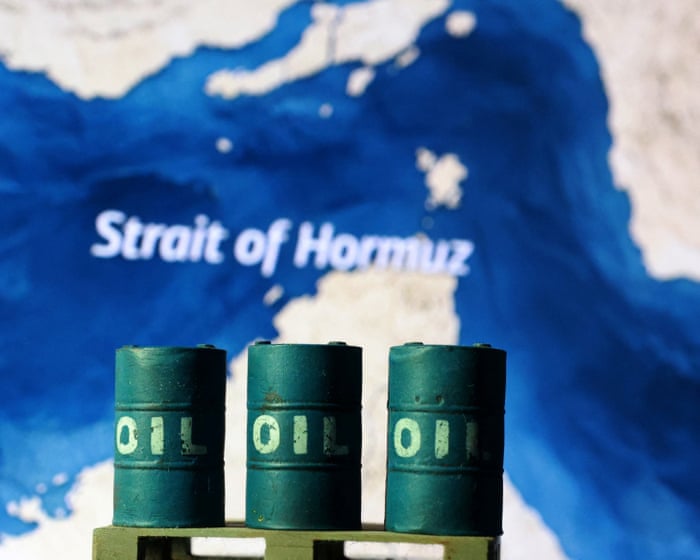
The head of Shell has warned that Europe could experience energy and fuel shortages as early as next month unless the Strait of Hormuz reopens. The CEO of Europe’s largest oil company stated that Shell is collaborating with governments to help manage the oil and gas supply crisis, which has already triggered energy rationing in parts of Asia.
Oil prices fell to around $100 a barrel on Wednesday, down from roughly $114 earlier in the week, following reports that the White House had submitted a 15-point peace proposal to Iran’s leaders. However, Wael Sawan cautioned that unless crude shipments resume from the Gulf via the critical Hormuz route, Europe may face fossil fuel shortages within weeks.
Speaking at an energy conference in Houston, Texas, Sawan noted, “South Asia was first to feel the impact. That has shifted to Southeast Asia, Northeast Asia, and will increasingly affect Europe as we enter April.” He explained that the ongoing crisis, now in its fourth week, has already driven up jet fuel prices—which have doubled since the conflict began—and that diesel could be next under pressure, followed by gasoline as the summer driving season approaches in the U.S. and Europe.
This dire outlook was echoed by Germany’s economy minister, Katherina Reiche, who also addressed the conference, warning that energy shortages could emerge in late April or May if the conflict persists. She added that Germany’s move to phase out nuclear power was a significant error and that increasing imports of liquefied natural gas via tankers would be crucial to addressing the situation.
The potential strain on Europe’s energy supplies could trigger a prolonged global recession if oil prices reach $150 a barrel, according to Larry Fink, CEO of BlackRock, the world’s largest asset manager. In a BBC interview, Fink stated that if Iran “remains a threat” and oil prices stay elevated, it would have “profound implications” for the global economy.
While it is still too early to gauge the full scale and outcome of the conflict, Fink outlined two possible scenarios: one where a complete resolution allows oil prices to fall back to pre-crisis levels around $70 a barrel, and another where the conflict pushes prices to record highs. The latter could result in “years of oil above $100, closer to $150, which has profound implications for the economy” and likely lead to “a stark and steep recession.”
This article was amended on 25 March 2026. Wael Sawan warned of potential energy and fuel shortages in Europe but did not specifically refer to “rationing,” as an earlier version of the text and headline indicated.
Frequently Asked Questions
Of course Here is a list of FAQs about the potential for fuel shortages in Europe based on the statement from Shells head
BeginnerLevel Questions
1 Whats the basic news here
Shells CEO has warned that Europe could start to see fuel shortages as early as April due to reduced oil supplies from Iran
2 Why would less oil from Iran affect Europes fuel
Oil is a global market If a major supplier like Iran reduces its exports it tightens the overall supply This can lead to higher prices and if the shortage is severe enough physical shortages at pumps in regions that depend on those supplies
3 Is this definitely going to happen
No its a warning not a certainty Its a prediction based on current market trends and geopolitical tensions Governments and companies will try to find other sources to prevent it
4 What kind of fuel are we talking about
Primarily diesel and gasolinethe fuels used in most cars trucks and for heating Diesel is often highlighted because Europe already imports a significant amount of it
5 What should I do as a regular driver
Dont panic Theres no need to hoard fuel as that can actually create shortages Just be aware that prices may rise and consider combining trips or using public transport if possible to manage your costs
Advanced Practical Questions
6 Why is Iran reducing oil supplies
This is likely due to a combination of factors increased domestic demand potential new US sanctions enforcement and Irans own strategic decisions to redirect exports to other allies or in response to geopolitical pressures
7 Doesnt Europe get most of its oil from Russia How does Iran fit in
Since the war in Ukraine Europe has drastically reduced imports of Russian oil and diesel This created a gap that other global suppliers including those in the Middle East Africa and the US have filled Losing another source strains the system
8 What are the knockon effects mentioned in these reports
If diesel becomes scarce and expensive it increases costs for transporting goods and for industries like agriculture and construction This can drive up inflation and the cost of living for everyone
9 What can Europe do to prevent this
Key actions include