The amount of explosives found in Serbia last week would not have been enough to destroy the Balkan Stream gas pipeline, leading an expert to conclude it was likely a Russian intelligence operation aimed at influencing Hungary’s upcoming election.
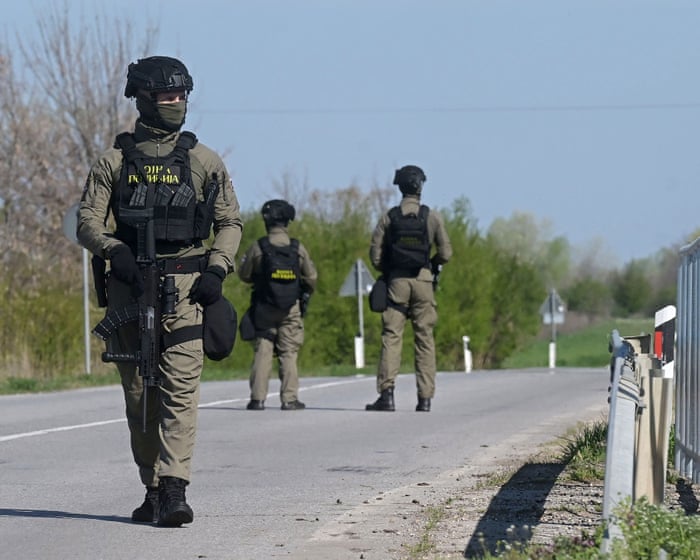
A former Ukrainian major general and munitions specialist told the Guardian that calculations by his company showed the 4kg of explosives recovered by Serbia’s military security agency in Kanjiža could not have seriously damaged the pipeline.
Experts from his firm, Andromeda, analyzed the steel and polypropylene connection, which carries Russian gas to Hungary through Turkey, Bulgaria, and Serbia, and estimated the amount of explosive needed to cause significant harm.
Mykola Zentsev said privately that a much larger quantity would have been required to succeed. “Four kilograms is not sufficient to halt the gas pipeline,” he stated.
Even if placed optimally, 4kg of plastic explosive “would likely result only in localized damage or limited penetration, which could be repaired within a few days without causing long-term disruption of supply,” he added.
“This does not align with the goal of a typical sabotage act, which aims to disable infrastructure for weeks or months,” Zentsev concluded, supporting “the view that the incident was likely a provocation.”
On Sunday, Hungary’s Prime Minister Viktor Orbán said he had been informed by Serbia’s President Aleksandar Vučić about the discovery of the explosives. Hungary’s Foreign Minister Péter Szijjártó suggested Ukraine could be responsible, calling it “an attack on our sovereignty.”
The incident received widespread media attention before Hungary’s election on Sunday, in which the pro-Russian Orbán is trailing in the polls and fighting for his political survival.
Péter Magyar, the leader of Hungary’s opposition, accused Orbán of “attempting to instill fear in his own people through false-flag operations” and following “the advice of Russian agents.” Ukraine denied involvement, a conclusion supported by the head of Serbia’s military security agency, which is leading the investigation.
Zentsev argued that, in his opinion, “the primary beneficiaries are likely the current Hungarian government, which gains an additional political advantage ahead of elections, and Russia, which seeks to use such incidents to discredit Ukraine in the eyes of the civilized world.”
Under Orbán, Hungary is one of the few EU countries that has chosen to remain close to Russia, purchasing its gas and oil. Budapest also blocked approval of a €90 billion loan to Ukraine in March after a dispute with Kyiv over repairs to the separate Druzhba oil pipeline, a section of which runs through Ukraine into Eastern Europe.
Serbia’s Vučić said last Sunday that the explosives could have “endangered many lives” and caused significant damage to the Balkan Stream pipeline. They were found in two backpacks in Kanjiža, “a few hundred meters from the gas pipeline.”
However, Zentsev said that based on public evidence, it did not appear any effort had been made to place the explosives on the pipeline itself. The Ukrainian, who is close to his country’s security services, said he believed the incident was probably a false-flag operation conducted by Russia’s GRU military intelligence.
“This meets the standards of the GRU,” said Zentsev, noting the incident’s military dimension. Last month, Magyar accused Orbán of inviting GRU agents.to assist with his re-election campaign. The Russian embassy in Budapest dismissed these claims, calling allegations of GRU involvement “blatantly false information.”
Frequently Asked Questions
Of course Here is a list of FAQs about the reported discovery of explosives near a pipeline in Serbia and the experts claim it was a Russian provocation
BeginnerLevel Questions
1 What happened in Serbia with the pipeline
An explosive device was discovered near a major natural gas pipeline in Serbia Authorities found and safely removed it before it could detonate
2 Who said it was a Russian provocation and why
A security expert likely analyzing the method timing and political context stated the incident had the hallmarks of a Russian operation The goal would be to create instability sow fear about energy security in Europe and pressure Serbia which has close ties to Russia
3 What is a provocation in this context
Its a covert action designed to look like it was done by someone else aiming to trigger a specific reactionlike blaming another country causing public panic or pushing a government to change its policies
4 Was Russia officially blamed
No The expert gave an analysis not an official accusation Serbian authorities are investigating and such investigations often take time and are not always made fully public
5 Why would Russia target Serbia a friendly country
Even friendly countries can be targets for covert actions The goal might be to test Serbias defenses send a warning about its relations with the West or create a crisis that makes Serbia more dependent on Russian support
Advanced Contextual Questions
6 What pipeline was involved and why is it strategically important
While reports vary it was likely a key pipeline supplying gas to Serbia and potentially onward to other parts of Europe Targeting it disrupts energy flows and sends a geopolitical message about vulnerability
7 What evidence might an expert use to call this a Russian provocation
Experts look at tradecraft parallels to known Russian intelligence tactics the timing relative to other geopolitical events and who benefits from the chaos The lack of a clear claim of responsibility is also a hallmark
8 How does this fit into broader hybrid warfare tactics
This is a classic hybrid warfare tactic a deniable covert attack below the threshold of open war It aims to achieve political goals without triggering a direct military response