You can kill almost anything if you’re willing to pay. Big or small. On land, in water, or in the air. Common as dirt or one of the last of its kind. There’s nearly always a way, though it might not make you popular.
The Niassa Special Reserve, a vast protected area larger than Switzerland, stretches for 190 miles along northern Mozambique, covering 4.2 million hectares of woodland and rivers. One of the world’s largest reserves, it is home to elephants, leopards, hyenas, zebras, and about 1,000 wild lions.
That word, however—”protected”—applies to some, but not all, of its animals. Each year, a specific number are set aside for sacrifice, for what is seen as the greater good. Not long ago, I joined an expedition in Niassa with one of Africa’s top hunting companies.
Safari guide Paul Stones and his client, an American neurosurgeon in his early 70s, were preparing to shoot a Cape buffalo with the help of two professional trackers: Mozambicans Sabite Mohamed and Tino Salvador.
The trackers found the first prints almost immediately. The trail led us through a labyrinth of green and bronze. We passed along dusty, thorn-tangled riverbeds, then damper, cooler corridors of leaves buzzing with tiny insects. The whole time, we moved in silence.
Suddenly, there was movement in the tall golden grass nearby—something large, moving fast. Stones and his client swung their guns toward the noise. The trackers melted into the trees. A waterbuck burst from the grass, pushing vegetation aside like a curtain. It leapt, balletic, into the air before galloping away. In the stunned pause that followed, I gulped with silent laughter, more from the release of tension than from the comic effect.
We walked on.
Every year, clients of the trophy-hunting industry take the lives of tens of thousands of wild animals worldwide. In sub-Saharan Africa, where hunting interests control vast stretches of wilderness, trophy hunters often directly fund conservation projects on a grand scale. In 2014, Texas oil heir Corey Knowlton reportedly paid $350,000 to kill a critically endangered black rhino in Namibia. He made the winning bid at an auction run by the Dallas Safari Club to raise funds for African conservation. Afterwards, Knowlton told the media he had received death threats but killed the rhino with a clear conscience: “I felt like from day one it was benefiting the black rhino.” Conservation efforts, he said, were expensive; it took money to keep them alive. “I’m absolutely hell-bent on protecting this animal.” He said less about what motivated him to kill one.
Professional hunters and trackers also die every year in pursuit of dangerous animals. Stones and his client speak reverently of what they call “fair chase”—an ethical distinction in certain sporting circles where the quarry is believed to have a sporting chance of survival. Wild animals moving freely through their natural habitat represent the ideal. At the other end of the spectrum is the “canned hunting” industry, where animals, particularly lions, are bred for the kill and held captive in fenced enclosures.
From this perspective, the larger and wilder the enclosure, and the freer the animal’s movement, the better. And Niassa is one of the largest and wildest game reserves in the world. Day after day, for ten days, Stones and his client rose before dawn, dressed in drab, dry-leaf green, and set out on the trail. By the time the sun was high and the gunmen were soaked in sweat, a sense of parity arose in their minds—a feeling of worthy opposition, equal opportunity in this game of life and death, even if only one party had chosen to play.
In a sense, the hunters are part of an ancient tradition of sport hunting that stretches back thousands of years: generations of emperors, kings, aristocracy, and later, merchants.Along with other newly wealthy groups, these individuals have turned to hunting as a way to prove themselves, fulfill deep-seated desires, test their courage, or seek spiritual meaning. Ironically, hunting cultures have often ended up preserving wildlife carefully: by allowing animal populations to recover, they ensure future hunts can take place.
Many of the world’s best-preserved natural areas were originally protected for the enjoyment of a hunting elite. For instance, the Białowieża Forest, often hailed as one of Europe’s last untouched “primeval” woodlands, was designated as a royal hunting park for Polish kings in the 15th century.
In medieval Europe, these protected areas were called “forests,” regardless of whether they were wooded, and were managed under a separate set of laws known as “forest law.” They were privileged, private domains, shielded from public view and scrutiny. Often, they served as discreet venues for deal-making and diplomacy. In other words, what happened in the forest stayed in the forest.
The establishment of hunting preserves had the unintended consequence of conserving vast stretches of wild or semi-wild habitat. Historian Thomas Allsen has argued, “If we understand conservation as conscious short-term restraint for long-term benefit, then many of the most active conservationists in history were political elites, the royal hunters and the polities they controlled.”
Following severe declines in African wildlife during colonial rule, European powers imposed the only model of wildlife preservation they knew: a network of private hunting reserves, transplanting feudal principles into a new setting. Since 1900, approximately 1.4 million square kilometers of sub-Saharan Africa have been set aside for trophy hunting. Many of Africa’s most famous wilderness areas and national parks were initially protected for hunters. South Africa’s beloved Kruger National Park began as the Sabi and Singwitzi game reserves. Although hunting is now banned within the park, it still shares unfenced borders with trophy-hunting estates, meaning animals safeguarded one moment can cross an invisible line and become fair game the next.
Big-game hunters were the founders of the international conservation movement and, to a surprising degree, continue to fund wilderness preservation in Africa and North America. However, they built it on a central contradiction: the idea that wildlife can be saved by killing it.
Trophy hunting, especially of rare or endangered species, is a deeply emotional and divisive issue, and there have been many efforts to ban it. But it is so tightly woven into the fabric of African conservation that it’s unclear whether the two can be separated and still survive.
Paul Stones is a professional hunter, or “PH,” as it’s commonly known. PHs are typically white African men trained to guide wealthy clients through the African bush. Stones is tall, tanned, brimming with relentless Boy Scout energy, and skilled at adapting his demeanor to his company. He takes amateur hunting enthusiasts, pushes or encourages them across rough terrain, hands them a cold water bottle when they overheat, and positions them perfectly to take their shot.
On the hunt I joined, Stones’ client was fairly typical demographically: white, American, and Republican. The client (whom I agreed not to name; let’s call him Elmer) was fit for his age and spoke with a gentle Southern drawl. He was a religious man whose wife of many years preferred to stay home. I could understand why. We were sleeping in basic army-style tents, though they did have plumbed toilets behind bamboo screens at the back. Still, Elmer was paying a significant amount for the experience. The basic cost for a buffalo hunt was $2,150 (£1,590) per day, with a minimum of 10 days required.Add to that the cost of the bush plane charter we flew in on ($5,500 at the time), as well as gun and hunting permits (upwards of $1,000 per person). Then there were the game fees.
When you shoot an animal in Mozambique, as in many African countries, you must pay a set price. Stones lists the options on his website: impalas ($600) and warthogs ($700) are the cheapest. He could arrange for you to shoot a crocodile or even a hippopotamus, if you wish, for $5,800. A leopard—currently classed as “vulnerable” by the International Union for Conservation of Nature—will cost you $11,650. A lion? $25,000. Lions, Stones noted drily, are “not something you dish out like doughnuts.”
In this particular section of the reserve, or hunting block, four lions were available to hunt each year, an estimated 2% to 4% of the local population. But you don’t simply shoot a lion if it crosses your path. Lion hunts are highly choreographed, exclusive affairs; you’re looking at $70,000 before you even load your rifle. Then there are the game fees for the bait you’ll need—a zebra, warthog, or kudu, for example—and for the lion itself. All in, you’re looking at a six-figure expense with no guarantee you’ll come home with a lion skin for a rug. (Taxidermy not included.)
Elmer has hunted all over Africa, with varying success. The worst, he said, was in Tanzania, where there were more snares than animals. Other places might have good hunting, but there were people everywhere. He said it again: everywhere. You’d be stalking a buffalo for hours in total silence, then a man would come by on his bicycle. When you lifted your gun to shoot, he said, you had to think: where’s the school? By contrast, Niassa—a troubled corner of Africa, where conservancies financed by hunters are often the best-resourced operations around—was where you came for the pure experience. The old-style, Hemingway safari.
There are people on bicycles in Niassa, too, though not as many. A few small villages of mudbrick and thatch have grown up along the road that cuts through the reserve. We saw mostly women balancing water canisters or bundles of firewood on their heads. A few men fished from shanties on the sandy riverbanks. Small children waved. I waved back, awkwardly regal, perched high on a bench in the back of the truck.
The residents of Niassa are some of the poorest people in one of the poorest countries in the world; here, 80% live on less than $2 a day. Mozambique gained independence from Portugal in 1975 but was ravaged by a brutal civil war that lasted until 1992, during which more than a million died from violence or starvation. The country’s wildlife was also devastated, as desperate people turned to bushmeat for survival—animal populations declined by 90% or more in some areas. The remoteness and sheer inaccessibility of the Niassa wilderness offered some protection, for both humans and animals. Villagers fled into the bush, setting up temporary camps. A few still live there, slashing and burning to create small clearings, growing what they can, then moving on.
All this is to say that wilderness preservation was low on the list of priorities. It’s difficult to think about aesthetics, landscape ethics, or sustainable harvest when you fear for your life. More recently, under significant pressure from international NGOs, poaching has become a priority issue. It was criminalized in 2014, and since then several kingpins have been sentenced to 20 years or more. Anti-poaching rangers patrol known hideouts. This, at least in part, is where the money from lion hunts is going.
Lion hunts are perhaps the most important source of income for the Luwire Conservancy, a private environmental organization that manages hunting block L7—the 4,500 sq km subdivision of the Niassa Special Reserve I was exploring with Stones and his client. The conservancy, which has controlled the block since 2000, works with the local community to minimize impact on the wilderness.The conservancy provides clean water from boreholes, medical care via flying doctors, jobs as rangers, an annual share of ready-killed bushmeat, and occasional meat gifts from trophy hunters. In return, the local people agree to limit their development to designated areas.
Later, I accompanied a professional hunter from the conservancy as he “harvested” bushmeat to meet the annual quota. This hunt was quick and clinical. Within what felt like minutes, the young, strong-jawed, blond-haired hunter returned holding a lithe and perfect impala aloft by its ankles, save for a finger-sized bullet hole through its chest.
Great crowds gathered to watch the carcass being portioned. The butchering was rough and inexpert, done rapidly with a serrated knife by the roadside. The animal’s organs spilled out and were eagerly gathered into a bucket. Its haunches were hacked off and carried away by the luckiest.
The idea is that, in exchange for these gifts, the people will allow rarer and more valuable animals to pass through their village unharmed. But the unbalanced dynamic—reminiscent of a squire throwing scraps to the crowd—felt uncomfortable to me. So did the irony of their situation: residents of a hunting preserve being prohibited from hunting for themselves.
African conservation’s emphasis on trophy hunting and game reserves can be traced to the first international environmental conference of its kind, held in London in 1900. There were no Black African representatives. Instead, foreign ministers of various imperial powers held emergency discussions, hoping to stem the sudden decline in African wildlife caused by European hunters, who had shot millions of animals in just a few decades. Shortly afterward, the Society for the Preservation of the Fauna of the Empire was established to manage game licenses across the colonial world. The Times dubbed it the “Repentant Butchers Club.”
In the colonies, hunting with traps and snares—deemed cruel, indiscriminate, and unsporting—was outlawed, effectively criminalizing Black African subsistence hunting overnight. However, trophy hunting continued on an unsportsmanlike scale. Teddy Roosevelt, the U.S.’s “naturalist president,” shot over 500 animals with his son during an extended African safari in 1909. These mega-hunts, reserved for blue bloods and celebrities, were formalized as “big-game safaris,” complete with dining tents, gimlets, and gun-bearers, as described by Hemingway.
This romance was so dazzling it obscured the details. Many well-known heroes of African conservation started as hunters, though this is often forgotten. George and Joy Adamson, for example, were practically canonized after Joy’s 1960 memoir Born Free and its Hollywood adaptation. Millions fondly remember Elsa, the bottle-fed lion cub, but fewer recall that George Adamson shot her mother, albeit in self-defense.
In many ways, life as a white conservationist on Africa’s private game reserves preserved a world of aristocratic privilege that was fading in industrializing Europe. These vast estates were often run as private fiefdoms marked by racial inequality. While preserving wilderness and wildlife was the guiding principle, flawed humans were at the helm. Heavily armed and often fueled by gin, landowners were apt to take enforcement of the new game laws into their own hands.
In some regions of Africa…In Africa, conservationists adopted aggressive, military-style tactics to protect wildlife and wild lands from criminal networks running multimillion-dollar operations in ivory, horn, and pangolin scales. These groups could be ruthless and were often implicitly backed by corrupt officials.
This militarized approach was first used in 1950s Kenya by park wardens David Sheldrick and Bill Woodley. They applied their experiences in guerrilla warfare from the Mau Mau rebellion, using those same tactics against Black Kenyans in a new context. Soon, many parks and reserves had their own armed patrols, and the death penalty was applied even to those merely suspected of poaching. In the West, this has often been framed as a just war: a battle of good (rangers) against evil (poachers). But it was a war, all the same.
When Stone, the client, the trackers, and I finally rattled back into camp, Derek Littleton, the director of the Luwire Conservancy, was waiting. Littleton is a veteran conservationist whose calm, genteel exterior covers a core of steel. He has managed Block L7 on wilderness-preservation principles for over 20 years, having moved to Mozambique from Robert Mugabe’s Zimbabwe.
He joined us for dinner. We ate rare, tender sable antelope fillet, shot that same day, served raspberry-pink with red wine. We sat on a covered terrace in the hot, still night, listening to the cries of lions nearby, fresh from a kill.
Littleton said that in the early days, there was friction with the local community. He found the war-hardened Mozambicans aloof and unwelcoming. Over the years, many outsiders had passed through—slave traders, colonists, criminals—few with good intentions. The locals, subsistence farmers from the Yao and Makua ethnic groups, had no particular love for wildlife either. They might tend a vegetable patch for months, only for a herd of elephants to devour it just before harvest. Hippos, crocodiles, lions, and wild dogs were constant dangers to those clearing small plots from the forest.
At first, Littleton was offended by their ambivalence toward, and even active destruction of, the environment he valued. Coming across a fresh clearing in the forest, roughly chopped with a hand axe, stumps still smoking, or the body of an impala caught in a homemade snare, he couldn’t help feeling he was saving Mozambique from Mozambicans.
He now sees that as a paternalistic mindset. The decades since have been about adaptation, negotiation, and a constant search for compromise. This year, the community’s share from trophy hunting came to 2,000 meticais, or about $35 per person, handed out in cash. That may not seem like much, but it’s a welcome sum in a region where the average annual income is around $250. Add in $400,000 in development funding, plus jobs for 60 anti-poaching scouts, managers, and hospitality staff, and the private conservancy now accounts for two-thirds of the local economy.
The next day, I flew with Littleton to the Luwire Conservancy headquarters, 30 miles east—a 20-minute trip by light aircraft. In a low, two-room building, Yasalde Massingue, a young Mozambican biologist with a pleasantly eccentric manner, was coordinating the conservancy’s anti-poaching units using real-time tracking data displayed on a bank of screens.
“These are the rangers,” he said, pointing to looping tracks fanning out from camps across the block. Toggling between displays, he added, “And these are elephants and lions with GPS trackers.” He monitors their movements, watching for any sudden stops. “These,” he said, ticking a box to bring up a new set of colored dots, “are vultures. When they gather, it usually means there’s a dead animal.” He flipped through photos of snares, animal remains, and evidence of illegal gold mining. And here: a fisherman.using the wrong kind of net. There: a man with bushmeat in a basket.
For now, things were calm in block L7. The threats were low-level—a welcome relief after nearly a decade spent fighting a crisis in which an estimated 10,000 elephants were killed by poachers linked to criminal gangs.
Littleton described it as fighting a mini-war. He barely slept for years. The rangers carried a makeshift arsenal of AK-47s, shotguns, and hunting rifles. One was shot and injured in a firefight, though he survived. They don’t have a shoot-on-sight policy for poachers, Littleton told me; if they catch one, he should be handed over to the police. Or, as he clarified, that is “certainly the objective.” But there has been one crisis after another. Almost as soon as the poaching crisis ended, an Islamist insurgency began. Then the river burst its banks and swept half of the Lugenda camp nearly a mile downstream.
Conservation under such conditions is logistically difficult and extremely expensive. It has consumed years of Littleton’s life and millions of dollars. Without income from trophy hunters, he says, it would be unworkable. He approaches the matter with raw pragmatism. The most vocal anti-hunting lobbyists, he argues, will never experience what he calls “the dirty end” of conservation, where killing something can apparently save it. He doesn’t claim that his hunting clients share his nuanced views on conservation and rural development. But in the end, does it matter if they pay their bills on time?
Ethical dilemmas are nothing new in conservation, a field where the interests of one species are often weighed against another. But the trade-off becomes explicit with trophy hunting. Fifteen African countries, including Tanzania, Namibia, and South Africa, rely on trophy hunting to fund their conservation efforts, either wholly or in part. In Zambia, where 23% of all land is tied to privately managed reserves, trophy hunting was banned in 2013, only to be reinstated in 2014 due to a lack of alternative funding.
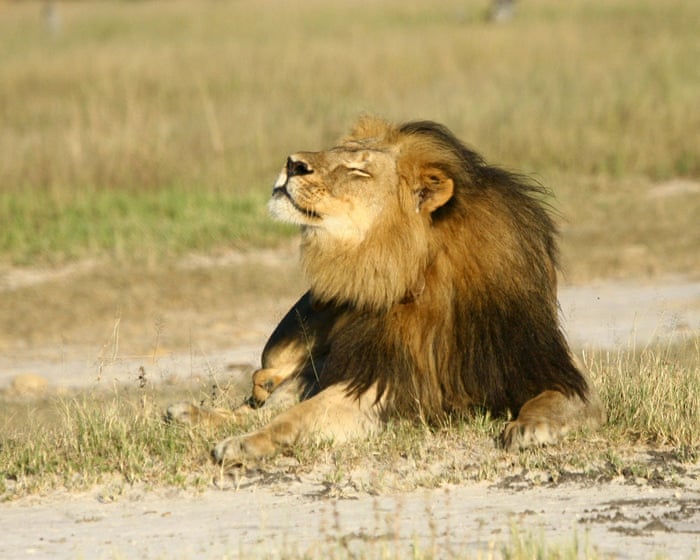
Still, critics argue that this system perpetuates dependence on—and subservience to—a foreign, usually white, elite. Others resent the disproportionate concern shown by foreigners for protected animals—exemplified by the international outcry over the death of Cecil the lion in Zimbabwe in 2015—compared to the lack of attention given to Black Africans living in poverty.
Any model that frames rural communities as a threat to their environment risks alienating them from their homelands and severing their traditional moral and religious ties to the land. These pre-colonial philosophies served the environment well; for centuries, subsistence hunters coexisted with vast populations of wild animals. The last great springbok migration, estimated at 260 million animals, took place in 1896—just a decade after the Berlin Conference formalized the colonial division of the continent.
The trophy hunting system is unlikely to survive in its current form. It is too contentious and racially divisive. African conservation more broadly, shaped by outside influence and funding, also echoes colonial attitudes. Some African thinkers, like development expert Danford Chibvongodze, have called for a completely new approach—perhaps one grounded in the more culturally relevant values of Ubuntu, a southern African philosophy of interconnectedness that may be at odds with the concept of the “wilderness” reserve.
In the meantime, perhaps the most puzzling thing of all is that—in Niassa, at least—the current approach seems to be working. The lion population in the special reserve, now estimated between 800 and 1,200, is one of the few in Africa believed to be growing.In South Africa, which has most strongly and consistently embraced trophy hunting, game populations have grown from 500,000 in 1964 to over 20 million. More than two-thirds of these animals now live on private reserves. In contrast, Kenya banned hunting in 1977 and has since experienced some of the steepest wildlife declines in all of Africa.
If banning trophy hunting would result in the loss of wilderness areas and a collapse in animal populations, would it still be the right thing to do? Can we dismiss an apparently successful strategy outright, based solely on emotion?
Frequently Asked Questions
FAQs Hunting Wildlife Conservation in Africa
Understanding the Concept
Q How can hunting possibly help protect wildlife
A The idea is that regulated legal hunting generates significant revenue This money funds antipoaching patrols habitat protection and community programs creating a direct economic value for keeping wildlife populations healthy on large tracts of land
Q Isnt this just killing to save That seems contradictory
A It can feel that way Proponents argue its a pragmatic tradeoff the carefully managed harvest of a small number of individual animals provides the financial means to protect entire species and ecosystems from greater threats like habitat loss and illegal poaching
Q Whats trophy hunting and how is it different from poaching
A Trophy hunting is legal regulated by government quotas targets specific animals and the hunter pays large fees Poaching is illegal unregulated targets any animal and generates no revenue for conservation or local communities
Benefits Economics
Q Where does the money from these hunts actually go
A Fees are paid to governments for permits to outfitters for logistics and to land owners A portion is legally mandated to go back into conservation agencies antipoaching units and community development projects like schools clinics and water access
Q Do local communities really benefit from this
A When programs are wellmanaged yes Communities that receive income and meat from hunted animals are more likely to see wildlife as an asset rather than a threat to their crops or livestock This reduces humanwildlife conflict and incentivizes them to protect animals on their land
Q What happens to the meat from the animal
A The meat is almost always utilized It is typically distributed to the hunting staff the local community or sold in local markets providing an important source of protein
Controversies Challenges
Q How do we know hunting doesnt hurt population numbers
A Legal hunts are based on