Τα νέα είναι ως επί το πλείστον πολύ καλά. Χάρη στη χρηματοδότηση της κυβέρνησης, το κόστος της πλήρους απασχόλησης για την παιδική φροντίδα στην Αγγλία για παιδιά κάτω των δύο ετών έχει μειωθεί κατά αξιοσημείωτο 39% από πέρυσι. Ο αριθμός αυτός, από την 25η ετήσια έρευνα του φιλανθρωπικού οργανισμού για παιδιά Coram σχετικά με τα νηπιαγωγεία, προσφέρει μια καλή στιγμή για να αναλογιστούμε πόσο έχει προχωρήσει η χώρα σε αυτό το τέταρτο του αιώνα.
Το 1995, υπήρχαν κουπόνια νηπιαγωγείου για λίγους, αλλά μόνο το 4% των παιδιών κάτω των πέντε ετών στην Αγγλία ήταν σε νηπιαγωγείο. Η πολιτική δεξιά υποστήριζε ότι τα μικρά παιδιά ήταν ευθύνη των οικογενειών, όχι του κράτους, και ότι οι μητέρες έπρεπε να μένουν στο σπίτι. Η ισχυρή ομάδα γυναικών του Εργατικού Κόμματος που έφτασε στο Κοινοβούλιο το 1997, με επικεφαλής τη βετεράνο Χάριετ Χάρμαν με τη στρατηγική της για παιδική φροντίδα, αγωνίστηκε σκληρά για να προσθέσει επιτέλους το 'άνοιγμα' που έλειπε στο κράτος πρόνοιας 'από την κούνια μέχρι τον τάφο'. Το 2003, το Υπουργείο Οικονομικών εισήγαγε φορολογικές πιστώσεις για παιδική φροντίδα, αν και κυρίως ως τρόπος για να βάλει τις γυναίκες στη δουλειά. Στη συνέχεια, το 2004, η κυβέρνηση επέκτεινε δωρεάν θέσεις μερικής απασχόλησης σε νηπιαγωγεία σε όλα τα τριετή και τετραετή παιδιά στην Αγγλία. Αυτό ήταν ένα τεράστιο βήμα — αλλά κάθε βήμα της πορείας ήταν μια μάχη, και ακόμα είναι.
Ίσως σύντομα, κανείς να μην θυμάται αυτή τη μάχη, καθώς οι νέοι γονείς θεωρούν τη δωρεάν παιδική φροντίδα δεδομένη, όπως όλη τη δωρεάν σχολική εκπαίδευση. Από τον περασμένο Σεπτέμβριο, οι γονείς μπορούν να διεκδικήσουν 30 ώρες την εβδομάδα κρατικά χρηματοδοτούμενης παιδικής φροντίδας για παιδιά από την ηλικία των εννέα μηνών μέχρι να ξεκινήσουν το σχολείο. Αυτό θα μπορούσε να εξοικονομήσει στους εργαζόμενους γονείς κατά μέσο όρο 8.000 λίρες το χρόνο ανά παιδί. Σημειώστε αυτό που οι ακτιβιστές προέβλεπαν πάντα: μόλις τον περασμένο χρόνο, αυτές οι επιπλέον δωρεάν ώρες νηπιαγωγείου επέτρεψαν σχεδόν στο ένα τρίτο των γονέων να αυξήσουν τις εργασιακές τους ώρες.
Οι οικογένειες μπορούν επίσης να εξοικονομήσουν έως και 450 λίρες από δωρεάν κλαμπ πρωινού και 500 λίρες ακόμα τον Σεπτέμβριο, όταν μισό εκατομμύριο ακόμη παιδιά θα λαμβάνουν δωρεάν σχολικά γεύματα. Όπως πάντα, υπάρχει μια απελπιστική έλλειψη θέσεων σε νηπιαγωγεία για παιδιά με ειδικές εκπαιδευτικές ανάγκες (Send). Οι γονείς περιμένουν να δουν αν η νέα κατάρτιση προσωπικού ως μέρος της μεταρρύθμισης Send του Εργατικού Κόμματος μπορεί να καλύψει αυτό το κενό.
Η εκπαίδευση των μικρών παιδιών ήταν πάντα βασική προτεραιότητα για τη Γραμματέα Παιδείας Μπρίτζετ Φίλιπσον, η οποία απώθησε πιο θορυβώδεις απαιτήσεις από τα πανεπιστήμια και τα σχολεία που αντιμετωπίζουν οικονομικές δυσκολίες. Σύμφωνα με το Ίδρυμα Νέας Οικονομίας, οι βραχυπρόθεσμες δαπάνες για την εκπαίδευση των μικρών παιδιών αποπληρώνονται και περισσότερο μακροπρόθεσμα. Έτσι, αξίζει να γιορτάσουμε ότι το 84% των τριετών και το 93% των τετραετών παιδιών στην Αγγλία φοιτούν πλέον σε νηπιαγωγεία.
Αυτό είναι όλο; Όχι, σχεδόν καθόλου, όχι ακόμα.
Η παιδική φροντίδα των μικρών παιδιών δεν είναι ούτε εντελώς δωρεάν ούτε καθολική. Αυτές οι πολύτιμες 30 δωρεάν ώρες είναι διαθέσιμες μόνο κατά τις 38 εβδομάδες της σχολικής περιόδου, επομένως οι γονείς πρέπει να πληρώσουν για το χάσμα των διακοπών. Μια εβδομάδα για ένα παιδί κάτω των δύο ετών μπορεί να κοστίζει περίπου 189 λίρες. Η χρηματοδότηση είναι πολύ χαμηλή σε μια εποχή αυξανόμενων ενεργειακών και προσωπικών δαπανών, και πολλά νηπιαγωγεία χρεώνουν επιπλέον για γεύματα, εκδρομές, πάνες, αντηλιακό ή οτιδήποτε άλλο μπορούν να σκεφτούν. Τα ιδιωτικά νηπιαγωγεία, που συχνά λειτουργούνται από μεγάλες αλυσίδες ιδιωτικών επενδύσεων, συγκεντρώνονται σε πιο εύπορες περιοχές, αποφεύγοντας οικογένειες που δεν μπορούν να πληρώσουν για επιπλέον ώρες. Εθελοντικά νηπιαγωγεία που αρνούνται να μειώσουν το προσωπικό ή να χαμηλώσουν τα πρότυπα έχουν κλείσει. Το μη κερδοσκοπικό Early Years Alliance έχει συρρικνωθεί από 132 νηπιαγωγεία σε μόλις 27.
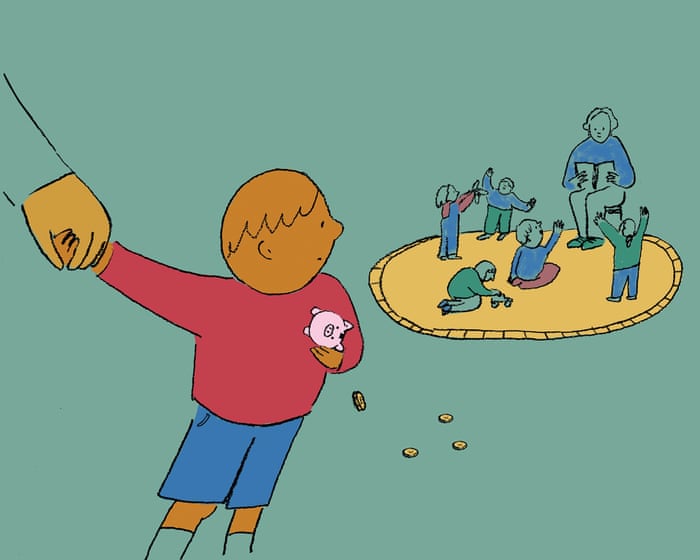
Αλλά εδώ είναι η μεγάλη ανωμαλία που υπονομεύει τον βασικό κοινωνικό σκοπό του κινήματος των νηπιαγωγείων: η εκπαίδευση των μικρών παιδιών ωφελεί περισσότερο τα πιο στερημένα παιδιά, ωστόσο αυτά τα παιδιά δεν δικαιούνται τις πλήρεις ώρες μέχρι να φτάσουν στην ηλικία των τριών ετών. Τι τα καθιστά 'μη δικαιούχα'; Ακριβώς αυτά που τα καθιστούν στερημένα. Αν οι γονείς τους δεν εργάζονται ή εργάζονται πολύ λίγο για να κερδίσουν 10.158 λίρες το χρόνο, το παιδί δεν λαμβάνει τίποτα μέχρι την ηλικία των δύο ετών, και στη συνέχεια μόνο τις μισές ώρες από τα άλλα παιδιά. Αυτή η μοχθηρή διάκριση ήταν η τελευταία ενέργεια της προηγούμενης κυβέρνησης, δηλώνοντας ότι οι γονείς που δεν εργάζονται πρέπει να φροντίζουν τα δικά τους παιδιά. Αυτό αγνοεί πόσοι γονείς αγωνίζονται με ψυχική υγεία, εξάρτηση ή σοβαρά οικογενειακά προβλήματα, αφήνοντας τα παιδιά τους αντιμέτωπα με το διπλό μειονέκτημα των δυσκολιών στο σπίτι και της έλλειψης πρώιμης παρέμβασης για να τις αντισταθμίσει.
Η φετινή έκθεση του φιλανθρωπικού οργανισμού Kindred Squared διαπίστωσε ότι περίπου το ένα τρίτο των παιδιών στην Αγγλία που ξεκίνησαν την πρώτη τάξη το 2025 ήταν... Πολλά παιδιά δεν είναι έτοιμα για το σχολείο. Μερικά φορούν ακόμα πάνες, δεν μπορούν να χρησιμοποιούν μαχαίρια και πιρούνια, δυσκολεύονται να καθίσουν ήσυχα, μιλούν πολύ λίγο και στερούνται κοινωνικών δεξιοτήτων. Μερικοί δάσκαλοι πιστεύουν ότι ο λιγότερος χρόνος στην εκπαίδευση των μικρών παιδιών έχει συμβάλει σε αυτά τα προβλήματα.
Η Κέλλιαν Μαγκουάιρ, διευθύντρια ενός νηπιαγωγείου του Early Years Alliance στο Νιούαρκ, προειδοποιεί ότι το κοινωνικό χάσμα διευρύνεται. Οι νέες δωρεάν ώρες σημαίνουν ότι τα περισσότερα παιδιά ωφελούνται από περισσότερο χρόνο στο νηπιαγωγείο και προχωρούν γρήγορα, ενώ εκείνα που δεν δικαιούνται μένουν ακόμα πιο πίσω. Ένα τριετές αγόρι στο νηπιαγωγείο της έφτασε ανίκανο να μιλήσει — έβγαζε μόνο γρυλίσματα και εκνευριζόταν εύκολα όταν δεν μπορούσε να εκφραστεί. Μετά από έξι μήνες, μιλούσε σε προτάσεις τριών λέξεων. «Μια τεράστια πρόοδος», λέει. «Αλλά αν το είχαμε από τους εννέα μήνες, θα είχε φτάσει τώρα». Θα φτάσει ποτέ; Δεν είναι σίγουρη, αφού έχασε εκείνα τα ζωτικά πρώτα χρόνια.
«Κατάρρευση των φραγμών στην ευκαιρία» είναι μία από τις πέντε αποστολές του Κιρ Στάρμερ, και η υψηλής ποιότητας εκπαίδευση των μικρών παιδιών «για να μεταμορφωθούν οι ευκαιρίες ζωής» βρίσκεται στο μανιφέστο του Εργατικού Κόμματος. Το κόμμα είναι σοβαρό. Η κατάργηση του ορίου των δύο παιδιών αφαίρεσε την πιο τιμωρητική αντι-φτωχική πολιτική που κληρονόμησε από τους Συντηρητικούς. Η Γραμματέας Παιδείας Μπρίτζετ Φίλιπσον είναι εξίσου αφοσιωμένη στην κατάργηση της διάκρισης στις ώρες νηπιαγωγείου. Αλλά όπως και με το όριο των δύο παιδιών, η εύρεση της απαραίτητης χρηματοδότησης από το Υπουργείο Οικονομικών απαιτεί χρόνο. Ιδιωτικά, το Εργατικό Κόμμα λέει ότι θα εξασφαλίσει τα χρήματα — και η έκθεση της Coram δείχνει πόσα έσοδα ρέουν στο Υπουργείο Οικονομικών όταν οι γονείς μπορούν να εργάζονται περισσότερες ώρες.
Μέχρι τότε, είναι κρίμα που αυτό το ζήτημα διακινδυνεύει να υπονομεύσει την αξιοσημείωτη πρόοδο προς τη θεώρηση των νηπιαγωγείων ως μέρος του δωρεάν, καθολικού εκπαιδευτικού συστήματος.
Η Πόλυ Τόινμπι είναι σχολιαστής του Guardian.
Guardian Newsroom: Μπορεί το Εργατικό Κόμμα να επανέλθει από το χείλος;
Την Πέμπτη 30 Απριλίου, συμμετέχετε στη συζήτηση με την Γκέιμπι Χίνσλιφ, τη Ζόη Ουίλιαμς, την Πόλυ Τόινμπι και τον Ραφαέλ Μπερ, καθώς συζητούν την απειλή που αντιμετωπίζει το Εργατικό Κόμμα από το Πράσινο Κόμμα και το Reform UK — και αν ο Κιρ Στάρμερ μπορεί να επιβιώσει ως ηγέτης.
Συχνές Ερωτήσεις
Συχνές Ερωτήσεις για την Ασφάλιση Ποιότητας στην Παιδική Φροντίδα
Ερωτήσεις Επίπεδου Αρχάριου
1 Τι ακριβώς είναι η παιδική φροντίδα;
Η παιδική φροντίδα αναφέρεται στην επίβλεψη, εκπαίδευση και ανατροφή που παρέχεται σε παιδιά από τη γέννηση μέχρι περίπου την ηλικία των 8 ετών. Αυτό περιλαμβάνει περιβάλλοντα ημερήσιας φροντίδας, προσχολικής εκπαίδευσης, προνηπιαγωγείου και φροντίδας στο σπίτι που υποστηρίζουν την ανάπτυξη, την υγεία και την ασφάλεια του παιδιού ενώ οι γονείς ή κηδεμόνες εργάζονται ή ασχολούνται με άλλες υποχρεώσεις.
2 Γιατί η εξασφάλιση καλής παιδικής φροντίδας είναι τόσο σημαντική;
Τα πρώτα χρόνια της ζωής ενός παιδιού είναι κρίσιμα για την εγκεφαλική ανάπτυξη, τις κοινωνικές δεξιότητες και τη συναισθηματική ευημερία. Η υψηλής ποιότητας φροντίδα θέτει ένα ισχυρό θεμέλιο για τη μελλοντική μάθηση, τη συμπεριφορά και την υγεία. Όταν η φροντίδα είναι αναξιόπιστη, απρόσιτη ή χαμηλής ποιότητας, προκαλεί στρες στις οικογένειες και μπορεί να επηρεάσει αρνητικά τα μακροπρόθεσμα αποτελέσματα του παιδιού.
3 Ποια είναι τα κύρια οφέλη της υψηλής ποιότητας πρώιμης φροντίδας;
Για τα Παιδιά: Καλύτερη προετοιμασία για το σχολείο, βελτιωμένες κοινωνικές και γνωστικές δεξιότητες και ι