On Saturday, Donald Trump announced he would increase a temporary tariff on all U.S. imports from 10% to 15%. This came less than a day after the Supreme Court ruled that his signature trade policy was illegal.
Angered by Friday’s ruling, which stated he overstepped his authority by imposing tariffs last year without congressional approval under the International Emergency Economic Powers Act, the president lashed out at the justices. He called them a “disgrace to the nation” and immediately ordered a new 10% tariff on all imports, on top of any existing duties, using a different law.
Announcing the further increase on Truth Social, Trump wrote that he was raising the tariff to the “fully allowed, and legally tested, 15% level” effective immediately, targeting countries he claims have taken advantage of the U.S.
The authority for this move comes from a never-before-used section of the Trade Act of 1974, which allows a president to impose a tariff of up to 15% for 150 days, though it may face legal challenges. After that period, congressional approval is required. Trump stated his administration would use this time to develop new, “legally permissible” tariffs.
While Trump said the new tariffs take effect “immediately,” it was unclear if official documents had been signed to confirm the timing. A White House fact sheet from Friday regarding the initial 10% tariff said it would begin at 12:01 a.m. ET on Tuesday, February 24.
Internationally, German Chancellor Friedrich Merz said he would travel to Washington with a coordinated European response. He warned that the “poison” of ongoing uncertainty harms economies and stated that tariffs hurt everyone. French President Emmanuel Macron noted the importance of the rule of law and checks on power in democracies, adding that France would assess the consequences and that fair rules require “reciprocity,” not unilateral decisions.
The increase to 15% also creates new complications for countries like the UK, which had previously agreed to a 10% rate. William Bain of the British Chamber of Commerce said the hike would be bad for trade, U.S. consumers, businesses, and global growth, emphasizing the need for clarity and certainty.
Certain products are exempt from the temporary tariffs, including critical minerals, metals, pharmaceuticals, and goods from Canada and Mexico that comply with the USMCA trade agreement.
The Supreme Court’s ruling does not affect separate, industry-specific tariffs on items like steel, aluminum, lumber, and autos that Trump imposed under a different law, which remain in force.
Trump has pushed aggressive tariff policies to boost U.S. manufacturing. The government has collected at least $130 billion in tariffs under the IEEPA. However, studies indicate that about 90% of this cost has been borne by U.S. businesses and consumers, leading major business associations to demand refunds.Former President Trump signaled on Friday that any refunds from the federal government would likely involve a protracted legal fight. The following day, he took to Truth Social to again criticize the Supreme Court’s 6-3 ruling, calling it “ridiculous, poorly written, and extraordinarily anti-American.” This came after he launched unusually personal attacks against the justices the previous day.
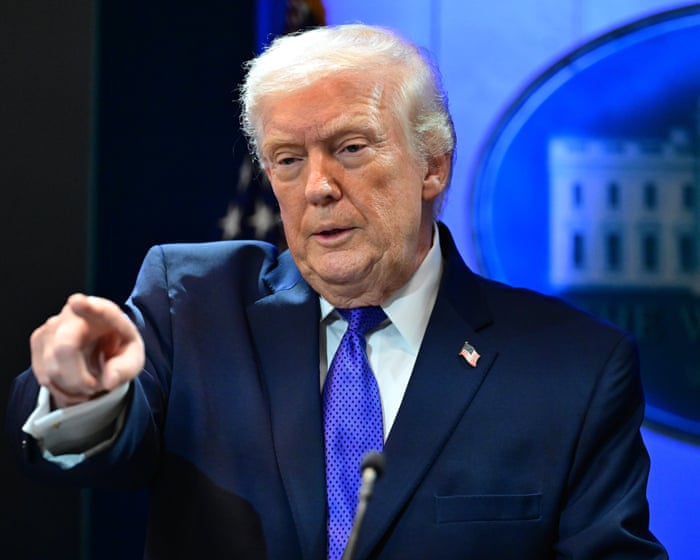
Speaking to reporters at the White House on Friday, Trump said, “I’m ashamed of certain members of the court. Absolutely ashamed for not having the courage to do what’s right for our country.”
He singled out the three dissenting justices—Brett Kavanaugh, who authored the main dissent, Clarence Thomas, and Samuel Alito—for praise. However, he was scathing in his criticism of the others, including two of his own appointees, Amy Coney Barrett and Neil Gorsuch.
“They’re just being fools and lapdogs for the RINOs and the radical-left Democrats, and not that they should have anything at all to do with it,” Trump said. “They’re very unpatriotic and disloyal to our constitution.”
He went on to call Barrett and Gorsuch “an embarrassment to their families” and remarked that they were “barely” invited to the upcoming State of the Union address.
Frequently Asked Questions
Of course Here is a list of FAQs about the topic of a 15 tariff increase on imports framed in a natural conversational tone
Beginner Definition Questions
1 What exactly is a tariff
A tariff is a tax that a country places on goods imported from another country It makes foreign products more expensive which is meant to encourage people and businesses to buy domestic products instead
2 Is it true that Trump has increased tariffs to 15 on everything
While this is a hypothetical scenario used for discussion the core idea is that a broad universal tariff of 15 would be applied to almost all goods coming into the United States from all trading partners In reality tariff changes are typically targeted at specific countries or product categories
3 Who actually pays the tariff
Initially the importing company pays the tax to US Customs at the border However that company will often pass the cost on to consumers by raising prices so ultimately both businesses and shoppers end up paying more
4 Whats the main goal of raising tariffs like this
The stated goals are usually to 1 Protect American industries and factories from foreign competition 2 Bring manufacturing jobs back to the US and 3 pressure other countries to change what are seen as unfair trade practices
Impact How It Works Questions
5 How would this affect the prices I pay at the store
You would likely see higher prices on a wide range of goods especially everyday items like clothing electronics furniture and some foods that are imported Products made entirely in the USA with domestic parts might see less of an increase
6 Will this help American workers and companies
It could help companies that directly compete with imported goods as their products become relatively cheaper However companies that rely on imported parts or materials will face higher production costs which could lead to job cuts or reduced investment The net effect on jobs is widely debated by economists
7 What would other countries do in response
They would almost certainly retaliate by imposing their own tariffs on American exports like agricultural products airplanes machinery and whiskey This would hurt US farmers and exporters
8 Could this cause a trade war
Yes a broad unilateral tariff