Fourteen years ago, a neurologist told me, “You have Parkinson’s.” I remember his face before I remember his words: calm, certain, kind. Parkinson’s is a progressive neurological disease with no cure. In my mind, it was an old person’s disease—something that happened to other people, later in life. Not to a single man in his early 50s who believed there was still time for romance, adventure, and reinvention.
What terrified me most wasn’t the tremors or the stiffness. It was the imagined future. I pictured a partner signing up not for love, but for care. I thought: who would choose that? Who would choose me, knowing this?
So, I hid. I’d had some practice: as a gay man who grew up when being out was dangerous, and later as a man living with HIV, I understood the choreography of concealment. You measure the room. You decide who is safe. You disclose carefully because you can never unring a bell.
In the beginning, it was easy enough. A slight shuffle could be brushed off, slower movements blamed on stress. But hiding has a cost. It shrinks your world. And Parkinson’s thrives when you withdraw, when you decide it’s easier not to go out, not to explain, not to be seen moving differently.
The moment that changed everything did not arrive with drama. There was no epiphany. It was a quiet decision, made at my kitchen table. I put my name on a waiting list for Dance for Parkinson’s classes with the English National Ballet.
It wasn’t entirely out of the blue. Earlier in my life I had worked for the Royal Opera House, so the world of dance already felt familiar—disciplined, creative, alive with possibility. Ballet wasn’t foreign territory; in many ways it felt like coming home.
Even so, when the offer of a place came, I nearly didn’t go. I didn’t want to meet other people with Parkinson’s. I was still in denial and I imagined it would mean confronting a future I wasn’t ready to see.
But once I stepped into the studio, something shifted.
The people I had feared meeting were not symbols of decline. They were, and remain, my courageous fellow warriors. I was greeted not as a patient, but as a dancer. There was live music, and volunteers who looked you in the eye. It felt less like therapy and more like art.
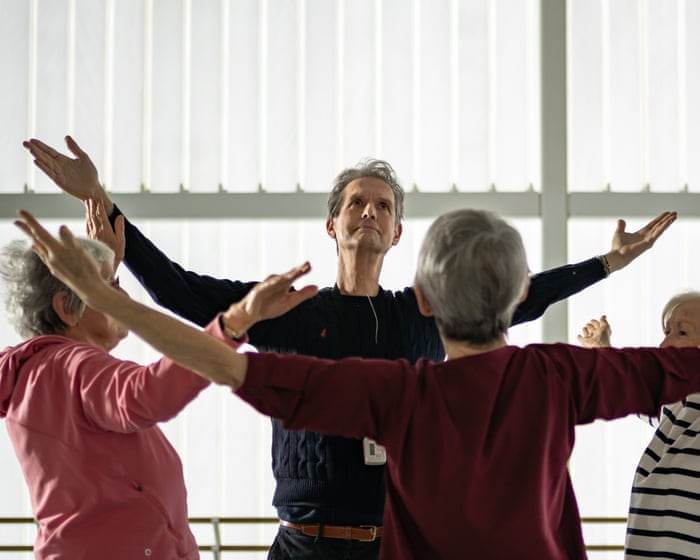
What surprised me most was the effect it had on my health. Parkinson’s tries to lock the body down—stiffness, hesitation, that awful moment when your feet feel glued to the floor. Dance does the opposite. It invites movement, encourages balance and demands rhythm. Week by week, I noticed subtle changes. My steps became more confident, my posture lifted and the freezing that sometimes trapped me began to loosen its grip.
But the real transformation wasn’t physical. Dance changed how I viewed the disease itself. Instead of seeing Parkinson’s solely as something that was taking ability away, I began to see what was still possible.
In the studio, surrounded by music and other dancers, I rediscovered a sense of joy and agency. Dance hasn’t cured my Parkinson’s—nothing can—but it has reminded my body, and my spirit, that I am still capable of movement, expression and grace. My arms could still carve shapes through the air. My feet, so often reluctant to move, occasionally left the ground. It felt almost miraculous.
The studio became a place where Parkinson’s retreated. For an hour, I wasn’t a diagnosis; I was part of a company. We worked with choreographers. We learned sequences. We were challenged. We were included. Over coffee and biscuits after class, friendships formed. It was the opposite of hiding.
Dance demanded that I be visible. That I take up space. That I allow my altered body to be seen not as shameful, but as human.But it is also capable of beauty.
That courage extended beyond the studio. In 2023, I joined my first Pride march with Parkinson’s UK. Last year, I took part in the Let’s Dance campaign, an initiative led by Angela Rippon and Arlene Phillips to encourage people who don’t usually dance to give it a try. Through the Dance for Parkinson’s programme, I have since had the privilege of working with award-winning choreographers like Arielle Smith and Harry Theadora Foster.
I discovered the true triumph was not in perfect steps, but in presence. It was about standing tall and saying: this is Parkinson’s, too. Not just decline or loss—but resilience, creativity, and connection.
Frequently Asked Questions
Of course Here is a list of FAQs about the topic A moment that changed me I thought Parkinsons meant the end of my life but dancing changed everything
General Understanding
Q What is the main idea of this story
A Its a personal story about someone diagnosed with Parkinsons disease who discovered that dance rather than being an impossible activity became a powerful tool to manage symptoms regain joy and redefine their life with the condition
Q How can dancing help with Parkinsons Isnt physical activity difficult
A Yes movement can be challenging but dance is a special type of activity It combines music rhythm social connection and varied movements which can help improve balance coordination flexibility and mood in ways that standard exercise sometimes doesnt
Benefits How It Works
Q What are the specific benefits of dancing for Parkinsons
A Benefits can include improved gait better posture enhanced balance to reduce fall risk increased muscle strength reduced stiffness and a significant boost in mental wellbeing and confidence
Q How does rhythm and music help
A The brain can use the steady external rhythm of music to help cue and organize movement This can help overcome the freezing episodes common in Parkinsons and make movements feel smoother and more automatic
Q Is this just about physical health or are there mental benefits too
A Its hugely beneficial for mental health Dance can reduce feelings of isolation combat depression and anxiety provide a creative outlet and foster a sense of community and accomplishment which is crucial after a lifechanging diagnosis
Getting Started Practical Tips
Q I have Parkinsons and want to try this Where do I start
A Look for Dance for Parkinsons classes specifically designed for people with the condition These are often offered by dance companies community centers or Parkinsons foundations They are taught by trained instructors in a safe supportive nonjudgmental environment
Q What if Im not a good dancer or have never danced before
A These classes are for everyone regardless of experience The focus is on movement expression and connection not performance Instructors provide seated and standing options to accommodate all ability levels