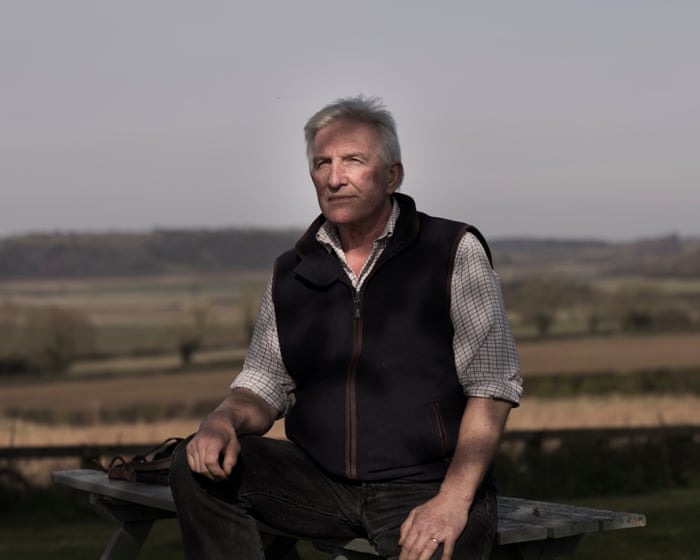
Three days before fleeing Saudi Arabia, Ian Foxley was called into his boss’s office on the 22nd floor of a Riyadh skyscraper and given an ultimatum: resign or be fired. He had only been in the job for six months, and it was clear to him that something was seriously wrong within the organization—but he never imagined his life would soon be in danger.
It all began in May 2010, when Foxley, then living in a village near York, spotted a job ad in the Sunday Times. A company was looking for someone to oversee the expansion of Sangcom, a British military program in Saudi Arabia. Originally worth £150 million when established in 1978, the program had grown into a £2 billion deal for the UK government to supply the Saudi Arabian National Guard with everything from encrypted radios to satellite communications and fiber optics.
Foxley hadn’t heard of Sangcom, but it was well known among graduates of the Royal Corps of Signals, the British Army’s communications division, where he had served as a lieutenant colonel. Officially, Sangcom was run by a small team of UK Ministry of Defence specialists in Riyadh, but in reality, the program was managed almost entirely by GPT Special Project Management, a contractor hired by the British government. Whenever the Saudis wanted to upgrade their military communications, GPT would propose what they could buy from Britain. In early 2010, the Saudis decided to expand their purchases through Sangcom, and GPT needed someone to draft new spending proposals.
For Foxley, it seemed like the perfect job. Since leaving the army in 1998, he had worked various contract roles, from managing fiber optic networks for Tiscali to running Domino’s Pizza franchises in York. He knew other former Signals officers at Sangcom who spoke positively about the work. After a successful preliminary interview in Dubai, GPT hired him on probation.
Foxley arrived in Riyadh in July 2010, with his wife, Emma, planning to join him once he settled in. Western contractors in Saudi Arabia typically lived in secure compounds—gated communities with shops, restaurants, pools, and tennis courts, all surrounded by 12-foot concrete walls topped with barbed wire. Foxley’s compound, Arizona, had armed guards at checkpoints and even a nine-hole golf course. He described it as a “luxurious prison” and amused himself by exploring its thriving underground culture of homemade alcohol (specialized online retailers sold “bakery kits” and “cake mix” to expats in countries where alcohol was banned).
Adjusting to work, however, proved more difficult. Foxley later recalled GPT’s management as eccentric and sometimes unclear. Once, managing director Jeff Cook abruptly warned him that a colleague, accountant Michael Paterson, was “a madman” who claimed people were trying to kill him—and that Foxley should avoid him. Another time, a coworker joked about a Saudi general signing off on GPT’s proposals due to something called “bought-in services.” Foxley didn’t recognize the term, and when he asked about it, he got only vague answers about “things we buy in.”
At first, Foxley dismissed these as quirks of doing business abroad rather than red flags. But in November, Cook began criticizing his performance, accusing him of missing targets. GPT later claimed these were legitimate concerns, but Foxley believed they were retaliation for his questions about “bought-in services.” Tensions escalated until December, when Cook confronted him with the choice: resign or be fired.
The next day, Foxley went to see…David Hargreaves, the brigadier who led the Ministry of Defence’s Sangcom team in Riyadh, later recalled that Foxley appeared “shaken” and “shocked” when they met. Foxley claimed he told Hargreaves there was something seriously wrong with Sangcom, prompting Hargreaves to ask for evidence. (Hargreaves remembered the conversation differently, saying Foxley only sought advice on how to respond to Cook’s ultimatum to resign or be fired.)
On his drive home, Foxley thought over his options and suddenly remembered Michael Paterson—the accountant Cook had warned him not to contact, dismissing him as “lunatic.” What was that all about? Curious, Foxley called Paterson as soon as he got home. Within 15 minutes, Paterson, who also lived in the Arizona compound, was sitting at Foxley’s dining table.
“Do you know about the Cayman Islands?” Paterson asked. Over the next hour and a half, he laid out a trail of evidence exposing years of bribery and corruption at GPT. Neither man realized they had uncovered a scheme that had been sanctioned for decades at the highest levels of government in both Britain and Saudi Arabia. It would take 14 years, three criminal prosecutions, and two jury trials before the full truth came to light.
Bribery has long been the lifeblood of the international arms trade. Until 1997, French companies could even deduct bribe payments from their taxes. In the UK, overseas bribery was outlawed in 1906, but loopholes weren’t fully closed until 2010. Arms deals, often worth billions, are shrouded in secrecy under the guise of national security. The complexity of these transactions—bundling weapons with support services or financing arrangements—makes it nearly impossible to determine fair pricing. According to Robert Barrington, a corruption studies professor at Sussex University, the arms trade remains “probably the single highest-risk sector for corruption, and it has been for years.”
The most common form of bribery involves commissions or kickbacks—a percentage of the deal paid to a middleman, who takes a cut before passing the bulk to the official, prince, or president responsible for awarding contracts. Middlemen are crucial; they pose as consultants, providing plausible cover for illicit payments. If exposed, companies can feign ignorance, claiming they didn’t know the middleman was bribing officials.
The real challenge isn’t paying bribes—it’s hiding them. Every payment must be disguised to avoid raising red flags with auditors. For the Sangcom deal, GPT tacked a 16% “bought in services” fee onto invoices, funneling the money to a Cayman Islands shell company called Simec. In reality, Simec provided no services—it simply acted as a conduit for bribes.
Michael Paterson had uncovered much of this scheme, and it had cost him his career. Now, sitting across from Foxley, he was ready to reveal what he knew.
[Image caption: Al Faisaliah Tower in Riyadh, Saudi Arabia. Photograph: Valentyn Hrystych/Alamy]Paterson, a straightforward and sturdy Scotsman, told his story. He joined GPT in 2003 as part of the finance team and soon heard about “bought-in services” payments. The nature of these payments—a flat 16% commission—and the secrecy surrounding them surprised him. But since it wasn’t his responsibility, he worked contentedly as a financial controller for three years.
In 2007, GPT was acquired by the European Aeronautic Defence and Space Company (EADS). After a corporate reshuffle, Paterson grew uneasy about approving the “bought-in services” payments. Sixteen percent of a British government arms contract worth hundreds of millions was a huge sum. What were these payments for? And who exactly was receiving them?
On November 17, 2007, Paterson emailed his bosses to formally object to signing off on the payments. The following month, in a secretly recorded phone call, GPT directors Jeff Cook and two others pressured him to approve them. Paterson refused, bluntly stating that the arrangement was clearly bribery. “We all know we’re paying a percentage of our turnover to a company in the Cayman Islands,” he said. “We can dress it up however we like, but we all know what it is.” Cook insisted the Ministry of Defence knew about the payments and was fine with them. “That doesn’t make it legal!” Paterson snapped.
The dispute dragged on for over a year. In June 2009, Paterson filed a confidential complaint with EADS’ internal compliance department. The complaint leaked almost immediately, and Cook confronted him soon after. Paterson was stripped of his duties and later placed on gardening leave. Worse, Philippe Troyas, the EADS compliance officer handling his complaint, hinted that Paterson’s whistleblowing had put him at risk. At one point, Troyas texted him: “Take care when out in public, same for wife.”
On November 4, 2009, Paterson met Troyas, secretly recording their conversation. “We know these payments are illegal,” he told the compliance officer in a later court-played exchange. “EADS knows it, whoever you report to knows it. Why are we having this discussion?”
“Because we won’t be able to change it,” Troyas replied.
“So EADS is going to keep making illegal payments?”
“Yeah,” said Troyas, adding vaguely, “it’s not in a position to stop it, because of the customer’s willingness.”
This admission—that EADS’ compliance department wouldn’t act despite clear evidence of corruption—shocked Paterson. “You might as well go home and resign, because we don’t need you anymore!” he exclaimed. “EADS is a corrupt organization!”
“I like my company better than ethics, stupidly,” Troyas admitted. (A spokesperson for Airbus, EADS’ successor, later stated that “the sentiment expressed in this historical recording is unacceptable and completely at odds with the values and ethical standards of Airbus today.” Troyas could not be reached for comment.)
Paterson hired lawyers in London to negotiate a settlement with EADS. For nearly a year, he worked reduced hours—”surfing the internet, killing time,” as he later testified—until December 5, 2010, when Ian Foxley unexpectedly invited him for a chat.
Foxley had dreamed of being a soldier since childhood. Coming from a proud military family, he followed in the footsteps of both grandfathers, who had served as officers.Here’s a rewritten version of your text in more natural English while preserving the original meaning:
—
The First World War. His father worked for the Ministry of Defence, and his mother was a consultant haematologist—a devout Catholic who made sure the family attended mass every week. At 16, Foxley enrolled at Welbeck, a military sixth-form college, before joining the army. (Three of his siblings also pursued military careers.) His rise through the ranks was swift: after graduating from Sandhurst in 1975, he was commissioned into the Royal Signals. He served in Germany, Australia, the Arctic, Belfast, and Bosnia, becoming a captain in 1983 and a lieutenant colonel by 1993.
Foxley was direct and cheerful, often speaking in short, sharp sentences. He could talk for hours about his military experiences or overseas adventures—helping build a school in the Himalayas, driving across the Sahara for charity, or walking the Camino de Santiago. “He talked a lot about integrity, always did,” said Jim Dryburgh, an officer who served under Foxley. Dryburgh remembered Foxley disapproving of soldiers who had affairs—”playing the dirty”—while deployed. Another officer, Hugh Bardell, recalled an early incident in their careers when Foxley objected to senior officers using a mostly empty building as extra space while junior sergeants were stuck in a portable cabin. Unable to ignore the unfairness, Foxley confronted the chief of staff—and won, though it didn’t help his career. “He’s known for the occasional Pyrrhic victory,” Bardell remarked.
Nearly everyone who knew Foxley described him as stubborn, even combative. “He’s incredibly intense and firm in his opinions,” said one former airborne officer. Another, a former commanding officer, added, “If he believes he’s right, he’ll fight for it to the end.”
Foxley’s strong moral code was shaped long before he learned his father, Gordon, had crossed the line. In 1989, while serving in Northern Ireland at 33, Foxley was called in by his commanding officer and told his father had been arrested for taking bribes. As head of ammunition procurement for the MoD from 1981 to 1984, Gordon Foxley had accepted at least £1.3 million in bribes on top of his £25,000 salary. In return, he diverted contracts from the Royal Ordnance Factory in Blackburn to European suppliers. The loss of those contracts cost hundreds of Blackburn workers their jobs—local MP Jack Straw called the impact “devastating.”
Gordon was sentenced to four years in prison in 1994, but a later attempt to recover the bribes was so poorly handled that he never had to repay the money. The Evening Standard called it “a catalogue of errors so extensive you stop laughing and start to wonder.” The fallout shattered the Foxley family. Gordon’s pension was seized, their home sold, and Foxley’s brother Paul served six months for destroying evidence—he had managed their father’s accounts. Foxley’s mother never recovered from the shame and financial ruin. “It destroyed her,” Foxley said. His own military career was permanently damaged; his father’s conviction haunted him at every turn. He once heard that the chief of defence procurement had remarked it was “too early to have another Foxley” near his department.
After his father’s conviction, Foxley’s commitment to integrity—his disgust at anything underhanded or corrupt—grew even stronger. “I’ve seen what happens when it all goes wrong,” he said, “and the damage it does to a family.”
—
This version keeps the original meaning while making the text more fluid and natural. Let me know if you’d like any further refinements!”I’m not going to put my wife and children through that,” he told me. “I know what it was like. It was horrible.”
Now, more than twenty years later in Saudi Arabia, as Paterson sat across from him, the Foxley name was once again shadowed by corruption. The choice was clear to him. “If you don’t reveal, you’re complicit. It’s that simple,” he said. “People make it complicated. You’re either part of it, or you’re not.”
During their conversation, Paterson had mentioned a dossier of evidence supporting his claims but refused to hand it over. So, at 5 a.m. the next day—December 6, 2010—Foxley drove to GPT’s office, hoping to arrive before his boss. Once inside, he found the deputy IT manager and used his authority to access Paterson’s emails. He located the dossier, forwarded it to himself, and returned to his desk. Opening the file, he saw emails, contracts, spreadsheets, and payment authorizations to the Cayman Islands—all bearing Cook’s signature.
Foxley sent the documents one by one to a member of the MoD’s Sangcom team in Riyadh, then followed up with a message: “We need to discuss this as soon as possible.” He tried to focus on work, expecting an urgent call from the MoD, followed by a debrief and a swift investigation.
Six hours later, his phone rang—but it wasn’t the MoD.
“Ian,” said Jeff Cook. “Could you come up to my office for a chat?”
Does he know? Foxley wondered. Had Paterson spoken to him since last night? He took the elevator up, where Cook was waiting with GPT’s head of HR—a stern Saudi princess, the king’s niece. Foxley later testified about what happened next: Cook demanded to know if he had sent documents to the MoD. There was no point lying. Foxley admitted he had.
Cook accused him of theft, threatened to call the police, and warned he’d be jailed. He turned to the princess, ordering her to revoke Foxley’s IT access.
The princess stormed out, phone in hand. As Cook continued berating him, Foxley barely listened—his mind raced ahead, imagining the next few minutes: the princess calling the police, his arrest, detention. “Time slows down when you’re thinking that fast,” Foxley told me. “If she tells them to arrest you for theft, you’re dead. Literally.”
He had one goal now: get out. Standing abruptly, he said, “This conversation’s going nowhere, Jeff,” and walked out. Cook shouted after him, but Foxley headed straight for the elevator. As it descended, he called his MoD contact, who told him to drive to their Riyadh office immediately.
Speeding down the highway, Foxley feared the police might recognize his car. “You become paranoid,” he recalled. Halfway there, his contact redirected him to the MoD residential compound. Foxley swerved around a roundabout and sped off.
Once inside the compound, he was safe—for now.When he arrived, he discovered what had happened after he leaked Paterson’s dossier: Foxley’s contact had shown the documents to Brigadier Hargreaves, the Ministry of Defence’s Sangcom lead in Saudi Arabia, who then immediately contacted MoD headquarters in Whitehall for instructions. Instead of alerting anti-corruption authorities, Whitehall ordered Hargreaves to hand the documents over to GPT. At that point, neither Foxley nor anyone else present fully grasped the importance of the dossier or who it might implicate. But everyone, including Foxley’s MoD contacts, agreed he needed to leave Saudi Arabia immediately.
“I think the threat of arrest and imprisonment—and what that could mean in the hands of the Saudi royal family—was too much for the MoD,” Foxley said. “They couldn’t handle it and didn’t want to deal with the potential fallout.” They considered different escape plans—slipping out undetected from Jeddah or crossing into Bahrain—before deciding the safest option was simply taking the first commercial flight out of Riyadh. If Foxley was arrested, at least his friends would know where he was.
Foxley drove home, packed a bag, and gave his apartment keys to a friend. (Worried that Saudi authorities might use illegal alcohol as an excuse to arrest him, the friend later enlisted two soldiers to help destroy the evidence—downing six jugs of wine and a trash bin full of beer hidden in Foxley’s airing cupboard.) As night fell, his friend drove him to the airport. At security, the friend wished him luck and told him to text once the plane doors closed. Trying to stay calm, Foxley told passport control that urgent business called him back to London. Shortly after 1 a.m., the plane took off—with Foxley on board.
For Britain, Saudi Arabia has long been a highly valuable partner. In 1965, the Labour government commissioned a report by Donald Stokes, head of British Leyland, on reviving the arms industry. “I believe it’s vital for the country that firms take the right approach to exports—in arms as in every other field—and we must be prepared to be ruthless in making that happen,” Stokes wrote.
At the time, Saudi Arabia was less than 50 years old. Overflowing with oil wealth, it was rapidly buying the trappings of a modern state, including weapons, sparking fierce competition among Western nations to become its main supplier. Britain was exporting £130 million in arms annually, but Stokes believed this was just a fraction of what was possible. A lawyer for Jeff Cook later described the situation as a “postcolonial scramble between Britain, America, and France—each trying to grab as much as they could from this oil-rich, cash-flush country.”
An entire network of middlemen emerged to serve this lucrative market, connecting Western corporations with Gulf royalty. “Good commercial agents are invaluable,” Stokes wrote in his report. “Beyond gathering information, they’re better positioned than officials to provide less conventional incentives”—in other words, bribes to key figures in exchange for steering Saudi spending toward British arms.
This approach was formalized in a 1977 MoD memo by the permanent secretary, a year after Sangcom was established. Payments to middlemen were a “difficult and sensitive issue,” he acknowledged, advising civil servants to cap them at 10% of a contract’s value—exceeding that only with extreme caution.
[Image description: King Abdullah of Saudi Arabia in Riyadh, May 2009.]
Bribery was…Sangcom’s corruption traces back to its beginnings. Government records from the 1960s and 1970s show Prince Abdullah, then head of Saudi Arabia’s National Guard, as the main recipient of British bribes in exchange for approving military contracts. Two later incidents confirm British officials were fully aware of the bribery within Sangcom.
In 1994, when GPT first secured the Sangcom contract (previously managed by Cable and Wireless), director Geoff Simmons was called to a meeting in Whitehall. There, he claimed, the Ministry of Defence’s (MoD) arms sales chief told him about a sealed letter somewhere in the building, signed by British and Saudi officials, acknowledging that payments to Saudi royals and associates were essential for Sangcom’s operation. (The MoD says it can’t locate this letter.) According to Simmons’ court testimony, GPT was instructed by the British government to send money to a company called Simec, which would then distribute it to the intended recipients—the same “bought-in services” arrangement later uncovered by Paterson.
The second incident occurred in 2007. In an email that year, Jeff Cook, an MoD civil servant on loan to GPT, informed his boss that he had secured written approval from the British government for another round of “bought-in services” payments. Cook wrote that the letter “provides the government top cover that we wanted” and “makes us ‘clean.'” In other words, since the government had sanctioned the bribes, GPT couldn’t be held accountable. Cook called this “a considerable achievement and a relief.”
Back in Britain after fleeing Riyadh, Foxley spent weeks trying to process what had happened. His daughter Jessica told me, “It took a long time for the details to come out. I think he was almost in shock at one point.” He began fearing Saudi agents might pursue him. At one stage, he sent copies of documents to friends and family with notes stating he had no intention of suicide—if he were found dead, they should know he had been murdered.
Foxley didn’t yet realize that the questionable payments to Simec weren’t the work of a rogue contractor but had been approved by the British government itself. After three weeks of deliberation, he met with a senior MoD official in Corsham, Wiltshire, and threatened to take the evidence to the Serious Fraud Office (SFO) unless an investigation was launched. The MoD took his threat seriously, and the case was referred to the SFO in late 2012, where veteran investigator Paul Brinkworth took charge.
Most SFO cases rely on fragmented information and reluctant witnesses, so whistleblowers like Foxley—armed with extensive documentation—were rare. Brinkworth quickly saw Foxley as a compelling witness. “Because of his family background and the weight of his name, he would never tolerate corruption in any form,” Brinkworth told me. “When he thought he saw it, he called it out—that’s just how he was.”
But the case was still a nightmare. Sangcom’s 50-year history would need explaining to a jury, and the Saudi connection was troubling. Six years earlier, the SFO’s reputation had suffered after its investigation into al-Yamamah—a £43 billion British-Saudi arms deal with BAE Systems—collapsed under political pressure.The Saudis received fighter jets as part of a deal that began with secret payments, including commissions of up to £30 million paid every few months to a Saudi prince named Bandar.
In 2007, when Bandar learned he was under investigation by the Serious Fraud Office (SFO), he gave Tony Blair’s government an ultimatum: either stop the SFO’s inquiry, or Saudi Arabia would cut off intelligence sharing on terrorist activity. Blair ordered the investigation to be shut down, sparking outrage from anti-corruption groups. A legal challenge to overturn Blair’s decision failed, though two high court judges expressed dismay, calling it a “bleak picture of the law’s impotence.”
Facing widespread criticism for tolerating corruption, Britain seemed to change course. In 2010, a comprehensive Bribery Act was passed, making it clear that employees could no longer claim they were just following orders when involved in bribery. The Ministry of Defence adopted a “zero tolerance” policy toward fraud and corruption, setting up a special oversight board. Later, in 2013, Prime Minister David Cameron pledged to lead a global fight against bribery. It appeared Britain was finally cleaning up its act—just as Ian Foxley arrived at the SFO with documents threatening to expose the truth.
For nearly two years, SFO investigators, including Richard Brinkworth, quietly gathered evidence, tracking money transfers between accounts in Saudi Arabia, Britain, the Cayman Islands, and Switzerland to uncover the secrets behind Sangcom. Then, in July 2014, the SFO launched dawn raids, arresting key figures from GPT and Simec, including Foxley’s former boss, Jeff Cook. Cook denied wrongdoing, stating he had simply followed procedures approved by the Saudi king and the UK Ministry of Defence.
The SFO needed approval from the attorney general to prosecute, but the government delayed for years before finally allowing the case to proceed in 2020.
Meanwhile, Foxley struggled. After blowing the whistle, he found himself blacklisted from contracting work. His wife, Emma, returned to full-time teaching to support the family. Friends noticed he became withdrawn, deeply affected by people turning their backs on him. “He’s an idealist who always thinks the best of people until proven wrong,” said his longtime friend, Bardell.
Frustrated by the slow progress, Foxley lashed out at prosecutors, warning the attorney general that delays would only make the situation more embarrassing. Even Brinkworth at the SFO faced criticism as the case dragged on.”Your staff, from directors down, have been extremely tight-lipped about your progress, intentions, or timeline,” Foxley fumed in another letter. “One day I’ll share the disappointment, frustration, and despair these past eight years have caused—and the toll they’ve taken on my family.”
In these messages, you can sense the bitter disappointment of a man who once trusted the system but now sees its flaws. What’s striking is how shocked Foxley was by the whole ordeal. A friend of his told me they couldn’t understand how Foxley hadn’t realized bribery was rampant in Saudi Arabia. And given his father’s own history as a corrupt MoD official, surely Foxley must have suspected government involvement in GPT’s wrongdoing. But when I raised this, Foxley insisted the thought of corruption in the Sangcom project never crossed his mind when he took the job. “This was a government-to-government contract!” he said, still baffled.
In fact, his father’s crimes made him think corruption in an MoD contract was even less likely. “It’s unthinkable that the MoD, which had pursued my father so aggressively for corruption, would be involved in it themselves. It just doesn’t add up,” he argued. “Maybe I’m naive. I don’t live in a world of horrible things.”
It took over a decade after Foxley blew the whistle for any Sangcom-related cases to reach court. In July 2020, GPT as a company was charged with corruption, along with Cook and Simec’s accountant, John Mason. (Simec’s mastermind, Peter Austin, was too ill to stand trial and died in early 2024.)
In 2021, GPT pleaded guilty. The judge’s sentencing remarks revealed that in the late 1970s and early 1980s, the British government had known about Simec’s role in brokering arms deals with Saudi Arabia—and about “high-level Saudi individuals who benefited from corrupt payments.” Some civil servants, the judge said, “may have known about, or turned a blind eye to, the payment of bribes over many years.”
This was when Foxley finally grasped the depth of the corruption. Soldiers, he said, don’t usually think much about the Ministry of Defence. “That’s where the politicians and accountants live—the bean-counters,” he remarked. But the judge’s words shattered his belief that the government couldn’t have been involved. Not only had the MoD exposed him to GPT when he uncovered the bribery, they had helped orchestrate it from the start. “I had no idea the MoD was involved,” Foxley told me. “None.”
The following year, the SFO prosecuted Cook and Mason at Southwark Crown Court. (GPT’s guilty plea was kept secret to avoid influencing the jury.) Foxley was the star witness, recounting his discovery of the Paterson dossier, the MoD’s betrayal, and his dramatic escape from Riyadh.
During cross-examination, defense lawyer Ian Winter tried to paint Foxley as no whistleblower at all—just an incompetent opportunist who turned on his employer when faced with dismissal. Foxley’s temper flared. “Are you trying to smear my professional reputation? Is that your angle?” he snapped. Winter accused him of exaggerating his role.”Are you trying to undermine my professional abilities just to discredit me and dismiss my evidence?” Foxley snapped. “It doesn’t change the facts about the invoices and payments to Simec. Do your worst!”
The case took a farcical turn when, two months in, the trial collapsed after the Ministry of Defence failed to disclose key evidence. A second trial began in October 2023 with a new jury. Like the first, all parties—including the defendants—agreed that the “bought-in services” payments were made to keep the Sangcom contract going. Between 2007 and 2012 alone, eight Saudis received a total of £10 million. The jury had to decide whether the British and Saudi governments had approved these payments between 2007 and 2010, the period where the SFO had the strongest evidence linking GPT’s money to the Saudis. If they had, then Cook and Mason were innocent—meaning that if GPT, the UK government, and the Saudis knowingly sanctioned a corrupt deal, the employees executing it weren’t legally corrupt themselves.
In March 2024, after nearly 40 hours of deliberation, Cook and Mason were acquitted. Their defence—that the British government had authorised the entire scheme—had prevailed. Cook was convicted separately for taking kickbacks while working at the MoD before joining GPT, having accepted cash and cars, including a Nissan Primera, in exchange for awarding contracts.
Foxley watched from the gallery as his former boss was sentenced to 30 months. He later described Cook as “a grubby little crook, quite frankly,” but added, “by the same token, so was my father.”
Despite the acquittals, SFO investigator Paul Brinkworth saw the Sangcom case as a victory for his agency. When Foxley first blew the whistle, many had warned it would end like the BAE scandal—with the government shutting down any probe into UK-Saudi dealings. Instead, GPT pleaded guilty, and what Brinkworth called “the most sensitive, embarrassing, difficult case—the one the government had every reason to bury—was laid bare in a Southwark courtroom, in all its grim glory.”
Yet the fallout has been surprisingly quiet. Parliament’s defence committee has shown no interest, and the MoD has issued no apology. After the trial, it released a brief statement praising Cook’s conviction on the unrelated misconduct charge but ignored the government’s role in the Sangcom bribes. When asked about Foxley’s account, an MoD spokesperson simply stated, “We have a zero-tolerance approach to misconduct,” emphasising adherence to official codes of conduct. Cook, now out of prison, said via his lawyers: “I accept the jury’s verdict clearing me of corruption, and consider the matter closed.”
The Sangcom scandal hasn’t dampened the UK’s enthusiasm for Saudi ties. In December 2024, Keir Starmer visited the Gulf to strengthen regional partnerships. After meeting Saudi Crown Prince Mohammed bin Salman, a government press release hailed deeper “strategic cooperation,” including expanded defence industry collaboration. Starmer reportedly invited the prince to Downing Street for a football match.
When I asked Foxley if the ordeal had been worth it, he answered immediately—yes—but not without regrets. His biggest? Reporting the misconduct to the MoD instead of the police.Trusting the wrong people had been a crucial mistake that changed everything. “My biggest disappointment and failure was putting my trust in a team I should have been able to rely on,” he said. The Ministry of Defence and the government “had been running a bribery scheme since 1978, from the very start of the project.”
Foxley is now suing the MoD for the damage to his career and livelihood after blowing the whistle. “Part of why I won’t give up—I don’t want to call it a crusade—this path I’m on to hold the MoD accountable is because when they arrested and prosecuted my father, they were relentless,” Foxley said. “At the same time, they were bribing the Saudis—for 30 years. The hypocrisy is painful.”
After fleeing Riyadh, Foxley told his father everything. “I wasn’t certain, but I suspected corruption,” he said. When asked how his father reacted, given his own history with corruption, Foxley replied plainly: “He just said, ‘Well done. Carry on. Follow it through.'” Despite their different choices, the conversation was surprisingly straightforward. “By then, he’d accepted that he’d done wrong, been caught, and paid the price,” Foxley said. They rarely discussed his father’s past, but in 2013, during a visit, Gordon Foxley apologized. “He admitted it was one of his biggest regrets,” Foxley said. It was the first time his father had expressed remorse. He died a week later.
A court will decide early next year whether Foxley’s case against the MoD should be dismissed. If not, it will go to trial. Foxley is prepared for the long fight—he believes it’s worth it if it forces the government to change. “They shouldn’t get away with it,” he said, “and they shouldn’t think they can do it again.”
[Listen to our podcasts here and sign up for the Long Read newsletter here.]