In Budapest today, bubble tea and all-day brunch—popular symbols of the social media era—are as common as historic coffee houses and tourists lining up for Danube cruises. But there’s something new in the EU’s only one-party state: politics is back.
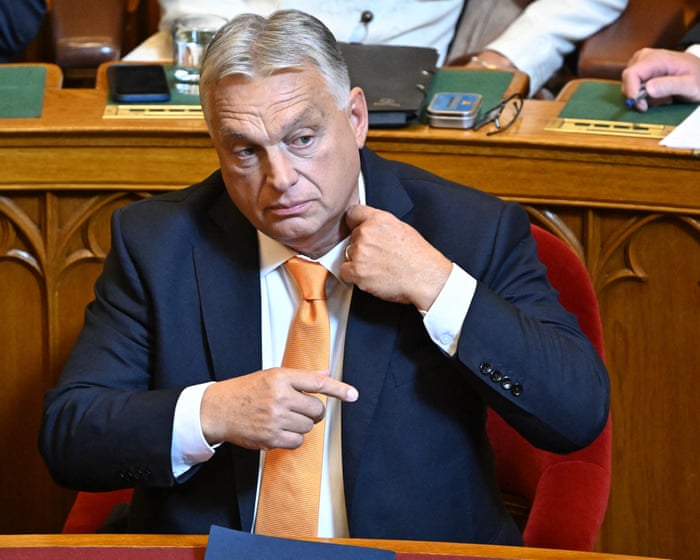
For 15 years, Viktor Orbán’s election wins seemed inevitable. Now, a credible challenger has emerged. Péter Magyar is no savior—in fact, he comes from Orbán’s own Fidesz party. But polls suggest his relatively new, pro-western Tisza movement could defeat Orbán in April’s elections.
This outcome would matter not only to Hungarians. After years of Orbán blocking EU policies, the future of the union and European democracy itself are on the line.
Hungary is what analysts call an “informational autocracy.” Rather than jailing critics, Orbán uses more subtle methods to silence opposition. Central to his 15-year rule is spreading populist stories that turn public opinion against “liberal elites”—many say at the cost of democracy and the rule of law, even beyond Europe.
Orbán’s model—weakening independent media, fueling culture wars, and undermining constitutional checks—may have inspired Donald Trump’s alleged attacks on U.S. democracy.
“I watched it happen in Hungary, now it’s happening here,” a former U.S. ambassador recently warned. A new documentary about Orbán is being called essential viewing for Americans due to the parallels with Trump.
This repackaged populist ideology is now boosting far-right parties across Europe in a powerful feedback loop. Allies like Andrej Babiš in the Czech Republic and Marine Le Pen in France are gaining ground, while Poland has elected a nationalist leader. In the UK, Nigel Farage’s Reform party is drawing attention. Many see Orbánism as the common thread.
The Central European University stands as a symbol of Hungary’s role as a testing ground for reversing democracy. Once a beacon of academic freedom, its Budapest campus now sits empty, forced out by a 2017 law targeting institutions linked to George Soros.
Last week, however, the lecture halls were busy again. Budapest’s progressive mayor, Gergely Karácsony—a persistent critic of Orbán—hosted a “democracy forum” and urged European politicians to counter the narratives that fuel populist support. Whether Hungarians are ready for non-populist solutions remains to be seen.
According to former politician and academic Zsuzsanna Szelényi, “Orbán fatigue” is widespread, even in his rural base. But the main concern for most people is the economy. Orbán is seen as increasingly out of touch—his conspiracy-driven, anti-EU rhetoric clashes with daily conversations about rising food prices, healthcare, and corruption.
While backlash against Orbán’s crony-run economy isn’t new, the energy of the opposition is. As one observer put it, “We’ve had a leadership crisis for 15 years, and that is over.””That is what gives Magyar a chance,” said Szelényi.
Katalin Cseh, an opposition MP whose party has decided not to contest the election in order to maximize the chances of unseating Orbán, agrees that Magyar’s centre-right policies are unclear. “But we share a strong belief in restoring democracy and ending systemic corruption,” she said.
Weakened, but don’t write him off
Orbán has won four consecutive elections by a landslide. Underestimating him would be foolish.
However, Krekó, director of the independent Political Capital thinktank, sees a crack in the “total confidence” that has long defined the regime.
Orbán’s attempt to ban Budapest Pride in June backfired. The march turned out to be the largest ever, partly thanks to Karácsony, with a massive display of rainbow flags and anti-government defiance.
Krekó also points to a Fidesz stumble over a “chilling, draconian” bill that would have blacklisted organizations with any foreign ties. The bill has been put on hold, possibly due to internal Fidesz concerns that it could backfire.
“This shows the government is weaker than before; the economic situation is dire; in opinion polls it is lagging behind Tisza; diplomatically within the EU its lack of allies has become quite desperate,” Krekó said.
Yet Orbán still commands a formidable arsenal. Expect a range of generous government-funded incentives, such as extra payments for pensioners and tax cuts for mothers with two or more children.
“In 2022, Fidesz spent 6% of Hungary’s GDP on transfers that people received before the elections. Many women and no one under 25 pays income tax anymore. We can expect more of the same this time,” Szelényi said.
Campaigns that demonize “enemies of the people” to discredit the opposition are another tried-and-tested method, Szelényi said. In the 2018 election, fears were stirred by linking refugees to terrorism. This time, it’s Ukrainians—Volodymyr Zelenskyy’s face appears as an enemy alongside Ursula von der Leyen on posters. Magyar is implausibly portrayed as an agent of Kyiv.
“Orbán’s methodology is all about narratives and storytelling and threats and emotions,” Szelényi said. “Interestingly, migration is no longer discussed. By 2019 it was a non-issue because, of course, in Hungary we need migrants.” State agencies have quietly recruited hundreds of thousands of migrants from the Philippines and Vietnam to fill job vacancies.
Game of drones
Orbán’s dizzying geopolitical maneuvers—maintaining friendships with Trump, the Kremlin, and China simultaneously—could either backfire or help him stay in power.
Hungary is a NATO member. Russian military provocations, such as the incursion of Russian fighter jets into Estonia’s airspace, could make Orbán’s closeness to Putin difficult to defend. Even Trump is now saying NATO should shoot down Russian aircraft.
Some Hungarians, including Karácsony, want an end to Orbán’s ambivalence toward Russia. “My great-grandparents were taken…Many Hungarians were taken away to forced labor camps by Russian soldiers and never returned alive. These stories are deeply engraved in the Hungarian soul,” he said.
Meanwhile, energy agreements continue to supply Hungarian consumers with cheap Russian oil and gas—at least for now.
Trump may be cautious about Hungary’s ties with China, but Orbán’s courtship of Beijing ensures investment for Hungary. In return, as Katalin Cseh noted, “China gains a Trojan horse within the European Union.”
### The Battle to Control the Narrative
In the cramped basement rooms of Budapest’s Terror House—where visitors are presented with the Fidesz-approved version of 20th-century Hungarian history—a video plays on a loop. It shows a younger, leaner Orbán delivering a speech about the evils of foreign invaders to rapturous applause.
Szelényi knew Orbán well in the 1990s when they were both part of Fidesz’s early leadership and the party leaned toward the liberal center. She left as he steered the party toward radicalization but recalls his reaction to losing the 2002 election. “That’s when he became very angry. He believed the loss was unjust and blamed liberal media elites. It became like a bug in his head.”
Now that his Christian nationalist ideals have made him a spiritual leader of a global “Maga” movement, would he accept an electoral defeat at home? Szelényi finds it hard to imagine. “Orbán does not want to lose. He has completely reorganized Fidesz’s campaign and placed himself at the forefront.”
New EU rules banning political advertising on social media take effect next month, but Fidesz is building its own online army to spread Orbán’s message through so-called digital “fighters clubs.” Reflecting on the struggle to control public opinion, Szelényi sighs. Whoever dominates the narrative, she says, will win.
“It will be a brutal campaign.”
To receive the full version of This Is Europe in your inbox every Wednesday, subscribe here.
Frequently Asked Questions
Of course Here is a list of FAQs about the challenge to Viktor Orbán designed to be clear and natural with direct answers
General Beginner Questions
1 Who is Viktor Orbán
Viktor Orbán is the Prime Minister of Hungary He has been the countrys dominant political figure for most of the period since 2010 leading the Fidesz party
2 What is the serious challenge hes facing
The challenge is a new political movement led by a former insider Péter Magyar He is attracting large crowds at rallies and criticizing Orbáns government for corruption and mismanagement which has resonated with many Hungarians
3 Who is Péter Magyar the challenger
Péter Magyar is a former government insider who was married to a former justice minister He has become a whistleblower using his insider knowledge to publicly accuse Orbáns system of corruption and cronyism
4 Why is this challenge considered more serious than previous ones
Previous opposition parties were often divided Magyars movement is gaining traction by uniting dissatisfied voters from both the left and the right creating a more centralized threat
Deeper Analysis How Questions
5 How has Orbán stayed in power for so long
He has consolidated power by rewriting the constitution gaining control over most media outlets to shape public opinion and changing electoral laws to favor his Fidesz party
6 What are Péter Magyars main accusations
He accuses the government of systemic corruption where Orbáns allies have grown wealthy from state contracts He also claims the government is more focused on maintaining power than serving the people
7 Can Orbán actually be toppled
Its a very difficult task While the movement shows significant public discontent Orbáns party still has a strong parliamentary majority To be toppled opponents would need to win a national election which is challenging under the current system
8 What role does the media play in this challenge
Orbáns government controls most mainstream media which often ignores or downplays the opposition Magyars movement has relied heavily on social media and independent news outlets to spread its message directly to people
Looking Ahead Practical Scenarios
9 What would need to happen for Orbán to lose power
A united opposition would need to win a parliamentary