Photographing the children’s cells was difficult for me because they feel both impersonal and intimate at the same time. Once you’re inside, you quickly feel trapped, going in circles with nowhere to go. Your eyes land on the few things that fill the space: a window, bars, a basic bed, a plank used as a desk, and sometimes a book or a few drawings.
Sometimes, because of staff shortages, a young person may spend up to 23 hours a day in their cell. This, along with limited access to education and sports, has been criticized by Europe’s Committee for the Prevention of Torture.
‘It’s worse at night’
The cell windows look directly onto the prison yard, where prisoners must spend one hour each day.
“We’re locked in our cells every day. Even though it can become our quiet corner, it’s hard. Because of how the buildings are laid out, the quiet corner is never really quiet. All the cells are connected, and this is a place that invites intrusion from outside. We’re constantly being called out. The windows face the yard, and we hear screaming all day long. It’s even worse at night.”
For all prisoners, minors and adults alike, the prison yard is a required one-hour stop each day. The cell windows overlook the yard, so it’s almost impossible not to be watched. Every movement, every word happens under the eyes of fellow prisoners and guards. They talked to me about boredom in prison and a distorted, artificial sense of time.
‘I’d rather go back to my cell’
“I feel like being here is making me stupid. I feel like an idiot. I forget things. I’ve lost what I knew. I don’t see anything new anymore. In my cell, my vision gets blurry from staring at the same walls, especially on weekends, which feel like three whole weeks. [There are no classes on weekends and almost no activities.] I’m losing it here. TV drives me crazy, so I draw to keep myself busy. It takes mental strength. Some people go crazy; they don’t care about anything anymore, as if they had nothing left to lose. I don’t like being around the other kids, the ones from the other units. I’d rather go back to my cell to avoid trouble.”
One boy talked about everything on his mind: his mother’s addiction, his fear of his hearing, heroin, and wanting to end it all.
Out in the courtyard, one boy told me about his love of nature. He wanted to photograph birds, sleep outdoors, and wash in rivers. It was the day before his court hearing. He just wanted to talk — sharing everything on his mind: his mother and her drug addiction, his fear of the hearing, his lawyer, heroin, the desire to end it all, whether to stay here or go elsewhere, the river.
In France, only three of the six juvenile detention centers are authorized to hold girls. They are housed in a separate unit but take part in the same activities and classes as the boys. In her cell, a girl talked to me about how hard it is to be in detention, and the paradox of feeling unsafe in a place built entirely around security and surveillance.
‘I hide my sadness to protect myself’
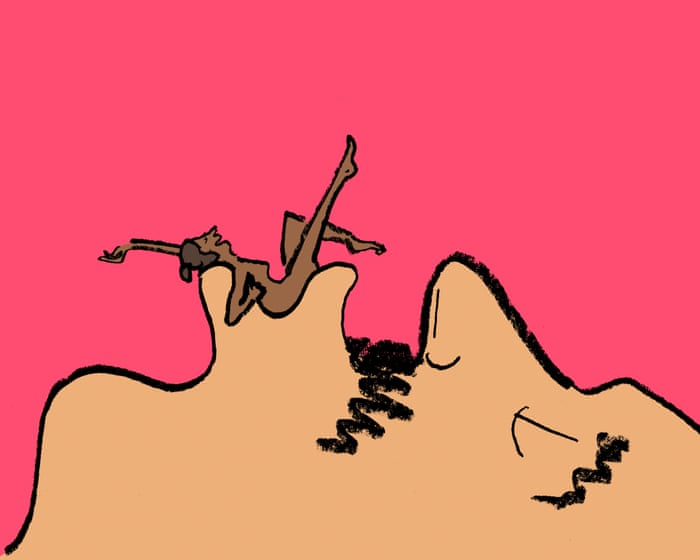
“I’m always self-conscious when I’m in bed, afraid someone might be watching me through the peephole. I no longer sleep in whatever position I want. Before, I didn’t like wearing pants to sleep, but here, I sleep with all my clothes on. I don’t know how else to protect my privacy. I don’t show that I’m sad, so I hide my sadness. I don’t talk about it with the other girls either, to protect myself. Girls are like that: the slightest argument, and the whole prison knows about it. Being a girl in detention isn’t easy. When we scream, we really scream.”
In France, only three of the six juvenile detention centers are authorized to hold girls.
I am able to photograph the disciplinary unit, where children are confined.Alone, when the cells are empty. Inside, there is a tiny concrete yard and almost completely bare cells, with no privacy. The windows are locked and cannot be opened. The narrow, grey yard exists only to allow the daily mandatory hour of outdoor exercise. On the walls, there are phrases written with faeces, as detainees are not allowed to have pens or personal belongings.
For minors, confinement in the disciplinary unit can last up to five days, or seven days in cases involving violence. Under the law, children are meant to be given activities and kept occupied, but that is not always respected and can result in situations of de facto isolation. A few days earlier, a young person had told me what it was like for them.
“You can’t come out of there normal”
“I got a saw to cut through my bars, and because of that, I’m going back to confinement. In the hole, you’re there, you stay there, that’s it. You lose it – you just have to talk to the wall; there’s nothing else to do. Honestly, some people want to kill themselves in there. It’s too horrible. They call it the disciplinary unit, but you can’t come out of there normal. It’s not possible. You can’t open the window. You can’t turn the light on or off yourself. You have to call the guard to do it. They tell us it’s a place to rest, but that’s not true. You end up thinking about doing even worse things after going through all this.”
View image in fullscreen
View image in fullscreen
In the disciplinary unit, there is a tiny concrete yard and almost completely bare cells, where words are written on the wall in faeces
I met one boy drawing lines in a notebook, crossing off the days, keeping track of time: a seemingly mundane act in prison. In his cell, he didn’t want to talk about it, but a few weeks later he spoke to me.
“I stopped counting the days”
“When I arrived, I took a notebook they gave me and drew lines to count the days I had left. I felt like doing it. And one day, I stopped. It wasn’t making the days go by any faster. The hardest part is staying in the cell all day. The days pass more slowly than the nights. There’s only a TV in the cell, and after a while I get tired of it, so I sleep.
View image in fullscreen
Some cross off the days to keep track of time
“I try not to overthink things. I’d rather go see the social worker, as it gets me out of the cell and makes me feel better. I don’t really care about meeting people, but the activities and classes help take my mind off things. [If I get out] I want to continue my studies and find an employer for a work-study programme. It might be this summer, or maybe next summer. Trials can take a long time. I think you can go crazy in prison, but I’m not worried about myself.”
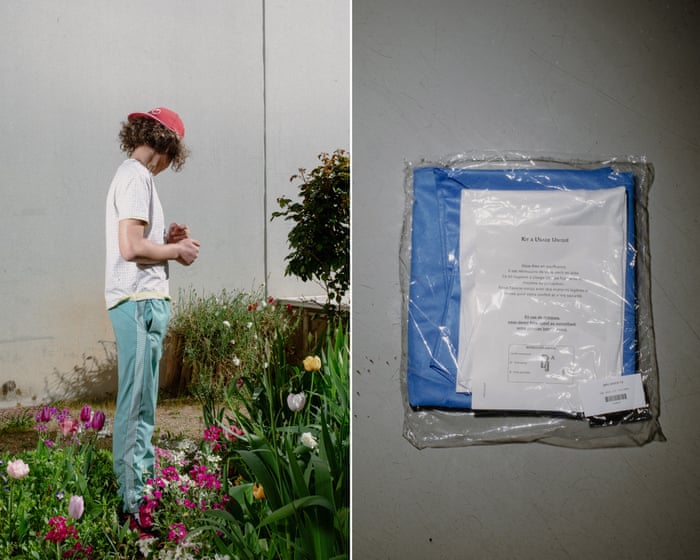
The reason why they are in prison is very often the same here: drug trafficking. I encounter a boy outside in the garden, standing among flowers the same colour as his sneakers and cap. He quickly tells me his story.
“I’m inventing a life for myself”
View image in fullscreen
One boy talks about drug dealing while he stands among flowers
“I started at 10am, in a small park, with a shoulder bag. Inside, there was a really big package: 50 baggies, droppers and heroin. It was a lot of money. I had clients, and at one point I saw a BAC [Anti-Criminal police] team. I still had the bag on me when they grabbed me.”
At times I feel his account is embellished, or perhaps more glamorous than the reality. I then think back to what an educator once told me about another young person here, who talked to her about his path in drug dealing. Knowing his judicial file, she told him, “But you weren’t really in it.” And he answered, “I know, I’m inventing a life for myself.”
In the gym, a young person is playing football. He looks very young; his gaze is tired. We talk briefly, and I learn that he is an unaccompanied migrant.
“It’s my first time in prison”
“I took anAn inflatable boat carrying 18 people. I reached Spain, then France, 10 months ago, and I’ve been here for almost three months now. This is my first time in prison. I wanted to play football, so I came to Europe for that, and for freedom too. The stadium isn’t far, so I can hear the games from my prison cell. I love Lionel Messi; he’s my role model, the best player in history. I’m going to be a player.”
An unaccompanied migrant playing football in the gym says he came to France after reaching Spain on an inflatable boat and has been in prison for three months.
In the prison’s shared space, another boy is getting his hair cut. It’s a special moment. The barber is well known on social media for the haircuts he gives in working-class neighborhoods. His styles are very different from those done by the guards, which are usually simpler and more uniform. The young people can choose whatever style they want. They trust him; he knows how to talk to them. One of the young people tells us about a 17-year-old friend of his who was murdered a few days after being released from prison. A settling of scores linked to drug trafficking.
“The guys were on scooters. They pulled up next to him, pulled out a ‘guitar’ [a rifle], and shot him. He had a huge debt, and they took him out a few days after he got out. They did crazy things to him — they kidnapped his older brother because he had changed the password to the Telegram account to keep his clients.”
A haircut is a special moment — the barber is well known on local social media.
When a risk of suicide is identified, the young person is placed in a special cell called an emergency protection cell. Then they’re given a “single-use kit” made of tearable clothing designed to prevent hanging. While suicides here can be counted on one hand, there are more attempts. And then there are those who don’t appear in any statistics, because they died some time after their release, outside the prison system. A member of the prison’s educational and medical team confided how difficult it is to face such situations.
A “single-use kit” of tear-resistant clothing designed to prevent hanging is given to young prisoners when a risk of suicide is identified.
“It’s the suicides that hurt me the most. One boy killed himself here, a week and a half before his release. It destroyed me. Another girl had been released and went to a specialized hospital unit, where she took her own life a few weeks later. We get training on ‘identifying suicidal crises,’ but with little Jonathan, we never would have suspected it. To kill yourself just days before your release. These are moments we live through here, pains. But afterward, what do we do with them? It’s another death that will be forgotten.”
Frequently Asked Questions
Here is a list of frequently asked questions about the topic I sleep fully dressed to protect my privacy a look inside a childrens prison in France
Beginner Questions
What does I sleep fully dressed to protect my privacy mean
It means a child in detention sleeps in their clothes so staff or other kids cannot see their body It is a way to feel safe and keep some privacy
Why would a child in a French childrens prison sleep fully dressed
Because they are scared embarrassed or want to avoid being seen undressed It gives them a sense of control in a place where privacy is very limited
Is this a common thing in French childrens prisons
It is not officially reported as common but former detainees and advocates say some children do it Prisons for minors in France are called établissements pénitentiaires pour mineurs
What is a childrens prison in France called
It is called an établissement pénitentiaire pour mineurs These are special prisons for minors usually ages 13 to 18
Do children in French prisons have privacy
Very little They often share cells are watched by staff and have limited private space That is why some sleep fully dressed
Intermediate Questions
What are the benefits of sleeping fully dressed for these children
It can reduce fear of being seen or touched inappropriately It can also help them feel more in control and less vulnerable at night
What problems can come from sleeping fully dressed
It can be uncomfortable cause hygiene problems and make it harder to relax or sleep well Staff may also see it as a sign of distress
How do French prison rules treat privacy for minors
French law says minors in detention have a right to dignity and privacy but in practice overcrowding and staff shortages make this hard to guarantee
Can staff force a child to undress before bed
No Staff cannot force a child to undress unless there is a clear safety or medical reason Forcing a child to undress could violate their rights
What do experts say about this behavior
Experts say it is a coping strategy It shows the child does not feel safe It is a sign that the prison environment is failing to protect them