I sat on the stern bench, the sun warming me. The bright orange wheel turned gently on autopilot, keeping us on course for the Marquesas Islands. We were a week out of Panama, and the trip had been smooth so far. Everyone was settling into their routines and responsibilities as we worked together to sail 4,000 nautical miles. Then, the email from the Pacific Crossing network we were part of arrived.
Coronavirus had become a global pandemic – borders were closing fast. There was nowhere to land. I was on a 47-foot (14-meter) sailboat with my on-again, off-again boyfriend (the Captain), three strangers, and a dog. It was the safest place on Earth, and the most trapped I had ever been in my life.
What did this mean for us? How were we even going to get home? I was hearing from actor friends back in Los Angeles that restaurants were closed, auditions had stopped, and the only place people could go was the grocery store.
At least I had the Captain. But it was a strange situation I found myself in – stuck in the middle of the ocean with the boyfriend I had only recently gotten back together with. When I first arrived in Panama to join the sailing trip, he barely paid attention to me. We had a painfully awkward conversation where I made it clear I wasn’t going on a six-week journey with someone who didn’t seem to care if I was there or not. He immediately changed his behavior, but we had no idea what we were about to face out there in the middle of the ocean. And I didn’t understand what I was already starting to feel between us.
I had first met the Captain five years earlier. He lived across the street from me in Austin, Texas, and would sit on his front porch smoking Marlboro Silvers. One day, I walked over and introduced myself, and we became inseparable from that moment on. He was soon heading to California for work and knew I wanted to move there someday to fully pursue my acting career. He invited me on an epic road trip. We got in his Tesla the next day, sightseeing our way across the vast American West. He was much older than me, bald and wrinkled, and had knowledge and experience I admired. By the time we got home, I realized I had fallen for him.
My attraction to the Captain caught me off guard. He had lived an adventurous life, in multiple countries, running companies and having a family, though he was now divorced. He was so capable, and anything seemed possible with him. I was full of dreams but had no real idea how to make them happen, or any life experience to give me the confidence to take a big leap. One by one, the Captain addressed my every concern as he helped me find a way around the obstacles I thought were in my way.
But there were some red flags – our age and values among them – and I didn’t think we were right for each other long-term. Besides, I didn’t want any distraction before moving to LA, so I ended things. He didn’t make it easy. He started bombarding me with constant texts about how much I had hurt him, how we were meant to be together, and how mean it was that I didn’t think he was good enough for me. I tried my best to reassure and reason with him, and he would say anything to keep me engaged. I soon moved to LA with everything that could fit in my Honda Civic and threw myself into pursuing my acting dreams. I missed the Captain dearly, but I tried to stay strong and focused, even when he moved to California for work soon after I did.
But everything was about to change, and that strength and focus I was holding onto would soon slip away. Two months after moving to LA, a producer took me to dinner, pretending to make a job offer. He ended up drugging, raping, and strangling me. The next morning, I woke up naked, in shock. I woke him and demanded he let me go. He unlocked the deadbolt, and I escaped into the sunrise. I spent six grueling hours at the police station being interrogated, photographed, drug-tested, and calling my rapist on a recorded line to try to get a confession.I felt a wave of guilt.
One day, I got a text from the Captain: “I’ll be in LA over Christmas. Do you want to see me?” I felt so alone after everything I’d been through. I couldn’t stay strong anymore. I called him and told him I wanted to see him. He held me while I cried and told him everything. As I started the hard journey of healing, the Captain stayed by my side. He comforted me when I was sad and listened when I poured out my broken heart. He knew when to speak and when to just sit with me in the pain. But I still didn’t think he was the right person for me. Those red flags were still there. So when he sold his company, bought a sailboat, and left to sail the Caribbean, we drifted apart.
With him out of the country, my main focus was healing. I went to therapy and took yoga classes that helped me work through sexual trauma. Then one day, I got another text from the Captain: “I’ll be in LA over Christmas. Do you want to see me?” I realized I did, and quickly said yes. Before I knew it, we were on a whirlwind 10-day trip through four states, and he was back in my heart. Right on cue, the world felt big and full of possibility again. I craved adventure, and being with the Captain always brought that. At the end of the trip, he dropped me off at the airport and invited me to join him on a sailing adventure on his boat, Alkemi, about a quarter of the way around the world. I worried about missing auditions, but I told him I’d think about it.
After a lot of thought, I said yes. The Captain was thrilled and offered to buy me a filmmaking camera so I could shoot a documentary about the journey. On March 3, 2020, I stepped onto the boat with my Black Magic 6K camera. People asked what my documentary was about, and I had no idea. But I picked up the camera and started filming and doing interviews. When we got the email about the coronavirus spreading around the world, I finally had my story. We weren’t stuck at home—we were stuck on a boat. But we had chosen this, unlike people back home who found themselves in an unexpected quarantine.
We started getting updates about the rules for landing in the Marquesas. At first, they said our time at sea would count as quarantine, and we could go ashore when we arrived. Then the rules changed—we could go ashore, but only after a 14-day quarantine on the boat. Then we were told we couldn’t go ashore at all. So I couldn’t visit any of the places I had marked in the Cruiser’s Guide to the Marquesas. The rules changed every day. But one of our crew was calm and said, “Right now, we have no problems.”
We had sunshine, wind, plenty of food and water, and our health. It was true. Panama had closed its borders to new arrivals, so going back wasn’t an option. We had no choice but to keep heading west across the Pacific. We spread out navigational charts in the salon, looking for any islands that might still accept foreign visitors. We even thought about going to an uninhabited island to wait things out for a few weeks, hoping the craziness would pass. In the end, the Captain decided to land in the Marquesas, hoping at least to get groceries and fuel.
When we anchored in Nuka Hiva Bay after 26 days at sea, we were greeted by a ghost town. Even though other boats were anchored in the bay, hardly anyone was on deck. No dinghies were moving around, and no one was allowed to swim off their boats. Everyone was closely watched by the gendarmerie, who strictly enforced the rules. We could see the land and even smell it, but we were forced to stay on the boat. When we arrived, they told us we could refuel and restock supplies, but then we had to leave or risk trouble.Heavy fines or having our boat impounded were real risks. It was starting to look like Hawaii was the best option for the Captain and me, since we’re US citizens. But our European crew wanted to go to Tahiti. We put out a call to the other boats anchored in the bay, asking if anyone was headed that way and had room for the three of them. A boat answered right away that they did, but said they were leaving in 45 minutes. A mad scramble followed as the crew packed their things and all the food left on our boat, then sailed off to Tahiti. We restocked supplies and headed out—just the Captain, the sea dog, and me.
Everything had changed. Now, with just the two of us, we had to keep a constant watch. He would sleep while I kept watch for four or five hours, then I would sleep while he watched. We had to scan the horizon every ten minutes, looking for other boats or shipping containers. With the crew gone, I was now responsible for two meals a day. The Captain took care of maintenance, weather reports, and navigation. I had to step up and pull my weight, instead of standing back and watching the crew handle the sailing. It was nerve-racking with just two people. I wasn’t sure I could make it to land if something happened to the Captain. He showed me everything I would need to know about the boat, just in case. A sense of anxiety hung over us.
One night after dinner, he was reading an email and exclaimed, “Holy Mackerel!” I popped my head up and asked what was going on. He told me there was a fleet of 20 fishing boats ahead, with steel cables stretching five miles long from boat to boat. If we hit one of those cables, it would sink us. The Captain came downstairs and started pressing buttons at the navigation station. I finished washing the dinner dishes, praying for our safety as I waited for the right time to talk to him. Finally, he got up, and I asked, “What are we going to do?” His reply was casual. “We don’t have to do anything. I just changed our course a little, and we’ll be fine.” I was relieved we were safe, but angry that he hadn’t told me that. It was starting to feel like he didn’t care about my feelings. I was left to figure everything out on my own.
Our next challenge came when we reached five to six degrees north of the equator, at a place called the ITCZ, or Intertropical Convergence Zone, which is known for its intense, stormy weather. The squalls raged, with lightning rods overhead, high winds, and pouring rain. One lasted 18 hours. At one point, Alkemi was heeled over hard at a 45-degree angle. I looked out the galley windows, which were underwater. The Captain told me that our life raft, strapped to the side of the boat, was also fully submerged. He was terrified during the worst of the storms, sweating bullets and worrying about all the things that could go wrong and leave us fighting for our lives. I had an unexplainable peace, though it was exhausting, and we were very happy to make it into calmer seas.
But those calmer seas were not to be found in our relationship, as my trust in him started to fall apart. One week into our passage, I found out he had enjoyed a passionate time with another woman aboard the boat before I arrived. I stumbled across some pictures I don’t think he meant for me to see. Pictures of them together, him smiling with pride. Pictures of her barely clothed, laid out seductively across his bed… our bed. Did the Captain think she was hotter than me? I suddenly felt completely insecure in my own body, wondering if he even thought I was beautiful or desired me.I was completely thrown off and tried to talk to him about it, but he wouldn’t. Soon, we barely spoke unless we had to for shift changes. I’d tell him how many knots we were going as I handed over, in case he wanted to adjust the sails. He’d just grunt a thanks without looking at me. His avoidance was tearing me apart. I wanted to leave, but I couldn’t. I was trapped on this floating prison, and we still had over 1,000 miles to go to Hawaii.
When it became too much to handle alone, I crawled to the side of the boat to call my mom on the satellite phone. But the Captain, who had been ignoring me below, suddenly came up. I felt like a kidnap victim who’d escaped, only to run into her captor around the corner.
He told me it wasn’t safe to be out there without a lifejacket. I went back to the cockpit, put one on, then crawled out again to make the call. I’m not sure what my mom could hear through my sobs and the five-second delay as my words traveled to space and back to her. But I poured my heart out about my jealousy and mistrust. She told me to forgive him, be kind, and sort everything out once we were safely on land. I’d already tried talking to him, but I’d been confrontational. So I decided to soften my approach.
I went below and asked if we could talk. I told him how his meeting with that woman made me feel insecure, like maybe he wanted someone like her instead of me. He pulled me close and said he didn’t want to be with her—he was glad when she left the boat. He told me he wanted to be with me: “Angela, stay with me, and one day you’ll trust me like I trust you.” I wasn’t sure that was true, but it was all I had to hold onto. At least he was talking to me again. We went up top, and he made gin and tonics. I was learning that on a small boat with just one other person, forgiveness is key to survival.
A few days later, we reached the halfway point to Hawaii. We decided to celebrate: high tea on the high seas. We dressed up in our fanciest clothes. I made chilled mint tea, cucumber sandwiches, and found some cookies in the cabinet. It was a nice break from the stress of the ocean.
View image in fullscreen
A selfie taken during one of the many night watches. Photograph: Courtesy of Angela Harger Thompson
The night watches on that trip to Hawaii were my favorite. While the Captain slept below, I was alone with the stars—I’d never seen so many. Toward the end, I had to sleep during my watch, setting an alarm every 10 minutes to look out. There was no other way; I was so exhausted. But we were almost there. I was getting more capable, resilient, and strong with every mile.
When we finally arrived in Hawaii, they told us we had to quarantine on our boat for 14 days, even though we’d been at sea for 49 days. We could walk around the yacht club, but we couldn’t leave its gates. A welcome party had been arranged, and other sailors gathered on the dock to greet us. There were so many new faces—it felt strange after only seeing the Captain for 16 days. I just wanted to celebrate what we’d done, but every time I stood next to him or reached for his hand, he walked away to talk to someone else. I was crushed and went back on the boat. When I tried to talk to him about it, he screamed that he “didn’t want to see my face” and slammed a door in it.
The next morning, government officers came on our boat. They threw away two black trash bags full of our meat, dairy, fruit, and vegetables, leaving us with only canned food. I couldn’t believe they were taking all our food but still making us stay on the boat for two weeks. When customs and immigration officers arrived toWhen we checked back into the country, the Captain went up on deck to handle the paperwork. I turned to the agriculture officers and asked, “Would it be possible for me to quarantine somewhere else?” I explained that I wasn’t in any physical danger, but we’d had a big fight the night before, and spending two weeks quarantining together would be really awkward. They didn’t know what to say, and I dropped it when the Captain came back below. After they left, I asked him where he told the officers I’d be staying. “Here on the boat,” he said. He admitted we’d both said things we regretted the night before, but he wanted me there with him. I wasn’t convinced, but I didn’t have any other choice.
When I needed to get off the boat to clear my head, I’d go to the yacht club’s bathroom for a hot shower—something I’d really missed while at sea. The warm water rushing over me made me feel the boat’s rocking all over again, what the French call “mal de débarquement.” I couldn’t convince my body that I was safely on land. Honestly, I wasn’t sure how safe I really was. When quarantine ended, we decided to leave the boat and rent an Airbnb across the island to ride out the pandemic. The Captain told me to leave my passport on the boat. When he wasn’t looking, I grabbed it and put it in my bag.
As we settled into our new home in Hawaii, the relationship started to completely fall apart. We began fighting about everything happening around us: Covid, the presidential elections, the protests breaking out across America. The world felt broken, and so did we. He embraced the pandemic restrictions as necessary and right, while I resisted them, questioning their consistency, the logic behind them, and where the lines were drawn and why. Inside the pressure cooker we were in, our views of the world started to drift far apart.
The breakup happened one day after a fight about a mask. He didn’t like that I’d refused to wear one outdoors at Pearl Harbor. We had traveled 6,400 nautical miles, and he didn’t want to be with me anymore because of this physical symbol of our opposing beliefs on our faces.
I left Hawaii, but the cruel emails and texts followed me to the mainland. The Captain told me he wanted to “squash me like a bug” and started a relentless campaign to do so. He sent me vicious messages about my appearance and character, and even hired a lawyer to send me a letter claiming ownership of the documentary, saying I had no rights to the film. To taunt and hurt me, he emailed to say he’d changed its title to “Worst Tits Ever.” I was shocked—and determined not to let him steal my creative baby. After a very expensive legal dispute, he backed off. His mask had completely slipped, and finally, all the pain and conflict I’d experienced at sea and in Hawaii started to make sense. I would never be tempted to go back to him again.
With LA shut down, my old way of life was gone. Shaken by the trauma of the relationship, I temporarily moved back to Texas to stay in my parents’ spare room. My dad got a severe case of Covid, and his oxygen levels dropped to the low 80s. He needed constant monitoring, so I took the midnight to 5 a.m. shift. My night watches during the passage had prepared me for this: just like I had to look out every 10 minutes to make sure there were no obstacles ahead, I now had to keep an eye on my dad’s oxygen levels. Thank God he recovered.
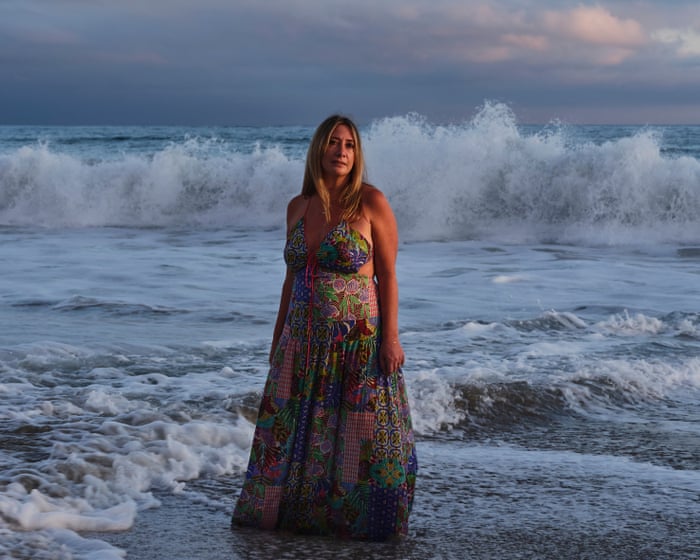
I went to sea expecting an adventure, but then everywhere locked down around me, my entire world fell apart, and the only way home was to keep my hands on the wheel. I eventually returned to California and stepped into the Pacific once more. I had missed the ocean and came to greet her. The water quickly swirled around my ankles, as if to say, “Hello, old friend. I have missed you, too.””Worst Tits Ever: A Raw Memoir of Survival, Humor, and Reinvention” by Angela Harger Thompson is published by Era. It’s available as an audiobook and on Kindle.
Frequently Asked Questions
Here is a list of FAQs based on the scenario you described covering the context of the journey the danger and the psychology behind it
Basic Questions
1 What is this watery prison story about
Its about someone who agreed to sail across an ocean with an expartner but the trip turned into a terrifying experience They felt trapped on the boat with no way to escape with over 1000 miles of open ocean ahead of them
2 Why would someone sail with an old flame if it was a nightmare
Often people underestimate how stressful a long ocean voyage can be They might think they can patch things up or that the adventure will be romantic But being stuck on a small boat with someone you have history with can amplify old conflicts and make small problems feel huge
3 What makes a long ocean journey feel like a prison
You cant just pull over and get out The boat is small the weather can be dangerous and youre reliant on the other person for safety If the relationship turns sour theres no escapeno phone signal no restaurant to go to nowhere to walk away to That lack of control is what makes it feel like a prison
4 How long would a 1000mile sail take
It depends on the boat and wind but a typical sailboat traveling at 56 knots would take roughly 710 days nonstop Thats a full week or more of being trapped together
Intermediate Questions
5 What specific things can go wrong on a trip like this
Common problems include
Mechanical failures The engine or autopilot breaks leaving you stuck
Weather Storms or calms that increase stress
Sleep deprivation Taking turns on watch means you never get a full nights sleep
Conflict Old arguments resurface and theres no way to cool off Small annoyances become huge fights
6 How do people end up in this situation
It usually starts with romantic optimism Someone suggests a bucket list trip They ignore red flags because they want the adventure to work out