Shocking. Unsettling. Unpredictable. Violent. For ten years, I’ve followed the twists and turns of Donald Trump’s America from the safe distance of a journalist. But on Saturday night, that darkness felt terrifyingly close.
Bang! Bang! What was that? Where was it coming from? At 8:36 p.m., panic broke out in the huge ballroom at the Washington Hilton. Men were running, and people were shouting, “Get down!” and “Stay down!”
I saw guests at the White House Correspondents’ Association (WHCA) annual dinner—men in tuxedos, women in dresses—diving under the round tables. Almost as if on cue, I did the same. It felt like a scene from a dozen Hollywood movies, but now it was happening to me, right here, right now.
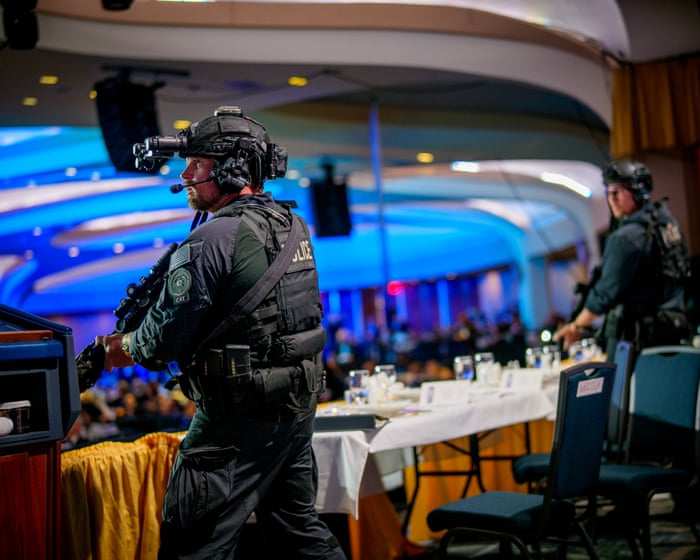
Secret Service agents rushed through the room, carrying weapons. An eerie silence fell. By the time I stood up to look at the stage, Donald and Melania Trump had already been rushed away. Instead, four officers in helmets with rifles stood guard in front of a backdrop showing the White House and the words: “Celebrating the First Amendment.”
Then a white-haired man in a tuxedo was led past our table, leaning on two men because he couldn’t walk on his own. Who was he? Had he been hurt in all this? We had no idea.
How did I feel? It’s a question reporters ask all the time. At that moment, I felt deep confusion and uncertainty. We were in the middle of the storm but had no idea how big it was or what it looked like.
This should have been the safest place in America. The Hilton was fortified after the attempted assassination of Ronald Reagan 45 years ago. I showed my admission ticket several times and went through an airport-style metal detector because Trump was attending the WHCA dinner for the first time as president.
In fact, that already made it a tense night: Would he attack the media on their own turf? Would reporters and other guests applaud him, stay quiet, or walk out in protest? The unsettling questions of the Trump era—about truth, normalization, resistance, surrender, and authoritarianism—hung in the air.
There were some cheers and applause as Trump entered the room to the familiar tune of “Hail to the Chief.” The president saluted throughout the entire national anthem. Weijia Jiang, president of the WHCA, told him, “It means a lot that you are here tonight.”
Guests were chatting among themselves, eating a spring pea and burrata salad and drinking wine when the disruption happened. We later found out that a person carrying guns and knives rushed a Secret Service checkpoint in a hotel lobby before being caught. One officer was shot but was protected by a bulletproof vest.
Minute by minute, a strange calm settled over the ballroom as it became clear the danger had passed. A metaphor for the new normal. Reporters called their editors or recorded videos on their phones. One person near the scene told me he heard five shots; another said he heard four. An embassy official said the sound of gunfire reminded him of his time in Afghanistan.
Jamie Raskin, a Democratic congressman from Maryland, told me the Secret Service had thrown him to the ground. “People were screaming and yelling,” he said. “People were terrified. They seem relieved now, but it definitely looks like the evening is over.”
Frank Luntz, a consultant and pollster who has long warned about poison spreading through politics, said, “It bothers me that people seem to think it’s okay to scream, shout, threaten, throw rocks and stones, and behave terribly. I hope you in the UK never have to go through this. You went through it during the IRA. Let’s hope it doesn’t come here tomorrow.”
For a while, it seemed like the dinner might go on. I imagined Trump seizing the moment, just as he did when he was bloodied after the assassination attempt.In Butler, Pennsylvania, Trump gave a defiant “the show must go on” performance that might have impressed even his critics in the audience. But protocol took over, and the dinner was postponed.
The president returned to the White House and held a briefing for reporters, many still dressed in their formal gala attire. He couldn’t resist using the incident to promote one of his favorite projects. “I didn’t want to say this, but this is exactly why we need all the features we’re planning for the White House. We need the ballroom.”
Fox News’ Peter Doocy asked why these incidents keep happening to Trump. The president referenced Abraham Lincoln and said, “I’ve studied assassinations, and I have to tell you, the most impactful people—those who do the most, who make the biggest difference—they’re the ones who get targeted.”
But that wasn’t the real story. Over the past ten years, we’ve seen a shooting at a congressional baseball practice, a deadly white supremacist march in Charlottesville, the January 6 insurrection at the US Capitol, and the killings of former Minnesota House Speaker Melissa Hortman and her husband, as well as right-wing activist Charlie Kirk. Political violence is widespread, and on Saturday, in a fancy Washington ballroom, Trump and the media got a glimpse of the edge of the abyss.
Frequently Asked Questions
Here are some frequently asked questions based on your perspective of covering Trump for a decade and the specific eerie feeling at the White House Correspondents Dinner
BeginnerLevel Questions
Q You say youve covered Trump for ten years What does that actually mean
A It means Ive been a reporter or journalist assigned to cover Donald Trump since he first ran for president in 2015 through his term in office and up to the present day Ive watched his rallies press conferences and legal battles up close
Q What is the White House Correspondents Dinner
A Its an annual formal dinner in Washington DC where journalists politicians and celebrities gather Its supposed to be a night of jokes and celebration of the First Amendment but it often has a tense political undercurrent
Q Why did the darkness feel dangerously close at the dinner this year
A The usual lighthearted mood felt heavy There was a sense that the political attacks on the press threats to democracy and the general atmosphere of division were no longer just background noisethey felt like they were right there in the room pressing in on us
Advanced Questions
Q How has covering Trump for ten years changed your view of the presss role
A Its made me realize that the press isnt just a neutral observer anymore Were often the direct target of political attacks and our reporting can feel like a lifeordeath struggle for factual reality The darkness at the dinner felt like a physical reminder that the line between covering the story and being part of it has blurred
Q What specifically made that Correspondents Dinner feel different from previous ones
A Previous dinners had tension but there was still a sense of a shared if grudging respect for the institution This year the jokes felt hollow and the silence between laughs was heavier It felt like everyone in the room knew that the social contract protecting journalists was fraying and the darkness was the realworld consequence of that frayinglike a storm cloud that was finally touching down
Q You mention the darkness Is that a metaphor for censorship or something else