There’s a Turkish saying: “Silivri soğuktur” — Silivri is cold. You’ll hear it from journalists, politicians, and activists after they say something critical of President Recep Tayyip Erdoğan’s government. It’s the kind of comment that could land them in the notorious prison complex in Silivri, where they might wait months before seeing a judge.
For decades, Silivri was known as a “sayfiye yeri” — a place for cottages, countryside, and summer homes. All around the complex are small family-run farms and villas with private pools, guarded by watchdogs. Construction of the Marmara Prison complex began in 2005 and took three years. It includes eight closed correctional facilities and an open prison where the court is located. It is the largest prison complex in Europe.
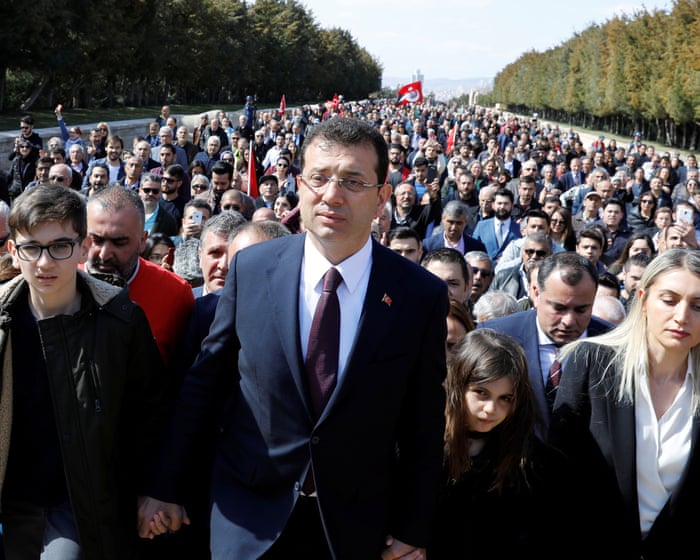
Ekrem İmamoğlu, the former mayor of Istanbul, is now Silivri’s most famous resident. He was detained on March 19, 2025, went on trial on March 9, 2026, and the case is expected to continue until early next year. No one I spoke to believes he will be acquitted.
İmamoğlu is Erdoğan’s biggest potential rival. In 2024, he won the Istanbul local elections comfortably, with just over 51% of the vote. On March 18, 2025, three weeks after İmamoğlu announced his candidacy for the 2028 presidential elections, Istanbul University revoked his college diploma, making him ineligible to run for political office in the country. The next morning, hundreds of police officers surrounded the mayoral residence. He has been accused of 142 offenses, including leading a criminal organization, accepting bribes, unlawfully obtaining personal data, aiding the outlawed Kurdistan Workers’ Party, racketeering, interfering with public tenders, and numerous other financial crimes that could result in 2,430 years in prison. In total, 104 other city officials were arrested. Yılmaz Tunç, Turkey’s justice minister at the time, denied that the government was pressuring the courts to prosecute İmamoğlu. Akın Gürlek, the prosecutor who indicted İmamoğlu, has since replaced Tunç as the new justice minister.
[View image in fullscreen]
To order the summer edition of the Long Read magazine, click here
İmamoğlu’s real crime, it seemed, was ending Erdoğan’s 25-year hold on Istanbul, which began when Erdoğan was elected its mayor in 1994. Since then, Istanbul had only seen mayors from his AKP party and its predecessors, the Welfare and Virtue parties. İmamoğlu’s victory in 2019 marked a change, handing the city over to the CHP, the main opposition party. He is a former football player who was the popular district mayor of Istanbul’s Beylikdüzü municipality, where he built his reputation as a hardworking progressive. His charisma allowed him to connect with both pious and secular voters. Many Istanbulites shorten his name to “İmam.” His initiatives to fight child malnutrition and improve public transportation and services strengthened his social democratic image. İmamoğlu’s win sparked street parties that lasted until the next morning.
İmamoğlu’s trial began on March 9 this year. More than 400 defendants are being tried in the case; 68 of them are currently detained. After reviewing the 3,739-page indictment, submitted by Istanbul’s lead prosecutor on November 11, 2025, the court said it aimed to finish the case in under 4,600 days — roughly 12 and a half years — though they now seem to be moving through it quickly. Furkan Karabay, a journalist covering the case who recently published a memoir about the 201 days he spent in Silivri prison for his reporting, told me he expected İmamoğlu to testify in mid-summer. The length of the trial will likely prevent İmamoğlu from running for office in the 2028 elections.
On the first day of the trial, several opposition lawmakers who are professional lawyers showed up in the courtroom to show support, along with activists and members of the press. By the time II visited on April 13, and the courtroom felt empty. Silivri is about 83 kilometers (52 miles) from my apartment in central Istanbul, and it takes two hours to get to the courthouse.
View image in fullscreen
The courthouse at Silivri prison, where the trial of Ekrem İmamoğlu is taking place, March 9, 2026. Photograph: Ümit Bektaş/Reuters
Gendarmerie officers, who work in smaller towns, had turned away reporters who didn’t have the “turquoise press cards” issued by Erdoğan’s communications directorate. But they let me in after checking the press card that Artforum magazine sends out every year from its Manhattan office to art critics. The young officer in the court was even kinder—he gave me a badge that let me into not just the press room but also the courtroom. I could sit there next to the families of İmamoğlu and other jailed defendants charged with being part of the “Ekrem İmamoğlu criminal organization.”
The atmosphere was calm, so I went to the press room in the morning. Bored gendarmerie officers there joked about the Galatasaray football match from the night before. Four sleepy court reporters—proceedings had gone on until 10 p.m. the previous evening—from three wire agencies and one national newspaper had brought meal boxes and an electric coffee pot to brew their first Turkish coffees of the day.
We watched on an 85-inch wall screen as lawyers and family members entered the courtroom. Reporters chatted about the dangers of Ozempic, a man who claimed to have lost 40 kilograms by “squeezing lemon into his Turkish coffee,” and the healthy habit of jumping rope. “Why do we come here every day when our papers don’t even use our reports?” one complained, yawning.
İmamoğlu’s lawyers entered the courtroom on the first floor. Then about a dozen defendants took their seats after climbing steps that led directly from the basement floor through a courtroom trapdoor. Relatives sitting in the stalls jumped up excitedly, waving and blowing kisses at their loved ones. The judge asked if anyone wanted to make a statement. İmamoğlu, sitting in the fifth row, stood up and held a microphone. It was 10:55 a.m. The chatty reporters fell silent.
“This process has turned into a form of torture,” İmamoğlu said in his opening statement. People who worked for him in the Istanbul municipality have been “forgotten inside the prison like stones cast into a well.” He called the case “unbelievable” and “shameful,” and voiced his concerns about the families of the detained, whom he described as “sıfır maaşlı”—people with zero income. Although he will be the last defendant to take the stand, he is allowed to make statements in court every day. When he was detained last year, İmamoğlu was offered his choice of lawyers. One member of his defense team, Mehmet Pehlivan, was then detained in June 2025, charged with money laundering.
The gendarmerie officers kept a close watch on those in court, making sure no one used their smartphone to film İmamoğlu. It’s illegal to record proceedings in Turkey’s courthouses; judges have prosecuted people who share images or sound clips from proceedings in the past. That means the only people who could see the next presidential candidate of Turkey’s main opposition party, aside from his jailers, were those sitting in the court and the press room.
The Turkish government has tried to stop İmamoğlu’s rise to national prominence since his first mayoral win in 2014 in the municipality of Beylikdüzü. İmamoğlu’s success led to his candidacy for Istanbul mayor in 2019, which he won. First, Turkey’s supreme election council annulled the election results and insisted on a rerun. İmamoğlu increased his vote by about 530,000. Then, in 2022, a court sentenced him to 31 months in prison for insulting officials from the supreme election council. (İmamoğlu appealed againstAfter İmamoğlu won the March 2024 mayoral elections in Istanbul by a comfortable 10% margin over his ruling-party opponent, the government’s panic grew. In just a few years, İmamoğlu had become a household name in national politics, and that election showed widespread dissatisfaction with Erdoğan’s party. İmamoğlu’s victory over Erdoğan’s chosen mayoral candidate allowed Istanbulites like me to imagine a country not run by the AKP. “Whoever wins Istanbul, wins Turkey,” Erdoğan used to say.
View image in fullscreen: Supporters of Ekrem İmamoğlu at a protest outside the courthouse in Silivri, 11 April 2025. Photograph: Tolga Bozoğlu/EPA
Ali Yaycıoğlu, an associate professor of Ottoman and Turkish history at Stanford University who has worked as İmamoğlu’s ghostwriter, landed in Istanbul on 18 March and was preparing to meet the mayor the next day. After he went to bed, he got a call from a journalist friend, who told him about the arrests and suggested he leave the country. “At that moment, we didn’t know what was happening; nothing was clear,” he told me. Yaycıoğlu called a friend in Berlin to say he was on his way to Germany and headed to the airport. İmamoğlu was arrested the next day.
Yaycıoğlu first met İmamoğlu in 2020, when İmamoğlu called him to say he admired his newspaper columns on Turkish history. “He wanted to take private lessons on history, left-wing ideas, and world affairs from me – he said he needed to improve himself.” They had 20 lessons, and the mayor kept a special notebook for them. “His mind was very open, very receptive. The things he learned stayed with him.”
Over time, the teacher-student relationship turned into a friendship, and Yaycıoğlu became part of İmamoğlu’s inner circle. That’s when the speechwriting job started. He was with İmamoğlu on the night of the March 2024 election and wrote his victory speech. The room was crowded and there was no table, so they sat and wrote it on the floor. When Yaycıoğlu returned to Istanbul last March, it was to draft İmamoğlu’s speech for his presidential candidacy. “But then there was talk of revoking his diploma. I knew something was going to happen.”
Yaycıoğlu, who hasn’t returned to Turkey since, started corresponding with İmamoğlu in prison. During this period, he wrote İmamoğlu’s op-eds for media outlets including the Financial Times. When I spoke to him, he was working on İmamoğlu’s defense from the Harvard University campus, as an adviser to his legal team. “I’m establishing the historical framework of the defense; it will be a very long text,” he said. He wouldn’t elaborate, except to say that it would be “a political defense.”
In September 2025, six months after his detention in the case for which he is currently being tried, İmamoğlu was convicted in the earlier case to two years and seven months in jail. The verdict resulted in what Turkish law calls “siyaset yasağı,” a ban on all future political activities. It may seem unrealistic, after that decision, to think İmamoğlu can still run for president in 2028, but he has appealed the verdict, and Yargıtay (the supreme court) can still overturn it in the future.
İmamoğlu had been a savvy social-media operator from the start of his career. This has allowed him to remain part of the daily lives of Istanbulites despite his physical disappearance from the public sphere. After his arrest, images of İmamoğlu – on billboards placed on highways and in subway stations, and on posters put up on the sides of construction sites and buildings – stayed in the city for a few weeks. But after massive protests against İmamoğlu’s arrest, the interior ministry ordered the city’s police department to remove posters and banners belonging to him.Referring to İmamoğlu and other detained opposition mayors, this attempt to remove the mayor from public view extended to social media as well. Between May 2025 and March 2026, İmamoğlu’s X account was “withheld” five times, forcing his team to find alternative handles.
In June 2025, the CHP announced it would use artificial intelligence and holograms in its presidential campaign for İmamoğlu. An AI-generated video message, released on YouTube in September 2025, shows İmamoğlu alongside an image of Atatürk, saying: “Neither pressures, nor obstacles, nor dark schemes will stop this march. Because we are right, because we are the people, because we are the republic!” In March, İmamoğlu told the court he hoped Turkey would have a female president; this statement sparked rumors that his wife, Dilek İmamoğlu, might run in his place in the 2028 elections.
In court, İmamoğlu looked well. Dressed in a dark suit and tie, he was surrounded by young gendarmerie officers who were looking at their phones.
Skip past newsletter promotion
Free newsletter | Weekly
Sign up to The Long Read
Lose yourself in a great story: from politics to psychology, food to technology, culture to crime
Preview latest
Enter your email
Sign up
After newsletter promotion
The previous week, he said, a prosecutor had told him: “If you don’t know your place, we’ll teach it to you.” He asked, rhetorically, who was behind this threat, and reminded the court that “the people are behind me.” There was applause from the audience.
View image in fullscreen
Turkey’s president, Recep Tayyip Erdoğan, giving a speech at the AKP’s 33rd consultation and assessment meeting, Sakarya, 27 June 2026. Photograph: Anadolu/Getty Images
The atmosphere in the courtroom has often been tense. On two occasions, the judge ordered the courtroom cleared and adjourned the case. On 9 March, when İmamoğlu wanted to greet those in the courtroom at the start of the hearing, the presiding judge switched off his microphone and instructed the gendarmerie to remove him from the courtroom. On 12 March, the judge tried to change the journalists’ seating arrangement in court after scolding them for asking İmamoğlu questions during a hearing. After reporters resisted, the judge ended the hearing early. In another hearing, İmamoğlu objected to being carried from his cell to the courtroom “like a ping pong ball.”
Today, the conflict between the defendants and the system judging them took the form of civilized disagreement.
İmamoğlu’s candidacy to be Turkey’s next president has inevitably made him the central figure in the hearings. But his private secretary, his security manager, and his chief of staff were all arrested alongside him last year, as were the deputy secretary general of Istanbul municipality and the head of the city’s water company. Every day, one defendant presents their defense in court, answers questions from prosecutors, and hopes to convince the judge to release them. Each defendant present in court is allowed to react to statements made during the proceedings.
After İmamoğlu made his statement and sat down, his campaign manager, Necati Özkan, took the stand. Özkan is one of the key figures in the case. He is charged with “membership in an organization established for the purpose of committing crimes,” which carries a potential sentence of up to six years in prison. He is also named in the investigation in connection with “facilitating bribery” and “illegally recording, providing, or obtaining personal data.” A self-described Obama fan (he has published a book called Obama’s Leadership Secrets), Özkan has often compared the CHP’s journey to that of famous heroes. In his 2019 book Kahramanın Yolculuğu: Yeni nesil siyasetin zaferi (The Hero’s Journey: The Triumph of New Generation Politics), he explains how he and İmamoğlu built their campaign inspired by figures such as Frodo.Baggins from The Lord of the Rings and Neo from The Matrix.
Dressed in a suit, like İmamoğlu, Özkan handed the judge a 243-page dossier detailing the financial transactions of his advertising business. He argued that he was a professional who had dedicated his life to his work, and that his financial dealings were normal for someone in his line of work. He asked to play a clip from the successful campaign video he had made for İmamoğlu. When the judge refused, he described the script in detail. The ad showed Istanbul’s natural and architectural beauty—from the Bosphorus and Hagia Sophia to the curved Camondo steps, built in 1880 by the Ottoman-Venetian Jewish banker Abraham Salomon Camondo—while a singer on the soundtrack sang: “This love is yours, two shores, seven hills / this strait, this bay, this city is yours, / the past is yours, the future is yours / a new life, a brand new beginning is yours / the decision is yours / Istanbul is yours.” The ad reminded voters that they weren’t passive bystanders or consumers, and that they could actively help run the city through democratic means. At the end, İmamoğlu appears and smiles silently. The campaign motto, “Her şey çok güzel olacak” (everything will be fine), now sounded sad.
Özkan was methodical in his defense, addressing each claim in detail and trying to convince the judge of his innocence. He didn’t raise his voice or show any anger. Only once did he express a deep sense of wariness. “They claim two times two equals purple,” he said. “If they said two times two equaled five, I could have tried to correct it, but how can I correct this?” The court recessed.
İmamoğlu’s case isn’t unusual: Turkish prosecutors have opened investigations against opposition-held municipalities across the country. Every week, there’s news of fresh arrests of CHP mayors at the district and city levels. When they are arrested, their positions are often filled by their deputies. Nuri Aslan, İmamoğlu’s former deputy, now runs Istanbul. In the city’s Esenyurt and Şişli districts, the government has appointed kayyıms (trustees) to replace detained CHP mayors. Ezgi Başaran, a scholar at Oxford University, calculated that 30 municipalities in Turkey, representing 28 million people, are run by politicians who were not elected by their citizens because of these arrests. Between the local elections in March 2024 and May 2026, 76 mayors from different parties, including 17 from the CHP, joined the AKP, allegedly to escape İmamoğlu’s fate. Court cases against the CHP have also targeted the party’s leadership. On 21 May, the Turkish court of appeals annulled the CHP’s November 2023 results in order to restore a politician who was hostile to İmamoğlu. On 24 May, riot police stormed the CHP’s headquarters in Ankara, using tear gas to break into the building and evict its ousted leadership.
Despite—or perhaps because of—the flood of cases against CHP politicians, public attention is fading. In 2025, 65% of Turks said they believed İmamoğlu’s arrest was “unfair,” but that number dropped to less than 50% this year. The Turkish lira, which collapsed after İmamoğlu’s arrest and required the central bank to spend $50 billion to support it, has somewhat stabilized. Maybe that’s why, although there is still widespread dissatisfaction with the government, it seems muted. Fatigue appears to have set in among opposition supporters.
İmamoğlu’s rise and fall resemble that of Erdoğan, who was himself elected Istanbul’s mayor in 1994 and placed in a cell just five years later as he was becoming increasingly popular. He was charged with “discriminating against people based on religion and race, and inciting kinship and enmity among them” for reciting a poem.The four months Erdoğan spent in Pınarhisar prison, not far from Silivri, only made him more popular. Supporters lined up outside the prison to show their backing. When he was released in July 1999, he was welcomed as a future national leader, and became prime minister less than four years later. But İmamoğlu has already spent over a year in pre-trial detention. It’s unlikely he’ll walk out of Silivri as long as Erdoğan remains in power.
Welcome to demokrasi: how Erdogan got more popular than ever | Christopher de Bellaigue
Read more
After the court recessed, I had lunch at the courthouse cafeteria, where lawyers, journalists, and families of the imprisoned gathered. I bought a muffin whose packaging said it was homemade by the Marmara prisoners themselves. I asked a server, wearing the same white uniform as everyone else, if he was a convict. He told me he was, and that all the cooks and cleaners were too.
Outside the prison, the sun was shining; the fields were bright with vivid colors; huge windmills nearby spun powerfully as I headed home, thinking about İmamoğlu’s final words before the court recessed. “Good things are happening around us,” the former mayor said, addressing the journalists in court. He was referring to Viktor Orbán’s removal after 16 years as Hungary’s prime minister the day before. “Long live democracy, long live justice, long live the republic,” he shouted before disappearing through the courtroom’s trap door.
This piece first appeared in the Dial with the headline The Hologram Candidate
View image in fullscreen
The Long Read magazine summer edition: AI in the classroom, vending machines in the canteen, homeless people in the library, no one in the pub. Surprising stories from our strange new world in the new edition of the Long Read magazine. Buy your copy here. For readers in London, we will be holding a launch event with writers Tom Lamont, Kieran Morris, and Linda Rodriguez McRobbie at MagCulture, 270 St John Street, EC1V 4PE, on Thursday 16 July at 6.30pm. Listen to our podcasts here and sign up to the long read weekly email here.
Frequently Asked Questions
Here is a list of FAQs based on the article title and implied context about the trial of Ekrem mamolu a key rival to Turkish President Erdoan
BeginnerLevel Questions
1 What does the title This process has become a kind of torture mean
It means that the defendant and his supporters feel the legal case against him is not a fair trial but rather a drawnout painful and deliberate punishment designed to break his spirit and political career
2 Who is the rival of Erdoan being referred to
The rival is Ekrem mamolu the mayor of Istanbul He is a popular politician from the main opposition party and is seen as a potential presidential candidate against President Erdoan
3 What is the trial about
mamolu is on trial for insulting a public official The case stems from comments he made after his 2019 election victory where he called the officials who annulled the first election fools His defense says it was political criticism not a personal insult
4 What is the possible punishment if he is found guilty
He faces a potential prison sentence of up to 4 years and more importantly a political ban This would prevent him from holding public office including running for president
5 Why do people say this is a political trial
Critics argue that the charges are very minor and would normally be resolved with a fine or a warning They believe the harsh prosecution is a tool to remove a strong political opponent from the race before the next election
AdvancedLevel Questions
6 How does this trial fit into a larger pattern in Turkey
It is part of a pattern where the government uses the judiciary to crack down on dissent Other opposition figures journalists and activists have faced similar politically charged cases often based on vague laws like insulting the president or terrorism propaganda
7 What specific torture is the process referring to
The torture refers to the slow grinding nature of the legal system The case has dragged on for years with frequent hearings delaying mamolus ability to campaign The uncertainty itself is a weaponit hangs over his head making it hard to