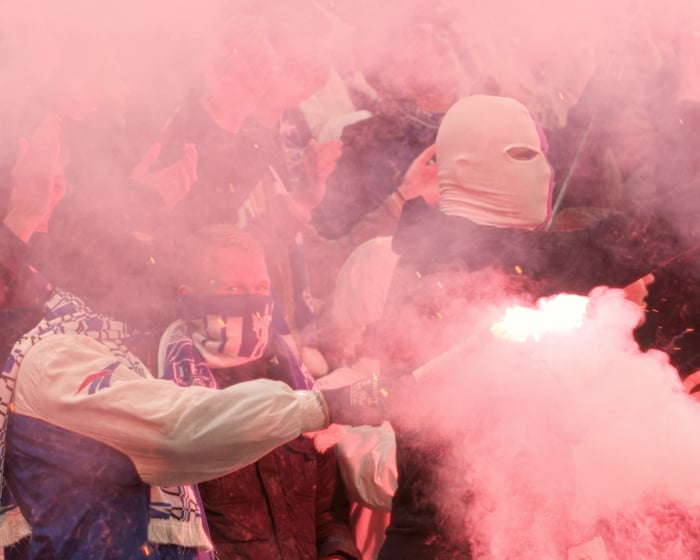
**"Ultras"** – i tifosi più accesi, noti per le loro incredibili coreografie negli stadi e per una lealtà quasi da gang – erano un tempo una sottocultura presente solo negli stadi italiani. Ma dalla fine degli anni Sessanta, questo movimento si è diffuso in tutte le gradinate del mondo, diventando un'ossessione culturale sempre più prominente.
Tra i libri sull'argomento ci sono il mio **Ultra** e **1312** di James Montague (i numeri stanno per ACAB, acronimo di "all cops are bastards"). Netflix non solo ha commissionato un film, **Ultras**, su una gang napoletana, ma anche tre serie più lunghe: **Puerta 7** (ambientata in Argentina), **Furioza** e **The Hooligan** (entrambe ambientate in Polonia).
Ora arriva il documentario **Ultras** di Ragnhild Ekner, un viaggio di 90 minuti attraverso Svezia, Indonesia, Polonia, Argentina, Inghilterra, Egitto e Marocco. Il suo film fa molta strada nell'esplorare le radici dell'ultra-mania. Molte delle inquadrature prolungate mostrano migliaia di persone che marciano, cantano e festeggiano insieme. In un primo voiceover, Ekner lo definisce "una rivolta contro la solitudine".
In molti modi, l'universo ultra offre esattamente ciò che manca alla società moderna: un senso di comunità in un tempo di isolamento, pericolo e adrenalina in un mondo che sembra stranamente incruento, mascolinità e forza all'antica in un'era di competenze trasversali, e appartenenza in un tempo di sradicamento. "È dove mi sento a casa", dice un ultra nel film di Ekner. "Dentro, siamo una famiglia", dice un altro, "e ci prendiamo cura l'uno dell'altro".
Gli ultras sono l'unico legame forte e appassionato con il terreno in cui il club è nato. Solo loro portano passione nell'esperienza calcistica moderna, igienizzata e asettica.
Alcuni potrebbero essere infastiditi da queste idee, ma molti – comprese le donne – non lo sono. Una ultra donna, descrivendo la sua **barra brava** (il termine sudamericano per una gang ultra), dice: "Non puoi entrare in gradinata con un anello, o con il rossetto, o con il trucco", come se quel divieto fosse liberatorio. Il film di Ekner fa un buon lavoro nello svelare le contraddizioni: ci sono gradinate dove le donne sono escluse (in Nord Africa) e altre (in Indonesia) dove giovani donne velate sono al centro della scena.
Il fascino degli ultras deriva, si presume, anche dal fatto che il calcio moderno stesso è così privo di radici. Le squadre ora hanno poco legame con la propria città o quartiere. Giocatori e proprietari vengono da paesi lontani. Le pubblicità sulle maglie sono in lingue straniere per i telespettatori all'estero. Gli ultras sono l'unico legame forte e appassionato con il terreno in cui il club è nato. Solo loro danno all'esperienza pulita e cinematografica del calcio moderno un senso di passione e persino di significato.
Un'altra parte del loro fascino è che sono fuorilegge e ribelli in un'era di conformismo e controllo. Gli ultras hanno giocato un ruolo chiave nella Primavera Araba in Egitto, e in tutto il movimento globale, affermano di difendere gli esclusi e i senza potere. "Se non puoi parlare", recita il loro slogan, "lo stadio parlerà per te".
Nella nostra epoca secolare, essere un ultra offre anche un modo per accedere a idee spirituali. È una religione per i non religiosi. Il vocabolario ultra – "fede", "presenza", "devozione" – è quasi identico al linguaggio religioso, e come in chiesa, la "congregazione" ultra spera di influenzare il destino attraverso lealtà e rituali.
Essere un ultra introduce persino quell'antica idea al centro di molte religioni. Un ultra sopravvissuto al massacro di Port Said del 2012 in Egitto (in cui morirono 72 tifosi dell'Al-Ahly, in parte come vendetta per il loro ruolo nella Primavera Araba) dice: "È stato allora che ho capito che ci si può sacrificare per una causa superiore".
Insieme alla finta religione, c'è anche un finto medievalismo. C'è un elemento di rievocazione storica in tutto ciò. Gli ultras giocano a "rubare la bandiera", scattando attraverso il campo per strappare e bruciare lo striscione di un gruppo rivale – quel "pezzo di stoffa dipinto a mano che vale più dell'oro". Secondo il loro codice, se la bandiera di un gruppo viene rubata, devono sciogliersi immediatamente, quindi "deve essere protetta a tutti i costi".
Questo include naturalmente la violenza. "Le sottoculture sono sempre state violente", dice un intervistato. "La violenza può essere estetica, verbale, o reale, fisica". Ma Ekner evita apertamente qualsiasi negatività, dicendo che il suo film "non è una recensione critica, è un tributo". Così facendo, potrebbe perdersi la ragione principale per cui gli ultras rimangono così affascinanti: i loro legami con la criminalità. Perché sotto tutta l'atmosfera da carnevale di fuochi d'artificio e immense coreografie (che usano 25 chilometri di filo e 150 litri di vernice), e dietro tutta la birra, gli spinelli e le risse, le gang ultras si sono spesso trasformate in organizzazioni criminali.
In Italia, alcuni capi ultra sono veri e propri mafiosi, che guadagnano cifre a cinque zeri ogni mese non solo dal bagarinaggio, merchandising, vendita di cibo e parcheggi, ma anche dal traffico di droga su larga scala. In tutta Europa, le gradinate degli stadi sono diventate focolai di sperimentazione politica, con gli ultras che alimentano l'ascesa dell'estrema destra.
Gli ultras sono incredibilmente contraddittori – sia caritatevoli che criminali, unificanti e divisivi, rivoluzionari e reazionari. È un movimento che riflette, come uno specchio deformante di un luna park, la società e lo sport in cui esiste. Ignorare queste contraddizioni significa perdersi la vera essenza dell'essere un ultra: si guadagna molto – appartenenza, radici e lealtà tribale – ma al costo di riportare indietro quei familiari aspetti negativi: bisogno di vergogna, capri espiatori, silenzio, forza bruta e disprezzo per la differenza e la diversità. Gli ultras ci mostrano non solo ciò che abbiamo perso lungo la strada, ma anche il prezzo per riaverlo indietro. Tobias Jones è l'autore di **Ultra: The Underworld of Italian Football**. Il documentario **Ultras** di Ragnhild Ekner è ora in programmazione in sale selezionate.
**Domande Frequenti**
Ecco un elenco di domande frequenti sull'ossessione culturale per gli ultras del calcio e la rivolta contro la solitudine.
**Domande di Base**
1. **Cos'è esattamente un ultra?**
Un ultra è un tifoso di calcio estremamente dedicato e organizzato. A differenza di un semplice sostenitore, gli ultras coreografano attivamente le loro esibizioni e hanno spesso un'identità forte, a volte politica, legata al loro gruppo.
2. **Perché si dice che questa è una rivolta contro la solitudine?**
Molti gruppi ultras funzionano come una seconda famiglia. In un mondo in cui le persone si sentono più isolate, unirsi a un gruppo con una passione condivisa, forti rituali e un nemico chiaro crea un immediato senso di appartenenza e comunità.
3. **Riguarda solo il calcio?**
No. Sebbene il calcio sia il palcoscenico, l'ossessione va più in profondità. Riguarda l'identità, la ribellione contro la vita moderna igienizzata e la ricerca di una tribù. L'ossessione culturale si riferisce a come artisti, registi e scrittori sono ora affascinati da questo stile di vita.
4. **Gli ultras sono solo teppisti?**
No. Sebbene ci possa essere sovrapposizione, i teppisti (hooligans) si concentrano sulla rissa. Gli ultras si concentrano sull'atmosfera e sul sostegno. La maggior parte degli ultras non è violenta, ma l'intensa passione a volte può portare a scontri, specialmente contro la polizia o gruppi rivali.
5. **Come si fa a unirsi a un gruppo ultra?**
Non è facile. Di solito devi dimostrare la tua lealtà partecipando a ogni partita, acquistando il merchandising del gruppo e partecipando alle coreografie. È un impegno serio, non un hobby occasionale.
**Domande Avanzate**
6. **Come fanno gli ultras a creare quell'effetto antidoto alla solitudine?**
Attraverso la solidarietà ritualistica. La sincronia dei cori, dei salti e dell'agitazione delle bandiere innesca un'euforia collettiva. Per poche ore, l'individuo scompare nella massa, fornendo una potente fuga dall'isolamento personale.
7. **Perché gli ultras sono diventati un'ossessione culturale per i non tifosi?**
Perché rappresentano l'autenticità. In un mondo di social media curati ed eventi aziendali, gli ultras sono grezzi, rumorosi e orgogliosamente tribali. Documentari e libri ne sono ossessionati perché offrono uno scorcio di una forma primordiale di comunità che la società moderna ha perso.
8. **Quali sono i problemi comuni all'interno della cultura ultra?**
I problemi includono violenza, legami con la criminalità organizzata, estremismo politico (spesso di estrema destra), misoginia e una cultura del silenzio che protegge i membri che commettono reati. La lealtà assoluta può portare a una mentalità "noi contro loro" che soffoca il dissenso interno e la diversità.