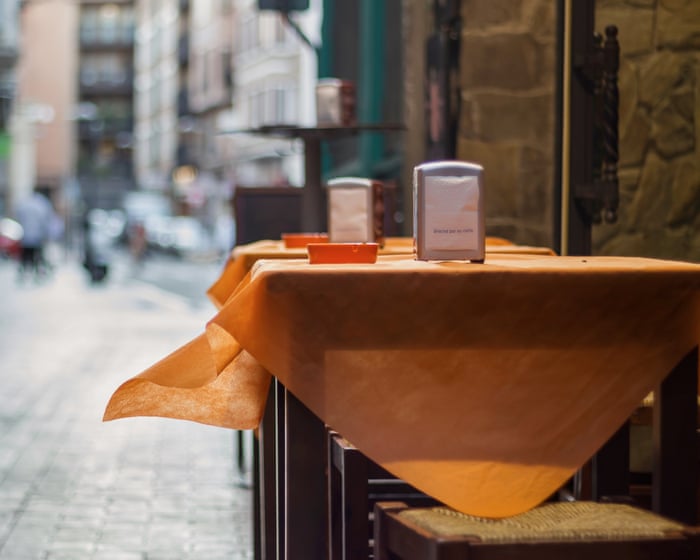
If you’ve ever eaten at a bar, café, or restaurant in Spain and grabbed a napkin from one of those small metal dispensers, you’ll know the most curious thing about those paper-thin servilletas: they’re completely useless.
Don’t bother trying to wipe up a spill with them—they’re more likely to form a waterproof barrier than soak anything up. And never, ever blow your nose in one when you have a cold or hay fever; you’ll just end up spreading the mess onto your hands. Their papery texture was originally meant to keep your hands clean while picking up greasy snacks, but somehow that design has stuck, even though their main use now is wiping your fingers and lips. For that, they’re pretty ineffective—you’ll go through half a dozen for every single croqueta.
Yet these humble napkins are a deeply loved part of Spanish culture. Piling crumpled servilletas on your plate after using them might seem logical, but in some places, customers just toss them on the floor, along with olive pits and other snack debris. A floor covered in servilletas is a sign you’ve found a humble, authentic bar. “The servilletas are made of paper,” reads a sign on the wall at Bar Alonso in Madrid’s Prosperidad neighborhood, my go-to spot for callos, “and just like prawn shells, they’re meant to be thrown on the floor.” (But don’t assume everyone loves this custom—some places have campaigned against it, and it’s becoming less common.)
The servilletas’ useless papery texture has one big advantage: they’re easy to print on with text and black-and-white images. Even the standard servilleta, which thanks you with “gracias por su visita,” can be a source of childish fun. Back in my university days, most students knew how to fold them so the text read “gracias puta” instead.
The real joy, though, comes from bars and restaurants that pay a little extra for custom servilletas. Madrid-based photographer Felipe Hernandez has been collecting these small gastronomic souvenirs from down-to-earth restaurants across Spain since 2014. By 2017, he had over 150, and he started photographing them on a white marble slab in his studio, posting them to a dedicated Instagram account. Last month, he released the book Servilletas, featuring 600 of the more than 1,000 napkins in his collection.
Some use the Post-It-sized space to boast about their cooking: “They say it’s the best roasted lamb and suckling pig in Madrid,” says Restaurante El Senador. Others match an illustration with their name, like the doves on the napkins at Marisquería La Paloma. My favorites are the servilletas at Bilbao’s Melilla y Fez, which show their famous pintxos morunos (grilled lamb skewers). Cleaning your greasy fingers with a picture of the dish that made them messy in the first place is a lovely touch.
These small visual quirks feel even more special when you consider how Spain’s food scene is becoming more uniform. “This book captures the resistance of our old-school bars against this trend, and the importance of supporting them as our city centers lose their identities,” Hernandez tells me.
“Since the graphic often relates to the food a place serves, you can even see cultural and regional differences reflected in the serviettes,” he says. Newer restaurants are less likely toSome of the older bars he visited have since stopped using personalized napkins to save money.
View image in fullscreen
‘This book captures the resistance of our old-school bars.’ Photograph: Felipe Hernandez
Like many local businesses in Spanish cities, some of the places featured in Hernandez’s book have struggled with the effects of gentrification and tourism. Mesón Planeta, a restaurant in Madrid whose napkin once advertised its Galician meats and octopus, is one example. It closed down four years ago after failing to keep up with rising rents. For former regulars, this book is one of the few physical reminders of the place.
Even though a particular bar may disappear, the napkin lives on. Its stubborn uselessness is a joyful rebellion against the constant “optimization” that defines our times. As Hernandez writes in the introduction to his book, what makes the napkin so appealing is “the beauty of the useless.”
Servilletas: Spanish Napkins is published by Ojos de Buey.
Frequently Asked Questions
Here is a list of FAQs about Spains superthin artful napkins covering beginner to advanced questions
Beginner Questions
Q What exactly is the beauty of the useless in this context
A Its a playful way to describe Spains ultrathin disposable napkins They are so flimsy theyre almost useless for cleaning up but they are often printed with beautiful collectible designsmaking them art treasures you throw away
Q Why are Spanish napkins so thin
A Its a cultural tradition They are designed to be used once and tossed not to be reusable or super absorbent The thinness actually allows for crisp detailed printing on the paper
Q Are these napkins actually good for anything
A Theyre great for a quick dab at the corner of your mouth during a tapas meal but dont expect them to soak up a spill Their real purpose is aestheticthey add a touch of art to the dining experience
Q Where can I find these napkins
A Almost exclusively in bars and restaurants in Spain especially in the south They are given out with drinks or small plates
Q Can I buy them to take home
A Yes Some bars sell them and you can find vintage or new packs in souvenir shops art fairs or online marketplaces like Etsy
Advanced Collector Questions
Q What makes these napkins collectible art
A Many are designed by local artists or illustrators They feature unique limitededition printsfrom flamenco dancers and bullfighters to surrealist designs and modern abstract art Some series become highly sought after by collectors
Q How are the designs printed on such thin paper
A They use a specialized flexographic or offset printing process that applies ink precisely without tearing the delicate tissue The thinness actually helps the colors pop and prevents bleeding
Q What are the biggest problems with using them
A They disintegrate quickly if wet Theyre terrible for wiping greasy fingers or cleaning up a mess You basically get one gentle dab before the napkin falls apart