For Andrés Sánchez Barea in Spain, fear struck when water began gushing from electrical outlets. For Nelson Duarte in Portugal, it was the feeling of helplessness as fierce winds toppled trees and ripped tiles from roofs. For Amal Essuide in Morocco, the grim reality set in when a body was pulled onto a boat in the flooded medina.
Each of these terrifying moments is part of the devastation caused by an atmospheric barrage that has unleashed storm after storm on the western Mediterranean in recent weeks. Scientists aren’t sure if climate change helped trigger the onslaught, but research indicates it made the storms more severe.
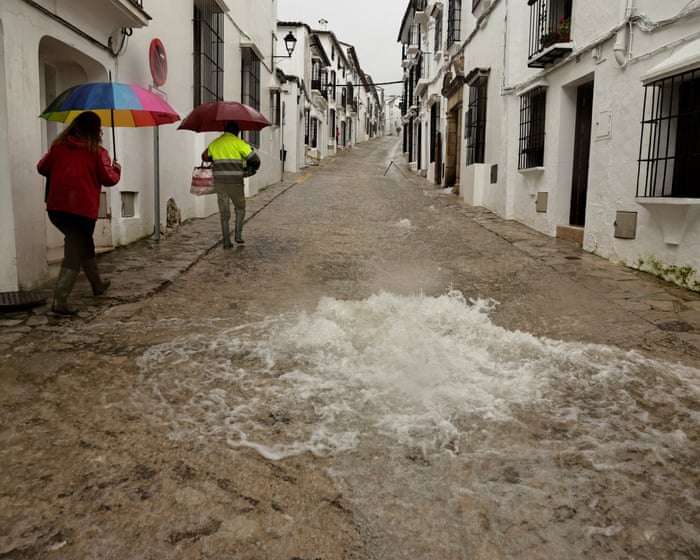
In Grazalema, Spain’s wettest town, a year’s worth of rain fell in just two weeks, overwhelming the karst aquifer below. Water flooded homes through floors, walls, and even power sockets, prompting authorities to order a full evacuation.
“I was terrified,” said Sánchez Barea, a guesthouse owner whose home remains in an exclusion zone along with hundreds of others. “At first we tried to clear the water. Many people came to help, but we soon realized it was impossible.”
In Leiria, Portugal—one of four regions where January rainfall broke records—powerful winds compounded the damage. The Monte Real airbase recorded a peak wind speed of 109 mph (176 km/h) before the station was hit and stopped measuring. Storm Kristin knocked out electricity, internet, and phone services in the early hours of a morning that would turn deadly.
“Around that time, it felt like everything was falling apart,” said Duarte, a beekeeper in Monte Real who lost half his hives. The house-shaking wind trapped him and his family inside, where they could only avoid balconies and windows and wait it out.
“The wind became deafening and relentless, mixed with the sounds of collapsing structures, flying tiles, breaking trees, and metal sheets banging violently,” Duarte recalled. “The atmosphere was terrifying—it felt like the house might not hold up.”
Duarte’s house survived, but others did not. Ricardo Teodósio, an industrial painter in nearby Carvide, was repairing a garage roof with his father when it collapsed on them. Injured, the father walked two miles to a fire station to get help for his son, who was trapped under the rubble. By the time rescuers arrived, Teodósio had died.
João Lavos, commander of the volunteer firefighters in Vieira de Leiria, said Teodósio was one of two people who died in the Carvide-Leiria area that day. Within 24 hours, his team responded to 50 storm-related incidents, 15 of which involved accident victims. “It was an unprecedented situation that caused immense damage,” he said.
Western Europe has been hit by 16 rapid-fire storms this season, driven by a shift in atmospheric currents that some scientists believe will become more frequent as the planet warms.
While the exact role of climate change in forming these storms is still uncertain, early analysis from Climate Central found that it made a marine heatwave—which intensified the storms in early February—ten times more likely. On Thursday, a study by World Weather Attribution (WWA) also concluded that carbon pollution increased the rainfall intensity and worsened the flooding, though the findings have not yet been peer-reviewed.
In Safi, Morocco’s ceramics capital, explosive mud waves shattered fragile pottery stores when heavy rain inundated the area.In the UK at the end of last year, most of the 43 people killed in storms across the country since mid-December died in the narrow, winding streets of its medina as floodwaters rushed through.
“At first, we didn’t think there would be major damage,” said Essuide, who watched the chaos unfold from the roof of the hotel she runs in the old town and was later rescued by a team. “But after we got into the small boat and they found someone dead, we realized it was very serious. It was scary.”
Drone footage shows severe flooding in Morocco after heavy rain.
According to a World Weather Attribution (WWA) study, observational data indicate that the most extreme rainfall days in Spain, Portugal, and Morocco now release about one-third more water than they did in the 1950s, though climate models present a more varied picture. Researchers linked an 11% increase in rainfall in the northern part of the study region to global warming, but the impact on the southern region was too uncertain to measure with probabilistic methods.
Clair Barnes, a scientist at Imperial College London and co-author of the study, said, “Trends in the region are mixed and aren’t fully captured by climate models. However, other evidence does suggest climate change has increased the amount of moisture available in that weather system to fall as rain.”
Last week, the EU’s official science advisors warned that Europe is failing to adapt to a hotter planet and the more extreme weather it brings. In Portugal, Duarte noted that emergency warnings failed to create sufficient public concern.
Military and civil authorities work in a flooded street after a storm in Ksar El Kebir, Morocco, in January.
“Nobody was prepared for such a devastating force,” he said, adding that the death toll could easily have reached hundreds if the storm had hit during the day instead of at night. “It caught us all completely by surprise.”
Meanwhile, in Spain, residents of Grazalema praised authorities for evacuating people promptly. The town’s center-left leadership quickly reached an agreement with the center-right authorities in neighboring Ronda, which opened its doors to those seeking shelter.
“They did the right thing,” said Mario Sánchez Coronel, who runs a textile shop in Grazalema that flooded. “They acted under pressure, and it’s not easy to act like that.”
In what Sánchez Coronel called a “miracle,” his wool blanket factory only experienced minor flooding. He said he hopes never to see such rains again.
“It was hard, because you think about what might happen next,” he said. “After the ‘bad,’ will the ‘worst’ come?”
Frequently Asked Questions
Of course Here is a list of FAQs about the recent storm tragedies in the western Mediterranean designed to answer questions from basic to more detailed
Basic Understanding The Event
1 What happened in the western Mediterranean recently
A series of exceptionally intense storms including a medicane named Daniel hit regions like Greece Turkey Bulgaria and Libya in early September 2023 They caused catastrophic flooding and thousands of deaths particularly in the city of Derna Libya
2 What is a medicane
A medicane is a informal term for a Mediterranean hurricane Its a hybrid storm that has features of both a tropical cyclone and a midlatitude storm It forms over the warm Mediterranean Sea and can bring extreme winds and torrential concentrated rainfall
3 Why is this being called a tragedy or a disaster
The scale of destruction and loss of life was immense In Libya alone entire neighborhoods were swept into the sea when dams collapsed leading to a death toll in the thousands Its a human tragedy exacerbated by extreme weather and infrastructure failures
Causes Contributing Factors
4 What caused these storms to be so severe
A combination of factors recordwarm sea surface temperatures in the Mediterranean provided massive energy and moisture A blocking highpressure system steered the storm south and caused it to stall over land dumping unprecedented amounts of rain in one place
5 Was climate change a factor
Yes scientists state that climate change was a key driver A warmer atmosphere holds more moisture and warmer seas fuel more intense storms While individual storms are complex the overall trend toward more extreme rainfall events in the region is linked to humancaused climate change
6 Why was the impact in Libya so much worse than in Greece
The storms impact was catastrophic in Libya due to a combination of the extreme weather and critical human factors aging dam infrastructure that failed inadequate warning systems political instability hindering maintenance and evacuation and construction in vulnerable floodplains
Impacts Consequences
7 What were the main types of damage
Flash Flooding Rapid powerful walls of water sweeping away cars buildings and bridges