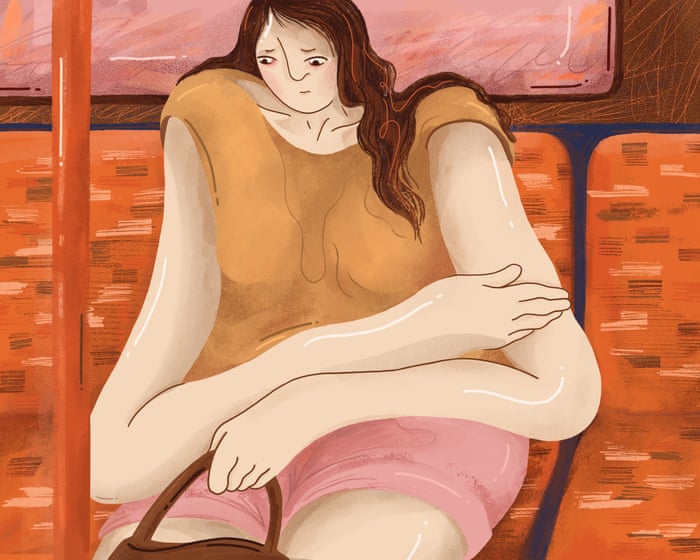
When Hayat goes out to eat, she picks a table far from other diners, ideally near a door or open window. She also avoids people at the cinema or on planes, even if it means paying more—anything to keep her distance from others. She attributes this to a lingering insecurity from her past. “I still have that paranoia… It’s all in my head, because of everything I went through.”
For over a decade, 66-year-old Hayat has lived with bromhidrosis: chronic body odour. While the term covers BO from any cause, including poor hygiene, it’s usually caused by a bacterial imbalance or another health issue.
Research shows that “15 minutes after a shower, you will already have started smelling.” For these people, it’s not about showering more often or using a stronger deodorant: their body is working against them, and the effects can be devastating. “Fifteen minutes after a shower, they’ve already started smelling,” says Chris Callewaert, a senior research fellow at Ghent University in Belgium and one of the few scientists in the world who specialises in body odour.
Callewaert describes bromhidrosis as a natural bodily process gone wrong, most often involving the apocrine glands. These are concentrated around the armpits, breasts and groin, and secrete lipids, steroids and proteins. This sweat is odourless on its own; BO is produced by the natural bacteria on the skin and inside hair follicles as they break down the fatty secretion.
In people with apocrine bromhidrosis—abnormal or unusually offensive body odour—some part of that process is out of balance, says Callewaert. They may have overactive apocrine glands, or too many specific “smelly bacteria.”
Body odour can appear suddenly: with puberty, a change to the microbiome, a disease affecting metabolism, or even as a side-effect of medication. But once it sets in, it can be hard to shift, Callewaert says. “It’s often multifactorial, and not easy to perceive the deeper origin or to fix it. Sometimes people have been stuck with this for many, many years.”
In Hayat’s case, she developed bromhidrosis along with hyperhidrosis—excessive, uncontrollable sweating, a separate but often co-occurring condition—during menopause. In 2007, when she was 48, she had an ovary removed, which disrupted her oestrogen production. “After that, life started to change. It was absolutely disruptive,” she says.
She was constantly overheated, “burning inside” even during New York’s freezing winters. On the subway, she would wear a sleeveless top and sandals, her hair dripping with sweat, while other commuters wore heavy coats, boots and scarves. “People were looking at me like I was crazy,” she says.
That was only half of it. She also smelled—from her armpits, under her breasts, her groin. Her fellow New Yorkers didn’t hold back from letting her know. Some covered their noses as she passed, or moved away. “Those were the polite ones,” Hayat says. Others verbally abused her; more than once, she was harassed off the train. “It was awful, a total nightmare.”
Hayat understood the strong reactions: “It’s normal—you don’t want to be next to anybody who smells bad.” But over-the-counter and prescription remedies made no difference. Hayat estimates she spent thousands of dollars searching in vain for relief. “At one point I was seeing endocrinologists, gynaecologists, general cardiologists… I had a whole team, trying to find out what was going on in my body.”
There is no set diagnostic threshold.There’s no clear line where bad body odor becomes bromhidrosis, which makes it hard to know how common the condition really is. A 2024 review called it prevalent, at least in the West, and said it takes a “significant” toll on patients’ social and psychological well-being. Yet there is very little focused attention on the condition or specialized support. “It is underserved,” says Angela Ballard, a registered nurse and communications director for the International Hyperhidrosis Society (IHS). The US-based organization was founded in 2003 to advocate for the estimated 4.8% of people who live with uncontrollable sweating, but has expanded its focus to include bromhidrosis and body odor, given how often they overlap and the lack of other resources. “There is not a lot of information, and I think that’s sort of indicative. People are ashamed,” Ballard says. “They don’t talk about it with their healthcare providers, even their friends.” The stigma around body odor persists even though it is a natural part of life, from puberty to pregnancy and beyond. According to the IHS, an estimated 50% of the 1.6 million women entering menopause each year in the US alone experience increased underarm sweat and odor. Ballard says a diagnosis of bromhidrosis is tied to “the level of distress it’s causing a person,” and its effect on their well-being and day-to-day functioning: “How much is this impacting your self-esteem, your confidence, your social life?” View image in fullscreen Botox injections can reduce sweat production. Photograph: Steklo_KRD/Alamy (Posed by a model) There are strategies that can help relieve the odor, she says—from the straightforward (using antibacterial soap, avoiding certain fabrics, improving laundry practices) to the unexpected (laser hair removal or waxing, which limit sites for bacteria, and Botox, which reduces sweat production) and, increasingly, high-tech. The miraDry, for instance, is an FDA-approved handheld microwave device that destroys the sweat glands, odor glands, and hair follicles in the armpits, and has proved effective at managing hyperhidrosis, and sometimes bromhidrosis too. But often, even a combination of strategies can only do so much to improve the smell. Meanwhile, managing the social anxiety, second-guessing, and paranoia is a separate concern. “You feel like people are judging you, that they think it’s your fault, when you’ve perhaps tried everything,” Ballard says. “It can really spiral.” The toll can be far-reaching. “People will choose jobs where they can work from home, or skip certain social occasions where their odor could be more apparent … You may hesitate to hug someone or get too close to other people.” Having been diagnosed with hyperhidrosis as a child, Ellie, 30, began struggling with body odor as she got older. She had wanted to pursue teaching, “but I just couldn’t imagine standing in front of a room full of students all sweaty, fearing smelling bad,” she says. She now works as an accounting assistant. “There were several career paths I wanted to pursue but didn’t.” She considers herself fortunate not to have been so affected in her intimate relationships. Many people with bromhidrosis report that it negatively affects their confidence and success in dating, but Ellie says her husband, who has known her since she was a teenager, has always been “completely unfazed.” She was, however, very nearly dissuaded from having children, for fear of passing on her conditions. But Ellie now has a young daughter: “While excessive sweating and body odor is extremely unfortunate, it is not a reason to not want to live. Even if I do end up passing this down, I will be the best advocate possible for my daughter.” With doctors having been, generally, “pretty dismissive,” Ellie has developed her own coping strategies, such as wearing only cotton socks and never leaving the house without a full change of clothes on hand. “I swear I’ve tried every deodorantAdded to the frustrations and challenges of managing her bromhidrosis are other people’s assumptions – that she is either unaware of how she smells, or deliberately doing nothing about it. “Don’t think we don’t know. Odds are, we’re trying everything we can to mask it and get rid of it, but sometimes there is no way.”
Callewaert’s research has found that people who know or fear they have BO are actually more attentive to personal hygiene than others. But, he says, the anxious effort to get on top of bromhidrosis can make the problem worse by further unbalancing the microbiome and increasing sweat production. “They have stress and, as such, they have odour, and because they have odour, they have more stress: it’s self-reinforcing.”
Over time, bromhidrosis can become as much a psychological issue as a physiological one. People with the condition often isolate themselves, making the negative effect on wellbeing worse, and they may develop anxiety or depression, says Callewaert: “On average, their quality of life is lower.”
Faced with “embarrassing situations and mistreatment”, Hayat organised her life around managing other people’s discomfort. At 50, she learned to drive and got a car so she could avoid public transport – no small feat in New York – and began flying business class for the extra space. “Economically, it was a sacrifice, but for my wellbeing, it was perfect to be as far away as I could from people,” Hayat says.
Her family thought she was behaving irrationally and told her she didn’t even smell: “They used to say: ‘It’s all in your head.'” But Hayat didn’t feel she could trust them over the feedback she was getting in public, “because they love me”.
The experience went so far as to test Hayat’s faith: she says she often turned to the Bible in search of solace and answers. “It was really frustrating: ‘Why me? Why do I have to go through this? What did I do?'”
Her world shrank. “Before menopause, I used to go to the theatre, the movies, to clubs to dance, to restaurants … I stopped all of that.” For more than a decade, she did not go anywhere other than work.
The office was difficult enough. Hayat’s colleagues knew she had a medical condition, but were far from sympathetic, she says. A younger co-worker made a show of using a room spray in Hayat’s presence; she overheard another pair of colleagues talking about her, waving their hands in front of their noses.
Hayat says her working environment became so hostile that she considered suicide. But eventually, she sought help from her employer’s human resources department, which moved quickly to find her a spot far from those colleagues and gave her the option of taking action against them for bullying. She declined, but “they made me feel really supported”.
Later in her career, Hayat took advantage of advances in remote working, such as telephone meetings and Zoom calls. She also became more adept at managing her sweating and stress, and with it the smell: “I found ways to survive.”
The strict social penalty against having body odour is worsened by the casualness and flippancy with which the topic is often treated. Even doctors can be dismissive, instructing patients to simply apply more deodorant. “People are being brushed off very easily [because] ‘it’s not life-threatening’,” says Callewaert.
That doesn’t just discount the real suffering of living with bromhidrosis: a subtle change in body odour has been associated with diabetes, Parkinson’s disease and cancer.“Knowing that body odour can be a symptom of underlying diseases, it’s a real sign that needs to be picked up,” he says. In most cases, however, strong BO comes from the microbiome and poor gut health. Stronger, more offensive body odour is linked to diets high in meat and fast food and low in vegetables. “Leading a healthy lifestyle will help you smell better,” Callewaert says. High stress is also a factor.
Because the microbiome makeup is often stubborn to shift, progress can be slow. Even using antiperspirants and deodorant can make odour worse, he says, by killing beneficial bacteria while encouraging the more stress-resistant, “smelly” kind to bounce back stronger and more numerous.
At best, these “underarm cosmetics” – widespread only since the mid-20th century – are a short-term solution, Callewaert says. He argues that their use has led to worse BO at the population level, along with trends, at least in the West, toward poor nutrition, high stress and unhealthy guts. So Callewaert – who publicly styles himself as “Dr Armpit” – has been developing what he hopes might prove a silver bullet to BO: his own range of patented probiotic deodorants.
In the meantime, Ballard calls for greater understanding of body odour as a natural product of bacteria on our skin, and compassion for people who might be struggling to keep it in check. Instead of leaping to the assumption that someone who smells must be skipping showers, we might consider their experience, she says.
“Maybe they have bromhidrosis, and it took a lot for them to get out the door to go to work and live their lives. Maybe they have another medical condition, and they have to take medication that has changed their body odour. Or maybe they’re going through menopause … You can notice that you smell something, and stop before the judgment.”
For Hayat, recently retired, the bullying she experienced over her bromhidrosis affected her wellbeing as much as the condition itself. After a decade of the menopause wreaking havoc, her symptoms began to ease. “It got better, thank God,” she says fervently. “It’s still not 100% managed – it’s just that I learned to get by.”
She, too, urges compassion – after all, no one is above body odour. “You can be smelling like roses now, but eventually, for whatever reason, your body’s gonna change.”
All case studies’ names have been changed.
In the UK and Ireland, Samaritans can be contacted on freephone 116 123. In the US, you can call or text the 988 Suicide & Crisis Lifeline at 988 or chat at 988lifeline.org. In Australia, the crisis support service Lifeline is 13 11 14. Other international helplines can be found at befrienders.org.
Do you have an opinion on the issues raised in this article? If you would like to submit a response of up to 300 words by email to be considered for publication in our letters section, please click here.
Frequently Asked Questions
FAQs The Pain of Living With Chronic Body Odor
1 What counts as chronic body odor
Its odor that sticks around most days for weeks or months even with regular washing and deodorant Occasional sweat smell after a workout is normalchronic odor isnt
2 I shower daily and still smell Why
Showering removes sweat but odor comes from bacteria breaking sweat down If bacteria stay on skin in clothes or in hair the smell comes back fastsometimes within hours
3 Is it true that some people just cant find a deodorant that works
Yes Deodorants target odor antiperspirants block sweat and everyones body chemistry is different What works for your friend may do nothing for you
4 Whats the difference between deodorant and antiperspirant
Deodorant masks or fights odorcausing bacteria Antiperspirant uses aluminum salts to reduce sweating itself If sweat is the problem you likely need an antiperspirant
5 Why do my clothes smell even after washing
Odorcausing bacteria get trapped in fabric fibers especially synthetics Normal detergent often doesnt kill them Try washing with an enzymebased detergent adding white vinegar and avoiding fabric softener which traps residue
6 Could a medical condition be causing this
Possibly Conditions like bromhidrosis trimethylaminuria diabetes thyroid issues and some liver or kidney problems can change how you smell If odor is sudden very strong or unusual see a doctor
7 What is bromhidrosis
Its the medical term for excessive persistent body odor usually caused by bacteria breaking down sweat Its a real condition not a hygiene failure
8 Does diet actually affect body odor
Yes Strong foods like garlic onions curry spices and red meat can come through your sweat Alcohol and caffeine can make you sweat more too
9 Why does stress make me smell worse
Stress triggers apocrine sweat glands which produce a thicker sweat that bacteria love Thats why anxiety about smelling bad can literally make it worse
10 Are natural deodorants any good for chronic odor
Some people do fine with them but many natural products dont fight bacteria strongly enough for chronic