Valeriia Kholkina was buying ice cream with her husband and four-year-old daughter when a man overheard them speaking Ukrainian. “Teach your daughter to speak Polish,” the stranger said, before physically assaulting both parents.
The incident, which took place in Szczecin in northwestern Poland, reflects a growing hostility toward Ukrainians in the country—a stark shift from the mood in 2022. Back then, following Russia’s full-scale invasion, hundreds of thousands of Poles showed remarkable support and hospitality, volunteering at the border and opening their homes to refugees.
Now, as the war nears its fourth year, that goodwill is fading. Surveys show increasingly negative perceptions of Ukrainians in Poland, fueled by a political debate that has moved to the right on migration and revived historical grievances.
According to UNHCR data from September, there are about a million Ukrainian refugees in Poland. Kholkina is not among them; she is one of nearly half a million Ukrainians who arrived before 2022 and has lived in Poland for over a decade. “I’m more Polish than Ukrainian now… but I never thought someone would lecture me on how to talk to my own family,” she said. Since the attack, she has experienced panic attacks and has told her daughter never to speak Ukrainian in public.
Her case was extreme—the attacker was sentenced to 14 months in prison—but being harassed for speaking Ukrainian in public has become common. “Things feel more tense now,” said Aliona, a 39-year-old entrepreneur living in a small town in western Poland. “Now when we go out, the kids whisper, ‘Mom, let’s speak Polish now.’ It wasn’t like this before. No one used to comment. Even if they heard my accent, they’d just smile.”
It is difficult to measure the scale of verbal and physical attacks against Ukrainians, as many incidents go unreported. But polls confirm the changing atmosphere is widespread. One survey shows support for accepting Ukrainian refugees has dropped from 94% just after the invasion to 48% today. Another indicates Polish support for Ukraine joining the EU has fallen from 85% in 2022 to 35%.
“There is an attitude in society that we don’t owe anything to the Ukrainians anymore,” said Piotr Buras of the European Council on Foreign Relations in Warsaw.
Several factors have contributed to this shift. Resentment has been stirred by disinformation and viral videos online. Moreover, the election of right-wing populist Karol Nawrocki as president in June 2025 followed a bitter campaign that pushed the political debate further to the right. Ukrainians are increasingly portrayed as ungrateful and eager for benefits, despite economic data showing they contribute more to the Polish economy than they receive.
Similar shifts are occurring elsewhere in Europe. German Chancellor Friedrich Merz said he discussed with Ukrainian President Volodymyr Zelenskyy the rising number of young Ukrainian men arriving in Germany. “I asked the Ukrainian president to ensure that young men in particular from Ukraine do not come to Germany in large numbers—in increasing numbers—but that they serve their country,” he stated. His government is drafting a bill to restrict benefits for Ukrainian refugees.
In Poland, Nawrocki vetoed a government bill in August that would have extended financial support for Ukrainian refugees. Instead, he proposed his own legislation tying benefits to employment.Ultimately, a compromise bill was passed.
Oleksandr Pestrykov from the Ukrainian House in Warsaw noted that anti-Ukrainian sentiment first emerged online in 2023, with any Polish media coverage about Ukraine quickly attracting a flood of negative comments. Some have pointed to Russian bots as a source of this online prejudice, and for a time, the hostility seemed confined to the internet. However, he observed that this is now shifting.
“Until this summer, that negativity mostly stayed online. The complaints we received from Ukrainians were occasional, similar to before the full-scale war. But since summer, we’ve seen a significant rise in people reporting attacks—thankfully, mostly verbal so far,” he said.
The complex history between Poland and Ukraine also contributes to the tension. A frequent point of discussion is the massacre of over 100,000 Poles by Ukrainian nationalists between 1943 and 1945, during efforts to prevent the Volhynia region from becoming part of Poland. While Ukraine has since permitted Poland to exhume the victims’ remains, progress has been slow, and the issue remains deeply emotional for many Poles.
“The level of support for Ukraine in 2022 was exceptional; now we’re somewhat returning to normal,” said Buras. This historical backdrop allows much of Polish society to oppose Ukrainians while still maintaining a firm anti-Russian stance. “In most countries, being anti-Ukrainian also means being pro-Russian, but not in Poland. Our relationship with Ukraine is weighed down by history, resentments, and disagreements,” he added.
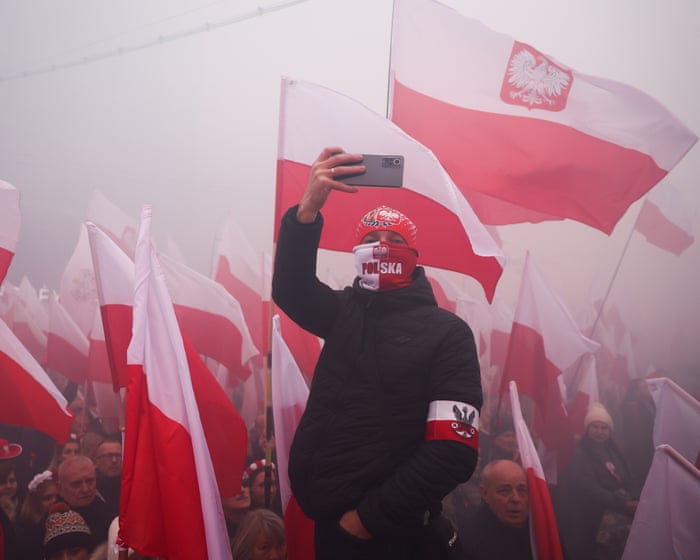
Tensions escalated when video from a Warsaw stadium concert featuring a Belarusian rapper showed people waving a wartime Ukrainian nationalist flag. The red-and-black flag, common in Ukraine but considered offensive in Poland, sparked clashes at the venue and led to Poland deporting 63 individuals, 57 of whom were Ukrainian. Increasingly, right-wing rhetoric criticizing migration has begun to target Ukrainians, whereas in 2022 and 2023 they were often viewed favorably compared to non-European refugees attempting to enter from Belarus.
Not all Ukrainians in Poland have faced difficulties. In a survey from late last year, 58% of Ukrainians said they expected their children to live in Poland “for many years.” Discrimination is not universally felt, especially among those in larger cities.
Anastasiia Zhelezniak, a 39-year-old child psychologist from Kryvyi Rih, moved to Warsaw with her two children in the summer of 2023 after deciding her hometown, under regular Russian attack, was too dangerous to raise a family. She chose Warsaw because her niece already lived there.
Since then, she has learned Polish through government-funded language courses, retrained as a massage therapist, and recently opened her own salon in central Warsaw. “Personally, I’ve had nothing but good experiences in Poland,” she said. When her children, now 10 and 15, started school in Warsaw, teachers and other parents went out of their way to help. “At one parents’ evening, everyone asked how they could support us. It almost moved me to tears,” she recalled.
The only negativity she has encountered has been online. Whenever she opens Facebook or other social media, she faces a barrage of negative comments about Ukrainians. “I’ve just stopped looking,” she said.
While many of her Ukrainian friends have begun to leave, citing the changing atmosphere and rising living costs, Zhelezniak now hopes to build a future in Poland. “I think it would be better for my children and offer them more opportunities than returning home,” she said.
Frequently Asked Questions
Frequently Asked Questions Teach your daughter to speak Polish Ukrainians in Poland Face Rising Tensions
BeginnerLevel Questions
1 What is this story about
Its about a Ukrainian mother in Poland who is determined to teach her young daughter Polish seeing language as a key to integration and safety amidst rising social tensions and antiUkrainian sentiment
2 Why is learning Polish so important for Ukrainians in Poland right now
Learning Polish is crucial for better integration accessing services finding stable employment and building a sense of belonging In a tense climate language fluency can also help reduce visibility as a foreigner and mitigate everyday prejudice
3 What are the rising tensions mentioned
The tensions refer to growing antiUkrainian sentiment among some segments of Polish society This can include public criticism political rhetoric blaming Ukrainians for economic issues and isolated incidents of discrimination or hostility fueled by fatigue from the longterm refugee situation
4 Is it safe for Ukrainians in Poland
Poland remains a major host and ally for millions of Ukrainians fleeing war While generally safe the reported rise in tensions means some Ukrainians may experience social friction verbal hostility or feel increased pressure to assimilate to avoid standing out
Advanced Practical Questions
5 Beyond basic communication what are the deeper benefits of teaching the daughter Polish
Its about building a future Fluency grants her social capital educational equality career opportunities and the ability to advocate for herself and her community Its also a tool for psychological resilience helping her navigate complex social dynamics and claim a place in the society where she lives
6 What are common challenges in this situation
Challenges include the emotional weight of preserving Ukrainian identity while adopting Polish finding quality affordable language resources dealing with childrens resistance and confronting the sadness or anger that comes with feeling pressured to change due to hostility
7 Could this pressure to assimilate lead to loss of Ukrainian culture
Its a valid concern The key is additive not replacive integration The mothers goal is likely bilingualismraising a daughter who is proudly Ukrainian and functionally Polish able to navigate both worlds This requires conscious effort to maintain Ukrainian language and traditions at home