Cats have long been kept on American dairy farms to control rats, mice, and other rodents. In March 2024, barn cats at several dairies in the Texas panhandle began acting strangely, as if in the opening scene of a horror movie. They walked in obsessive circles, grew listless and depressed, lost their balance, staggered, suffered seizures and paralysis, and died within days of falling ill. At one north Texas dairy, two dozen cats showed these odd symptoms, and more than half soon died. Their bodies revealed no signs of unusual injury or disease.
Dr. Barb Petersen, a veterinarian in Amarillo, began hearing stories about the sick cats. A colleague told her, “I went to one of my dairies last week, and all their cats were missing. I couldn’t figure it out—the cats usually come to my vet truck.” For about a month, Petersen had been investigating a mysterious illness among dairy cattle in Texas. Cows were developing fevers, producing less milk, losing weight, and the milk they did produce was thick and yellow. While rarely fatal, the illness could last for weeks, and the drop in milk production was hurting local dairy farmers. Petersen sent fluid samples from sick cows to a diagnostic lab at Iowa State University, but all tests came back negative for known cattle diseases. She began to wonder if there might be a link between the unexplained illnesses in the cats and the cows. She sent the bodies of two dead barn cats to the Iowa State lab, where their brains were examined.
Petersen’s hunch led to a series of important discoveries. The dairy cows in north Texas were suffering from highly pathogenic avian influenza A (H5N1)—and the barn cats had been infected with this virulent bird flu after drinking raw milk from the sick cows. H5N1 had emerged years earlier in Asia, reached the United States via migrating birds, and began devastating U.S. poultry farms in 2022. The fatality rate of H5N1 in poultry approaches 100%, and American farmers have culled more than 150 million chickens since 2022 to stop the virus’s spread. Researchers have known for years that cats were vulnerable to bird flu, having previously been sickened mainly by eating infected birds. But until Petersen’s discovery, no one knew that cows could be infected with bird flu, that the virus could multiply in their udders, or that it could spread through their milk.
A commonsense response to finding H5N1 in Texas dairy cattle in 2024 would have included mandatory testing of every cow for the virus, strict quarantine of affected dairies, mandatory milk testing for contamination, financial compensation to dairy farmers for losses, and widespread testing of dairy workers to ensure H5N1 was not spreading to people. None of those things happened.
The United States Department of Agriculture (USDA) is primarily responsible for livestock health, not human health. The Food and Drug Administration (FDA) lacks authority to test livestock for diseases. And the Centers for Disease Control and Prevention (CDC) cannot test farm animals or workers without permission from farm owners. State officials do have such powers, but Texas Agriculture Commissioner Sid Miller—a right-wing conspiracy theorist who had spoken at a QAnon event in Dallas a few years earlier—believed H5N1 posed “no threat to the public.” The dairy industry opposed routine testing of its cows or workers, and dairy contributes about $50 billion to Texas’s economy each year. Miller made his feelings clear about federal investigators visiting panhandle dairies to look for bird flu: “They need to back off.”
Twenty-five years ago, my book Fast Food Nation outlined the dangers of a food system controlled by a handful of multinational corporations. As the book argues, the real price of cheap food doesn’t appearThe industrialization of livestock farming has turned sentient animals into commodities, and a lack of government oversight has opened new pathways for dangerous pathogens. Some mega-dairies in the U.S. house up to 100,000 cows. The crowded conditions, shared milking equipment, lack of quarantines, and interstate transport of cows between these large operations have allowed H5N1 to spread across the country.
Over the past 30 years, the UK dairy industry has also shifted toward large-scale, centralized production. In 1980, there were 46,000 dairy farms; today, there are just over 7,000. Just four companies now process about 75% of the nation’s milk.
These changes in the industry have also transformed the workforce. In the U.S., many dairy workers are now recent immigrants who earn low wages, often work 60 to 80 hours a week, and frequently move between jobs.
The first known human case of H5N1 in the U.S. was a dairy worker in Texas. A few weeks after bird flu was detected in cows, he developed pink eye, which tests confirmed was caused by H5N1. His illness was otherwise mild—no fever or respiratory congestion—and he recovered within days. Despite the risk that H5N1 could be spreading silently among workers or mutate to become more dangerous, few have been tested. The dairy industry opposed testing, and immigrant workers were often reluctant to engage with investigators due to fears of deportation.
The first known cluster of human H5N1 infections in the U.S. occurred in July 2024 among poultry workers in Weld County, Colorado. The area is home to poultry farms, egg farms, mega-dairies, large cattle feedlots, and beef slaughterhouses. Workers often move between these industrial operations. At one of Colorado’s largest egg farms, a group of workers was tasked with culling nearly 2 million hens that had tested positive for H5N1. They spent hours in hot, poorly ventilated henhouses. Five later developed fevers, chills, respiratory symptoms, and pink eye—marking the largest human bird flu outbreak in U.S. history.
None were hospitalized, and all recovered quickly. However, their illnesses suggested that mild or asymptomatic cases may be occurring among workers at poultry, egg, and dairy facilities nationwide. As more workers and cows become infected, the risk of a dangerous mutation in the virus grows. By the time of the Weld County cluster—about four months after the first Texas case—only about 200 workers nationwide had been tested for H5N1.
Bird flu is a zoonotic disease, meaning it can jump from animals to humans. Like E. coli O157:H7 (which emerged in cattle feedlots) and MRSA (which originated in industrial hog farms and kills about 9,000 Americans annually), H5N1 is another unforeseen cost of factory farming.
So far, highly pathogenic avian influenza A (H5N1) has not caused a deadly epidemic in humans. Pasteurization kills the virus in milk, and it hasn’t mutated to become more contagious or lethal. However, H5N1 is now endemic among wild birds, chickens, turkeys, and dairy cattle in the U.S., allowing its genes to continually mix. A bird flu epidemic that kills millions remains a real possibility.The threat of a virus emerging from factory farms is ever-present and global. On December 9, H5N1 was confirmed at a large poultry farm in Lincolnshire, UK, leading to a two-mile exclusion zone and the culling of all birds—the second such outbreak in a week.
When Fast Food Nation was published in January 2001, I didn’t expect industrial food giants to like it, and they didn’t. The book exposes the gap between their polished marketing and the reality of their operations, detailing the impact of the industrial food system on workers, consumers, animals, and the environment.
McDonald’s Corporation stated, “The real McDonald’s bears no resemblance to anything in [Schlosser’s] book. He’s wrong about our people, our jobs, and our food.” The National Restaurant Association accused me of acting like the “food police,” trying to coerce Americans away from fast food while recklessly disparaging an industry that has greatly contributed to the nation.
A spokesperson for the American Meat Institute dismissed my evidence of safety issues in meatpacking plants as “anecdotal” and claimed I had “vilified the industry unfairly.” The right-wing Heartland Institute later accused me of “tricking young people… away from capitalism into failed socialist ideology.” According to the Wall Street Journal, McDonald’s hired the DCI Group—a public affairs firm with ties to oil, tobacco, and pharmaceuticals—to post online attacks against me. (McDonald’s denied using third parties and said they “appreciate feedback.”)
Despite the personal attacks, none of the industry critics pointed out factual errors in the book. More surprising were the disruptions at my public appearances. I often faced the same hostile, scripted questions in different cities. Protesters interrupted my talks, and I received threats. Armed guards sometimes stood by during book signings, and during a visit to an Indiana university, a state police officer accompanied me from my arrival at the airport until I left days later. After a panel in Tucson, a man assaulted me in a parking lot, putting me in a headlock and shouting, “Why do you hate America? Why do you hate America so much?” It was a bizarre and unsettling experience.
My ordeal was minor compared to what other critics faced. In 2008, Burger King hired a private security firm to infiltrate the nonviolent Student/Farmworker Alliance, which was urging a boycott over suppliers linked to slave labor in Florida’s tomato fields. The firm’s owner posed as a college student to gather information but did a poor job impersonating an activist and was soon exposed as a corporate spy, generating bad publicity for Burger King.
McDonald’s was more successful at spying on its critics. During the 1980s, up to half the attendees at London Greenpeace meetings were corporate spies hired by McDonald’s to gather information on the group. As documented by Guardian journalist Rob Evans, Scotland Yard had also infiltrated London Greenpeace with undercover agents. These corporate spies and police officers helped McDonald’s gain an advantage in the McLibel case.In a lawsuit targeting two members of London Greenpeace, it was revealed that an undercover police officer, posing as an anti-McDonald’s activist, had a nearly two-year romantic relationship with a Greenpeace member while secretly gathering information on her. Separately, a corporate spy for McDonald’s slept with another Greenpeace activist for about six months to build trust and obtain information. An inquiry is now underway into the conduct of over 139 undercover police officers who spied on tens of thousands of activists between 1968 and 2010.
In Fast Food Nation, I wrote: “The history of the 20th century was dominated by the struggle against totalitarian systems of state power. The 21st will no doubt be marked by a struggle to curtail excessive corporate power.” Well, I was at least half right. We now face a struggle against both.
One of the book’s main goals was to show how private interests were being prioritized over the public good. The industrial food system clearly illustrated these broader themes, and similar conclusions would likely emerge from investigations into banking, aerospace, chemicals, defense, healthcare, entertainment, or software.
Today, consumers have only an illusion of choice. Decades of corporate mergers and acquisitions have drastically reduced the number of food companies, a fact masked by the many brand names on the shelves. For example, while Starbucks is the world’s largest coffee shop chain, a family-owned German firm, JAB Holding Company, sells more coffee through brands it fully or partly owns—like Keurig, Krispy Kreme, Peet’s Coffee, Stumptown Coffee, Green Mountain Coffee Roasters, and Pret a Manger.
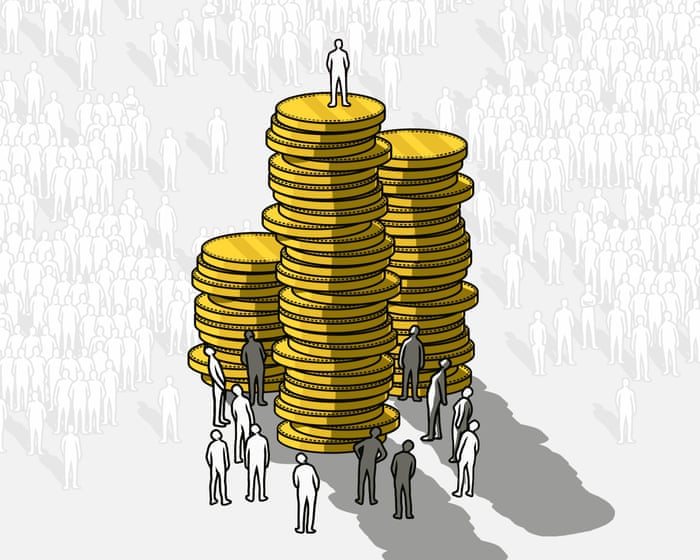
When corporations grow too powerful, market forces no longer determine the prices paid to suppliers, the wages given to workers, or the costs charged to consumers. Government agencies become “captive” to the very companies they are meant to regulate. These corporations boost profits by cutting wages, raising prices, and manipulating supplies. Once four companies control 40% or more of a market, competition often turns into collusion, transforming a free market into an oligopoly.
Today, four companies control 56% of the global seed market and 61% of the pesticide market. Five companies handle about 70% to 90% of worldwide grain trade. In the U.S., four companies control over 80% of beef, 70% of pork, and 60% of chicken supplies. Four companies also dominate about 75% of the yogurt market and 79% of the beer market, while three firms control 93% of carbonated soft drinks. Factory farming has even concentrated commercial livestock genetics: two companies supply the breeding stock for more than 90% of the world’s egg-laying hens and turkeys.
Hidden market power can suddenly become visible when something goes wrong. In the summer of 2024, an E. coli outbreak led to a massive recall of sandwiches across UK stores and supermarkets. Hundreds fell ill, and two died. A UK Health Security Agency report later indicated that “epidemiological analyses provided robust evidence that pre-packaged sandwiches containing lettuce were the likely vehicle of infection.” While no specific sandwich company or brand was definitively linked, the outbreak shed light on how our food is produced. Many of the recalled items were made by the same firm: Greencore, possibly the world’s largest manufacturer of fresh, pre-made sandwiches.
Based in Ireland, Greencore sells about 600 million sandwiches a year in packaging bearing the logos of other brands, such as Boots, Marks & Spencer, Sainsbury’s, Tesco, and WH Smith.A photo taken at a Greencore factory in Nottinghamshire, England, shows hundreds of workers standing at assembly lines inside a massive refrigerated room. Wearing white coats and green hairnets, they add ingredients by hand as slices of bread move past them on conveyor belts. The factory operates around the clock, producing hundreds of different sandwich varieties. The familiar small packages containing these sandwiches—lined up in refrigerated cases at grocery stores, gas stations, and airport newsstands—give no indication that what’s inside was assembled on such an industrial scale.
A far more serious example of hidden market power came to light in the fall of 2021, when an infant in Minnesota fell ill with Cronobacter sakazakii. This pathogenic bacteria can be especially dangerous to infants under two months old, those born prematurely, or those with weakened immune systems. Among these vulnerable babies, the estimated death rate from a Cronobacter infection ranges from 40% to 80%. Many survivors suffer lifelong brain damage and seizure disorders. The Minnesota baby was hospitalized for three weeks but survived. Soon after, three more infants in other states were diagnosed with Cronobacter; two of them died. All the cases were linked to powdered infant formula made at the same plant—one of the largest infant formula factories in the U.S., covering over 800,000 square feet, an area larger than a dozen football fields. The facility, located in Sturgis, Michigan, was owned by Abbott Nutrition.
When FDA inspectors visited the Sturgis plant in early 2022, they found multiple strains of Cronobacter inside. FDA officials later described conditions there as “shocking” and “egregiously unsanitary.” Abbott voluntarily shut down the plant and recalled three brands of powdered formula made there. The company insisted that investigators found no evidence “to link our formulas to these infant illnesses.” But Frank Yiannas, who served as FDA deputy commissioner during the recall, believed Abbott’s denials were misleading. “Abbott’s Sturgis facility lacked adequate controls to prevent the contamination of powdered infant formula,” Yiannas testified before Congress. “It is likely that other lots produced in this plant were contaminated with multiple C. sakazakii strains over time, evaded end-product testing, were released into commerce, and consumed by infants.”
The Abbott plant in Sturgis produced roughly one-fifth of all infant formula consumed in the United States. When it shut down and remained closed for six months, parents scrambled to find formula amid nationwide shortages, hoarding, and panic-buying that lasted throughout 2022. Monopoly power had severely weakened the resilience of the food system, raising the risk that some babies might not have enough to eat. As of this writing, the U.S. infant formula market is still dominated by the same four companies. In the U.K., the market is even more concentrated, with one company, Danone, controlling about 71%.
In many ways, the harms of the food system have only worsened in the 25 years since Fast Food Nation was first published. The consumption of ultra-processed foods—which includes most fast food—has been linked to at least 32 health problems, including heart disease, cancer, diabetes, obesity, and mental health disorders. More than half of what Americans now eat is ultra-processed.
Yet there are still reasons for hope, as suggested by a surprising tweet from President Donald Trump a week after his reelection in November 2024: “For too long, Americans have been crushed by the industrial food complex … [that has] engaged in deception, misinformation and disinformation when it comes to public health.”
Coming from a politician who drinks 12 Diet Cokes a day and serves McDonald’s food at…The White House, which stages campaign events at McDonald’s and where the president routinely orders two Big Macs, two Filet-O-Fish sandwiches, and a chocolate shake just for himself, now feels compelled to criticize industrial food. This marks a seismic shift in U.S. popular opinion.
Parts of the MAHA Report, issued by the Trump administration in May 2025, read almost like a hallucination. A conservative Republican administration released a document condemning ultra-processed foods, calling for bans on synthetic additives, lamenting high childhood obesity rates, attacking federal agencies for “corporate capture and the revolving door,” and blaming part of the problem on the “consolidation of the food system.”
The real significance of the Make America Healthy Again (MAHA) crusade is the overwhelming public support behind it. A 2025 poll by a conservative think tank found that 96% of likely U.S. voters somewhat or strongly agreed that warning labels should be placed on ultra-processed foods containing additives linked to serious health risks—including 97% of Republicans. Additionally, 70% of likely voters opposed serving school meals with potentially harmful ultra-processed foods, and 95% supported requiring schools to serve fresh fruits and vegetables at lunch.
Yet the idealism and passion of the MAHA movement hide an ugly truth: the Trump administration has launched a radical assault on the very government agencies dedicated to food access, safety, and public health.
The mass firings and termination of long-standing programs by Health and Human Services Secretary Robert F. Kennedy Jr. have been unprecedented. As of this writing, the CDC has lost about a quarter of its employees. Its National Center for Chronic Disease Prevention and Health Promotion may lose all funding to address heart disease, stroke, obesity, diabetes, and other disorders. Cuts to the CDC’s foodborne illness tracking network mean outbreaks will soon be much harder to detect—a change that benefits companies selling contaminated food. And a $590 million grant to Moderna for a bird flu vaccine has been canceled.
But all is not lost. We still have agency in this world, for better or worse. In recent years, a new discipline has emerged that examines economic activity from a system-wide perspective: true-cost accounting. It aims to measure the real costs that prices often fail to reflect. Applied to the food system, it includes the health, environmental, and other hidden costs that businesses frequently pass on to society. True-cost accounting makes it clear that cheap, industrial fast food is actually far more expensive than we can afford.
According to a Rockefeller Foundation study using this method, Americans spent $1.1 trillion on food in 2019. But that figure didn’t include the healthcare costs of diet-related illnesses, the food system’s contribution to pollution, the social costs of its low-wage workforce, or the impacts of greenhouse gas emissions and biodiversity loss. When those hidden costs are added, the true annual cost of America’s food comes closer to $3.3 trillion.
The accuracy of such estimates can be debated. It’s difficult to put a dollar value on natural capital—like a beautiful rural landscape bulldozed for factory farms. How do you price that kind of loss? But the core idea behind true-cost accounting is sound: the harms and benefits of our food system are not shared equally.
Changing economic incentives can lead to dramatic real-world outcomes. As the environmental movement learned long ago, when polluters are forced to pay for the damage they cause, behavior changes quickly.When polluters pay for the harm they cause, our air and water become cleaner. If a package of ground beef were required to list all the dangerous pathogens it contained, market forces would favor companies committed to food safety. Those selling contaminated meat would have to slash their prices or improve their practices.
In 2019, the food policy group Eat and the medical journal the Lancet published a report titled Food in the Anthropocene, connecting unhealthy diets to the environmental harm caused by industrial food production. It has since become one of the most frequently cited, peer-reviewed scientific papers of the last two decades. The report makes the case that transforming what we eat and how we produce it is crucial not just for human health, but for the planet’s well-being.
Transforming this system won’t be simple, and it could take years. But it has been done before—child labor was once commonplace in American factories until the U.S. Supreme Court outlawed it. The alternative to change would be far worse. So change we must. When the disinformation, misinformation, and lies of the Trump administration become impossible to ignore, and the damage of its policies undeniable, new opportunities will emerge. The same holds true wherever industrial, ultra-processed food is sold.
After thirty years of investigating this fast-food nation, I feel grateful for the friends I’ve made, inspired by the workers, farmers, ranchers, and activists I’ve met—humbled, disappointed, amazed, outraged, at times speechless with anger, and yet still hopeful.
Frequently Asked Questions
Of course Here is a list of FAQs about the enduring relevance of the issues raised in Eric Schlossers Fast Food Nation
General Understanding
Q What does living in the world of Fast Food Nation even mean
A It means that the major problems exposed in the 2001 booklike unhealthy food poor worker treatment and corporate control over our food supplyare still very much present today even if some details have changed
Q Wasnt that book just about fast food burgers
A No it used the fast food industry as a lens to examine much bigger issues the American diet agriculture marketing to kids worker safety and the power of large corporations
Q Has anything improved since the book came out
A Yes in some areas Theres more awareness better labeling in some places and some chains offer healthier options However the core systems of industrial agriculture lowwage labor and highly processed food dominate the market more than ever
Health Food Quality
Q Arent fast food calories and nutrition facts posted now Doesnt that solve the problem
A Transparency helps but it doesnt solve the problem The food is still engineered to be cheap addictive and high in calories salt sugar and fat Knowing a meal has 1200 calories doesnt make it nutritious
Q Whats the big deal about processed food
A Highly processed foods are designed for long shelf life and profit not health They often contain additives preservatives and refined ingredients linked to obesity heart disease and diabetes Fast Food Nation showed how this model became the standard
Q Are healthy salads and wraps at fast food places really better
A Often they can be misleading Dressings cheeses fried toppings and sauces can pack them with sodium sugar and fat Its an example of healthwashingmaking something appear healthier than it is
Labor Worker Treatment
Q Do fast food workers still face the issues described in the book
A Fundamentally yes While some wages have risen due to public pressure many jobs are still lowwage parttime with unpredictable schedules and can have high injury rates The fight for a living wage and unions continues directly from the