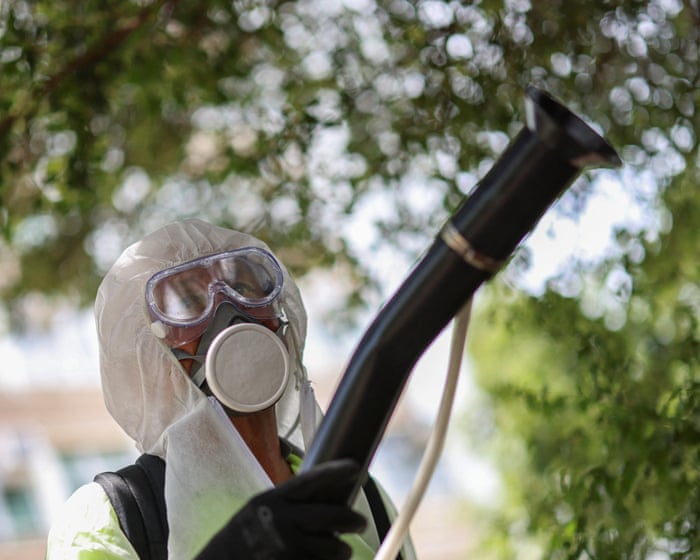
A study has found that chikungunya, an extremely painful tropical disease, can now be spread by mosquitoes across most of Europe.
Rising temperatures due to climate change mean infections are possible for over six months of the year in Spain, Greece, and other southern European countries, and for two months a year in southeast England. Scientists warn that as global heating continues, the disease will inevitably spread further north.
This analysis is the first to fully evaluate how temperature affects the incubation period of the virus in the Asian tiger mosquito, which has spread across Europe in recent decades. The research found that the minimum temperature at which infections can occur is 2.5°C lower than previous, less reliable estimates—a difference the researchers described as “quite shocking.”
First identified in Tanzania in 1952, chikungunya virus was once confined to tropical regions, where millions of infections occur each year. The disease causes severe and prolonged joint pain, which can be debilitating and is sometimes fatal in young children and older adults.
In recent years, small numbers of cases have been reported in more than 10 European countries, but large outbreaks involving hundreds of cases struck France and Italy in 2025.
Sandeep Tegar, from the UK Centre for Ecology and Hydrology (UKCEH) and lead author of the study, said: “The rate of global warming in Europe is about double the global average, and the lower temperature limit for virus transmission is crucial, so our new estimates are quite shocking. The northward spread of the disease is just a matter of time.”
Dr. Steven White, also at UKCEH, added: “Twenty years ago, if you said we’d have chikungunya and dengue in Europe, people would have thought you were mad—these were tropical diseases. Now everything has changed. This is because of this invasive mosquito and climate change—it really is that simple.
“We’re seeing rapid change, and that’s what’s worrying. Until last year, France had recorded around 30 cases of chikungunya over the previous decade. Last year, they had over 800.” The virus was brought to Europe by travelers from French overseas territories in the tropics, including Réunion, where outbreaks occurred.
The Asian tiger mosquito (Aedes albopictus), which bites during the day, is moving northward across Europe as temperatures rise. It has been detected in the UK but is not yet established there. While costly vaccines for chikungunya exist, the best protection is to avoid mosquito bites.
Dr. Diana Rojas Alvarez, who leads the World Health Organization’s team on insect- and tick-borne viruses, said: “This study is important because it shows that transmission in Europe may become even more noticeable over time.” She noted that chikungunya can be devastating, with up to 40% of people still experiencing arthritis or severe pain five years after infection.
“Climate plays a huge role in this, but Europe still has the opportunity to control the further spread of these mosquitoes,” she said. Key measures include community education on removing standing water where mosquitoes breed, wearing long, light-colored clothing, and using repellent. Health authorities also need to establish surveillance systems.
When a mosquito bites an infected person, the chikungunya virus enters its gut. After an incubation period, the virus appears in the mosquito’s saliva, allowing it to infect the next person bitten. However, if this incubation period is longer than the mosquito’s lifespan, the virus cannot spread.
The study, published in the Journal of the Royal Society Interface, used data from 49 earlier studies on chikungunya virus in tiger mosquitoes to determine these findings.For the first time, researchers have mapped the incubation period across the full temperature range. The study reveals that transmission can occur at temperatures as low as 13°C to 14°C, lowering the previous estimated threshold of 16°C to 18°C. This means the risk of chikungunya outbreaks is both wider and longer-lasting than earlier believed.
In countries like Spain, Portugal, Italy, and Greece, conditions allow transmission for over six months of the year. In nations such as Belgium, France, Germany, and Switzerland, the risk window spans three to five months.
“This more detailed risk mapping helps local authorities identify specific locations and months for potential transmission, allowing them to decide when and where to act,” said Tegar.
Outbreaks in Europe typically begin when travelers infected in tropical regions are bitten by local tiger mosquitoes, which then spread the disease. Historically, cold European winters halted mosquito activity, creating a natural “firebreak” between years. However, scientists are now observing year-round tiger mosquito activity in southern Europe, a trend likely to worsen with climate change and lead to larger outbreaks.
“We expect much bigger outbreaks because we’re losing that natural firebreak,” said White.
While no local transmissions have been reported in the UK, imported cases are rising sharply—73 cases were recorded between January and June 2025, nearly triple the number for the same period in 2024.
White emphasized the importance of preventing the establishment of tiger mosquitoes in the UK, noting: “This highly invasive species can transmit several serious infections, including chikungunya, dengue, and Zika viruses.”
Frequently Asked Questions
Of course Here is a list of FAQs about the study warning of a painful tropical disease potentially spreading across Europe written in a clear and natural tone
Basic Understanding The Disease
1 What tropical disease is the study talking about
The study focuses on dengue fever a viral infection spread by mosquitoes Its often called breakbone fever due to the severe muscle and joint pain it can cause
2 Why is this news now I thought dengue was only in tropical areas
A new scientific study has modeled that due to climate change the specific mosquitoes that carry dengue are finding more areas in Europe suitable to live and breed yearround
3 Is dengue already in Europe
Yes but in a limited way Southern Europe has seen small local outbreaks in recent years often started by a traveler bringing the virus back The study warns these outbreaks could become more frequent larger and spread further north
4 How do you catch dengue
You catch it from the bite of an infected Aedes mosquito It does not spread directly from person to person
Risks Symptoms
5 What are the symptoms of dengue
Symptoms include
High fever
Severe headache especially behind the eyes
Intense muscle and joint pain
Nausea and vomiting
A skin rash
Many people have mild or no symptoms but it can be severe
6 How serious is it Can you die from it
While most people recover in 12 weeks a small percentage develop severe dengue which is a medical emergency involving bleeding organ failure and shock It can be fatal without proper hospital care The risk is higher with a second infection
7 Who is most at risk
People living in or traveling to areas with active dengue transmission are at risk The elderly young children and those with certain chronic conditions or previous dengue infection are at higher risk for severe illness
Prevention Protection
8 Is there a vaccine for dengue
Yes but its not universally recommended for