Remember the early 2000s, when Silicon Valley was full of idealism and tech guys claimed they were going to save the world? Google’s unofficial motto was “Don’t be evil,” and its 2004 IPO prospectus said that doing “good things for the world” mattered more than “short term gains.” Similarly, Mark Zuckerberg wrote in Facebook’s 2012 IPO letter that the social network was “built to accomplish a social mission – to make the world more open and connected.”
As anyone paying attention could see, this was all just performative nonsense. Still, it’s hard not to feel nostalgic for that time – which ended for good in 2018 with the Cambridge Analytica scandal. Back then, billionaires and CEOs mostly still cared what ordinary people thought of them. They were self-aware enough to realize that, even with all their money, there are a lot more of us than there are of them.
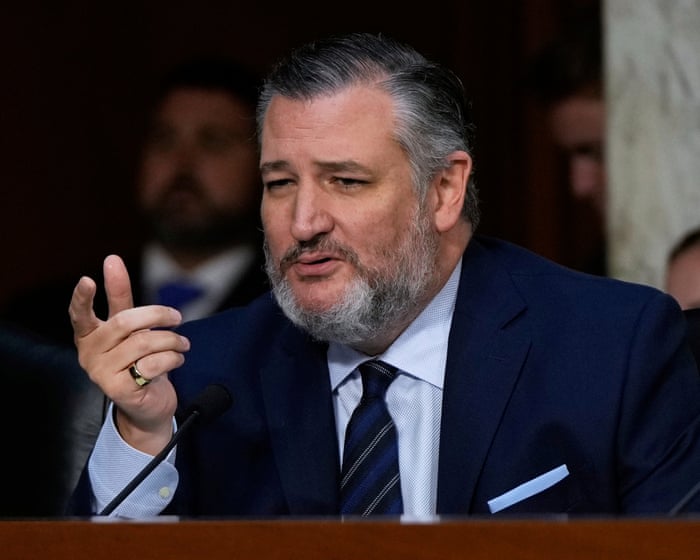
But now, there’s been a major shift in the mood. Donald Trump has made cruelty seem cool and normalized greed and corruption. Meanwhile, tech leaders have lined up to flatter him and grab as much money from his administration as they can. Elon Musk has gone from being a quirky rocket guy to a right-wing troublemaker. Zuckerberg is in his macho phase, urging companies to embrace their “masculine energy” and saying he regrets apologizing so much in the past.
As for the motto “don’t be evil”? Ha. Now tech companies are openly fueling unimaginable evil. For example, Project Nimbus – a $1.2 billion contract awarded by Israel to Google and Amazon – has been accused of playing a role in the ongoing genocide in Gaza. Meanwhile, Google co-founder Sergey Brin has said that using the term “genocide” for Gaza, which many leading human rights groups and scholars do, is “offensive.”
Amid this shift, something strange has happened: the Vatican has replaced Silicon Valley as the center of bold thinking. The Catholic Church, dripping with gold and burdened by a dark history of sexual abuse and cover-ups, is becoming a beacon of light in a very dark world. Even for nonbelievers like me, the pope has become a reassuring – and all too rare – voice of moral clarity.
Pope Francis, who died last year, started this change. He wasn’t exactly a perfect ally for LGBTQ+ people, but he insisted that no one should be marginalized for their sexual orientation and called laws criminalizing homosexuality “unjust.” He spoke out for immigrants, advocated for climate justice, and criticized the Trump administration’s mass deportations. He told churches in South Sudan they couldn’t stay neutral in the face of injustice. And he condemned Israel’s assault on Gaza. “This is not war. This is terrorism,” he said in November 2023. One of his last requests was that his popemobile be turned into a health clinic for Gaza’s children. Of course, Israel still hasn’t allowed it in.
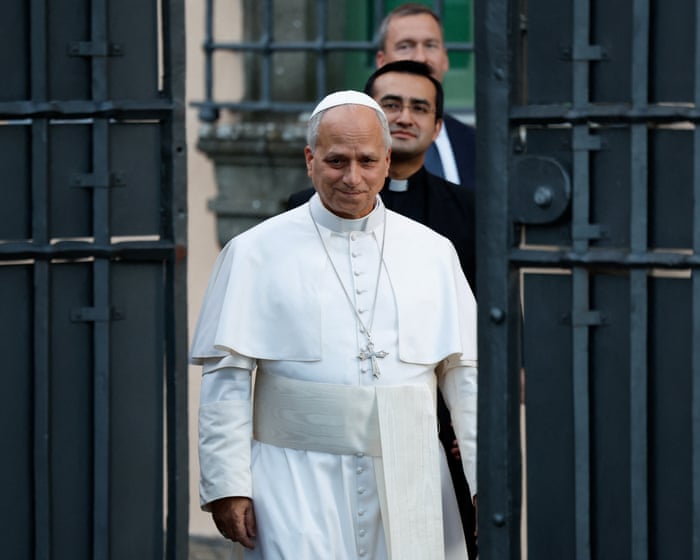
When Pope Leo XIV succeeded Francis, many wondered if he would keep standing up for the most vulnerable. To the Trump administration’s annoyance, he has. Leo has spoken out against the war on Iran and against the religious justifications used by MAGA supporters. He has reminded the world that “the people of Gaza are still not receiving humanitarian aid” – a fact most world leaders seem eager to ignore. He has rattled Trump and his supporters so much that the president accused him of being “WEAK on crime,” and Fox News’ Sean Hannity wondered on air whether the pope had “even read the Bible.”
Now, Leo is becoming a problem for Silicon Valley. On May 25, the pope released his first encyclical – an official statement outlining the church’s position on an important issue. Titled Magnifica Humanity:In a discussion about protecting human dignity in the age of artificial intelligence, a warning is issued about the risks of unregulated AI. It points out that “the growing dominance of a technocratic paradigm” threatens to “reduce creation to an object of exploitation and human beings to mere cogs in a system driven toward ever greater efficiency.”
The encyclical is quite long—over 40,000 words—and full of interesting insights. But here’s one of the sections I think is most important:
“The search for truth is an essential part of democracy. When questions about what is true lose their appeal, and a pragmatism takes over that is satisfied with what seems useful or effective, then democratic life weakens. Indifference to the truth leads, slowly but surely, to a slide into totalitarianism. As the philosopher Hannah Arendt wrote, the ideal subjects of such regimes are not so much those who are ideologically convinced, but rather ‘people for whom the distinction between fact and fiction (that is, the reality of experience) and the distinction between true and false (that is, the standards of thought) no longer exist.'”
Why I’m grateful to the Pope for his encyclical on AI | Francine Prose
Read more
Social media, which has been used for both good and bad, shouldn’t be blamed for all our problems. But it seems pretty clear that the moral decay spreading through the world began as social media took over the planet, turning us all into data points that could be manipulated. A fact is fragile, and in her essay Truth and Politics, Arendt warned that a flood of lies undermines our sense of reality. AI, of course, is already making this worse—eroding our critical thinking, casting doubt on everything, and blurring the line between fact and fiction. This is why the Trump administration loves AI so much: it helps make the rich richer and the rest of us more compliant.
Leo’s point about a dangerous “pragmatism” taking hold is also important. The world seems to be run by the gleefully evil and the pathetically pragmatic. On one hand, you have people like Stephen Miller, Donald Trump, and Benjamin Netanyahu—people who take pleasure in cruelty. Then, just as bad, though not as blatant, are the people who just go along with it all because it’s easier that way.
In a January piece in the Wall Street Journal, of all places, former US Treasury Secretary Robert E. Rubin lamented that business leaders stay quiet about Trump’s trampling of democracy. “In my experience, many leaders harbor deep concerns about Mr. Trump’s lawlessness, weaponization of the government, and interference in markets,” Rubin wrote. “They refrain from public criticism not because they find nothing to criticize but because they’re intimidated.”
We are ruled by cretins and cowards. From our universities to our courts, our institutions have not shown courage in this moment. Thank God, then, for the pope. He is still just a mortal, not perfect, but he is proving to be a much-needed force for good. He is speaking truth to a higher power.
Arwa Mahdawi is a Guardian US columnist and the author of Strong Female Lead.
Frequently Asked Questions
Here is a list of FAQs about Thank God for Pope Leo framed as a movement or sentiment expressing gratitude for his leadership
General Beginner Questions
Q What does Thank God for Pope Leo mean
A Its a phrase used by people who feel that Pope Leo is a uniquely strong clear and principled leader for the Catholic Church It expresses relief and gratitude that he is leading during a time of confusion and crisis
Q Who is Pope Leo
A Pope Leo is the Bishop of Rome and the leader of the Roman Catholic Church He is known for his traditional stance on doctrine his intellectual rigor and his firm guidance
Q Why do people say hes exactly the kind of leader our world is desperate for
A Supporters believe he offers clarity in a world of moral relativism They see him as a doctor of the soul who doesnt water down Church teaching to fit modern trends but instead provides a strong unshakable foundation in a chaotic culture
Q Is this a political movement
A No Its a spiritual and cultural sentiment Its about supporting a Pope who prioritizes truth and tradition over popularity which many believe is the only way to heal both the Church and society
Benefits Impact
Q What are the main benefits of his leadership style
A Three key benefits 1 Clarity He speaks plainly about right and wrong 2 Courage He doesnt fear criticism from secular or progressive voices 3 Unity He pulls the Church back to its core teachings reducing internal confusion
Q How does he help ordinary Catholics
A He gives them confidence Instead of feeling like they have to reinterpret their faith to fit the world they feel empowered to live their faith boldly He reminds them that the Church is a refuge not a debating society
Q Does his leadership affect nonCatholics
A Yes Many nonCatholics and even secular people respect his consistency In a world of shifting ethics a leader who stands for unchanging truth can be a moral anchor for society as a whole
Common Concerns Problems