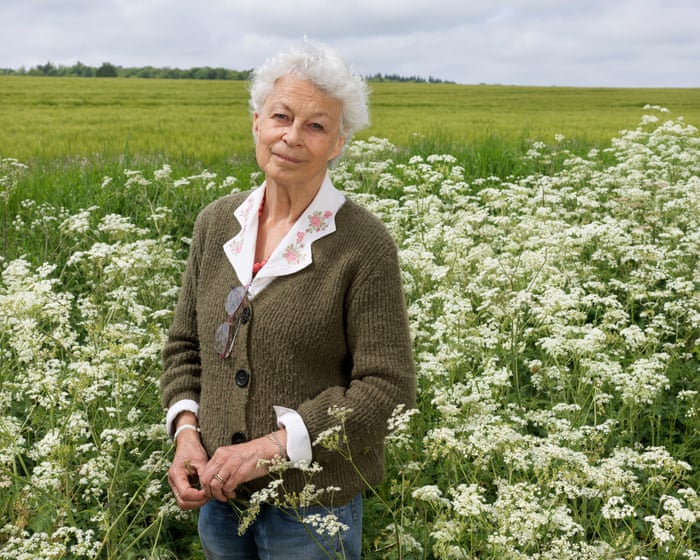
When Sarah Geeson-Brown retired in 2022, she had a rough idea of what the next few years would look like. She and her husband, Michael, planned to travel. But six months later, Michael had a stroke, and then another. After a third stroke, he fell and broke his hip, which left him in a wheelchair. By the time he came out of the hospital, Geeson-Brown was his full-time carer.
They had meant to go Interrailing, but now even the end of the garden felt far away, and upstairs was completely out of reach. Geeson-Brown, then 67, spent her days endlessly circling the ground floor of their home in Oxfordshire, England. “We both had to deal with a lot of grief,” she says. “There was so much saying goodbye to things… Being out and about. And, of course, sharing a bed.”
Her waking hours were ruled by giving him 19 pills a day, using hoists, washing, dressing, trying to eat, and going to medical appointments. Even with help from professional care workers, the days were exhausting and the nights were broken.
“The word ‘care’ comes from the old English, caru, which means sorrow, anxiety, grief, trouble,” Geeson-Brown says. “So, you know, that’s quite a lot to carry.” The loneliest time was “going up to bed on my own each night… knowing it was never going to get better.”
At first, her instinct was to cheer her husband up. “Your legs don’t work,” she would say, “but that doesn’t make you a lesser man.”
The emotional toll felt harder to handle than the physical demands. She could wash him and deal with incontinence. “But the mental side, that was the tough part.”
Over time, she realized that “what helped most was to say, ‘Yes, this is a crap situation’, and to cry with him. Quite often we would cry, and then we’d laugh.” In this way, she says, she learned “to align with him.” She would lie beside him to talk, just to be at the same height, and to remind herself “that we were still a couple – not a patient and carer.”
After a while, she noticed that although their world had shrunk tightly around them, it had, in unexpected ways, expanded.
“We had care workers of different nationalities,” she says. “I learned about Pakistan, Nigeria, South Africa, Namibia… countries we hadn’t visited. It was a privilege to hear about their lives, families, backgrounds. I had this sense that, oh, maybe we are travelling in a sort of vicarious way.”
She and Michael had met in Hong Kong in 1988. He was working as a lawyer, and Geeson-Brown, then 32, had left her publicity job at the National Gallery in London to travel.
“There wasn’t a thunderclap,” she says. “But I liked him and he liked me. We found that we could talk to each other. And that didn’t stop for 38 years.” Back in England, they married and had two sons.
Geeson-Brown thinks that talking about love can “sound so Hollywood, or trite.”
But while she cared for her husband, she became so attentive to him and his needs, so in tune with them, that she felt her love grow stronger. It was constantly examined, and so, she says: “I was given the opportunity not to take it for granted, but to see it for what it was.”
Their love felt alive to her; she drew on it deeply every day. It was “a gift.”
Small moments of togetherness brought huge joy – watching the clouds, his hand reaching for hers. She cooked him his favourite dishes and planned small adventures: lemon meringue pie, singing lessons, walks with the wheelchair.
When Michael died in January: “Everything felt a bit unreal.”
In March, the rains came. “I went into a slump,” Geeson-Brown, now 70, says. “I thought: ‘You’ve still got life in you, and you’ve got to find meaning in it.'” She decided to help people take care of their gardens. The rhythms of nature are soothing, and she is ableShe now brings the same patience and acceptance she discovered while caring for Michael into her daily life. Becoming a carer was the hardest thing Geeson-Brown has ever been through. But she found a kind of balance in that difficulty: a deep appreciation mixed with sadness, and gratitude for what she had lost, alongside the grief. “You can choose how to look at things,” she says.
The small things still matter most. “Human kindness, raindrops on a window pane, the burst of a robin’s song.”
Tell us: has your life taken a new direction after the age of 60?
Frequently Asked Questions
Here is a list of FAQs based on your experience written in a natural tone with clear and concise answers
BeginnerLevel Questions
1 How did caring for your husband change your view on travel
It taught me that travel isnt about crossing things off a bucket list Now its about finding peace in small slow momentslike watching a sunset from a quiet bench or taking a short gentle walk together
2 What do you mean by a fresh perspective on nature
Before I saw nature as a backdrop for activities Now I notice the details the way light filters through leaves the sound of birds or the feel of a cool breeze Its more about appreciating whats right in front of me
3 Did caring for someone make you feel more or less in love
More Its a different kind of loveless about grand gestures and more about quiet patience small acts of kindness and just being present It deepened our bond in a way I never expected
4 Im new to caregiving How do you find joy in it
Start by looking for tiny wins Maybe its a shared laugh over a silly mistake a good cup of tea together or a moment when you both just sit in comfortable silence Joy hides in the routine
Advanced Practical Questions
5 How do you handle the loneliness that can come with caregiving
I reframed alone time as recharge time I take 10 minutes to sit in the garden or listen to a favorite song I also joined a local support grouptalking to others who get it makes a huge difference
6 Whats one practical tip for traveling with a loved one who has limited mobility
Plan for margin time Double or triple the time you think youll need for transitionsgetting in and out of a car finding a restroom or just resting Rushing ruins the experience for both of you
7 You mentioned a fresh perspective on love Can you give a specific example
Yes We used to argue about who forgot to buy milk Now if he cant remember something I just smile and say Thats okay well figure it out together Love became less about being right and more about being kind