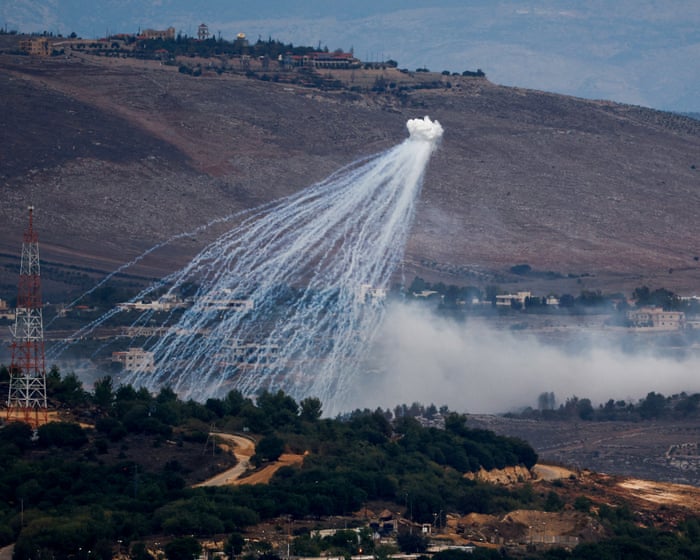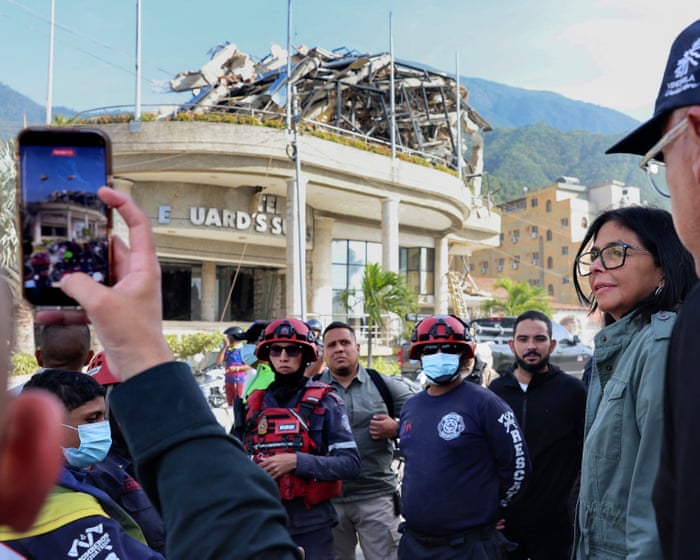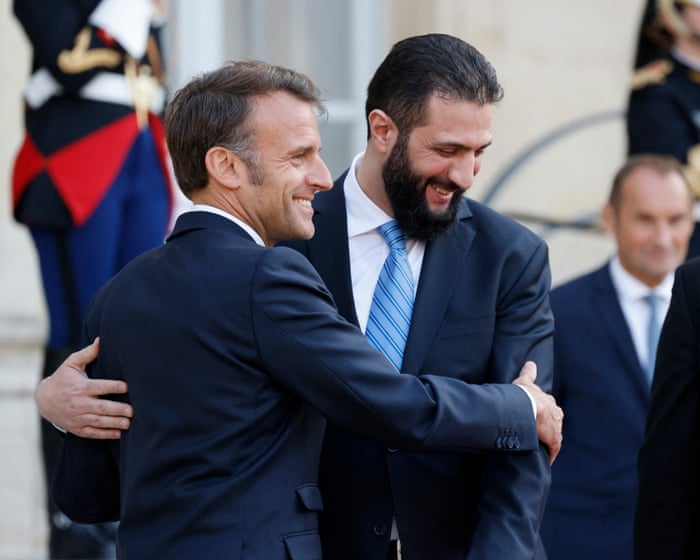
A year after the fall of Syria’s Bashar al-Assad, the country’s new president, the former jihadi fighter Ahmed al-Sharaa, spoke at the Doha Forum this month. He skillfully navigated questions about his contentious past while describing Syria’s difficult path toward a more open, rules-based system. Listening to him, I was struck by a thought: even though Europe’s standing in the Middle East has been badly damaged by its stance on Gaza and its self-exclusion from Iran’s nuclear diplomacy, it still has a part to play with its neighbors in the eastern Mediterranean.
Europe’s world has been upended—by Washington’s alignment with Moscow in Ukraine, and by the transatlantic rift as the Trump administration treats Europe as a rival. Another facet of this upheaval is Europe’s fading relevance in the Middle East. Only by accepting that the past is over can Europeans hope to regain a constructive, independent role in the region.
After the Suez crisis in 1956 ended European colonial dominance in the Middle East, Europeans settled for playing second fiddle to the United States. Washington called the shots, and European governments and publics did not always agree—most notably over the 2003 Iraq war. Still, the U.S. usually sought European support for its initiatives, and Europe generally complied.
The underlying bargain—European security under the American umbrella—made the arrangement worthwhile. That didn’t mean Europe lacked agency in the Middle East. It played key roles during the Oslo peace process, backing the Palestine Liberation Organization as an emerging state. More impressively, European diplomacy patiently built the multilateral effort that led to the Iran nuclear deal. In each case, however, Europe’s role—even when it differed from Washington’s—aimed to support U.S. leadership while softening its excesses. Sometimes it worked; often it failed. But the political framework held.
That framework is now gone. Europe has withdrawn from the Middle East, consumed by war on its own continent. The conflict in Ukraine has absorbed most of Europe’s foreign-policy attention and distorted its view of the Middle East. Securing U.S. support on Ukraine, especially under Donald Trump, has meant accepting Washington’s regional policies without question—including the illegal bombing of Iran. Iran, long seen as problematic due to its human rights record, proxies, and nuclear program, suddenly became an adversary in European eyes because of its alignment with Russia.
For its part, the United States no longer treats Europe as its primary partner in the Middle East. With the rise of regional powers—especially the Gulf states and Turkey—Washington now deals directly with Riyadh, Doha, Abu Dhabi, and Ankara. Europe’s marginalization was already clear under Joe Biden, largely due to its own self-inflicted irrelevance. Under Trump, this exclusion has become automatic, as his administration pushes Europe further to the sidelines.
Regional players are not asking Europe to return. Most damagingly, Europe’s stubborn and immoral refusal to use its influence to stop Israel’s devastating war in Gaza has shattered whatever credibility it had left. When German Chancellor Friedrich Merz bluntly stated that Israel was doing Europe’s “dirty work” by attacking Iran, the pretense fell away. Europe was no longer accused of double standards; with few exceptions—like Spain, Norway, Ireland, and occasionally France—it was seen as having no standards at all. There was neither leverage nor principle: Europe had simply been erased from the map.
Today, any hope for a lasting Gaza ceasefire, let alone progress toward a Palestinian state, does not come from European efforts.European leaders are still hiding behind Trump’s peace plan, avoiding any real pressure they could put on Israel. The small hope that remains comes from Qatar’s mediation, with Turkey, Saudi Arabia, and Egypt playing key roles. Likewise, if diplomacy between the U.S. and Iran restarts in the future, European governments will not be leading it. The E3 group—France, Germany, and the UK—weakened its own position by triggering the “snapback” of UN sanctions on Iran, which effectively ended the nuclear deal they helped create.
Any progress now depends on alignment between the Gulf states and Iran, especially Saudi Arabia’s potential role in facilitating talks between Washington and Tehran. In short, on the Middle East’s most urgent issues—the Israeli-Palestinian conflict and Iran—European governments can, at best, support Gulf efforts to influence Trump. That support is important, particularly in Gaza, where a fragile ceasefire could fall apart if Trump’s plan stalls. But Europe’s role in the region has been reduced to a third-tier status.
Yet the Middle East remains Europe’s neighbor, and it would be naive to think Europeans can stay disengaged forever. With its room to maneuver shrinking, Europe should focus on the wider Levant—specifically Lebanon, Iraq, and Syria. All three countries are highly vulnerable. Lebanon is navigating a complex reform process, with the constant threat of war as Israel continues to occupy five outposts in the country. Iraq has managed to stay out of the region’s recent upheavals, striving for a delicate balance as it seeks greater autonomy without angering Tehran. Syria remains fragile as it tries to reconcile justice and social cohesion while facing an expansionist and aggressive Israel.
Except for Syria, where Trump has shown some interest—highlighted by al-Sharaa’s visit to Washington—the U.S. is not deeply involved in Lebanon or Iraq. And while regional actors are essential, whether for their security influence (like Turkey’s in Syria) or economic support (like the Gulf’s), there is a vacuum that Europe could help fill. With the international liberal order in disarray, governance support may no longer be fashionable, but it is needed in the Levant. This is where Europe can still make a constructive contribution.
Frequently Asked Questions
Of course Here is a list of FAQs about the statement Europe has lost all credibility in the Middle East To regain it the path forward lies in Syria Iraq and Lebanon
BeginnerLevel Questions
1 What does it mean that Europe has lost credibility in the Middle East
It means that many governments and people in the Middle East no longer trust Europe to be a consistent effective or fair partner They see European policies as often being hypocritical driven by shortterm interests or ineffective in addressing core regional problems
2 Why focus on Syria Iraq and Lebanon specifically
These three countries represent epicenters of major unresolved crises that impact the entire regionfrom war and terrorism to refugee flows and economic collapse Successfully contributing to stability here would demonstrate a new more capable European approach
3 Isnt this the United States role Why should Europe get involved
The US is a major player but its focus is often military and strategic Europe due to its geography deep historical ties and the fact that it feels the direct consequences has a unique stake and potential to play a different role focused on longterm stabilization and development
4 What could Europe realistically do in these countries
Europe could move beyond just humanitarian aid and focus on rebuilding infrastructure supporting local governance investing in job creation for youth and fostering independent civil societyall while maintaining consistent diplomatic pressure for political solutions
Advanced Practical Questions
5 What specific actions caused Europe to lose credibility
Key actions include inconsistent responses to the Arab Spring perceived double standards on human rights failing to prevent the Syrian wars worst atrocities and policies seen as prioritizing stemming refugee flows over solving the root causes of displacement
6 How are Syria Iraq and Lebanon connected Why is a joint approach necessary
Their fates are intertwined Instability in Syria spills into Lebanon and Iraq Militant groups operate across borders Economic collapse in Lebanon affects the entire region A piecemeal approach fails Europe needs a coordinated strategy that addresses crossborder issues like refugees reconstruction and security sector reform
7 What are the biggest obstacles Europe faces in this path
Complex Conflicts Deepseated sectarian and political divisions within each country