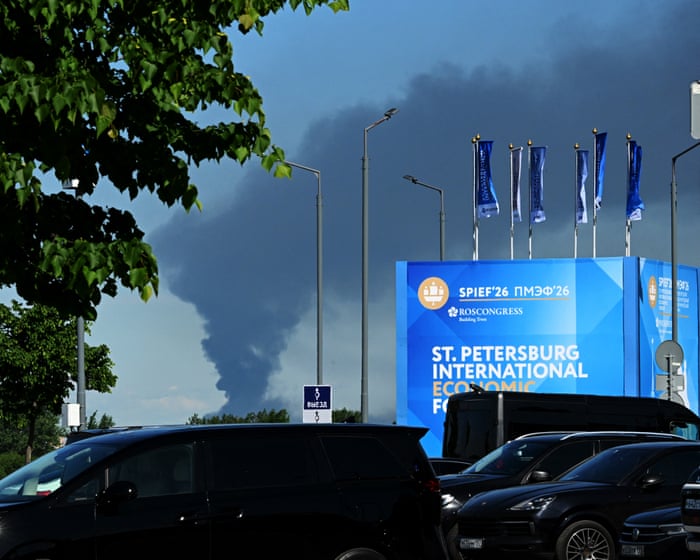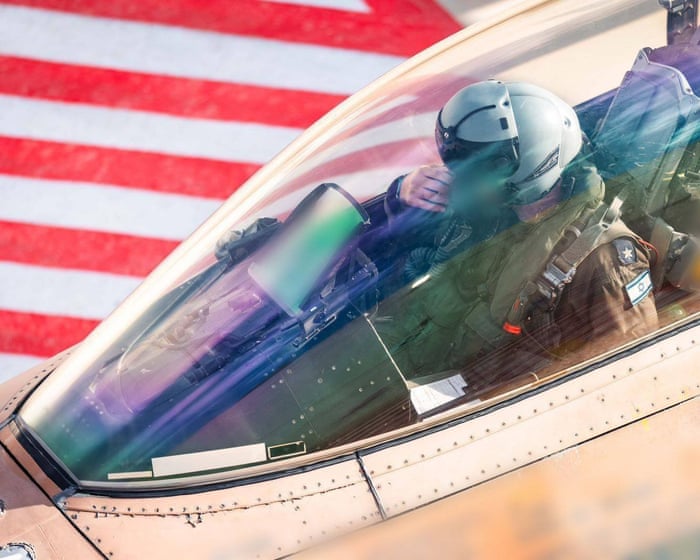
Israel lacked a realistic plan for regime change when it attacked Iran, according to multiple Israeli security sources. The hope that airstrikes would spark a popular uprising was based more on “wishful thinking” than solid intelligence.
Iran has endured nearly two weeks of bombing raids and the assassination of Ayatollah Ali Khamenei. President Trump is now publicly considering ending the increasingly costly war.
If Iran’s new leadership consolidates power, the long-term success of the conflict may ultimately depend on the fate of 440kg of enriched uranium buried under a mountain by U.S. strikes last June, say former and current Israeli defense and intelligence officials. This material, enough for more than ten nuclear warheads, could allow Iran to accelerate building a weapon if it remains in the country.
“These 440kg of uranium are one of the clearest litmus tests for how this war ends, whether it is a success,” said one former senior Israeli defense and intelligence official who worked on Iran. “We need to be in a position where either this material is out of Iran, or you have a regime where you are confident that it is safeguarded [inside Iran] in a very meaningful way.”
Hardliners in Iran have long argued that a nuclear deterrent is the only guarantee of the Islamic Republic’s survival. The overwhelming military dominance of U.S. and Israeli forces in this war is likely to strengthen that view if the regime survives.
The U.S. is reportedly considering a high-risk military mission to secure the uranium. Pre-war negotiations also included proposals for Iran to surrender the enriched material to another country.
“It’s a high-risk game, this war, because if it succeeds, it would completely change the Middle East for the best,” the former official said. “But if we bomb everything and the regime stays in power, and they continue to maintain those 400kg of uranium, I think we will be starting the countdown to an attempt by Iran to go for a nuclear weapon.”
Yoav Rosenberg, the former deputy head of Israel’s military intelligence research division, was even more blunt, describing any end to the war that leaves the uranium in Iranian hands as a Pyrrhic victory.
“The worst result of this war will be a declaration of victory around June 2025, leaving the Iranian regime weak but with 450kg of enriched uranium in its hands,” he said in a social media post. “So they will 100% be going for a nuclear bomb, and our victory will become our loss.”
The assassination of Ali Khamenei may have intensified the nuclear threat from Iran. He devoted significant economic and political resources to a program easily convertible to military use but held off for decades on the final step of ordering a weapon’s construction.
The views of his son and successor, Mojtaba Khamenei, are less clear. “With [Ali] Khamenei, we knew almost everything about his decision-making,” said another former senior intelligence official. “He was doing a lot of things we were concerned about, and that’s why there was a war. But he never took the decision to sprint for a bomb, no matter what.”
“With Mojtaba, I am not so sure we have the knowledge to assess what he will do with the nuclear program,” the source added. “He could sprint for a bomb right now.”
The devastation from Israeli and U.S. bombing would delay work on a nuclear weapon, but even with limited technical capacity, a political decision to proceed would escalate the long-term threat to Israel, he said.
Despite these risks, the U.S.-Israeli war has broad support within Israel’s military establishment, several serving and former defense and intelligence officials told the Guardian, reflecting popular backing.The recent escalation of airstrikes by Israel, with U.S. support, has significantly degraded Iran’s military infrastructure, targeting its ballistic missile program, launchers, and associated supply chains, as well as key figures in its political and military leadership. This campaign follows the Hamas-led attacks of October 7, 2023, which led Israel to prioritize the rapid elimination of perceived immediate threats.
While Israeli Prime Minister Benjamin Netanyahu and former U.S. President Donald Trump initially framed the conflict with calls for regime change in Iran, many Israeli defense and intelligence experts view this goal as unrealistic through air power alone. They argue that while airstrikes can cripple military and industrial capacity, they cannot easily force political collapse or predict public uprising, as seen in the regime’s brutal suppression of protests earlier this year.
The campaign has also targeted Iran’s internal security apparatus, such as the Basij militia, in an attempt to weaken the government’s control. However, experts note that a popular uprising during wartime is unlikely, and significant defections from security forces have not materialized. Some believe that while external bombing may not directly cause regime change, the cumulative economic and security damage could eventually destabilize the government.
Despite concerns that a weakened Iran might pose increased nuclear risks if it retains enriched uranium, many in Israel’s security establishment support continued airstrikes over diplomacy. They argue that destroying Iran’s military-industrial base and further crippling its economy takes precedence, reflecting a broader shift in Israeli security strategy since October 7 toward immediate tactical dominance.The goal is to weaken Iran and its proxies as much and as quickly as possible, even if the war might accelerate Iran’s long-term pursuit of a nuclear weapon, according to multiple current and former officials.
“Israel is a different country after October 7th. The policy has completely changed. About 70% to 80% of Israelis now have zero tolerance for threats from adversaries who want to destroy us,” one official said regarding the war’s long-term strategic impact. “The IDF’s first priority is protecting our families. Everything else comes after that.”
After nearly two weeks of bombing, much of Iran’s military-industrial base has been destroyed, hitting targets from missiles and factories to the academics and engineers behind the programs.
“The IDF is close to concluding this campaign. They won’t say so publicly because it’s a political decision, but militarily, they’ve nearly completed the mission,” the official added. “Two more weeks, and it will be over.”
A third former senior security official noted that repairing the damage will take years, enhancing Israel’s security in the near term even without regime change in Iran. “Iran is not a small terrorist cell; it’s a large country with deep academic, intellectual, and resource capabilities. So once the active combat ends, assuming the regime remains, we should expect a new arms race.”
“You have to target the experts, facilities, equipment, and in some cases, nuclear materials. Dealing a severe blow to these capabilities can delay the renewal of the threat for a much longer time,” the official explained.
Several sources indicated that the current bombing campaign has been more extensive than the 12-day war in June. At that time, Netanyahu declared a “historic victory” by neutralizing Iran’s ballistic missile threat, but Iran quickly restored production.
Another strategic success for Israel has been securing the ability to operate in the skies over a vast and distant country—more than 1,000 kilometers away and larger than Germany, France, and Spain combined. This will make it easier for Israel to project power over greater distances in future conflicts.
Air defenses cannot be eliminated in a single surprise strike; achieving air superiority required sustained attacks on anti-air missile batteries, often when the enemy was prepared. In response, Iran has launched asymmetric attacks across the region and into Europe, driving up fuel costs and destabilizing regional economies.
Many Israelis, viewing this war as an existential struggle, support a prolonged bombing campaign in hopes of weakening the Iranian regime enough to force it to relinquish control of enriched uranium, thereby granting Israel “much broader deterrence.”
They are willing to risk extending an open-ended conflict that began in Gaza over two years ago and has since expanded to Lebanon, Syria, Iran, and Yemen.
As oil prices rise, fueling inflation and unrest, many regional and global leaders are making very different calculations. Israel’s reliance on military power as its sole path to security risks leaving it isolated in the Middle East and, eventually, internationally.
“Israel is neither willing nor able to leverage its dramatic military achievements to build new political alliances,” another former senior official said. “I fear we will remain stuck in this situation.”
Frequently Asked Questions
Of course Here is a list of FAQs about the reported Israeli attack on Iran and the strategic questions surrounding it framed in a natural tone
BeginnerLevel Questions
1 What actually happened
Reports from Israeli and Western security sources indicate that Israel conducted a limited military strike on targets inside Iran in April 2024 widely seen as a response to a prior major Iranian attack The key claim is that this action lacked a clear longterm plan for how to deal with the Iranian government afterward
2 What does no clear strategy for changing its government mean
It means the attack was designed to send a message or degrade specific military capabilities but it wasnt part of a larger publicly known plan to force Irans leaders to step down alter the regimes fundamental behavior or reshape the countrys political system The goal seemed to be retaliationdeterrence not regime change
3 Why would Israel attack without such a plan
Possible reasons include wanting to restore deterrence without triggering a fullscale war responding to domestic political pressure to act or specifically targeting a military asset seen as an immediate threat rather than trying to solve the broader Iran problem
4 What are the risks of acting without a longterm strategy
The main risks are escalation without a clear endgame It could lead to a cycle of retaliation drag other countries into the conflict strengthen hardliners in Iran and destabilize the region further without achieving any lasting security improvement for Israel
Advanced Strategic Questions
5 If the goal wasnt regime change what were the likely strategic objectives
Analysts suggest possible objectives were 1 Signaling Demonstrating capability and resolve directly on Iranian soil 2 Calibration Imposing a cost on Iran while keeping the response proportionate to avoid allout war 3 Degradation Weakening specific military assets used in the prior attack 4 Reassurance Showing the Israeli public and allies that threats will be answered
6 How does this fit into Israels broader Iran strategy
Israels longterm strategy has been a multipronged campaign between wars involving covert operations cyberattacks and supporting pressure from abroad to hinder Irans nuclear and regional power ambitions This overt strike is a significant escalation of that