At the Embassy Suites on Broad Street in downtown Chattanooga, the vans have left for the last time. The day before they departed, like every other day, a small group of kids had climbed over barriers and trees, hoping to catch a glimpse of Spain’s players.
A girl stood on a ladder, holding up a sign in each hand above the fence. One read: “I’ve been here three weeks. I know you’ve seen me!” The other said: “Please come out!” On Wednesday afternoon, Tennessee time, they finally did. They won’t be coming back.
Mexico ends World Cup knockout drought with a last-32 win over Ecuador in the Azteca cauldron. Read more.
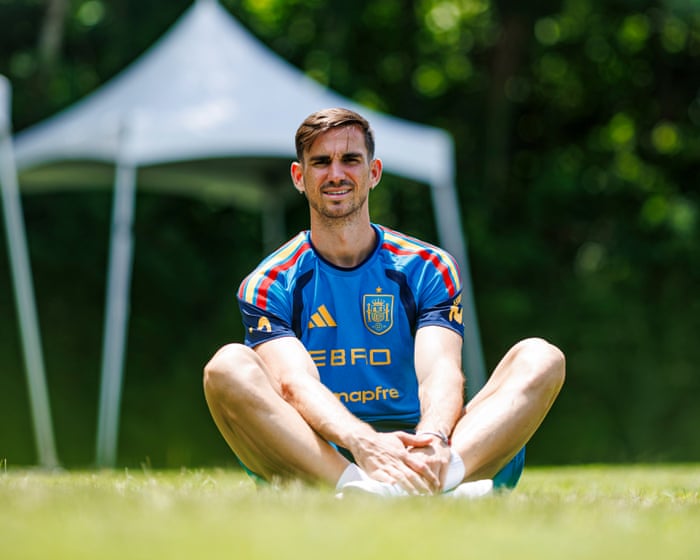
Spain is leaving their base and heading to Los Angeles, and if all goes well, from there to Dallas. They’re leaving with more doubts than they had before the World Cup started. Well, Fabián Ruiz says, maybe that’s from the outside looking in. Inside, at the training ground where the last session just wrapped up before they fly west, it’s a bit different.
Fabián doesn’t say much, and he doesn’t really get the chance to, but one word he keeps coming back to is “natural.” The debates? Those are for other people. Still, Fabián says: “Sometimes things don’t go the way we’d like; we’re working to make sure they do.”
For Spain, the start of the tournament was all about Lamine Yamal’s fitness. At just 18, he’s already a player who overshadows everything else, and he had been out since April. It felt like everyone was waiting for him, and they couldn’t really get going until he was back.
All four wingers have had issues, and that hits at the heart of Spain’s identity—the twist on tiki-taka that Luis de la Fuente brought. The midfield is also a concern. And that’s where Fabián comes in. Or, maybe, where he gets left out.
He hasn’t started since the opening game against Cape Verde. Sometimes it’s felt a little too easy to leave Fabián on the bench. “If his name wasn’t Fabián, everyone would talk about him more,” De la Fuente once said. If he talked about himself a bit more, they might, but that’s not really his style. He’s soft-spoken, doesn’t always get noticed, and has no one pushing for him. Although the other day, there was a funny moment when he suggested a TV channel add subtitles for him, after another channel did the same for his mom in a recent documentary. Chari Peña has a strong Andalusian accent, and Fabián is proud of Andalusia—and even prouder of her.
From the small town of Los Palacios y Villafranca—known for producing bumper cars, wicker chairs, and tomatoes—Chari raised Fabián on her own, working as a cleaner at the same training ground where her son made his way through Betis’s youth system. Some days, she’d take him to sessions at 7 a.m., when she had to clock in, leave him asleep in the car, and then go back to wake him up when it was time to train.
Everything he achieves is for her, he says. And it’s been a lot. He’s a European champion three times over: winner of Euro 24, where he was arguably Spain’s best player, and the last two Champions Leagues with Paris Saint-Germain.
View image in fullscreen: Fabián Ruiz (center) on the Chattanooga training pitch with his Spain teammates, including Lamine Yamal (left). Photograph: Pablo Garcia/The Guardian
De la Fuente claimed Spain has “the six best midfielders in the world,” which is exactly the kind of thing De la Fuente would say. The challenge, though, is figuring out how to make them all fit or which combination works best. And what shape they’re in: like Nico Williams and Lamine Yamal, Mikel Merino and Fabián missed a lot of the season due to injury.
“It’s been hard to get my pace and rhythm back, but I’m 100% now,” Fabián says. “I think they’re 100%, but I can only speak for myself: I feel in good form. There were long-term injuries, and it’s true that at first it’s hard to get up to speed and adapt when you come back. I struggled with that, but by the time I got here, I had played several games in a row for PSG at the highest level without needing a break. The injury is behind me now.”At the World Cup, Pedri and Rodri have started every match. The question is who will play alongside them. In the first game, it was Fabián. In the second, Dani Olmo. In the third, Merino. Who it will be next, against Austria on Thursday, is uncertain—and what that means is also unclear. That’s the puzzle the coach has to solve.
Including Fabián meant switching from the 4-2-3-1 formation, which was De la Fuente’s preferred setup, to a 4-3-3, or moving Pedri higher up the pitch, where he found it harder to control the game. Fabián being dropped seemed to be about the team’s shape as much as his performance, though he insists: “I don’t think it’s about Pedri’s position that makes the game slower.”
[Skip past newsletter promotion]
Free newsletter | Every weekday
Sign up to Football Daily
Kick off your evenings with the Guardian’s take on the world of football
Preview latest
Enter your email
Sign up
[After newsletter promotion]
Fabián Ruiz profile
“From the outside, I don’t know how people see it. On the inside, we see it as completely normal. We know any of the central midfielders can play. We can play together or separately, it doesn’t matter. It’s not important who plays; what matters is that we support each other.
“I don’t think it changes anything. Our idea is the same, and we all have the ability to make it work. We have different qualities, but as a team, the idea stays the same.”
But the players trusted to lead are not the same. At the European Championship, Spain had a kind of leadership trio: Álvaro Morata led through empathy, Dani Carvajal through competitiveness and character, and Rodri through his football. Only one of them is still here.
“Álvaro and Dani were two very important captains for us and had a lot of influence in the team,” Fabián says. “But there are others with experience. The captains. Rodri, the first captain. Unai Simón. Mikel Oyarzabal, who seems shy, but he’s someone you listen to, someone who commands attention when he speaks because he always has the right opinion. Aymeric Laporte, too.”
What about you? After all, no one else has won two Champions Leagues in a row. “Well…” Fabián says, which kind of says it all. “I’ve always said I’m reserved. I’m not someone who likes to be in the spotlight or talk much, but within the group, I always do my part to help my teammates, especially the younger ones.
“Whatever the manager decides, we’re fully ready to help the team on or off the pitch. The best thing about this team is the family we are. We believe in what we’re doing. We’re 100% now, and we hope we can show it.”
Frequently Asked Questions
Here is a list of FAQs based on Sid Lowes article about Fabián Ruiz and his quote It doesnt matter who plays what matters is that we support each other
BeginnerLevel Questions
1 Who is Fabián Ruiz
Fabián Ruiz is a Spanish professional footballer who plays as a midfielder for Paris SaintGermain and the Spanish national team Hes known for his technical skill and passing
2 What does the quote It doesnt matter who plays what matters is that we support each other mean
It means that individual egos and personal glory are less important than the teams unity and collective effort The focus should be on working together not on who gets the spotlight
3 Why did Sid Lowe write an article about this quote
Sid Lowe is a wellknown football journalist He likely wrote the article to highlight Fabián Ruizs humble teamfirst mentality which is a refreshing contrast to the often individualistic nature of modern football
4 Is Fabián Ruiz a starter for Spain or PSG
He is often a starter but his playing time can vary The quote emphasizes that even when he isnt playing he still believes in supporting his teammates
AdvancedLevel Questions
5 How does Fabián Ruizs quote relate to his playing style
His playing style is very selfless Hes a connector on the pitchhe makes simple effective passes to keep the team moving rather than trying to dribble past everyone or take flashy shots His quote perfectly matches his unselfish role
6 What specific match or situation prompted this quote from Fabián Ruiz
While the exact moment isnt specified in the prompt the quote likely came from a press conference or interview after a match where he was either benched or rotated out Its a response to a question about team selection or individual disappointment
7 What is the common problem this quote addresses in football
The common problem is a toxic team environment where players care more about their own minutes or stats than the teams success This can lead to infighting poor morale and underperformance Ruizs quote is a direct solution to that problem
8