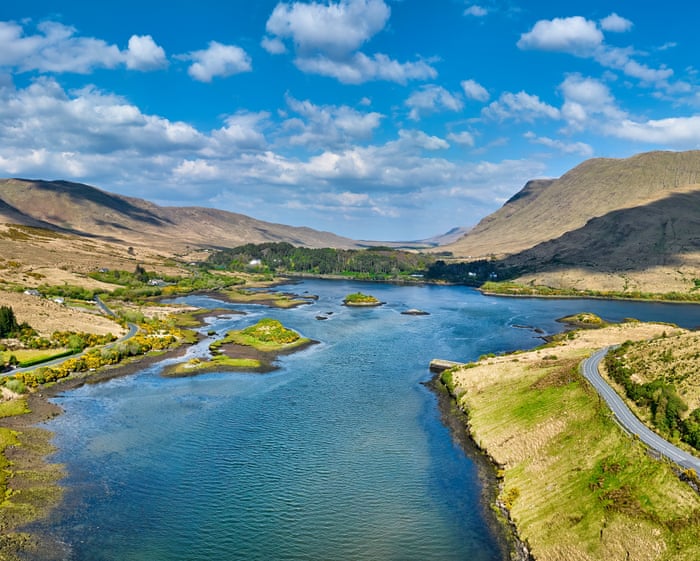
Εάν λάβετε υπόψη όλες αυτές τις πηγές μαζί ως προς τη ροή, είναι μακράν η μεγαλύτερη στην Ιρλανδία και ένα από τα μεγαλύτερα συστήματα στον κόσμο, δήλωσε ο Δρ. Benjamin Thébaudeau, γεωλόγος του πρόσφατα ονομασθέντος Γεωπάρκου UNESCO Joyce Country and Western Lakes στη δυτική Ιρλανδία.
Μέσα σε λίγες ημέρες, ανακάλυψα ότι αυτό το τεράστιο δίκτυο ασβεστολιθικών πηγών και σπηλαίων είναι η μηχανή που κινεί αυτό το τοπίο, όπως ακριβώς ένα υπόγειο σύστημα τρένων τροφοδοτεί μια πόλη. Είναι ένα μέρος όπου ποτάμια εξαφανίζονται σε ασβεστολιθικές ρωγμές και υπόγειες λίμνες, και όπου δρόμοι διασχίζουν πλημμυρισμένες κοιλάδες κάτω από βουνά που σχηματίστηκαν από φωτιά και πάγο.
Είναι επίσης το ονειρικό, καταπράσινο τοπίο της δυτικής Ιρλανδίας που φημισμένα προσέλκυσε το Χόλιγουντ στο χωριό Cong για την ταινία **The Quiet Man** το 1952. Ταξιδεύοντας μέσα από το γεωπάρκο από την καρδιά της Κομητείας Γκάλγουεϊ προς τη νότια Κομητεία Μέιο, βάσισα τον εαυτό μου στο Cong, το οποίο είναι ουσιαστικά ένα εσωτερικό νησί ανάμεσα στο Lough Mask και στο Lough Corrib. Το χωριό παίρνει το όνομά του από την ιρλανδική λέξη για τα «στενά», αναφερόμενο στη στενή, υδατοδέσμια γεωγραφία του και στη συγκέντρωση πηγών που ανεβαίνουν και κατεβαίνουν αόρατα κάτω από την επιφάνεια.
Η γλώσσα διατρέχει το τοπίο ως ένα άλλο εδραιωμένο σύστημα δίπλα στο βράχο, το νερό και το χώμα.
Το νερό είναι παντού και σπάνια ακίνητο. Αποστραγγίζεται από το Lough Mask μέσω καταβόθρων, στη συνέχεια ταξιδεύει αόρατο για μίλια μέσα από ασβεστολιθικές ρωγμές κάτω από το Cong, για να βγει τελικά ξανά στην επιφάνεια ως κρύες πηγές γύρω από το χωριό.
«Αν κοιτάξετε στο κέντρο, μπορείτε να δείτε το ρεύμα να ρέει σε αντίθετες κατευθύνσεις», λέει ο Benjamin, δείχνοντας πέρα από τους ενημερωτικούς πίνακες προς τα κανάλια όπου παρατήρησε για πρώτη φορά το φαινόμενο. «Το ονομάζουμε Εκκολαπτήριο λόγω της σύνδεσής του με τα άγρια ψάρια, και οι πηγές αναβλύζουν εκεί, ακριβώς στη μέση».
Ωστόσο, γρήγορα συνειδητοποίησα ότι δεν είναι μόνο το καρστικό έδαφος και οι παγετωνικές κοιλάδες του γεωπάρκου που του δίνουν τόσο ξεχωριστό χαρακτήρα. Στον πυρήνα του βρίσκεται μια ζωντανή Gaeltacht όπου τα ιρλανδικά ομιλούνται ακόμα στην καθημερινή ζωή, ενσωματωμένα σε τοπωνύμια, τοπικές συζητήσεις και βραδινές συνεδρίες στο τρίτης γενιάς Burke's Bar (Tí Bhúrca) στο κοντινό Clonbur. Η γλώσσα διατρέχει το τοπίο ως ένα άλλο εδραιωμένο σύστημα δίπλα στο βράχο, το νερό και το χώμα.
Το Αυγουστινιανό αββαείο στο Cong ιδρύθηκε υπό γαελική βασιλική προστασία, αλλά οι σωζόμενες πέτρινες καμάρες του αντικατοπτρίζουν το βαθύ αρχιτεκτονικό αποτύπωμα που άφησε η μεταγενέστερη νορμανδική ανοικοδόμηση. Τον 12ο αιώνα, ο Ruaidrí Ua Conchobair (αγγλοποιημένο σε Rory O'Connor), ο τελευταίος ύπατος βασιλιάς της Ιρλανδίας, πέρασε τα τελευταία 15 χρόνια της ζωής του εντός αυτών των τειχών μετά την πολιτική κατάρρευση στο Κόννοτ, αναζητώντας ένα ήσυχο καταφύγιο όπου το ποτάμι συναντά τα δάση. Αιώνες αργότερα, οι παλίρροιες της εξουσίας άλλαξαν βάναυσα υπό την κυριαρχία των Τυδώρ. Το αββαείο καταστράφηκε και ο Sir Richard Bingham, ο διαβόητος λόρδος πρόεδρος του Κόννοτ, μετέτρεψε το Κάστρο Άσφορντ σε ένα απειλητικό διοικητικό κέντρο, τραβώντας προσωρινά την πολιτική βαρύτητα της περιοχής στο Cong προτού η εξουσία μετατοπιστεί και πάλι δυτικά. Το κάστρο αγοράστηκε το 1852 από την οικογένεια Γκίνες με έσοδα από την παγκόσμια ροή της μαύρης ουσίας. Μετέτρεψαν τα μεσαιωνικά ερείπια σε ένα μεγαλοπρεπές βικτοριανό κυνηγετικό καταφύγιο, το πολυτελές καταφύγιο που βλέπουμε σήμερα.
Το Μουσείο The Quiet Man έχει χαρακτηριστεί Θησαυρός Ευρωπαϊκής Κινηματογραφικής Κουλτούρας, με σχέδια για τον εορτασμό της 75ης επετείου της ταινίας στο Cong το επόμενο έτος.
Όπως και το τοπίο του ίδιου του γεωπάρκου, αυτά τα πέτρινα ορόσημα παραμένουν, αλλά αλλάζουν συνεχώς μορφή, αντανακλώντας τη ρευστή πολιτιστική μετέπειτα ζωή του χωριού Cong. Στο Μουσείο The Quiet Man, η επιμελήτρια Lisa Collins μίλησε για τη διαρκή έλξη της ταινίας του John Ford. Επισκέπτες σε γαμήλιο ταξίδι φτάνουν ακόμα ντυμένοι ως Sean Thornton (τον οποίο υποδύθηκε ο John Wayne) και Mary Kate Danaher (Maureen O'Hara), είπε, μπαίνοντας σε μια εκδοχή της Ιρλανδίας που έχει ξεπεράσει κατά πολύ την παραγωγή της ταινίας—ακόμα και την ίδια τη χώρα. Έχει χαρακτηριστεί Θησαυρός Ευρωπαϊκής Κινηματογραφικής Κουλτούρας από την Ευρωπαϊκή Ακαδημία Κινηματογράφου και υπάρχουν σχέδια για τον εορτασμό της 75ης επετείου της ταινίας στο Cong το επόμενο έτος.
[Εικόνα: Το μουσείο εξοχικής κατοικίας The Quiet Man στο Cong, Co Mayo. Φωτογραφία: Image Source Limited/Alamy]
Μεταξύ των εκθεμάτων είναι το καλάμι ψαρέματος που χρησιμοποίησε ο ιερέας του χωριού κατά τη διάρκεια των γυρισμάτων στον ποταμό Cong. Το σκηνικό φυλάχθηκε για δεκαετίες από την οικογένεια του ηχολήπτη Thomas A. Carman προτού δωρηθεί στο μουσείο. Ζωντανεύει μια από τις πιο διάσημες κωμικές σκηνές της ταινίας. Σε εκείνη την αξέχαστη στιγμή, η Mary Kate μιλάει ιρλανδικά στον Πατέρα Peter Lonergan καθώς αυτός προσπαθεί να πιάσει έναν θρυλικό, άπιαστο σολομό. Στεκόμενη δίπλα στο νερό, εξηγεί απελπισμένα ότι έχει αρνηθεί να κοιμηθεί με τον σύζυγό της ενώ εκείνος κοιμάται σε ένα «mála codlata»—που σημαίνει υπνόσακος.
Η χρήση των ιρλανδικών επιτρέπει στη συζήτηση να μετατοπιστεί σε διαφορετικό τόνο, ξεγλιστρώντας από τους λογοκριτές του 1952, ενώ ταυτόχρονα γίνεται πλήρως κατανοητή στη Gaeltacht όπου γυρίστηκε η ταινία. Λειτουργεί ως ένα είδος κάλυψης, αφήνοντας το νόημα να βρίσκεται ακριβώς κάτω από την επιφάνεια.
Αυτός ο κρυμμένος κόσμος γίνεται πραγματικότητα στο σύστημα σπηλαίων Pigeon Hole λίγο έξω από το χωριό. Η είσοδος κατηφορίζει απότομα μέσα στον ασβεστόλιθο από γυαλιστερά, φθαρμένα σκαλοπάτια, οδηγώντας σε ένα στενό χάσμα. Από κάτω, ένα ρηχό υπόγειο ποτάμι κινείται μέσα στο σκοτάδι, ανέγγιχτο από το ηλιακό φως.
Εδώ παίρνει μορφή ο θρύλος της Λευκής Πέστροφας του Cong γύρω από το νερό. Η ιστορία μιλάει για μια νεαρή γυναίκα που εξαφανίστηκε αφού δολοφονήθηκε ο εραστής της, και λίγο αργότερα, μια ολόλευκη πέστροφα εμφανίστηκε στο σπήλαιο. Είναι παρόμοια με το μυθικό ψάρι του Πατέρα Lonergan στο **The Quiet Man**, και όπως όλα στην Joyce Country και τις Δυτικές Λίμνες, είναι εν μέρει μύθος και εν μέρει αλήθεια.
Ο Benjamin σημειώνει ότι μέρη του θρύλου μπορεί να μην είναι εντελώς ξεχωριστά από την πραγματική παρατήρηση. Τα ψάρια που ζουν για γενιές σε απόλυτο σκοτάδι μπορεί να χάσουν το χρώμα τους με την πάροδο του χρόνου, γίνοντας χλωμά ή ακόμα και λευκά λόγω του περιβάλλοντός τους. Υπό αυτή την έννοια, η ιστορία δεν είναι αποκομμένη από τη γεωλογία. Μια άλλη αλήθεια είναι ότι η αλιεία παραμένει κεντρική εδώ, τόσο ως πρακτική όσο και ως παράδοση.
[Εικόνα: Το ερειπωμένο σπίτι και κτήμα του βουλευτή και εμπόρου κρασιού George Henry Moore, ο οποίος τάισε και έσωσε τους ενοικιαστές του από την πείνα κατά τη διάρκεια του Μεγάλου Λιμού. Φωτογραφία: Eimantas Juskevicius/Alamy]
Κοντά στο Κάστρο Άσφορντ, ένα εκκολαπτήριο σολομού προσπαθεί να υποστηρίξει τους μειούμενους πληθυσμούς άγριων ψαριών. Το κρύο νερό που αναβλύζει από τις λίμνες θα έπρεπε να βοηθά στη διατήρηση των αποθεμάτων ψαριών, αλλά οι περιβαλλοντικές πιέσεις αυξάνονται.
«Ίσως να δίνουμε έναν χαμένο αγώνα», είπε ο Benjamin.
Η κλιματική αλλαγή, η θέρμανση των θαλασσών και η αυξανόμενη πίεση στα ποτάμια συστήματα επηρεάζουν όλα τον άγριο σολομό του Ατλαντικού. Οι πέστροφες είναι πιο ανθεκτικές, περνώντας τη ζωή τους σε τοπικά νερά όπως οι Loughs Mask και Corrib αντί να μεταναστεύουν στη θάλασσα.
Ωστόσο, καθώς το σύγχρονο περιβάλλον αλλάζει, το τοπίο εξακολουθεί να κρατά παλαιότερες ιστορίες σε διαφορετικά βάθη. Πιο στο εσωτερικό, στο Carnacon, τα ερείπια του μεγαλοπρεπούς κτήματος Moore Hall υψώνονται πάνω από το Lough Carra μέσα από δάση που προχωρούν. Ένα από τα λίγα καθολικά ιδιοκτησίας κτήματα της εποχής του, το σπίτι συνδέθηκε με τον βουλευτή της εποχής του Μεγάλου Λιμού George Henry Moore και τους πολύχρωμους απογόνους του, συμπεριλαμβανομένου του συγγραφέα George Augustus Moore. Σήμερα, στέκεται μερικώς κατεστραμμένο αφού καταστράφηκε κατά τη διάρκεια του Εμφυλίου Πολέμου, αλλά τα γύρω δάση το έχουν απορροφήσει αντί να το εξαφανίσουν. Μονοπάτια διασχίζουν αυτό που κάποτε ήταν ένα προσεκτικά διαχειριζόμενο κτήμα, γλιστρώντας σε μέρη όπου η διάταξη του κτήματος εξακολουθεί να επιβιώνει κάτω από βρύα και ρίζες.
Το νερό εξαφανίζεται υπόγεια πριν αναδυθεί αλλού. Τα κτήματα γίνονται ερείπια. Τα ερείπια γίνονται δάση. Η γλώσσα μεταφέρει νοήματα κάτω από νοήματα. Οι ιστορίες επιβιώνουν αλλάζοντας μορφή.
Όχι μακριά, στο Ballinrobe, μια άλλη μορφή ιστορικής μνήμης εγκαθίσταται στην ίδια τη γλώσσα. Εδώ, ο Captain Charles Boycott, πράκτορας γης του Λόρδου Erne, κατά τη διάρκεια του Πολέμου της Γης του 1879, έγινε το επίκεντρο οργανωμένης εργατικής αντίστασης. Το όνομά του εισήλθε στο παγκόσμιο λεξιλόγιο ως ρήμα, αποκομμένο από τις τοπικές του ρίζες αλλά ακόμα δεμένο με αυτό το τοπίο της αμφισβητούμενης γης και μνήμης. Το Moore Hall και το Ballinrobe απέχουν μόνο μικρή απόσταση, αλλά μαζί δείχνουν διαφορετικές πλευρές των ίδιων πιέσεων: ιδιοκτησία, αντίσταση, κληρονομιά και την αργή αναμόρφωση του νοήματος με την πάροδο του χρόνου.
Περαιτέρω δυτικά, στο Κονέμαρα, το τοπίο αλλάζει δραματικά καθώς φτάνει προς τον Ατλαντικό. Στο Killary Fjord, η στεριά ανοίγει ξαφνικά σε βαθύ νερό, μια παγετωνική τομή που χωρίζει το Κονέμαρα από το Μέιο. Εδώ, τα κρυμμένα μυστικά του τοπίου έρχονται στο φως. Το φιόρδ αποκαλύπτει άμεσα τη γεωλογία, δείχνοντας τη δύναμη με την οποία ο πάγος κάποτε χάραξε τη γη.
[Προβολή εικόνας σε πλήρη οθόνη: Lough Mask στην Κομητεία Μέιο. Φωτογραφία: David Lyons/Alamy]
Στα νότια, το Αββαείο Kylemore εμφανίζεται στην πλαγιά του λόφου πάνω από το Pollacappul Lough. Χτισμένο πρώτα ως ιδιωτική κατοικία και αργότερα μετατραπεί σε βενεδικτινό μοναστήρι, φέρει μια άλλη στρωματωμένη ιστορία προσαρμογής και απώλειας. Όπως το Moore Hall, αντικατοπτρίζει την αλλαγή ιδιοκτησίας και ταυτότητας, αν και εδώ το τοπίο το αντανακλά τέλεια στο ακίνητο νερό.
Σε όλα αυτά τα μέρη, από το Cong έως το Moore Hall, από το Ballinrobe έως το Killary, μοτίβα επαναλαμβάνονται σε αλλαγμένες μορφές. Το νερό εξαφανίζεται υπόγεια πριν αναδυθεί αλλού. Τα κτήματα γίνονται ερείπια. Τα ερείπια γίνονται δάση. Η γλώσσα μεταφέρει νοήματα κάτω από νοήματα. Οι ιστορίες επιβιώνουν αλλάζοντας μορφή.
Επιστρέφοντας ξανά στο Cong, τώρα καταλαβαίνω καλύτερα πώς ταιριάζει σε ένα πολύ μεγαλύτερο σύστημα γεωλογικής ροής, ιστορικής πίεσης και πολιτιστικής κληρονομιάς. Αυτό που συγκρατεί αυτή την περιοχή δεν είναι η ακινησία, αλλά η κίνηση κάτω από την επιφάνεια.
Και πάνω από το Lough Nafooey (που ονομάζεται επίσης Lough Finny), όχι μακριά από τις φουρκέτες που είναι χαραγμένες στην επιφάνεια ηφαιστειακής τέφρας του Aill Dubh (Μαύρος Γκρεμός), πολύ μετά το στένεμα του δρόμου σε σιωπή ξανά, το κάλεσμα ενός κούκου διασχίζει τους λόφους, σημαδεύοντας τον χρόνο σε ένα τοπίο που ποτέ δεν επαναλαμβάνεται με τον ίδιο τρόπο δύο φορές.
Η διαμονή παρασχέθηκε από το Michaeleen's Manor B&B στο Cong, Κομητεία Μέιο (δίκλινα και δίκλινα δωμάτια €115 με πρωινό, μονόκλινα €70) και το Leenane Hotel στην Κομητεία Γκάλγουεϊ (δίκλινα από €120 με πρωινό).
Συχνές Ερωτήσεις
Ακολουθεί μια λίστα με συχνές ερωτήσεις σχετικά με το μαγευτικό τοπίο της Δυτικής Ιρλανδίας όπου οι ασβεστολιθικοί ποταμοί, οι θρύλοι του Χόλιγουντ και οι ιρλανδικοί μύθοι συγκλίνουν.
Ερωτήσεις Αρχικού Επιπέδου
1 Τι ακριβώς κάνει το τοπίο στη Δυτική Ιρλανδία να μοιάζει μαγικό
Είναι ο μοναδικός συνδυασμός από γυμνό αρχαίο ασβεστόλιθο, μυστηριώδη ποτάμια που εξαφανίζονται υπόγεια, ομιχλώδη βουνά και μια βαθιά αίσθηση ιστορίας, όπου κάθε βράχος φαίνεται να έχει μια ιστορία ή έναν μύθο συνδεδεμένο μαζί του.
2 Τι είναι οι ασβεστολιθικοί ποταμοί
Είναι ποτάμια που ρέουν πάνω ή μέσα από το τεράστιο ασβεστολιθικό υπόστρωμα. Σε πολλά σημεία, το νερό βυθίζεται σε ρωγμές και ρέει υπόγεια, δημιουργώντας κρυμμένες σπηλιές και πηγές. Το τοπίο του πεζοδρομίου μπορεί να μοιάζει σχεδόν εξωγήινο.
3 Γιατί οι θρύλοι του Χόλιγουντ συνδέονται με αυτό το μέρος της Ιρλανδίας
Το δραματικό, ανέγγιχτο τοπίο της Δυτικής Ιρλανδίας έχει αποτελέσει το σκηνικό για πολλές διάσημες ταινίες, κυρίως το The Quiet Man και μέρη του Χάρι Πότερ και του Star Wars. Το ίδιο το τοπίο συχνά μοιάζει με σκηνικό ταινίας.
4 Ποιοι είναι μερικοί διάσημοι ιρλανδικοί μύθοι από αυτή την περιοχή
Αυτή είναι η καρδιά του μυθολογικού κύκλου. Οι ιστορίες περιλαμβάνουν τον θρύλο των Παιδιών του Lir, τον πολεμιστή Fionn mac Cumhaill και τα ξωτικά που ζουν στα αρχαία πέτρινα φρούρια και σπήλαια.
5 Είναι καλό μέρος για αρχάριους πεζοπόρους
Ναι, αλλά με προσοχή. Υπάρχουν ήπιοι παράκτιοι περίπατοι και επίπεδα μονοπάτια μέσα στο Burren. Ωστόσο, το έδαφος μπορεί να είναι πολύ ανώμαλο και ολισθηρό στον ασβεστόλιθο. Να μένετε πάντα σε σημαδεμένα μονοπάτια και να φοράτε γερά παπούτσια.
Ερωτήσεις Ενδιάμεσου Επιπέδου
6 Πώς επηρεάζουν οι ασβεστολιθικοί ποταμοί την τοπική άγρια ζωή και τα φυτά
Το αλκαλικό νερό από τον ασβεστόλιθο δημιουργεί ένα μοναδικό βιότοπο. Βρίσκετε σπάνια αλπικά και αρκτικά λουλούδια να αναπτύσσονται δίπλα σε μεσογειακά φυτά. Οι υπόγειοι ποταμοί δημιουργούν δροσερά σκοτεινά σπήλαια που φιλοξενούν μοναδικά έντομα και νυχτερίδες.
7 Τι είναι το Burren και γιατί είναι τόσο ξεχωριστό
Το Burren είναι ένα τεράστιο, σεληνιακού τύπου τοπίο από ραγισμένα ασβεστολιθικά πεζοδρόμια. Είναι διάσημο για το γόνιμο βράχο του, ένα μείγμα από αγριολούλουδα, ορχιδέες και βότανα που φυτρώνουν ακριβώς πάνω στην πέτρα. Είναι Παγκόσμιο Γεωπάρκο UNESCO.