Adults often dismiss young love, seeing it as all-consuming for teenagers and almost certain to fail. But a holiday romance changed my life forever.
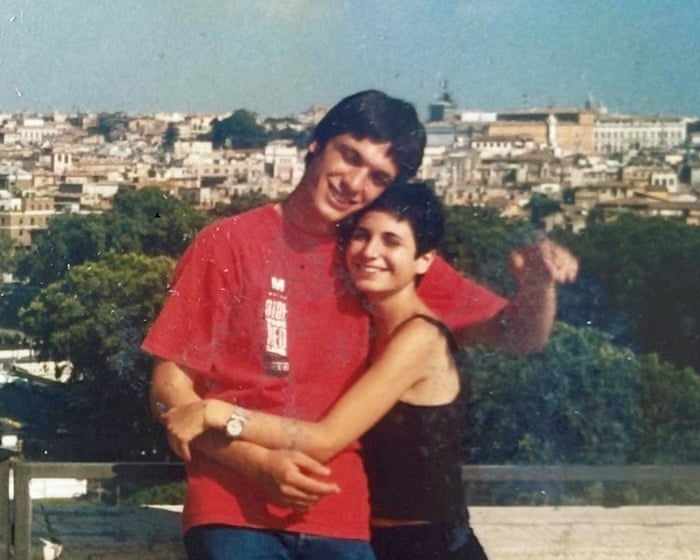
I was 16 when I met Giacomo at a bar in Atina, the small Italian mountain town where my parents grew up. One evening, during a local festival, tables were hard to come by, so our two groups of friends ended up squeezed around the same one. At over six feet tall, Giacomo was hard to miss. He was friendly and always smiling, and though he didn’t speak a word of English, I appreciated that he didn’t treat me like just another “foreign girl” with the usual “ciao bella” swagger.
I wasn’t really foreign. My parents had moved to Scotland in the 1960s and settled in Selkirk, but Atina had always been part of our lives—woven into every holiday and every meal. Meeting Giacomo, though, made me see Italy in a new light. It was no longer just something I’d inherited; it was something I was experiencing for myself.
When summer ended, I didn’t go back to Scotland as planned. I’d left school early, not enjoying it much, and intended to continue my studies in other ways. Instead, I stayed in Italy to figure out what to do with my newfound independence—and my new love.
That autumn, Giacomo moved to Rome to study architecture and became an excellent cicerone—an Italian word for a cultural guide. Through him, I discovered a side of the city beyond the tourist spots. I got to know student life, open-air music festivals, and hidden bakeries that sold pastries out the back door in the early hours.
But it wasn’t all gelato and romance. I drifted between courses and jobs, hoping something would click, but nothing really did. I tried studying in Italy but struggled with oral exams and, missing home, eventually committed to a degree at Edinburgh University—where, unsurprisingly, I ended up studying Italian. Giacomo and I tried to make long distance work, but without mobile phones and with the constant pull between countries, cultures, and expectations, it took its toll.
Our relationship didn’t last, but my love for Italy never faded. After graduating, I moved back, this time choosing cities for myself. I lived in Florence and Bologna, working, studying, and forming lasting friendships—some with Italians, others with third-culture kids like me. Despite our varied backgrounds, often with four or five nationalities in the mix, we understood what it meant to belong to more than one place—and to no place at all. To always be missing somewhere, or someone.
Atina remained a constant, and I often returned for holidays to see friends and family. Then, one summer, 12 years after our relationship ended, I saw Giacomo there again—at the same bar where we’d met. Still tall (maybe even taller), still smiling, and still unable to speak a word of English.
This time, the bar wasn’t crowded—we didn’t have to share a table, but perhaps remembering the hopeful teenagers we once were, we chose to. A new chapter opened in a story we thought had ended.
Giacomo was leaving on holiday the next day, and neither of us wanted the night to end. We stayed until we were the last ones there, talking so long that at sunrise his dad showed up to take him straight to the station, shaking his head at the sight of two people in their thirties acting like teenagers. This time, we had mobile phones, so we exchanged numbers, and I remember wondering if it would lead to something more.I always had a feeling it would come to something, even back then. Giacomo visited me in Bologna on his first free weekend, and that was the start of many trips back and forth. Two years later, I moved to Rome.
We’ve been married for over ten years now. We eloped—not out of some grand romantic gesture, but because it was the only choice that felt right. Both of us come from big families, many of whom had also emigrated and were spread all over Europe. Trying to bring everyone together—choosing one country, one language, one way to celebrate—seemed impossible.
These days, we’re officially settled in the Scottish Borders, but our lives are still a blend of both worlds. We switch between English and Italian, sometimes in the same sentence, and we run a business together that spans both countries, which means we’re always travelling back and forth. As we go, we keep discovering overlaps in our pasts—beaches we’d each visited years apart, mutual friends we never knew we had, regional dishes that are familiar to one of us and new to the other.
Maybe one day our daughters will have their own holiday romances. I’ll do my best not to roll my eyes—because sometimes, it pays to trust those early sparks of young love.
Livia in Rome by Bruna De Luca is out now (Chicken House, £8.99). To support the Guardian, order your copy at guardianbookshop.com. Delivery charges may apply.
Frequently Asked Questions
Of course Here is a list of FAQs about the topic A moment that changed me I ran into my exboyfriend at the same bar where wed met twelve years earlier
General Beginner Questions
Q What is the core idea of this moment that changed me
A Its about a powerful unexpected encounter that forces someone to reflect on their past see how much theyve grown and gain a new perspective on a significant chapter of their life
Q Why is running into an ex such a common lifechanging moment
A Because its a direct reallife comparison between who you were then and who you are now It can bring up old feelings highlight your personal growth and offer a sense of closure you might not have had
Q Whats so significant about it being in the same place you met
A The location acts as a powerful symbol It creates a full circle moment intensifying the contrast between the past and the present
Deeper Advanced Questions
Q Beyond nostalgia what kind of personal growth can this moment trigger
A It can lead to profound selfawareness You might realize youve overcome past insecurities that your priorities have healthily shifted or that youve developed a resilience you didnt have during the relationship
Q Is this experience always positive What if it brings up negative emotions
A Its not always positive It can trigger regret sadness or old pain However even these difficult emotions can be lifechanging if they lead to processing unresolved feelings and achieving a more honest form of closure
Q How can a brief encounter be truly lifechanging
A The encounter itself is just the trigger The real change happens in the days and weeks of reflection afterward Its the new insights about yourself and your life path that create the lasting impact
Common Problems Scenarios
Q What if seeing them makes me want to get back together
A This is a common reaction Its crucial to separate nostalgia for the past from the reality of the present Use the moment to reflect on why the relationship ended and whether those reasons have truly changed
Q I felt really awkward and flustered Did I handle it wrong
A