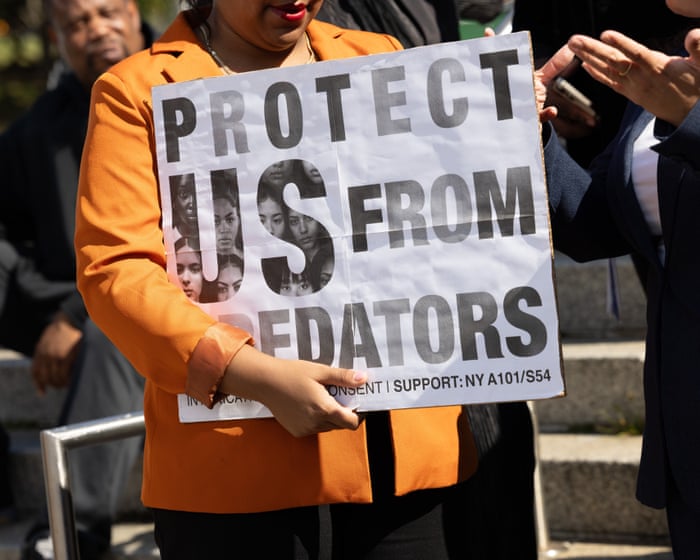
Student safety advocates in the US call the start of the fall semester at universities “the red zone”. Fraternities, sororities and off-campus bars throw parties welcoming students back to school. It’s supposed to be fun, but it can also be dangerous: more than 50% of sexual assaults that occur at colleges happen during that six- to 10-week period.
It was mid-October of 2024, during the red zone and just before a deluge of Halloween celebrations, when, a former Cornell University student says, she was gang-raped by a group of fraternity brothers. Recent attention on these allegations sparked widespread outrage this week, reviving a contentious national debate about how authorities respond to allegations of sexual assault on US college campuses.
The anonymous young woman at the center of the story – known as Jane Doe in court documents – filed a civil lawsuit last month, accusing seven men of plying her with drugs and alcohol and assaulting her over the course of seven hours at their fraternity house. The woman originally went to the house to visit a friend; she claims she arrived intoxicated and willingly took the party drug ketamine with the men. Later, she says, she became incapacitated by the drug, which is a dissociative anesthetic, while the men “commanded” her to keep snorting it.
Jane Doe also alleges that the Ivy League university’s ensuing internal investigation was too lenient toward the men. None have ever been charged with a crime. Two were expelled for their misconduct, while five were given lighter punishments: writing an essay, attending a workshop or serving a suspension. Some still attend the school. All seven men denied wrongdoing during Cornell’s investigation.
Public outcry over the case reached a breaking point on Thursday, when the New York governor Kathy Hochul stepped in to appoint a new special prosecutor to investigate the incident, which the original district attorney declined to prosecute. Now, state attorney general Leticia James will decide whether or not to take the case to a grand jury, which would decide whether there was enough evidence to charge the men with a crime.
View image in fullscreenKathy Hochul, the New York governor, during a news conference with state attorney general Letitia James, on Friday in New York City. Photograph: Yuki Iwamura/AP
In a statement, Cornell University defended its investigation of the incident. It closed the fraternity chapter involved and barred the group from campus. “We will continue to examine and strengthen our policies to ensure we are doing all we can to foster a culture where sexual misconduct is never tolerated, those who come forward are supported, and individuals found responsible through our processes are held accountable,” the statement read. (Cornell directed the Guardian to this statement when reached for comment.) After intense public pressure, the university agreed to hire external, independent lawyers to investigate whether its handling of the allegations was appropriate.
Matthew Van Houten, the Tompkins county district attorney, has said that he did not pursue the case two years ago because the woman’s first account to police did not say that she was drugged, incapacitated or forced into sex. He later said he did not read her full interview, only a shorter statement written by campus police and signed by Jane Doe. Her full statement included the sentence: “I can say with 100 percent confidence that I was raped,” but this did not make it into the final statement sent to Van Houten.
In the immediate aftermath of the incident, the woman exchanged friendly messages with some of the men, expressing concern about rumors that were spreading on campus about the event. She also maintains that the alleged assault began as a consensual encounter. It is common for sexual assault survivors to downplay their experiences as a coping mechanism. False rape accusations are incredibly rare.
One of the most damning pieces of evidence in the lawsuit involves screenshots of Snapchat messages sent iIn a fraternity group chat, a participant named Jonathan Newell allegedly called Jane Doe "free pussy," advertising the assault as it happened.
What upsets many women most about this case is how normal such behavior seems. About one in four undergraduate women experience sexual violence in college, and 60% of rapes involving university students are committed by someone the victim knows. Last year, a survey of female undergraduates at Cornell found that 35% had experienced "nonconsensual sexual contact involving physical force, threats of force or incapacitation." That was up from 23% in 2023.
"There are so many people in America who find this so familiar," said Lisa Wade, an associate professor at Tulane and author of American Hookup: The New Culture of Sex on Campus. "Not just the incident itself, but also the response by Cornell."
View image in fullscreenThe Cornell University campus in Ithaca, New York, on Thursday. Photograph: Lauren Petracca/Reuters
As the case moves through the courts, the so-called "Cornell 7" have become the public face of how persistent sexual assault is on campus—and of the institutional failures that let it continue. Their names and photos appear in social media posts demanding accountability. The Cornell Daily Sun, a student newspaper that has covered the lawsuit relentlessly, led the way with an op-ed titled "Cornell Won't, We Will." It began by listing the alleged assailants' names. "We know who you are and we refuse to let you benefit from this University's concealment," the editorial board wrote.
A former South Park writer named Toby Morton launched a website detailing what Jane Doe alleges each man did to her. Morton wrote on Instagram that he plans to sponsor billboards about the case. The actor Florence Pugh weighed in, urging men on social media to be "as horrified and as sickened as us [women]." She added that "college/schools/universities repeatedly fail women around the world [building] men [who] get taught through time and time again that they can do extreme harm and won't be harmed in return."
When content creator and commentator Michael Tracey threatened to release Jane Doe's name and personal details—breaking decades of journalistic norms for reporting on alleged rape victims—women flooded TikTok in her defense. The Spartacus-style rallying cry "I'm Jane Doe" filled feeds, with users sharing their own experiences with sexual assault. "All of us women are jane doe, and we will all continue to ban [sic] together for her," reads the caption of one clip liked more than 267,000 times.
College admissions advisers told the New York Post that some of their high school clients withdrew their early decision applications to Cornell because they would not feel safe in that community.
This outpouring recalls the early days of #MeToo, a global hashtag campaign against sexual abuse that was ignited by the first allegations against convicted rapist and former film producer Harvey Weinstein. But Wade, the Tulane professor, said she sees this case as "metabolizing the failure of #MeToo," which promised a reckoning in 2017. Ten years later, manosphere influencers teach their followers to see women as sex objects, and Americans re-elected a man who infamously bragged about grabbing women "by the pussy."
Sexual assault survivors have long faced victim-shaming. Jane Doe's story is complicated, and the New York Times reported that the alleged victim did not realize she had been raped until she read someone else describe the event that way on a social media forum; she had texted one of the accused: "At the end of the day non of the sexual stuff was illegal and honestly i really liked being w u and matt." This is not an unusual trauma response: it is common for victiSome victims continue relationships with their abusers because it gives them a sense of control over the situation. But the confusing timeline gives ammunition to bad actors and conservative commentators pushing an anti-woman agenda. These young men have not been convicted of a crime, and prosecutors would struggle to convict them of rape because of a New York state legal loophole: a victim is not considered incapacitated if she willingly contributed to her own intoxication. (Jane Doe said she arrived at the fraternity house drunk and willingly took substances with the men, though she also says they coerced her into snorting ketamine.)
The Free Press, a proudly "anti-woke" publication run by Bari Weiss, criticized the "court of public opinion" for "already punishing" the Cornell 7. Dasha Nekrasova, one of the edgy hosts of the Red Scare podcast, spent much of the week trying to shame Jane Doe and calling women upset about the lack of accountability in this case "deranged."
"There's a sadness, cynicism and deep disappointment that is also driving the response to this," Wade said. "#MeToo happened, and nobody cared. Here it is again."
A poster at Cornell University on Thursday. Photograph: Lauren Petracca/Reuters
Elizabeth Armstrong, a University of Michigan professor who studies gender inequities in universities, says there have been "big waves of outrage" over campus sexual assault since the 1980s, when Mary Koss first coined the term "date rape." The last national conversation happened around 2015, when a Columbia University student carried a mattress around campus as a performance art piece about her sexual assault.
More than a decade later, the problem has only gotten worse. The Trump administration has gutted Title IX protections, which prohibit sex-based discrimination at universities receiving federal funding, and narrowed the definition of sexual harassment under it. Just this week, Trump announced that universities no longer have to investigate assaults on students that happen off-campus. (The Cornell case occurred at a frat house.) "We have an administration that is actively rolling back protections for student survivors," said Amanda Walsh, deputy director for external affairs at the Victim Rights Law Center.
But Walsh, who works closely with survivors, says Gen Z women carry much less internalized shame about their assaults than previous generations, who were often taught that women invite sexual assault through their actions. "It feels like the focus has shifted away from talking about what the woman did, and more appropriately to exploring the behavior of the men involved," she said. "I always admire how much they focus on the behavior of the person who harmed them, rather than asking: 'What could I have done differently? Why did this happen to me?' I see college students really pushing back against that."
The Cornell case has revived discussions about abolishing Greek life, the student social club system behind fraternities and sororities in the US. This week, a Vogue article called for universities to "ban frats once and for all." It's not unprecedented: Swarthmore, a liberal arts college in Pennsylvania, did so in 2019 after campus publications leaked racist, sexist and homophobic documents written by fraternities. "That would be a really real change, but I doubt that will happen," said Armstrong.
Elizabeth Allan, who leads the Hazing Prevention Research Lab at the University of Maine, added: "It's important for everyone [in Greek life] to think about how these groups might reflect larger societal norms and expectations and the ways in which [bad] behavior is reinforced."
Most of all, Walsh worries how all the attention on this case will affect Jane Doe, and the countless other anonymous victims who are sure to come after her. "I've been in this field long enough“To know that however much support she gets, she’ll get just as much negativity on the other side,” Walsh said. “At this point, with the political climate and the online reaction, it almost feels like supporting a survivor of sexual violence is seen as political or partisan, which is crazy.”
Frequently Asked Questions
FAQs Sadness Cynicism and Deep Disappointment The Cornell GangRape Case and the Failure of MeToo
1 What was the Cornell gangrape case
In 2015 a Cornell University student reported that she was sexually assaulted by several male students at an offcampus fraternity house The case drew national attention as it moved through Cornells campus disciplinary process and the criminal justice system Outcomes included a suspension and later a plea deal for one defendant while others faced no criminal consequences leaving the survivor and many observers deeply disillusioned
2 What is MeToo
MeToo is a social movement against sexual harassment and assault founded by activist Tarana Burke in 2006 and going viral in 2017 after allegations against Harvey Weinstein It encouraged survivors to speak out and demanded accountability for powerful abusers
3 Why do people connect the Cornell case to MeToo
Because it became a symbol of the movements limits Despite heightened awareness the case ended with what many saw as minimal accountability showing that speaking out doesnt guarantee justice especially on college campuses
4 What does the failure of MeToo mean
Its shorthand for the gap between the movements promises and results most highprofile cases ended without criminal convictions institutional processes often protected the accused or the institution and many survivors felt retraumatized rather than helped
5 Why do people feel sadness and disappointment about this
Because the movement raised hopes that reporting would lead to real consequences When cases like Cornells end with little accountability survivors and supporters feel betrayed by the very systems courts universities fraternities that were supposed to help
6 What is cynicism in this context
Cynicism is the belief that the system is rigged and speaking out is pointless After watching highprofile cases fizzle out many people conclude that powerful institutions will always protect themselves which discourages future reporting
7 Is MeToo really a failure
Not entirely It changed workplace policies toppled dozens of powerful men and made public conversation about sexual violence normal But its core promise consistent justice for survivors remains largely unfulfilled which is why failure is a common framing
8 What are the main problems with how campuses handle these cases
Common issues include