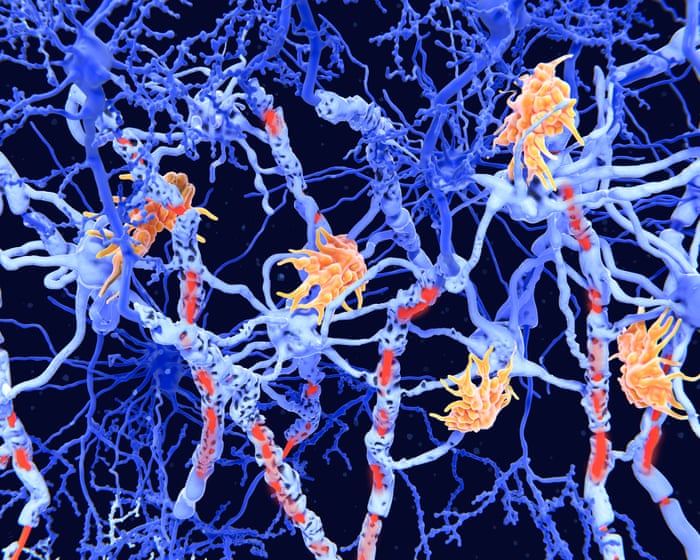
Scientists have discovered two new subtypes of multiple sclerosis using artificial intelligence, opening the door to personalized treatments and improved outcomes for patients.
Millions of people worldwide live with MS, but treatments are typically chosen based on symptoms and may not work well because they don’t target the specific biology of each patient. Now, by combining AI with a simple blood test and MRI scans, researchers have identified two distinct biological forms of the disease. Experts call this an “exciting” breakthrough that could transform how MS is treated globally.
In a study of 600 patients led by University College London (UCL) and Queen Square Analytics, scientists examined blood levels of a protein called serum neurofilament light chain (sNfL), which indicates nerve damage and disease activity. Using a machine learning model named SuStaIn to analyze these blood results along with brain scans, the team found two clear patterns, published in the journal Brain: early sNfL and late sNfL.
In the first subtype, patients showed high sNfL levels early in the disease, along with visible damage in a brain region called the corpus callosum and rapidly developing brain lesions. This form appears more aggressive. In the second subtype, brain shrinkage in areas like the limbic cortex and deep grey matter occurred before sNfL levels rose, suggesting a slower progression with noticeable damage appearing later.
This discovery will help doctors better identify which patients are at higher risk for certain complications, enabling more tailored care. Dr. Arman Eshaghi, the study’s lead author from UCL, explained, “MS is not one disease, and current subtypes don’t capture the underlying tissue changes we need to treat it effectively. By using AI with a widely available blood marker and MRI, we’ve revealed two clear biological patterns for the first time. This helps clinicians understand where a person is in the disease pathway and who might need closer monitoring or earlier, targeted treatment.”
In the future, patients identified by the AI tool as having early sNfL MS could be eligible for more potent treatments and more frequent monitoring. Those with late sNfL might receive different therapies, such as personalized approaches to protect brain cells. “The innovation is twofold: transforming centuries-old clinical exams with AI algorithms and providing personalized treatments based on disease profile,” Eshaghi added.
Caitlin Astbury, senior research communications manager at the MS Society charity, said, “This is an exciting step forward in understanding MS. The study used machine learning on MRI and biomarker data from people with relapsing remitting and secondary progressive MS, identifying two new biological subtypes. While we’ve improved our grasp of MS biology in recent years, current definitions rely on clinical symptoms, which often don’t reflect what’s happening in the body, making effective treatment challenging.”
Astbury noted that while there are about 20 treatments for relapsing MS and some emerging options for progressive MS, many still lack effective therapies. “The more we learn about the condition, the closer we get to finding treatments that can halt disease progression. This research adds to evidence supporting a shift away from terms like ‘relapsing’ and ‘progressive’ toward descriptions that reflect the underlying biology of MS.”This could help identify people at an increased risk of progression and allow for more personalized treatment to be offered.
Frequently Asked Questions
Of course Here is a list of FAQs about the recent discovery of two new subtypes of multiple sclerosis designed to be clear and helpful for a wide audience
Beginner General Questions
1 Whats the big news about MS that I keep hearing about
Researchers have used artificial intelligence to analyze brain scans and have identified two completely new subtypes of Multiple Sclerosis This changes the longheld belief that MS is a single disease with a standard progression
2 What are these new subtypes called
They are currently named by their apparent driving mechanism based on the scan analysis
Cortexled Where damage appears to start in the brains outer layer
White Matterled Where damage appears to start in the brains deeper white matter which has been the traditional focus of MS study
3 Why is this discovery considered a breakthrough
It fundamentally changes how we view MS Instead of treating it as one disease we can now see it as two distinct diseases with different starting points in the brain This could explain why patients respond so differently to treatments
4 I have MS Does this change my diagnosis right now
Not immediately in a clinical setting This is a major research discovery that needs to be validated and developed into a standard diagnostic tool Your current diagnosis of MS remains but this finding helps explain the diversity of experiences among patients
Advanced Detailed Questions
5 How were these subtypes discovered
Scientists used AI to analyze thousands of MRI brain scans from MS patients The AI looked for patterns that human radiologists couldnt easily see and consistently grouped the scans into these two distinct categories based on where damage appeared to originate and spread
6 What are the key differences between the Cortexled and White Matterled subtypes
Cortexled Damage seems to begin in the cortex the brains gray matter responsible for thinking memory and processing This may be linked to more rapid progression and cognitive symptoms early on
White Matterled Damage follows the more traditional pattern starting in the white matter highways that connect different brain regions This has been the primary focus of MS treatment and monitoring for decades