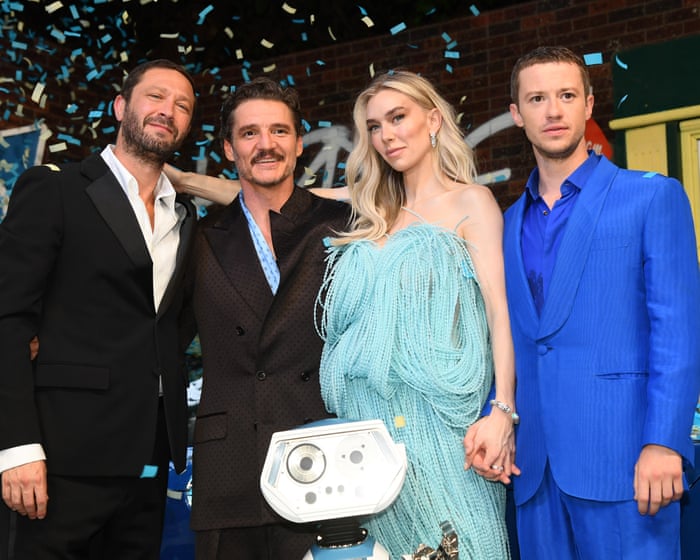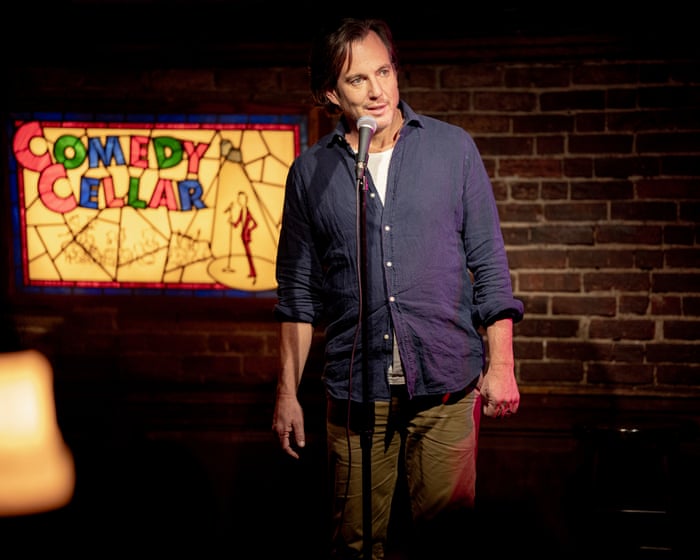
‘When no one laughs, your soul leaves your body’: have you heard about the Bradley Cooper film inspired by John Bishop?
Not every standup comedian decides to become funny for a living overnight. That certainly wasn’t the case for John Bishop. He started doing comedy to avoid paying a bar’s cover charge and to escape his failing marriage—a story that inspired Bradley Cooper’s new film, Is This Thing On? And Bishop isn’t the only comic with an unusual start. From impressing girlfriends to losing their voices, dealing with brain tumors or bad bosses—or simply not wanting to lose a £5 bet—British comedians shared with us why they became standup comedians and what they went through to get on stage for the first time.
Aarian Mehrabani: ‘Facing surgery for a brain tumour, I wanted to be remembered for my work’
The first time I considered becoming a standup was at 14, in the school canteen. My friend Tom and I were talking about what we wanted to be when we grew up, and out of nowhere, he said, “You would make a good standup comedian.” That stayed with me.
After graduating from drama school in 2020, I co-founded a disabled-led theatre company called FlawBored with Sam Brewer and Chloe Palmer. We wrote and performed our debut show, It’s a Motherfking Pleasure*, a multi-award-winning satire critiquing the monetization of identity politics. The show was a success—it won the Untapped award at the Edinburgh Fringe in 2023 and went on to tour the UK and internationally.
Then, in 2024, my life changed completely. Early in the year, we took the show to New York for a three-week off-Broadway run. Four days after returning, I became seriously ill—bedridden and vomiting multiple times a day. To cut a long story short, I was diagnosed with brain cancer.
The doctors told me the tumor was 8cm and that my chances of survival were low. I was scheduled for one brain surgery but ended up having five in five days. Before the operations, all I could think about was my legacy. I wanted to be remembered for my work. Our theatre show had been successful, but was it enough? Had I made a real impact? Had I said everything I wanted to say? Right then, I decided: “As soon as I get out of the hospital, as soon as I’m able, I’m going into standup comedy!” That way, whether I lived or died, I would have done something that was truly mine, something I gave my all to, and something people might remember.
Thankfully, I survived. After surgery, I underwent six weeks of daily proton beam therapy, followed by six months of chemotherapy. By October 2024, even before my treatment ended, I received a development commission from the Lowry theatre to create my first standup show, set to premiere at the Edinburgh Fringe in 2026.
A month later, between chemo sessions, I did my first standup gig in London. It was a bringer night—where promoters ask you to bring someone along to help fill the audience—and my friends Hannah and Jim came to support me. I had never been more scared in my life. I’d performed on big theatre stages and done major auditions, but the nerves I felt for just 50 people in the back of a pub were overwhelming.
I stepped on stage completely terrified. Then I got my first laugh, and suddenly, I loved every moment. Afterward, I sat down and thought: This is what I’m meant to do. I love this feeling. At the end of the show, they held a “clap off” for the funniest comic—whoever got the loudest applause won. I received the biggest clap and a small plastic trophy. Leaving that gig, I felt it was the best feeling ever. Since then, I’ve been on a high.I love comedy, even when I have bad gigs. Oh, and I’ve finished my treatment. My prognosis is good, so Edinburgh Fringe, here I come.
Lee Ridley, AKA Lost Voice Guy: ‘A friend made me believe I could be funny even though I can’t speak’
‘I genuinely didn’t know how people would react to a guy with an iPad on stage’ … Lee Ridley.
Stand-up comedy didn’t feel like an option, so it never really occurred to me to try. Then a friend suggested I give it a go. He basically said, “You’re funny, you should try stand-up,” as if the fact that I literally couldn’t speak was a minor detail. From my point of view, stand-up comedy was built around quick talking and crowd interaction—things I assumed automatically ruled me out. He didn’t argue with me. He just planted the idea and left it there, which somehow made it harder to dismiss. What stuck with me wasn’t anything profound he had said, but the fact that he didn’t treat my disability as the main issue. He talked about comedy as if it were something I might enjoy, not something I should be protected from.
My first gig was in Sunderland. I was very nervous beforehand because I didn’t know how it would go. I type the material into my iPad before a show, then play it on stage through the automated voice. I was worried people wouldn’t understand me, and I’d be standing there telling jokes to myself via an iPad. But once my first few jokes were out of the way, I began to relax and enjoy myself. By the time I walked off stage, I didn’t want it to end. I was on a massive high for the rest of the night. I didn’t get any sleep because I was still so excited. I couldn’t wait to get up on stage again.
I genuinely didn’t know how people would react to a guy with an iPad on stage, and that uncertainty shaped my approach from the beginning. I decided the best thing was to acknowledge the awkwardness immediately and take control of it, rather than let it hang in the room. That’s where the name Lost Voice Guy came from. The fact that I had to write and program every word in advance didn’t feel like a limitation; it felt like my version of the job.
For most of my life, I’ve been spoken for, spoken about, or spoken over. Being on stage flips that completely. Suddenly, I’m the one setting the pace, deciding when the room goes quiet and when it erupts. That sense of being truly listened to is something I don’t take for granted. In a very real way, stand-up gave me a voice for the first time.
Amanda Hursy: ‘I did it to prove my boss wrong’
‘As a working-class person, sometimes humour is the only thing you can trade on’ … Amanda Hursy on stage at her first headline gig.
I grew up working class in Glasgow, in the areas of Easterhouse and “Crazy Ruchazie.” It was notorious for gang fights, addiction, and deprivation, but despite that, it was a nice place to live as everyone looked out for each other. I wanted to do drama, but because of my background it never seemed like an option. I wanted to escape the council estate and was fortunate to get a sports scholarship at Glasgow School of Sport. That led me to university, where I studied politics and psychology. The whole comedy thing never entered my head.
I ended up in corporate sales for a big soft-drinks firm based in Scotland. I went for a promotion, but the person who got the job over me was a relative of someone on the board. I’m great with people and can chat to anyone, but obviously my manager had to give me some sort of feedback. He said I needed to improve my presentation skills.
So, in true Glaswegian style, I thought, “Is that right?” I saw an advert for a comedy course called Ultra Comedy, the proceeds of which go to Cancer Research UK, and you do a gig at the end. The course was taught by the incredible Viv Gee—a legend of the Scottish comedy scene.I was terrified before picking up the microphone, but once I started, the nerves faded. I was just talking about what I did over the weekend. It must have gone well because a comedy promoter was there and offered me a paid professional gig. I couldn’t believe someone would pay me £25 for a 10-minute set. I had to go and write the other five minutes of material.
Everything moved really fast. A year after my first gig, I was on stage at Glasgow’s Armadillo arena, telling jokes to 3,000 people. Coming from my background makes you appreciate laughter. Humor is all you have, and as a working-class person, sometimes it’s the only thing you can rely on.
My comedy career started because I wanted to prove my boss wrong. The course was supposed to be a one-time thing to get back at him, but it backfired. It’s basically a joke that went too far.
Lydia Cashman: ‘My friend bet me a fiver’
In 2022, my friend and I made a short film on the Isle of Wight. After filming, we had a few drinks and both decided to try standup. We made a bet, wagering a fiver that we’d each do a standup gig by the end of the year.
I signed up for a comedy course right away. After finishing, I suggested we all enter The Gong Show at the Comedy Store in London. A gong show is a live event where comedians perform for five minutes but risk being cut off by a gong if they don’t impress the audience or judges. They’re brutal, but I didn’t know that.
My gig was on Halloween. The venue had a fancy-dress competition with a prize for the best costume. I went as a “sexy” clown, wearing a big striped ruffled top with a leather miniskirt and my face painted like Stephen King’s It.
When I arrived, I hadn’t realized how huge the Comedy Store is. I met the promoter, and he put me in the first section. Standing at the edge of the stage, I was surprised to see over 30 comics, each with five minutes of jokes. I naively thought the show must be really long. I started chatting with a really nice comic, Ian Murphy, and told him it was my first gig. I’ve never seen someone’s jaw drop so fast. He explained the format: you go on, try to be funny, and if they don’t like you, they raise a card. Three cards, and you’re off the stage. Then I watched the other comics perform—I was horrified. Really talented and experienced comedians were getting gonged off in seconds.
When I went on stage, I panicked and abandoned my plan, talking too fast instead. I rushed through it. I heard one person laugh in the front row, which kept me going, but at 46 seconds, I got my three cards and had to shuffle off stage. I watched the second half, and Ian, who had advised me backstage, was on. A few audience members were being awful, and he completely destroyed them. He was amazing and lasted over three minutes.
Afterwards, he introduced me to the other standups, and they were incredibly lovely and supportive. But I’d completely forgotten I was standing there, taking serious career advice from seasoned comics at the famous Comedy Store, dressed as a sexy clown. Only one other comic had dressed up—she was a dinosaur—but somehow no one won the best-dressed prize.
I realized nothing could be worse than that Gong Show. After that, I got right back on the horse and have been gigging ever since. Meanwhile, my friend still hasn’t done a standup gig or paid me the fiver.
Richard Stott: ‘I did it to impress a girl’
I agreed to a full Edinburgh Fringe run of a show…I never thought I’d do standup comedy, which is strange because I once ran a venue for a comedy festival in Manchester. I looked at the comics and thought, well, that’s not in my skill set.
In 2017, I was in a relationship with a standup comedian. She was going to perform at the Edinburgh Fringe and complained that she couldn’t afford the rent on her own. Then she asked, “Well, you’re an actor, why don’t you do a one-person show?” In hindsight, it was more about finding someone to share the rent with than believing in my ability. But I liked her and wanted her to like me, so I agreed to a full Edinburgh Fringe run of a show I hadn’t written.
I booked my first gig in London, a five-minute set at a popular comedy night called Comedy Virgins. The place was packed, the set went well, and I got a little plastic trophy for the funniest comedian. It felt more satisfying than anything I’ve achieved in my acting career. I loved it instantly—the energy when the room is about to erupt at the next big punchline and you have to hide your excitement, or when you have a perfect idea and it works instantly.
The Edinburgh Fringe didn’t go so well. I had a terrible venue (literally a cave) and a worse time slot—12:45 p.m. I had no real experience except for my little trophy, which I’ve now lost. I had to cancel shows because there was no audience. Sometimes, the people who came sat through it and seemed to enjoy it, but otherwise, it was a slog. It was completely naive to do a full Edinburgh run with a 45-minute show and no gigs under my belt. I don’t look back and think I was brave; I think, given my lack of experience, it was stupid.
At a relatively low point, I was wandering around Edinburgh and bumped into an old friend, a poet named Matt Panesh. He asked how my run was going, and I told him I was really down about it. Matt has done the Fringe every year for about 15 years, so he gave me an excellent pep talk. He put things in perspective, helped me realize I wasn’t the only person who’d had a hard time there, and snapped me out of my funk. In 2019, I was back at the Fringe doing a full-hour standup show at the Gilded Balloon. I went up to the Loft Bar, and Matt was there. I had just gotten a bunch of four-star reviews. Without even skipping a beat, he said, “It turned out all right then!”
I went to the Fringe to impress a girl. Ultimately, the relationship didn’t work out, but starting comedy for the wrong reasons has led to what I argue is a career.
I was at university studying biomedicine and planned to become a scientist. My placement was in gastroenterology. I really care about people’s bowels, but I wasn’t enjoying it and was having a career crisis.
My way of coping was to terrorize my fellow students in the library with pranks and jokes. My best friend had a big following on Instagram, and I would be the performing monkey for her stories. She suggested I try standup comedy. At the same time, she had this awful boyfriend. I kept telling her to cut ties, but she kept going back to him, which was straining our friendship.
After an intense chat, we decided to sort out our lives. She agreed to dump her boyfriend if I would try standup. So, a year later, I booked a comedy workshop where you work on your best jokes. I am fascinated by dictators and had a great story about my uncle, who was briefly Colonel Gaddafi’s ear, nose, and throat doctor. I got good feedback, which was enough to boost my ego and book my first gig, at the Frog & Bucket in Manchester. On the train there, I felt like a cow being led to the slaughter. I kept thinking, “Why am I doing this to myself? Please drown me in a puddle.” I arrived, and the crowd was huge—There were about 100 people in the audience. I went straight to the bathroom, locked myself in a stall, and practiced my jokes. I was third in the lineup. I was too nervous to concentrate on the other comics, completely focused on my own set. I started with my best dictator jokes, which I knew really well, and got my first big laugh. I was instantly thrilled that everyone was enjoying it, and I just let the laughter wash over me. Afterwards, I was so excited that I decided I needed to put together a full hour of standup right away.
My process for gigs is still the same. Before the gig, I want to die. During the gig, I’m having the time of my life. And afterwards, I want to sell out arenas with my jokes.
My friend was true to her word and dumped her awful boyfriend. I guess I have him to thank for my career. Is This Thing On? is out now in the US. It will be released in the UK on 30 January and in Australia on 5 February.
Frequently Asked Questions
Of course Here is a list of FAQs about the special It turned out I had a brain tumor Six standout comedians share what inspired them to take the stage
General Beginner Questions
1 What is this special actually about
Its a comedy special where six different comedians each perform a short set The unique hook is that every comedians story is introduced by the same surprising line It turned out I had a brain tumor
2 Is this a sad or depressing watch
Not at all While the premise sounds heavy the special uses this shared extreme experience as a jumpingoff point for hilarious insightful and often uplifting comedy about life perspective and resilience
3 Do all six comedians really have brain tumors
The special uses a creative framing device The brain tumor line is a thematic throughline but the comedians sets are about the real moments traumas or absurd situations in their lives that felt similarly monumental and ultimately pushed them to pursue comedy
4 Where can I watch it
Availability changes but its typically found on major streaming platforms like Netflix Amazon Prime Video or HBO Max Check your preferred service by searching the full title
5 Is there a common theme in their stories
Yes The core theme is how profound personal challenges shocks or realizations can completely shift your perspective and give you the courage to pursue a dreamin this case stepping onto a comedy stage
Deeper Advanced Questions
6 Whats the deeper message behind using brain tumor as a theme
Its a metaphor for a personal earthquakeany lifealtering event that shatters your normal life and forces you to reevaluate whats important often leading to unexpected paths like comedy
7 How do the comedians styles differ despite the shared premise
The special showcases a range of styles from oneliner and observational humor to more narrative storytellingbased comedy Each comedian brings their unique voice to the theme proving theres no single way to process lifes big moments
8 Is this special more about comedy or therapy
Its comedy first The comedians are using their craft to find humor and connection in dark places which is a classic comedic tradition The therapeutic insight