Words can tell a story, but it’s pictures that make you believe it. That is the power of a photograph: the ability to strip away illusions, reveal something hidden, and sometimes force us to accept uncomfortable truths. When it comes to scandal, seeing is believing—sometimes to the point that a picture changes the course of history.
How different might life have been for Prince Andrew if he had never been photographed with his arm around the waist of the 17-year-old girl he later claimed he had never met? Without that haunting image of the then-prince, the late Virginia Giuffre, and Jeffrey Epstein’s associate Ghislaine Maxwell hovering in the background, there would have been no tangible link between him and a trafficking victim. For years, Andrew’s friends insisted the photo must have been faked, but buried in the recently released Epstein files is a note from Maxwell that appears to confirm its authenticity.
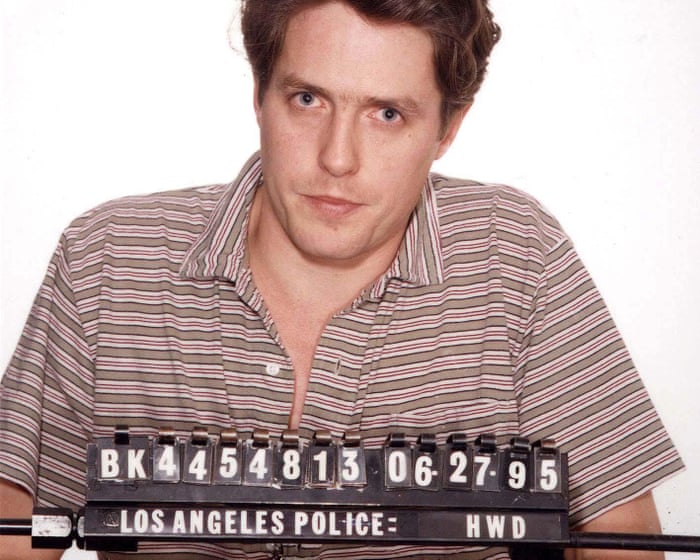
More often, though, the camera simply captures public figures in moments their publicists wish you had never seen. There’s former health secretary Matt Hancock, caught on office CCTV kissing his mistress during the pandemic, with no regard for social distancing; actor Hugh Grant posing for a police mugshot after being found with a sex worker; Michael Jackson dangling his baby son over a dangerously high hotel balcony to show him to fans below. So many of the pictures gathered here expose the gap between carefully crafted image and reality.
Sometimes the guilty party isn’t even in the shot. Consider Lewis Morley’s provocative photo of Christine Keeler straddling a chair, an image imprinted on public memory long after the political details of the Profumo scandal faded. It was taken to promote a film about the affair that was never released. Keeler didn’t want to be naked during the shoot, but according to Morley, the producers insisted. His compromise—a sexy yet oddly vulnerable pose, nude but mostly covered—now reads as a study in exploitation, first by the powerful men she was involved with, then by the publicity machine that consumed her.
The story these pictures tell is partly one of changing morals: things that seemed scandalous only by the standards of a more repressed era, and things that in hindsight should have shocked us more than they did. Paparazzi shots of the late George Michael cruising for sex in Los Angeles, which forced him out of the closet in 1998, now evoke only sympathy. The opposite is true of photos from what Hello! magazine called the “fairytale wedding” between Rolling Stone Bill Wyman and Mandy Smith in 1989; Smith was just 13 when they started dating (he was 47) and 18 when they married.
One constant theme for almost a century, however, is the use of the female body to shock. Pioneering war photographer Lee Miller turned this into something empowering by allowing herself to be photographed in Hitler’s abandoned bathtub, washing away the grime of weeks at the front. Every element of this image is deliberately transgressive, from her muddy boots staining the bathmat—she had just returned from documenting the newly liberated Dachau camp—to the intimacy of her bare shoulders.
It stands as a powerful act of defiance: a rebuke to a dictator by a woman some believed had no place in a war zone, and by her Jewish lover David Scherman, the photographer behind the camera. After talking their way into Hitler’s Munich apartment, which had been taken over by advancing American troops, the pair took turns photographing each other in the bath. Afterwards, Miller slept in Hitler’s bed.
From the historic to the trivial, what makes many of these images unusually poignant is…The significance of the year 2026 is that the era these photographs represent—a time when humans provided visual proof of our shared reality to one another—is now under threat. Hoaxers have always existed, as the fakes in this collection demonstrate. However, the spread of highly convincing AI-generated images, amplified instantly and virally by social media, risks causing a much more serious erosion of trust in what we see with our own eyes.
Malicious actors are already exploiting this technology. Will it become common practice for public figures caught in clear wrongdoing to blame AI? What you see here may one day be remembered as a golden age for photography: a time when cameras were quick enough to capture a fleeting moment of truth, and we were still capable of believing it.
Picture captions by Hannah J Davies and Gabrielle Schwarz
Christine Keeler on a chair, 1963
By Lewis Morley
Sitting naked astride a chair, Christine Keeler appears as the image of the sexually liberated new woman of the 1960s. But there was more to it: Keeler, then a 21-year-old showgirl, was at the center of a major controversy due to her affair with the married British Secretary of State for War, John Profumo.
The affair captivated the nation, especially when it was revealed that Profumo had lied about it in the House of Commons. Keeler was also said to be involved with Soviet naval attaché Yevgeny Ivanov, raising national security concerns. The scandal contributed to the downfall of Harold Macmillan’s Conservative government.
Despite her provocative pose, Keeler, who died in 2017, later longed for obscurity. In her memoir, Secrets and Lies, she reflected that while she liked the image, it was “a constant reminder of those difficult days.” — HJD
Andrew with Virginia Giuffre, 2001
Photograph: US District Court – Southern District of New York/AFP/Getty Images
Prince Andrew is pictured with 17-year-old Virginia Giuffre, as Ghislaine Maxwell stands smiling. Before her death in 2025, Giuffre, a victim of Jeffrey Epstein’s sex-trafficking ring, had accused Andrew of sexually assaulting her on multiple occasions.
While he has denied the photo is real and claimed he never met Giuffre, an email from the Epstein files released in January seemed to confirm its authenticity. Titled “draft statement” and sent in 2015 by “G Maxwell” to Epstein, it read: “In 2001 I was in London when [redacted] met a number of friends of mine including Prince Andrew. A photograph was taken as I imagine she wanted to show it to friends and family.” — HJD
Hugh Grant’s mugshot, 1995
By Steve Granitz
Photograph: Steve Granitz/WireImage
Hugh Grant had just risen to fame as the bumbling romantic lead in Four Weddings and a Funeral when he was arrested for “lewd conduct” after picking up a sex worker on Los Angeles’s Sunset Boulevard in June 1995. The British heartthrob’s sheepish mugshot was splashed across the news. “Hugh Dirty Dog!” one headline exclaimed.
Grant, who was then in a relationship with Elizabeth Hurley, issued a public statement: “I have hurt people I love and embarrassed people I work with. For both things I am more sorry than I can ever possibly say.” He received a fine, two years’ probation, and was ordered to attend an AIDS education program. But his career didn’t suffer; instead, he became seen as a lovable, suitably contrite rogue.
These days, he’s happy to joke about the incident—a few years ago, he tweeted his mugshot with a caption addressed “to my dear trolls.” — GS
The ‘car graveyard’ after the VW emissions scandal, 2018
By Lucy Nicholson
Photograph: Lucy Nicholson/Reuters
One of the biggest corporate scandals in recent history, “Dieselgate” began in September 2015 after it was discovered that Volkswagen had sold millions of vehicles fitted with software that falsified emissions tests—sometimes allowing cars to emit over 40 times the legal limit of pollutants in the U.S. The scandal cost Volkswagen billions in fines, settlements, and recalls, and severely damaged its reputation. The photo shows a “car graveyard” of affected vehicles in 2018, a stark visual reminder of the fallout.The company faced $31.3 billion (£25 billion) in fines and settlements in the US alone and was forced to buy back 600,000 vehicles, including those in this “car graveyard” in California’s Mojave desert.
The Will Smith Slap, 2022
Oscar scandals usually involve a frontrunner being snubbed, not the host being attacked on stage. But that’s what happened in 2022 when Will Smith slapped Chris Rock over a joke the comedian made about Smith’s wife, Jada Pinkett Smith. Rock compared her bald head—a result of alopecia—to the buzz-cut action heroine GI Jane. The “slap heard around the world” caused widespread shock, and Smith was banned from the Oscars for 10 years. He later said his actions “were not indicative of the man I want to be.”
Matt Hancock’s Covid Kiss, 2021
The Covid-19 pandemic was a time of uncertainty and isolation for millions in Britain, making then-Health Secretary Matt Hancock’s kiss with aide Gina Coladangelo—captured on CCTV in his office—especially contentious. Both were married at the time, and the leaked footage appeared to show Hancock breaking his own social distancing rules.
“The personal felt most political during Covid,” says the Guardian’s deputy political editor, Jessica Elgot. “Matt Hancock was on TV nightly urging people to follow strict rules. When the pictures were published, they landed on the breakfast tables of families who had been unable to embrace loved ones in hospitals, after births, or at funerals.”
Hancock soon resigned and left his wife. When first told about the leaked video, he said, “Not sure there’s much news value in that, and I can’t say it’s very enjoyable viewing.”
Diego Maradona’s ‘Hand of God’, 1986
One of football’s most infamous moments came in the 1986 World Cup quarter-final when Diego Maradona used his left hand to score for Argentina, knocking England out. When asked about the goal, Maradona—labeled a “cheat” by the Daily Mirror—famously said it was made “a little with the head of Maradona, and a little with the hand of God.” He later called it a kind of revenge for the Falklands War, writing in his 2017 memoir that he had been “thinking about all the boys who had died in the Malvinas war.”
Janet Jackson and Justin Timberlake at the Super Bowl, 2004
During the Super Bowl halftime show, Justin Timberlake ripped off part of Janet Jackson’s bustier, accidentally exposing her breast to 140 million TV viewers in a “wardrobe malfunction” that lasted just over half a second. But “Nipplegate” really exposed racist and sexist double standards: while Timberlake was forgiven, Jackson faced cancelled film roles and performances, and her music was blacklisted by major TV stations.
Bill Wyman and Mandy Smith’s Wedding, 1989
Age-gap relationships are often controversial, and the 1989 marriage of 52-year-old Rolling Stones bassist Bill Wyman to 18-year-old model Mandy Smith remains a troubling example. (They had met when she was 13.) They divorced less than two years later. In a strange twist, Wyman later became her step-grandfather when his 30-year-old son from a previous relationship married Smith’s 46-year-old mother.
Smith has since called for the UK’s age of consent to be raised to 18.”You’re still a child at 16,” she said. “You can never get that part of your life back.”
John Stonehouse’s faked death, 1974
Amid rumours of his involvement with Czech intelligence services and facing financial ruin, Labour MP John Stonehouse faked his own death in 1974 by leaving a pile of his clothes on a Miami beach. He was found and arrested five weeks later in Australia, where this photo was taken of him and his wife Barbara in Melbourne.
If she looks annoyed here, it’s no surprise: Barbara was not part of his plan and had mourned her husband while he plotted a new life for himself and his mistress, Sheila Buckley, who would later become his second wife.
Incredibly, Stonehouse remained an MP long after his arrest. When he returned to the House of Commons, he described his behaviour as the result of a “complete mental breakdown.” He was later convicted and imprisoned on charges including fraud and wasting police time, and went on to play chess with Moors murderer Ian Brady while both were imprisoned at Wormwood Scrubs in west London.
Michael Jackson dangling his baby, 2002
In November 2002, the singer made tabloid headlines again after dangling his baby son, Prince Michael II, over a Berlin hotel balcony. It was just the latest in a string of strange stories.
“There was this feeling of, this guy’s an oddball,” says music journalist Larry Fitzmaurice, who believes it helped the press and fans overlook the accusations of sexual assault against a minor that Jackson faced in 1993.
That changed when Martin Bashir’s documentary Living with Michael Jackson aired in 2003, bringing similar allegations to light and making more people feel “there’s something unseemly about him,” Fitzmaurice says.
Charles and Camilla at a polo match, 1975
Rumours of an affair had circulated for years. Then, in January 1993, a month after Charles and Diana’s separation was announced, British tabloids published “Tampongate”: the transcript of an intimate call, secretly recorded in 1989, between the future king and Camilla Parker Bowles, in which he joked he wished to “live inside” her trousers.
The public backlash against the couple only intensified, and old photos like this one came under scrutiny (the moment was recreated by Josh O’Connor and Emerald Fennell in The Crown). As Guardian reporter Caroline Davies explains, after Diana’s death in 1997, “there was this near-hysterical grief which turned to anger against the ‘other woman.'”
“It was horrid,” Camilla later recalled in an interview. “I wouldn’t want to put my worst enemy through it.”
Spain’s Paralympian basketball team, 2000
The triumph of Spain’s basketball team in the intellectually disabled category at the Sydney Paralympics ended when it was discovered that only two of the 12 players were actually disabled. Spain was stripped of its gold medals, and all competitors with intellectual disabilities were banned until 2012.
Captain Ramón Torres—who is disabled and was not part of the plot—said in the 2021 BBC podcast The Fake Paralympians, “Everybody says time is a healer, but some things it doesn’t heal.” The incident, he added, “broke me in two.”
Pseudomnesia: The Electrician, 2023
In April 2023, German artist Boris Eldagsen made headlines when he turned down a prestigious photography prize for a work that was actually AI-generated. The image, in a vintage sepia style, had been chosen as the winner of the creative open category of the Sony World Photography Awards.
Eldagsen submitted the work because he was a “cheeky monkey” and wanted to know if organisations were ready to deal with evolving technologies: “They are not.”He hoped his act would spur conversation about the issue. The judges said they had known the image was created using AI—a claim Eldagsen disputes. But he got what he wanted: people were talking about it.
Former Democratic US congressman Anthony Weiner has starred in not one, not two, but three sexting scandals. In 2011, the politician—who was married to senior Hillary Clinton staffer Huma Abedin—resigned from Congress after tweeting a photo of his underwear-clad crotch. He initially claimed to have been hacked before admitting to sending sexually explicit images to several women.
In 2013, when he ran for mayor of New York City, it emerged that Weiner, still married to Abedin, had continued to send lewd texts and photos to multiple women. His campaign imploded, and he finished fifth in the Democratic primaries.
Worse was to come. In 2016, he and Abedin announced their separation after more sexting allegations. Weeks later, it was reported that he had been corresponding with a 15-year-old girl. He was eventually sentenced to 21 months in prison and registered as a sex offender.
That’s not all. When the FBI seized Weiner’s devices, they found messages that led them to reopen their investigation into Clinton’s emails—just days before the 2016 election. (Clinton, who had used a personal email server for official correspondence during her time as secretary of state, was eventually cleared of wrongdoing.) Many commentators have suggested Weiner’s crime helped Trump become president.
The Profumo affair was not the only sex scandal that shook the British establishment in 1963: Margaret Whigham, the Duchess of Argyll (pictured here at a dress rehearsal for a ball), was pilloried when Polaroids were released showing her performing fellatio on an unknown figure (his head wasn’t visible) alongside others with a man masturbating in the background. She was quickly identified by her signature three-strand necklace; the identities of the men were never officially confirmed.
The images—whose whereabouts are unknown—came to light as part of a bitter split between Whigham and her husband, and were discovered after he hired a locksmith to break into her private drawers. In the ensuing so-called “divorce of the century,” the duke accused his wife of infidelity with 88 men. A press campaign against the “dirty duchess” followed.
In a 2021 interview, Sarah Phelps—who wrote the 2021 TV mini-series A Very British Scandal about the case—said Whigham’s image was “trashed deliberately … the aristocracy are no worse than the rest of us. But they have a lot more time for debauchery and a lot more at stake.”
Lee Miller worked as a Vogue model and fashion photographer before turning her camera on the ravages of the Second World War. The images she and her lover (and fellow photographer) David E. Scherman captured in Hitler’s Munich flat as the conflict neared its end are loaded with defiance, with the pair taking turns to leave their dirty boots—caked in mud from Dachau concentration camp—on the white bathmat.
For Miller, the most “chilling” thing about being in Hitler’s flat was “how normal” it was, says her granddaughter, Ami Bouhassane. A bathroom is “where you do the most private things. They have chosen to defile this place as the best way of getting under Hitler’s skin.”
The former Wham! singer is pictured leaving a public toilet in Los Angeles. It’s arguably an unremarkable image of an unremarkable moment—except a year later,He would later be arrested for engaging in a “lewd act” in the same spot. Having never confirmed nor denied his homosexuality in the past, George Michael was now outed. Despite intense media scrutiny and homophobia, he embraced his gay identity, notably with his cruising anthem “Outside,” which mocked the press.
Adam Mattera, editor of Attitude from 1999 to 2008, spoke to Michael for his first major interview with a gay publication. “There was a history of public figures being arrested for ‘cottaging’ and publicly shamed for it,” Mattera says. “What George chose to do, which no one had ever done before, was to appear on major talk shows like Parkinson in the UK and Letterman in America. He addressed it with candor, humor, and no shame. He was defiant.”
The Bullingdon Club Photograph, 1987
In 2007, the Mail on Sunday published a photograph taken 20 years earlier: a group portrait of the Bullingdon Club’s class of 1987. Ten young members appear in the bespoke uniform of the exclusive all-male “dining club” at the University of Oxford. Among them are two future luminaries of the Conservative Party: David Cameron (standing, second from left) and Boris Johnson (seated on the right).
The club’s reputation as a drinking society for badly behaved posh boys—in 1987, a plant pot was thrown out of a window during a Bullingdon party—made the photo a source of embarrassment for Cameron, then leader of the opposition. “We do things when we are young that we deeply regret,” he said in 2009.
Soon after, the company holding the copyright for the image withdrew permission to republish it. This painting by Oxford-based artist Rona Marsden was commissioned by BBC Newsnight as an alternative. The image remains a striking illustration of the elitism of Britain’s ruling class and the vast inequality within the country.
The Fyre Festival Sandwich, 2017
Two sad slices of bread and cheese in a polystyrene container became the visual metaphor for 2017’s Fyre Festival. Billed as a not-to-be-missed luxury music festival, the event was a disaster. Tents replaced promised high-end accommodation, and attendees grabbed any food they could get.
Seth Crossno was one of its many disappointed customers: “There were mattresses all over the place—we were like, what is this?!” He says the event, co-founded by now-convicted fraudster Billy McFarland and the rapper Ja Rule, was “so dumb… it’s like if you had handed middle school students a project to run an event.”
Last year, McFarland announced plans for a Fyre Festival 2 in Cancún, with tickets costing from $1,400 to $1.1 million. After disputes with local government, the event was postponed.
The Coldplay Concert Couple, 2025
Andy Byron and Kristin Cabot shot to global infamy in July 2025 when they were captured embracing at a Coldplay concert in Boston, Massachusetts. Once they realized they were on the “kiss cam,” Byron ducked while Cabot hid her face. “Either they’re having an affair or they’re very shy,” quipped lead singer Chris Martin.
The fallout was brutal. Their identities were quickly discovered—they were both married to other people and had children—and a false narrative of infidelity and impropriety between a tech CEO and his head of HR emerged. Cabot later corrected the record in an interview with the New York Times: she was separated from her husband at the time, she said, with Byron telling her he was “going through the same thing.”
Shortly after she was identified, Cabot was doxed and received upwards of 60 death threats a day. A story that at first unfolded like a giddy viral soap opera has since become a cautionary tale about the perils of mass surveillance and online shaming.
Oliviero Toscani’s Benetton Campaign1992
By Therese Frare
“Other photographers look for consensus, but I don’t care,” Oliviero Toscani once said. As the longtime art director of the fashion brand Benetton, Toscani, who died last year at 82, regularly stirred controversy with attention-grabbing ad campaigns that had nothing to do with clothing.
One of his most polarizing choices was using this image of HIV activist David Kirby dying from AIDS—with the Benetton logo placed over it. Originally shot in black and white by journalism student Therese Frare and published in Life magazine in 1990, Toscani later had it colorized with oil paint. The photo was widely republished and credited with humanizing a crisis often overlooked, but the Benetton ad sparked a fierce backlash from AIDS activists, who accused the brand of commodifying their suffering and called for a boycott.
Kirby’s family argued that it raised awareness: “Benetton didn’t use us or exploit us. We used them. Because of them, the photo was seen all over the world, and that’s exactly what David wanted.”
GS
Beyoncé, Jay-Z and Solange’s elevator scandal, 2014
It was a rare glimpse behind the curtain of one of show business’s most famous families—and it was messy. In May 2014, security footage of Solange Knowles lashing out at Jay-Z in front of her sister Beyoncé in a hotel elevator after a Met Gala afterparty was leaked online. Here they are leaving the hotel: a tense scene. The internet buzzed with speculation that rumors of Jay-Z’s cheating sparked the spat, but the family stayed quiet: “We’ve put this behind us and hope everyone else will do the same.”
GS
Peter Viggers’s £1,600 duck house, 2009
What better image to capture the expenses scandal that swept through British politics in 2009? Over six weeks, the Daily Telegraph published a steady stream of revelations about expense claims—from egregious to outright illegal—made by MPs across all parties. This photo shows an ornamental “duck island” for which then-Conservative MP Peter Viggers claimed £1,645. It was built in his garden pond; the ducks, he later said, never used it.
Viggers, who died in 2020, was among the many politicians whose careers ended due to the exposé. In total, 392 MPs and peers were ordered to repay £1.3 million for misclaimed expenses; seven received jail time.
GS
The Mirror’s fake Iraqi abuse images, 2004
In May 2004, Daily Mirror editor Piers Morgan was ousted after images the paper published, claiming to show tortured Iraqi prisoners, were exposed as fakes. As doubts grew about the images’ authenticity, the late photographer and Guardian picture editor Eamonn McCabe gave his verdict. “These pictures are all too clinical, too pristine, and too well shot for me to trust them absolutely,” he wrote. “While the images are powerful, the question is, can you trust them?”
HJD
Marilyn Monroe’s early nude, 1949
By Tom Kelley
“I was broke and needed the money. Why deny it?” Marilyn Monroe told reporters when her nude 1949 photos, taken by Hollywood photographer Tom Kelley, resurfaced just as she was on the brink of fame and were published in the first issue of Playboy. Studio executives feared the images would harm her career, but she was unapologetic: “I’m not ashamed … I’ve done nothing wrong.”
Academics later saw the images—or rather, Monroe’s ownership of them—as a sign of the sexual revolution of the time.
HJD
‘Monkey Jesus’, 2012
In the summer of 2012, Cecilia Giménez, an 81-year-old parishioner, attempted to restore a fresco of Jesus in her local church in Borja, Spain. The result, widely dubbed “Monkey Jesus” or “Ecce Homo,” became an internet sensation due to its botched appearance. What began as a well-intentioned effort turned into a global phenomenon, drawing both ridicule and unexpected tourism to the small town. The fresco’s transformation sparked debates about art restoration and unintended consequences, ultimately becoming a symbol of DIY gone awry.In the Spanish town of Borja, an elderly woman took it upon herself to restore a badly deteriorated fresco in her church: an Ecce Homo of Christ from around 1930 by the little-known artist Elías García Martínez. A photo of the spectacularly botched restoration quickly went viral, earning the nicknames “Monkey Jesus” and “Ecce Mono” (Spanish for “behold the monkey”). Though initially hurt by the reaction, the woman, Cecilia Giménez, came to appreciate the attention it brought to her hometown. Over the next year, 40,000 people came to see the fresco, raising €50,000 for a local charity.
“Jeans are hard to sell: there’s only so much you can say about their cut,” says the Guardian’s deputy fashion editor, Chloe Mac Donnell. Outrage can help, as seen in Calvin Klein’s 1980 TV and print campaign shot by Richard Avedon and starring a 15-year-old Brooke Shields. One ad featured the line, “You want to know what comes between me and my Calvins? Nothing.” A furore ensued. TV networks banned the ad, the media hounded its star—and sales soared. Looking back recently, Shields said nothing untoward happened; in fact, she was so “naive” she didn’t even realize the ad was “about underwear or sexual in nature.”
“Many people I know in Los Angeles,” Joan Didion wrote, “believe that the 60s ended abruptly on August 9, 1969 … when word of the murders on Cielo Drive travelled like brushfire through the community.” The night before, four members of the (seemingly) hippy cult known as the Manson Family had murdered five people, including the heavily pregnant actor Sharon Tate, at the home she shared with film director Roman Polanski. Then the group—joined by leader Charles Manson (whose arrest is shown here) and two others—struck again, killing a married couple. Obsession with the murders has never really abated. “How he gained control of his followers remains a mystery,” says Tom O’Neill, author of a book about the crimes. Their significance, though, was clear: as Didion put it, the countercultural dream had been shattered.
On 15 May 2020, Boris Johnson and his wife, Carrie, were photographed enjoying cheese and wine alongside staff in the garden of 10 Downing Street. That same day, the then health secretary, Matt Hancock, gave a press briefing urging the British public not to break Covid lockdown rules, which at the time allowed only one-to-one distanced socialising outdoors. The photograph was shared with the Guardian in December 2021, as allegations of multiple lockdown-breaking gatherings on government premises began to emerge. Though Johnson defended the photo—”This is where I live, it is where I work. Those were meetings of people at work”—public anger about Partygate grew and the so-called Teflon leader eventually resigned from No 10 the following year.
This is the photo that kicked off the Iran-Contra affair. In October 1986, a Nicaraguan soldier shot down a cargo plane carrying military supplies to the rightwing rebel forces known as the Contras. Pictured is the crash’s lone survivor, American ex-marine gunrunner Eugene Hasenfus. His capture led to the revelation that the CIA was covertly supporting the Contras in their guerrilla war against Nicaragua’s socialist Sandinista government—and that Ronald Reagan’s government had used proceeds from secret arms-for-hostages deals with Iran to help fund this mission. The operations violated multiple laws, but an investigation was hamstrung by destroyed evidence—National Security Council aide Oliver North and his secretary Fawn Hall held “shredding parties.”The text discusses various scandals and the lack of consequences for senior officials, citing Malcolm Byrne of the National Security Archive, who notes that pardons, obstruction, and legal loopholes prevented sanctions. This, he says, sent a message that future presidents could evade accountability.
It then recounts Winona Ryder’s 2001 shoplifting arrest, her trial, and the media frenzy that followed, including the “Free Winona” trend and her fashion choices in court. Ryder later reflected on the incident as overblown, and her career resurgence came with “Stranger Things” in 2016.
Next, it describes the famous photo of Bill Clinton embracing Monica Lewinsky in 1996, which gained significance after their affair became public. Lewinsky, who faced intense online shaming, later spoke out about the experience in a 2015 TED Talk, highlighting the personal cost of public humiliation.
The piece concludes by inviting readers to suggest other scandalous moments from the 1930s onward.
Frequently Asked Questions
FAQs Sometimes a Single Image Can Change History
General Definition
Q What is this book about
A Its a collection of 33 of the worlds most powerful and shocking photographs each with a story explaining its historical impact and why it changed public perception or policy
Q What does change history mean in this context
A It means a photo that directly influenced major eventslike ending a war sparking a social movement exposing a tragedy or shifting global opinion on a critical issue
Q Are these just sad or violent photos
A While many capture difficult moments the book includes a range of impactful images including those of triumph discovery and profound human connection that spurred change
Content Examples
Q Can you give me a few examples of photos that might be in the book
A Likely candidates include the Napalm Girl from the Vietnam War the Migrant Mother from the Great Depression the falling man from 911 and the Earthrise photo from the Apollo mission
Q Does the book include recent photos from the digital age
A Yes it likely covers iconic images from events like the Arab Spring the Syrian refugee crisis and the Black Lives Matter movement showing how photography remains powerful today
Q How does the book handle graphic or disturbing content
A It presents such images with necessary historical context and warnings focusing on their significance rather than shock value but reader discretion is advised for sensitive topics
Purpose Benefits
Q Why should I read a book like this
A To understand how visual evidence can cut through abstraction make distant events feel real and become a catalyst for empathy outrage and tangible change
Q What will I learn from it
A Youll learn hidden backstories behind famous images gain insight into pivotal 20th and 21stcentury events and develop a deeper appreciation for photojournalisms role in society
Q Is this book just for history buffs or photographers
A Not at all Its for anyone interested in media psychology social justice storytelling or understanding the forces that shape our world
Common Concerns Practical Tips