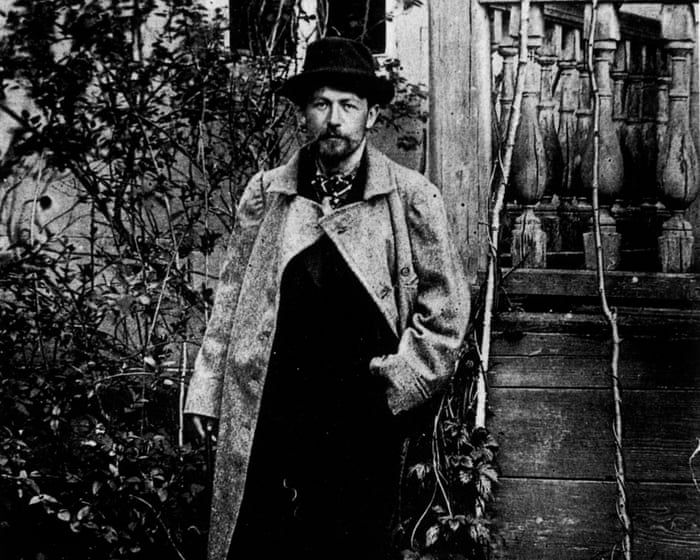
Anton Chekhov is one of the most widely admired writers. As Booker Prize winner George Saunders bluntly states, “Chekhov is the greatest short story writer who ever lived.” Novelists from Ann Patchett to Zadie Smith credit him as an influence. His plays—The Seagull, Three Sisters, Uncle Vanya, and The Cherry Orchard—continue to draw full houses around the world. Just in the past year, Andrew Scott captivated audiences with his solo performance of Vanya at London’s National Theatre, and Cate Blanchett played Arkadina in The Seagull at the Barbican. But how familiar are you with his playful side?
“Anton Chekhov: Earliest Stories” presents the first complete English translation of the stories, novellas, and humorous sketches he wrote in the early 1880s. These works are delightfully immature in the best sense. Many are only now being translated because, as editor Rosamund Bartlett explains, commercial publishers have long considered them unworthy of Chekhov’s legacy, deeming them too childishly funny. Bartlett recalls that during translation, “we would just collapse in fits of giggles.”
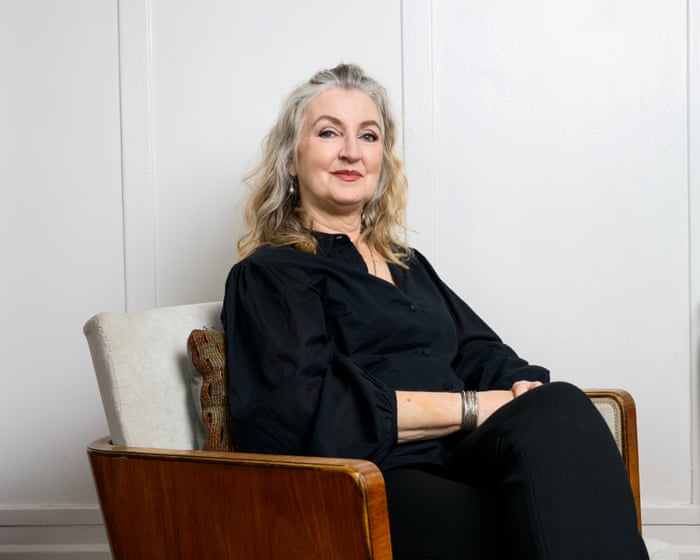
Bartlett, known for her acclaimed biographies of Chekhov and Tolstoy, co-edited the collection with Elena Michajlowska, a Russian filmmaker based in the UK. Together, they run the Anton Chekhov Foundation, a charity supported by prominent patrons like Ralph Fiennes, Tom Stoppard, and Kenneth Branagh. Initially founded to preserve Chekhov’s White Dacha in Yalta, the foundation shifted its focus after Russia’s annexation of Crimea in 2014 made that work impossible. They then conceived the “crazy, idealistic idea” of recruiting 80 volunteer translators worldwide—from students to retired scholars—to bring these overlooked stories to light.
Written between the ages of 20 and 22, these tales are filled with experimental wordplay, absurd names, and onomatopoeic silliness. For instance, the opening story, “Letter to a Learned Neighbour,” features a village called Eaten-Pancakes, while “On the Train” includes railway stations named Crash, Bang, Wallop, Run for Your Life, and Swindler Town. Another story, “Before the Wedding,” introduces a character named Second Lieutenant Zyumbumbunchikov—a nonsensical but brilliantly sounding name.
According to Bartlett, these 58 stories, published under various pseudonyms, are little known even among experts. “In Russia, Chekhov is better known for his stories than his plays, and these early works remind us that he started as a humorist,” she says. “Not all are funny or meant to be, but many are entirely frivolous—as you’d expect from a 20-year-old medical student writing for comic journals to earn a few kopecks.”
At the time, Chekhov’s father had gone bankrupt, forcing Anton to fund his own education and support his family. He reserved his real name for serious scientific publications. However, within a few years, it became clear that, whether he liked it or not, he was a writer whose work deserved serious attention. By the mid-1880s, he famously described medicine as his “lawful wedded wife” and writing as his mistress, joking, “When I’ve had enough of one, I can go and spend the night with the other.”
Chekhov was often critical of his own work, both prose and plays. He remained humble about even his most celebrated stories, such as “The Lady With the Dog,” “Ward No. 6,” and “The Darling.” After the disastrous premiere of The Seagull in 1896, he was so embarrassed that he fled the theater, vowing never to write for the stage again.”I write plays or have them performed.” (Konstantin Stanislavski’s 1898 staging of the play was highly praised.) In 1888, Chekhov told his editor he didn’t believe any of his stories would “remain in people’s memories for even ten years.” Yet his uncertainty never slowed his output. The year he qualified as a doctor, 1884, he published over 100 stories. By his death from tuberculosis in 1904 at age 44, that figure had risen to more than 500.
This collection arrives at a delicate cultural time. Ukrainian authors such as Oksana Zabuzhko, Olesya Khromeychuk, and Oleksandr Mykhed are calling for a fresh look at Russian literature and greater recognition of Ukrainian voices and culture. “The disgust many Ukrainians feel toward Russian literature because of the war is understandable,” notes Bartlett. “But even those who reject it often make an exception for Chekhov, and rightly so.”
Importantly, Chekhov does not align with Putin’s Russia, she explains. “He was never an imperialist, he despised the nationalism of writers like Dostoevsky, and there aren’t statues of him everywhere in Russia. Chekhov was a quarter Ukrainian and grew up in Taganrog, a town historically part of Ukraine. As a child, he and his brothers put on amateur plays in Ukrainian—the language was part of his heritage. He sometimes included Ukrainian expressions, which we’ve noted and explained in the annotations.”
Bartlett argues it shouldn’t be an “either/or” choice: “Learning more about Ukrainian writers shouldn’t mean we can’t explore new works by Chekhov. We should keep reading, and read more.” Starting with Zyumbumbunchikov seems like a good idea. Anton Chekhov: Earliest Stories: Stories, Novellas, Humoresques, 1880–1882, edited by Rosamund Bartlett and Elena Michajlowska, is published by Cherry Orchard.
Frequently Asked Questions
Of course Here is a list of FAQs about the topic He was just trying to make a little money newly translated stories show Chekhovs playful side
General Beginner Questions
Q What is this new collection of Chekhov stories about
A Its a book of newly translated short stories that highlight a more humorous lighthearted and playful side of the famous Russian author Anton Chekhov
Q What does the title He was just trying to make a little money refer to
A Its the title of one of the stories in the collection It reflects the everyday often comical struggles of ordinary people which is a central theme in these newly featured works
Q I only know Chekhov from serious plays like The Cherry Orchard Is this different
A Yes absolutely While his major plays are known for their melancholy and depth these stories showcase his sharp wit satire and ability to find humor in mundane situations
Q Why are these stories only being published now
A They arent new stories they are newly translated into English This new translation aims to capture the original humor and casual tone that might have been lost in older more formal translations
Deeper Advanced Questions
Q How do these playful stories change our understanding of Chekhov as a writer
A They reveal that he wasnt solely a tragedian He was a master of many tones and his humor adds a crucial layer to his work showing his full range as an observer of human nature
Q What kind of humor do we see in these stories
A Youll find satire poking fun at social pretensions ironic twists of fate and witty dialogue that exposes the silly often misguided ambitions of his characters
Q Are there any common themes in these playful stories
A Yes common themes include the absurdity of bureaucracy the petty schemes people devise for money or status and the comedic gap between a persons selfimage and reality
Q How does the new translation affect the reading experience compared to older versions
A The new translations use more modern conversational language making the jokes land more effectively and the characters feel more immediate and relatable to todays readers
Practical Tips Common Questions