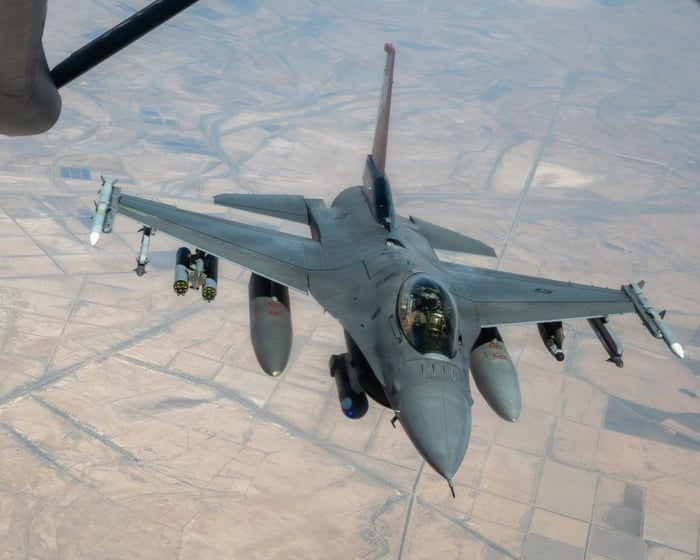
The US has carried out strikes against Iran in retaliation for a drone attack on a cargo ship, putting the ceasefire between the two countries—which reopened the Strait of Hormuz—under its most serious strain yet.
On Friday, the US targeted several missile and drone sites in Iran near the Strait of Hormuz and on Qeshm Island. The strikes appeared limited in scope, aimed at responding to Iran’s attack on a Singapore-flagged cargo ship without escalating the conflict further.
The US struck “Iranian missile and drone storage locations,” according to US Central Command (Centcom), which described the action as a “powerful response” to Iran’s strike on the M/V Ever Lovely.
However, the US military said it would continue to uphold the fragile ceasefire with Iran, even as disagreements have surfaced over Iran’s nuclear program, tolls in the Strait of Hormuz, and other difficult issues like Iran’s ballistic missile program.
Trump blames Iran for drone strike on cargo ship in Strait of Hormuz
Read more
“The US military remains present and vigilant to ensure all aspects of the agreement with Iran are adhered to, obeyed, and in full force and effect,” Centcom said.
“Iran signed a ceasefire agreement. We have honored it. If they have disagreements about how the MOU is being applied, they can pick up the phone,” JD Vance, the US vice-president, wrote on social media after the strikes. “But violence will be met with violence.”
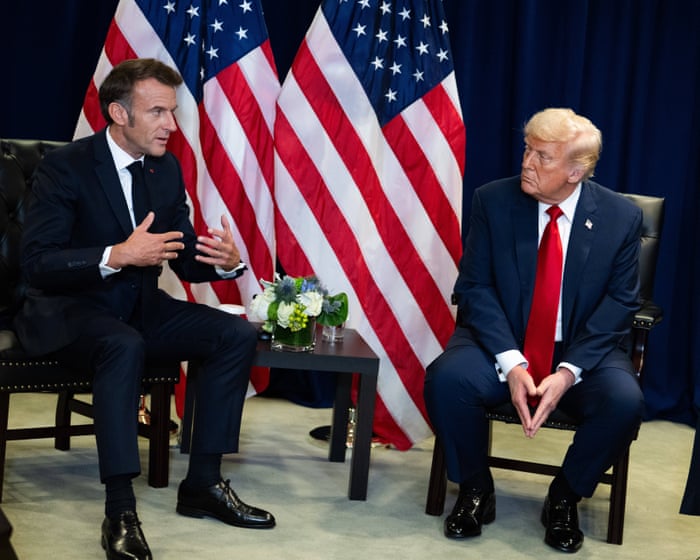
Donald Trump said that Iran’s drone attack violated the ceasefire. The strikes came shortly after Trump told reporters “you’ll find out” whether the US would respond. The US president also called the attack a “foolish violation” of the ceasefire.
“I don’t like the fact that they took a shot yesterday, actually four of them,” Trump said shortly before the US strikes on Friday.
Iranian state media, citing an unnamed military source, reported the strike at the port of Sirik after an explosion was heard there. The source said several warning shots had been fired from Sirik toward vessels that violated Strait of Hormuz regulations about five hours earlier, adding that two warning missiles had also been launched from the nearby Karpan area toward the strategic waterway.
The Revolutionary Guards said that in response, its navy “struck the locations where the terrorist US military is stationed in the region” and warned that any further US attacks would be met with a broader response, according to a statement carried on state media.
The ceasefire agreement gave Iran control over ship traffic in the strait, the Guards said.
map
“However, the United States, by provoking various fronts, sought to violate this commitment, and the necessary response was given and will continue to be given. If the aggression is repeated, our response will be broader than this.”
Ebrahim Azizi, a senior Iranian security official, said that Iran was not looking to escalate the conflict.
“This is not a violation of the ceasefire; it is ceasefire management,” Azizi wrote.
The attack caused the UN’s International Maritime Organization to pause efforts to evacuate hundreds of ships stranded in the Persian Gulf because of the conflict. It was not immediately clear under what conditions or authority the Ever Lovely tried to leave the Strait of Hormuz. The UK Maritime Trade Operations center said no one was injured in the attack on the Ever Lovely, which damaged the ship’s bridge.
“A cargo vessel has been hit on the starboard side by an unknown projectile, causing damage to the bridge,” the authority said. “Master has reported no casualties and no environmental impact.”
On Thursday, Iran’s Persian Gulf Strait Authority said: “Any passage through routes outside the framework designated by PGSA will not be covered by safe passage guarantees and will not be entitled to insurance coverage or related liabilities.”
Elsewhere, there were signs of progress, however, as Israel and Lebanon signed an agreement to end the fighting between Israel and Iran-backed Hezbollah. Both sides framed the deal as anThe first step calls for Hezbollah to disarm and for Israel to withdraw its troops from Lebanon, but it wasn’t clear how this would be enforced. Hezbollah said it would not cooperate.
The deal “begins to put in place a framework for lasting peace and security,” said U.S. Secretary of State Marco Rubio at the signing ceremony. He added, “It’s the beginning of the beginning. There’s a lot of work ahead.”
Lebanon’s ambassador to Washington, Nada Hamadeh Moawad, said the agreement “is a first step on the road to restoring Lebanese sovereignty and territorial integrity, securing a permanent and final end to hostilities, and allowing our people to return to their land.”
Israel’s envoy to the U.S., Yechiel Leiter, said that under the deal, “Iran is out, Hezbollah is out, and the road to peace between Israel and Lebanon is in.”
According to the agreement, whose text was released late Friday by the U.S. State Department, Israel and Lebanon “declare their intent to conclusively end the conflict, address its underlying causes, and thereby formally end any state of war between them.”
It also sets up a process for the Lebanese armed forces to restore “sovereign authority over all Lebanese territory,” pending the “verified disarmament of non-state armed groups,” especially Hezbollah.
With Reuters and Agence France-Presse
Frequently Asked Questions
Here is a list of FAQs about the US strikes on Iranian targets following the attack on a cargo ship in the Strait of Hormuz
BeginnerLevel Questions
1 What exactly happened
The US military carried out airstrikes against targets linked to Irans Islamic Revolutionary Guard Corps This happened after an attack on a cargo ship in the Strait of Hormuz which the US blamed on Iran
2 Why did the US strike back
The US said the strikes were a direct response to the attack on the cargo ship They described it as a necessary act of selfdefense to protect commercial shipping and deter future attacks
3 Where is the Strait of Hormuz
Its a narrow strategically important waterway between the Persian Gulf and the Gulf of Oman A huge amount of the worlds oil passes through it
4 Was anyone hurt in the US strikes
The Pentagon stated the strikes were proportional and aimed at military targets They did not report any civilian casualties but independent confirmation is often difficult
5 Is this a war between the US and Iran
Not yet Both sides have called for deescalation However it significantly raises tensions and increases the risk of a broader conflict
IntermediateLevel Questions
6 What exactly did the US strike
The US struck facilities used by the IRGC and affiliated groups These included weapons storage areas commandandcontrol centers and air defense systems
7 What was the cargo ship that was attacked
The ship was a commercial vessel often reported as an Israelilinked or Westernlinked tanker The specific details vary by source but the key point is it was a merchant ship in international waters
8 How does this relate to the Iran nuclear deal
This incident is separate from the nuclear deal negotiations Its part of the broader longstanding proxy conflict between the US and Iran The failure to revive the nuclear deal has made these kinds of direct military confrontations more likely
9 What does proportional response mean in this context
It means the US tried to match the scale of its strike to the initial attack Instead of launching a massive invasion they targeted specific military assets to send a message and degrade Irans ability to attack ships without escalating into a fullscale war