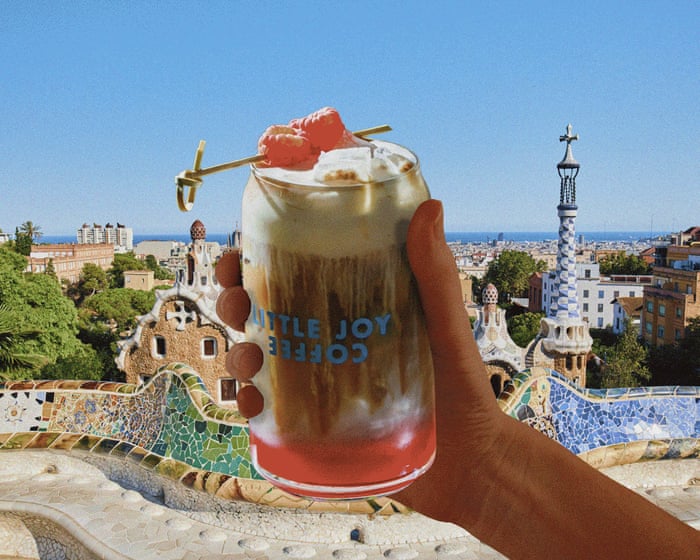
A viral coffee drink created by a small-town coffee shop near Minneapolis is now spreading worldwide after its creators decided to give away the recipe for free.
After Little Joy Coffee’s raspberry danish latte—a spring seasonal drink—went viral in March, the owners encouraged other coffee shops to adopt the recipe and add it to their menus. They shared both a home recipe and step-by-step instructions for cafes, inviting shops to join a map of locations serving the raspberry danish latte. Hundreds quickly signed up. The map now shows participating shops on every continent except Antarctica, with pins in dozens of countries, and has garnered nearly 2 million views.
Baristas from the shop even tasted their own creation while on vacation in Dublin, Ireland—a testament to how far the latte has traveled.
The idea grew out of the shop’s video series, “DIY or buy,” which shows how their drinks are made and breaks down ingredient costs. As people everywhere grapple with affordability, the videos aim to give a clearer picture of what goes into their favorite beverages.
Little Joy’s raspberry danish latte costs $8 and is made with house-made raspberry syrup at the bottom, followed by milk and a double shot of espresso. It’s topped with vanilla cream cheese foam and finished with two raspberries on a skewer. The DIY cost? About $2.46, according to the shop—not including labor or tools.
“The verdict is in: don’t make this one at home,” store manager Serena Walker said in the video.
Located in downtown Northfield, Minnesota—a town of about 20,000 known for “cows, colleges, community”—the shop knew most viewers wouldn’t be able to visit in person to try the drink.
“But this reveals a flaw in the whole ‘DIY or buy’ premise: How are you supposed to buy this if you live 1,000 miles away? That’s why we’re inviting any coffee shop to steal this drink and put it on their own menu. Not you, Starbucks,” Walker said.
Owner Cody Larson came up with the idea after realizing most of the shop’s 132,000+ Instagram followers wouldn’t make the trip to Northfield, located about 45 minutes south of Minneapolis. The shop opened in 2019, after operating as a coffee cart for several years.
“At first I thought, nah, that won’t work—nobody’s actually going to put it on their menu. I even wrote in my notes app: pros and cons. The con was we’d look like losers if no one added it,” Larson said.
He sees small coffee shops less as competitors and more as collaborators, with the real competition being large chains. Small shops tend to support one another, and sharing the recipe felt like a natural extension of that spirit.
“Giving permission was really cool for a lot of shops watching from afar—ones that thought, ‘That’d be cool to have on our menu, but I don’t want to be a copycat,’” Larson explained. “It doesn’t hurt us if a coffee shop in California serves the same drink. We’re not worried about that.”
Little Joy doesn’t vet the coffee shops that sign up, so customers are encouraged to check with locations to confirm the latte is on the menu. There’s also no way to control how another shop prepares the drink. Larson noted that people sometimes email him about ingredient swaps or adjustments, almost seeking his approval, but it’s out of his hands now.
“I assume we won’t catch any bad reviews from a drink made at another shop,” he said. “I think people understand that from shop to shop, there are going to be differences.””If the drink has the same name.”
The raspberry danish latte isn’t a permanent item on the Little Joy menu. It’s a special spring seasonal drink that won’t be available past the season. In its short time on the menu, it has become the shop’s top seller, even outselling the standard plain latte.
Inspired, unsurprisingly, by a raspberry danish, the latte mimics the pastry: the raspberry syrup acts like the fruit filling, and the cream cheese foam resembles a pastry cream.
Seasonal specialty menus have become common at many small coffee shops. At Little Joy, they’ve noticed over the past year that drinks with more unusual or trendy ingredients, like yuzu, have stopped selling well. This might reflect how people are cutting back on expensive specialty lattes while dealing with higher costs for other goods.
The shop’s “DIY or buy” series offers people the choice to make a signature drink at home, but it also reveals what goes into an $8 latte, Walker explained.
“People say, ‘Coffee at small shops is so expensive now, it costs $8,'” she said. “But when you break it down, you see how little profit we’re actually making. The cost of ingredients, the labor to make it and serve it, keeping the lights on—it all adds up and gives some perspective.”
Drinks inspired by familiar desserts have been a hit with customers. A carrot cake latte “went absolutely crazy,” Larson said. He draws inspiration from mixology and cocktail culture—for instance, using a fat-washing technique from bartending to create the syrup for a cardamom bun latte. He experimented with several versions of a mango sticky rice latte before settling on the raspberry danish.
People often comment on the shop’s videos, wishing they lived near Little Joy to try the drinks. There are occasional critics, too, who say the raspberry danish latte isn’t that original and doesn’t deserve the hype.
“To me, that’s like someone at the Museum of Modern Art looking at an abstract painting and saying, ‘I could have done that.’ Well, you didn’t,” Larson said. “And we did put in a lot of work figuring out the right ratios.”
The shop’s regular morning crowd consists mostly of locals and college professors, with students from Northfield’s two private colleges arriving in the afternoon. Since the recipe went viral, people have driven for hours just to try the drink in person, Walker noted. Some are visiting family, while others come specifically for Little Joy.
“Sometimes I’ll check Instagram later and see someone tagged us in a story saying, ‘I drove two hours to be here.’ And I realize, ‘Oh my gosh, I served them.’ It’s so scary—it’s a lot of pressure,” Walker said.
Larson is still amazed by how widely the latte has spread and is thinking about what to do next. The shop will likely create another recipe to share openly for others to use, but not too often—he wants to ensure it’s something people will enjoy and that the recipe works well. With many other coffee shops now following Little Joy online, he’s considering other ways to share knowledge.
“I still don’t understand how it went so far,” he said. “And I’m just thinking, okay, what’s next? Not how do we top this, but what do we do with this new following?”
Frequently Asked Questions
Of course Here is a list of FAQs about the viral smalltown coffee shop story written in a natural tone with direct answers
Beginner General Questions
Q What is this viral drink story about
A A small independent coffee shop in a tiny US town created a unique drink that unexpectedly went viral on social media bringing them massive sudden attention
Q Which coffee shop and what town is it
A The specific shop and town arent named in the headline but stories like this often feature shops in towns with populations under 10000 far from major cities
Q What was the actual viral drink
A The articles headline doesnt specify but in similar cases its often a creatively named latte frappe or lemonade with a special combination of flavors colors or toppings
Q Why does the owner say I still dont understand how it blew up like this
A It expresses their genuine shock The growth was organic and driven by customers online not a paid marketing campaign which feels unpredictable and overwhelming for a small business
Advanced BehindtheScenes Questions
Q How does a drink from a small shop even go viral
A Usually a customer posts an appealing photo or video of the drink tagging the location If the post is unique aesthetically pleasing or tells a good story it gets shared widely by algorithms and users looking for the next hidden gem
Q What are the biggest challenges for the shop after going viral
A They likely face a sudden surge in demand they werent staffed or supplied for longer lines frustrating regulars quality control issues and the pressure to maintain the hype
Q Is this viral fame good or bad for a small business
A Its a doubleedged sword Good Massive sales national recognition and financial security Bad Can lead to burnout alienate local regulars and is often a temporary boom thats hard to sustain
Q Can a small business prepare for going viral
A Not really for the initial shock but they can