Three hours before their team’s first World Cup match on June 14, around 4,000 football fans are expected to fill a huge former concrete grain store in Rotterdam, one of the city’s most famous nightclub venues.
But instead of orange flags, the blue ones will be waving, and the smell of arros moro will fill the air as the room pulses to the beat of conga drums and ritmo kombina. The Maassilo has been booked for a watch party for Curaçao, the least populated country to qualify for the World Cup and a part of the Kingdom of the Netherlands.
Many Dutch fans will be cheering alongside them. All but two of Curaçao’s players were born in the Netherlands, and 12 of them play for clubs in the Eredivisie or the second-tier Keuken Kampioen Divisie. The team is managed by longtime Dutch coach Dick Advocaat. The Dutch king and queen plan to attend at least one of the Blue Wave’s group matches.
“This World Cup isn’t just historic for Curaçao—it’s historic for the Netherlands,” said Sontje Davelaar, 41, a DJ for community radio station Fortius, which is organizing the watch party. “Curaçao is like a child of the Netherlands. For the first time, we’re going to the World Cup together as a family.”
Dutch football fans are famous for turning stadiums and host cities into a sea of orange wherever they go. But in Rotterdam, where one in three residents was born abroad and 60% have a non-Dutch background, the scene is much more diverse.
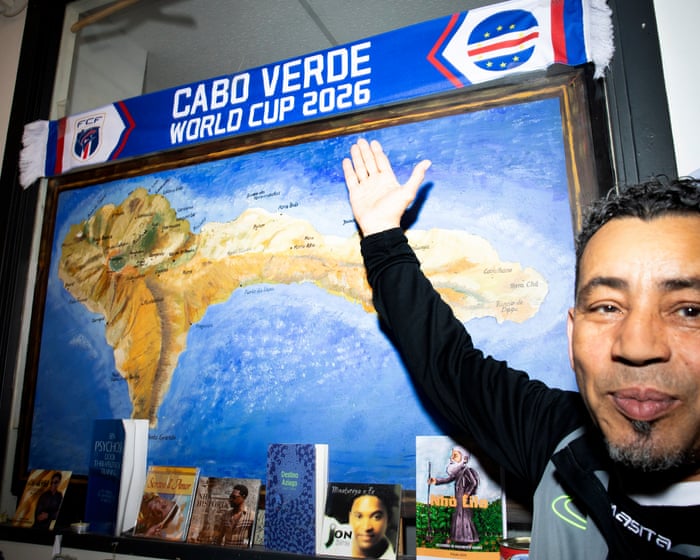
Cape Verde, an island nation off the northwest coast of Africa, is also making its World Cup debut. Six of its players were born in Rotterdam, a city that Cape Verdeans call “the 11th island” because of its 20,000-strong emigrant community.
“This place will be packed,” says Alexander Soares Silva, an administrator at FC Maense, a community football club founded by Cape Verdeans 48 years ago. Sitting in the basement of the São Nicolau cultural center, he describes how he had to watch Cape Verde’s historic final qualifying match on his phone outside the door because there was no room inside.
Cape Verdeans began arriving in Rotterdam in the 1950s, during the fight for independence from Portugal, to work on Dutch ships. “We’re known as the silent migrants,” says Soares Silva, 43. “We’ve been here for three generations, but the rest of Rotterdam doesn’t know us. Now people see us on ESPN, they know who we are, and we can be proud of our roots.”
Rotterdam’s mayor, Carola Schouten, hopes the tournament will bring the city’s communities together. The council has relaxed licensing hours during the World Cup so that as many games as possible can be shown on outdoor screens, including Curaçao and Cape Verde’s matches against Germany and Spain.
“We’re cheering on five teams during this World Cup,” she said. “I think it’s great that there are so many places where people can watch together and support each other’s teams.”
Morocco and Turkey have also qualified, and each will be cheered on by 50,000 Rotterdammers. When Morocco beat Portugal to reach the semi-finals in Qatar four years ago, with a team that included several Dutch-born players like then-Chelsea star Hakim Ziyech, hundreds of fans gathered in the city center, waving red and green flags and setting off fireworks.Photo: Paul Ellis/AFP/Getty Images
This time, the Morocco squad includes three players born in the Netherlands, among them Manchester United defender Noussair Mazraoui. Dutch Moroccans usually don’t choose to play for the country where they were born: the last one to wear the famous orange jersey was Ibrahim Afellay, about ten years ago.
“It’s become a matter of loyalty,” said Lotfi El Hamidi, a journalist born in Rotterdam who wrote a book called Generation 9/11 about the experiences of Muslims growing up in Europe in the 21st century. He added that this reflects a broader feeling among Dutch Moroccans that they are only ever seen as “temporary” members of society—a feeling that has grown stronger with the rise of far-right parties like Geert Wilders’ Party for Freedom (PVV) over the past 30 years.
“They’re expected to choose the Netherlands because they have Dutch passports,” El Hamidi says. “But when they do, they realize they’re under a microscope. If things go wrong, they’re the ones who get singled out for criticism. On the other hand, if they play for their parents’ home country, they get the red carpet treatment.”
View image in fullscreen: Stef Praag, the manager of sports bar Panenka, wearing a promotional shirt for the bar. Photo: Judith Jockel/The Guardian
The debate is likely to heat up if Morocco and the Netherlands face each other on the field, which could happen as early as the second round. “Some Moroccans won’t care either way, but there’s a group that will be hoping Morocco wins, so they can say: we’re not inferior to you,” El Hamidi says.
Still, for many fans in Rotterdam, loyalties are shared rather than divided. “We start out supporting different teams, but as other countries get eliminated, we all get behind Oranje [the Dutch national team],” El Hamidi says. “It’s just that not everyone does it with the same passion.”
“Rotterdam is a very multicultural city,” adds Soares Silva. “I have Turkish neighbors and friends from the Antilles. I was so proud when Morocco became the first African nation to reach the semi-finals. When Curaçao qualified, I actually set my alarm for their final game. I was so happy when they made it.”
Frequently Asked Questions
Here is a list of FAQs about Were cheering for five teams how Rotterdam will go beyond orange for the World Cup written in a natural conversational tone
BeginnerLevel Questions
1 What does Were cheering for five teams mean
It means that during the World Cup Rotterdam is officially supporting five different national teamsnot just the Netherlands The city is embracing its diverse population by cheering for the home countries of many of its residents
2 Which five teams are they cheering for
The campaign highlights the teams representing the largest diaspora communities in Rotterdam the Netherlands Morocco Turkey Suriname and Curaao
3 Why is Rotterdam doing this instead of just cheering for the Dutch team
Rotterdam is one of the most multicultural cities in the world The city wanted to celebrate that diversity and make everyone feel included rather than focusing only on the Dutch national team Its a way to turn the World Cup into a citywide party for all Rotterdammers
4 Does this mean they arent supporting the Netherlands
No not at all They are absolutely still cheering for the Netherlands The idea is to support the Netherlands plus four other teams creating a bigger more inclusive celebration
5 How are they showing support for all five teams
The city is flying the flags of all five nations together at key locations like City Hall Theyre also organizing public viewing events for each teams matches and encouraging local businesses and residents to decorate their streets and homes with the flags of all five countries
Advanced Practical Questions
6 How did the city decide on these five specific teams
The city government worked with local community organizations and used census data to identify the largest immigrant communities in Rotterdam The five nations chosenMorocco Turkey Suriname and Curaaorepresent the most significant and longestablished diaspora groups
7 What if my favorite team isnt one of the five Can I still join the celebrations
Absolutely The campaign is about inclusion and community spirit While the official focus is on five teams the public viewing events and street decorations are open to everyone regardless of which team they support The goal is to create a festive atmosphere for the whole city