If there’s any doubt about Norway’s commitment to maintaining and expanding its offshore oil and gas production, Energy Minister Terje Aasland has a blunt response: “We will develop, not dismantle, activity on our continental shelf.”
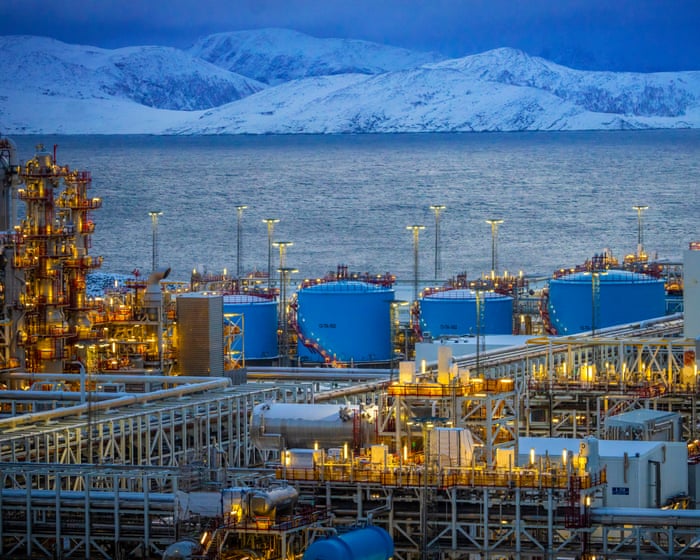
This week, to the concern of environmental activists, he announced that three gas fields off Norway’s southern coast would reopen by the end of 2028—nearly 30 years after they closed—to make up for a shortfall caused by the war in Ukraine and disruptions to supplies from the Middle East.
The decision will help keep oil and gas production at roughly 2025 levels, which have been stable for almost 20 years, and remain about the same for the rest of this decade. Norway has 97 offshore oil fields, three of which started production last year. The Norwegian Offshore Directorate expects “100 and beyond” within the next two years, still producing at least the current level of 2 million barrels of oil per day.
The Barents Sea, in the far north, is the new frontier for oil and gas—along with the possibility of mining seabed minerals between northern Norway and Greenland. That prospect is more distant, though initial surveys by the Norwegian Offshore Directorate, an agency under Aasland’s department, showed potential.
“Norwegian offshore production plays an important role in ensuring energy security in Europe,” Aasland told the Guardian. “The world, and Europe, will need oil and gas for decades to come, and it’s crucial that Norway continues to develop its continental shelf to remain a reliable, long-term supplier—with a high level of exploration activity.”
The sector generates huge wealth for Norway, but this week’s decision to reopen the Albuskjell, Vest Ekofisk, and Tommeliten Gamma gas fields in the North Sea—closed since 1998—has drawn heavy criticism.
It goes against the advice of the country’s environment agency, and the Socialist Left party accused the government of “greenwashing.”
Lars Haltbrekken, the party’s deputy leader and environment spokesperson, said: “This shows the government is once again blatantly ignoring environmental advice from its own experts. All the talk about responsible oil extraction is nonsense. It’s greenwashing through and through, with vulnerable and important natural areas knowingly put at risk.”
Equinor (formerly Statoil), the Norwegian energy company in which the state owns a 67% stake, says it’s making a “big effort” to maintain its 2020 production levels of 1.2 million barrels per day until 2035. The state’s holding in the company is expected to yield about £2 billion in dividends this year.
“It’s very important for the company’s market value to keep production higher now than in 2001—yes, we had lower production back then,” said Equinor’s Ola Morten Aanestad. To prevent any decline, he said Equinor is committed to investing $6 billion (£4.4 billion) annually until 2035—”more drilling, a lot of new development, more pipelines, maybe smaller fields being developed, but still important.”
Aasland—Norway’s longest-serving oil minister, a 61-year-old former electrician and trade union leader—says Norway has “a responsibility.”
“In Europe, before the war in Ukraine, there was a lot of talk about how to get rid of oil and gas on our continental shelf. Now they ask me every day, ‘Can you deliver more oil and gas?’ We’re talking about energy security for Europe, and we have to increase investment. We have a responsibility. Our focus is very clear.”
Aasland also stressed the importance of job security for the 210,000 people employed by Norway’s energy industry. “It’s really important that they wake up in the morning knowing their jobs are secure.”Waking up knowing they have a secure job for the future. Aanestad says Norway’s steady tax rate on oil and gas companies has made it appealing to investors.
“We’ve had a 78% tax rate since the 1970s – it’s high, I know – but investors know what to expect; it’s predictable,” he says. That tax is a key part of Norway’s £1.5 trillion sovereign wealth fund, which helps the country maintain a large surplus.
Norway’s straightforward approach stands in contrast to the UK, its North Sea neighbor, where the government has ruled out new licenses for oil and gas exploration.
Terje Sørenes, the chief economist at the Norwegian Offshore Directorate, says the goal is to keep production going as long as possible and to increase output, which currently supplies a third of Europe’s gas. For now, Europe’s energy powerhouse is focused on more drilling and offshore production well into the 2030s and beyond.
Frequently Asked Questions
Here is a list of FAQs based on the headline Were talking about Europes energy security Norway says as it pushes ahead with more oil and gas production
BeginnerLevel Questions
Q Why is Norway increasing oil and gas production right now
A Norway says Europe needs a reliable source of energy By producing more Norway is trying to help European countries that are facing shortages or high prices especially after Russia cut off much of its gas supply
Q Doesnt producing more oil and gas hurt the environment
A Yes burning fossil fuels contributes to climate change Norway argues that its gas is cleaner to produce than many other sources and that Europe needs this energy right now to keep the lights on and factories running while it builds more renewable energy
Q Who is Norway selling this extra oil and gas to
A Mostly to European countries like Germany the UK Poland and the Netherlands Norway is now the largest supplier of natural gas to Europe
Q Is this a permanent shift or just temporary
A Norway says its a temporary measure to help Europe through the current energy crisis However critics worry it will slow down the transition to clean energy
IntermediateLevel Questions
Q What does energy security mean in this context
A It means making sure Europe has enough energy to run its economy without being dependent on unreliable or hostile suppliers Norway is positioning itself as a stable trustworthy partner
Q How does Norway justify expanding fossil fuels while also promoting climate goals
A Norway says its a bridge solution They argue that if Europe doesnt get gas from Norway it will buy dirtier coal or more expensive liquefied natural gas from other countries They claim their production is the least bad option for now
Q What specific projects is Norway pushing ahead with
A Major projects include the Johan Sverdrup oil field and new gas developments like Ormen Lange 3 and the Troll Phase 3 project which will extend the life of Norways biggest gas field
Q Is Norways gas actually cleaner than other fossil fuels