Last August, supermodel Heidi Klum shared that she and her husband, Tom Kaulitz, were planning a worm and parasite cleanse. “Everything on my Instagram feed at the moment is about worms and parasites,” she told the Wall Street Journal, adding ominously, “I don’t know what the heck is going to come out.”
Maybe your social media feeds aren’t full of posts about worms and parasites—if so, congratulations. But if you type “parasite cleanse” into TikTok or Instagram, you’ll be flooded with so-called experts selling expensive herbal supplements that promise to detoxify the body and eliminate harmful worms and parasites.
One TikTok user, who describes herself as a “holistic mama,” suggests people should do deworming cleanses if they experience “sleep issues, gut issues, weight loss issues, mood swings, skin issues.”
It would be nearly impossible to find a single person who isn’t dealing with at least one of these issues. Does that mean everyone should be on a parasite cleanse?
“NO,” wrote Caroline Susie, a spokesperson for the Academy of Nutrition and Dietetics, in all caps over email. She emphasized that there is no solid clinical evidence supporting these cleanses.
Ideally, a medical professional’s strong discouragement would be enough reason to avoid something. But if you’re still unconvinced, here’s what to know about parasite cleanses and why you probably don’t need to do one.
What are parasites?
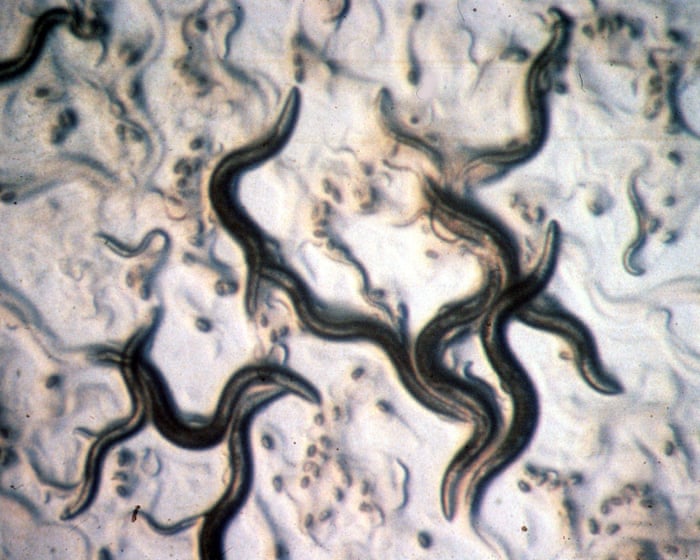
Parasites are organisms that live in, on, or with another organism and get their food “from or at the expense of its host,” according to the Centers for Disease Control and Prevention. Examples include tapeworms, fleas, or me when I lived at my parents’ house after college.
Humans contract parasites in several ways, says Beth Czerwony, an outpatient dietitian for Cleveland Clinic’s Center for Human Nutrition. These include ingesting contaminated food or water and direct contact with infected feces. Some parasites, like hookworm, can also penetrate the skin when a person walks barefoot on contaminated soil, while others can be transmitted from person to person in unhygienic environments.
In the U.S. and U.K., the most common intestinal parasites are giardiasis and cryptosporidiosis, says Dr. William A. Petri, a professor of infectious diseases at the University of Virginia. Both are transmitted through ingesting fecally contaminated food or water.
Parasitic infections are extremely common. According to a 2023 World Health Organization (WHO) report, almost 25% of the global population has an infection related to parasitic worms like roundworms, whipworms, and hookworms. These infections tend to be concentrated in “the poorest and most deprived communities” where people lack access to clean water and sanitation, per the WHO.
“Having intestinal parasites is less common in places with good sanitation,” says Czerwony.
What are the symptoms of a parasitic infection?
Symptoms vary based on the type of parasite and the health of the host, says Czerwony. Common symptoms can include diarrhea, nausea and/or vomiting, stomach pain, loss of appetite or increased hunger, unexplained weight loss, skin irritation, visible worms or eggs in one’s stool, and itching around the anus or genitals.
What is a ‘parasite cleanse’?
Klum described her cleanse as involving “all these herbs.” Most of the so-called remedies promoted on social media involve taking herbal supplements (like anise, clove, grapeseed, wormwood, and goldenseal), making dietary changes (like eliminating processed foods or cutting out gluten), or a combination of both.
Does it work?
No.
“There is no evidence that these parasite cleanses are either effective or needed,” says Petri. And if someone feels better after one of these cleanses, it’s probably not due to eliminating parasites, says Susie—it might simply be because they’re eating more nutrient-dense food.
At-home cleanses also come with risks. Supplements are not regulated, SusieShe also notes that some herbs can interact with other medications and become toxic at high doses. Restrictive diets can also lead to nutrient deficiencies.
How are parasitic infections treated?
“If you think you may have a parasite, it’s important to contact a medical professional and not try to treat it yourself,” says Czerwony.
She explains that infections can be diagnosed through stool or blood tests, and sometimes with imaging tests like endoscopies or colonoscopies.
If a patient does have a parasitic infection, treatment depends on the type of parasite and how severe the infection is. Often, doctors will prescribe antiparasitic or antibiotic medications, and may provide rehydration and nutritional support if there has been significant weight loss, Czerwony adds.
Did the parasite cleanse work for Heidi Klum?
It’s unclear, but probably not. Klum—who once dressed as a worm for Halloween—told People magazine in November, “I don’t even know if anything happened!”
Frequently Asked Questions
Of course Here is a list of FAQs about parasite cleanses designed to answer questions from basic to more detailed
FAQs About Parasite Cleanses
Beginner Definition Questions
1 What is a parasite cleanse
A parasite cleanse typically refers to an overthecounter herbal supplement regimen or a restrictive diet that claims to detoxify the body by killing and removing intestinal parasites
2 Do I need to do a parasite cleanse
For the vast majority of people in developed countries with access to clean water and food no there is no need Your bodys natural defenses and a healthy digestive system are very effective True parasitic infections are medical conditions diagnosed by a doctor
3 Are parasites a common problem
True intestinal parasites are uncommon in healthy adults in developed nations They are more prevalent in areas with poor sanitation or in specific situations
Benefits Claims
4 What are the supposed benefits of a cleanse
Proponents claim benefits like increased energy reduced bloating clearer skin weight loss and relief from vague symptoms like brain fog or joint pain There is no scientific evidence linking these general symptoms to parasites in otherwise healthy individuals
5 Can a cleanse help with bloating or fatigue
While you might feel temporary relief its likely due to the restrictive diet that often accompanies the cleanse not from killing parasites Addressing diet sleep and stress is a more direct and evidencebased approach
Common Problems Risks
6 Are parasite cleanses safe
They can be risky Many cleanse products are unregulated may contain strong unproven herbs or could interact with medications They can cause severe digestive upset nausea and dehydration Selftreating can also delay diagnosis of a real medical issue
7 What are the signs of a real parasitic infection
Actual symptoms include persistent and severe diarrhea unexplained weight loss visible worms in stool stomach pain lasting more than two weeks or travelrelated illness These require a doctors visit and lab testing not an overthecounter cleanse
8 I saw something in my stool after a cleansewas that a parasite
What people often see are normal intestinal linings