On September 9, 2022, Lucia Osborne-Crowley flew from London to Miami and took a Greyhound bus north to West Palm Beach. The writer and journalist had arranged to meet Carolyn Andriano, who was abused by Jeffrey Epstein and Ghislaine Maxwell from age 14 to 17, starting in 2001. Andriano had been a key witness in Maxwell’s 2021 trial.
When they met, Andriano said a private investigator in his 60s had just visited her—he’d heard she was speaking to someone for a book. That same afternoon, at a restaurant, Osborne-Crowley was approached by a man in his 60s. He asked what she was writing, offered her drugs, cash, and a meeting with one of Epstein’s pilots, then put his hands under her skirt. After the manager made him leave, he waited in the parking lot; Osborne-Crowley had to escape through a staff exit.
By then, she had been following the Epstein case for six years and had written a book about the Maxwell trial, The Lasting Harm. This incident was just a glimpse of what others had endured. In November 2025, 28 Epstein survivors released a statement saying many had received death threats. They all requested police protection.
With Epstein dead and Maxwell in prison, who was paying these men? “It could be any of the people who are not yet facing charges,” Osborne-Crowley says. “First, they can afford it. The weekend I was in Miami, someone was following me, someone was following a survivor in South Africa from my book, and someone was following a survivor in the UK. Just so we were all aware.” Two women withdrew from The Lasting Harm after receiving threats. “Ghislaine used to tell them: ‘If you ever tell anyone what’s going on here, no matter how far in the future, we will find you and we will stop you.’ And in many ways, that promise was kept.”
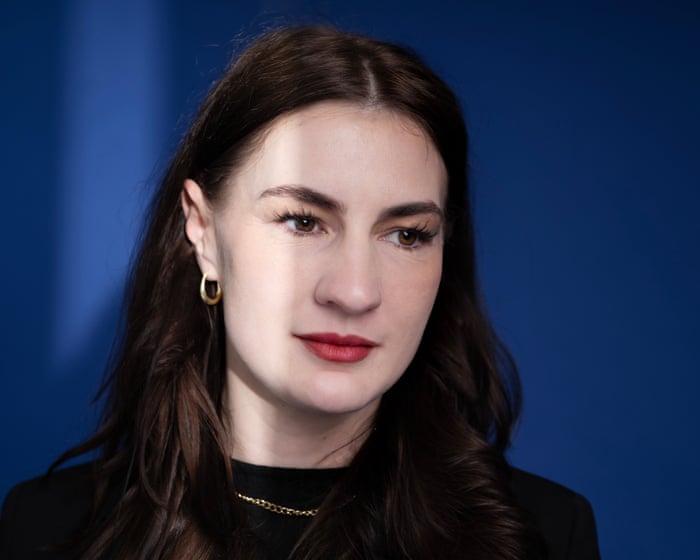
Osborne-Crowley, 34, is sitting on my sofa during a lunch break between filing court reports for Law360, having just made a fuss over my cat. She wears black cowboy boots and keeps her scarf on, apologizing in a faint Australian accent (she moved to London from Sydney in 2018) when she needs to answer a work email. It’s a busy week, with a class action against Amazon, a landmark disability claim, and the latest round in a lawsuit backed by Ronnie O’Sullivan against snooker’s governing body. But she keeps returning to the steady stream of Epstein revelations, especially their impact on the women she now considers friends.
Her frustration is that coverage focuses on Epstein, Maxwell, and Andrew Mountbatten-Windsor, trying to unpack their psychology and connections, finding it easier to discuss political corruption than sexual abuse. The human cost gets lost, along with the survivors’ own agency. “This would never have happened if these women hadn’t campaigned for this act [the U.S. Epstein Files Transparency Act]. We don’t need more articles or books saying, ‘Ooh, Jeffrey Epstein, how do we understand him?’ There are a lot of things that need more scrutiny, but it’s not the yachts and islands and opulent wealth. This is a story about grooming and the girls who lived through it.”
In her book, Osborne-Crowley writes about Jane, who was approached by Maxwell and Epstein at a summer camp in 1994 when she was 14. There’s Annie Farmer, invited to a weekend retreat for bright students at Epstein’s ranch at 16, only to find no other children there. Kate, 17, was promised an introduction to a music producer in London. Liz Stein was a 21-year-old personal shopper in a New York department store. Jess Michaels was a 22-year-old dancer when Epstein raped her after a massage, as far back as 1991.Ghislaine used to tell them: “If you ever tell anyone what’s going on here, no matter how far into the future, we will find you and we will stop you.”
Reading their stories, what strikes you are the similarities—the love-bombing, the identification of weakness, the financial help, the gifts of lingerie, the name-dropping—as well as how that playbook was refined over time. In 2004, when Andriano got too old for Epstein, he asked her to recruit younger friends from school. “Why would I want to be friends with girls younger than me?” she said at Maxwell’s trial. “That would be so uncool.”
Andriano died in a hotel in May 2023, eight months after Osborne-Crowley’s visit. The autopsy recorded an accidental overdose of methadone and fentanyl. It was a shock to those who knew her. “She’d been clean for so long, and I spoke to her the day before,” says Osborne-Crowley. “It didn’t feel like she was about to relapse for the first time in 10 years.”
For the Epstein survivors, the recent release of files has been both vindicating and re-traumatizing, she says: “It’s so complicated. They feel very validated on some levels.” At the same time, central figures were concealed and survivors’ names were left unredacted. “It’s hard to be shocked at this point, but it does feel really shocking that the Department of Justice would do that. And they are very angry that the cover-up is so brazen. The law says that the only things that can be redacted are the names of the victims. So you’ve got the executive branch breaking the law, and in a way that’s sloppy.”
Epstein abused hundreds of women, most of whom prefer to remain anonymous. Does belonging to that group, “the Epstein survivors,” minimize them—an interchangeable mass of Jane Does, as Epstein saw them?
“It’s both good and misinformed,” Osborne-Crowley says. “Good because they have voices and the attention of politicians. But it is frustrating to be treated as though you all have the same opinions. Carolyn was 36; Liz is in her 50s. This operation was very different in the ’90s than it was in the mid-2000s, so people’s experiences are different. I’ve seen people latch on to that as ‘infighting.’ It’s ridiculous, because there’s no world in which it would make sense for them to agree on everything, given how sophisticated this operation was.”
As a child, Osborne-Crowley was a star gymnast. At 12, she represented Australia at the world championships. She did triple somersaults in the air and held a handstand with one arm. The training was relentless: camps where she was woken for a 5 a.m. run by Rihanna’s “Pon de Replay” on full blast; a diet of raw eggs, protein powder, and milk. “I had to be strong and powerful and graceful and light, all at the same time,” she writes in her 2019 memoir, I Choose Elena. “I had to smile.” The judges nicknamed her “the smiling girl.”
She was training for her second world championships, at 15, when she was raped by a stranger in Sydney. A man in his 30s marched her into a McDonald’s toilet, and she escaped only by smashing a bottle on the floor and startling him. She didn’t go to the police but gradually dropped out of gymnastics and began to develop chronic pain symptoms, later diagnosed as endometriosis and Crohn’s disease. Over years of treatment, she surfaced memories of being abused by a gymnastics coach—and realized she wasn’t the only one.
“My friends joke that I’m a very all-or-nothing person,” Osborne-Crowley says. “I have the institutional childhood abuse and the violent rape, these things I told nobody about for 10 years. And then I publish an essay and tell everybody, all at once.” In her memoir, she details the physical cost of suppressing this and the science around it—the addictions and autoimmune diseases that are the body’s way of processing trauma.
Covering Ma…Growing up in America, if you ask your parents for something completely outlandish, they might say, “What do you want—an act of Congress?” But we actually did it: we created an act of Congress.
For support, here are some helplines:
For child protection and abuse support:
– In the UK, the NSPCC offers support to children at 0800 1111, and adults concerned about a child at 0808 800 5000. Adult survivors can contact the National Association for People Abused in Childhood (Napac) at 0808 801 0331.
– In the US, call or text the Childhelp abuse hotline at 800-422-4453.
– In Australia, children, young adults, parents, and teachers can contact the Kids Helpline at 1800 55 1800, or Bravehearts at 1800 272 831. Adult survivors can contact the Blue Knot Foundation at 1300 657 380.
– Additional resources can be found through Child Helplines International.
For rape or sexual abuse support:
– In the UK, Rape Crisis offers support at 0808 500 2222 in England and Wales, 0808 801 0302 in Scotland, or 0800 0246 991 in Northern Ireland.
– In the US, RAINN offers support at 800-656-4673.
– In Australia, support is available at 1800Respect (1800 737 732).
– Other international helplines can be found at ibiblio.org/rcip/internl.html.
For crisis or emotional support:
– In the UK and Ireland, Samaritans can be contacted at 116 123, or by email at jo@samaritans.org or jo@samaritans.ie.
– In the US, you can call or text the 988 Suicide & Crisis Lifeline at 988, or chat online at 988lifeline.org.
– In Australia, Lifeline is available at 13 11 14.
– Other international helplines can be found at befrienders.org.
Frequently Asked Questions
Of course Here is a list of FAQs about the book The coverup is shocking a journalists relentless and painful battle to reveal the truth about Ghislaine Maxwell
Beginner General Questions
1 What is this book about
This book details the investigative work of journalist John Sweeney as he pursued the story of Ghislaine Maxwell her role in Jeffrey Epsteins sex trafficking network and the powerful figures who tried to suppress the truth
2 Who is the author
The author is John Sweeney a veteran investigative journalist for the BBC and other outlets known for his tenacious and often confrontational style of reporting
3 Is this just about Ghislaine Maxwell
While Maxwell is a central figure the book is equally about the system that protected her and Jeffrey Epstein for decadesincluding lawyers PR firms intelligence connections and wealthy enablers
4 Do I need to know a lot about the Epstein case already
No The book serves as both an investigation and a primer It explains the key players and events making it accessible even if you only know the basics
5 What does the coverup is shocking refer to
It refers to the extensive efforts to silence victims intimidate journalists bury court documents and use legal threats and PR spin to hide the full scope of the crimes and the powerful people involved
Advanced Detailed Questions
6 What new information or perspective does this book offer
It provides a firsthand account of the tactics used to thwart journalists surveillance legal threats disinformation campaigns and the emotional toll on those digging into the story It emphasizes the how of the coverup not just the what
7 How does the author describe his painful battle
Sweeney recounts being followed facing aggressive legal letters designed to bankrupt him and his publishers experiencing intense stress and confronting the sheer scale of opposition from wellresourced connected individuals
8 Does the book name other powerful people beyond Epstein and Maxwell
Yes it discusses the challenges in reporting on the network of associates including how laws and threats prevented the naming of some individuals prior to Maxwells trial and the role of figures like Prince Andrew
9 What role does the author suggest intelligence agencies played
Sweeney investigates