Lying face down in the dirt, the cold metal of a baseball bat striking his skull, spine, and legs—the same legs that once carried him to glory—Luvo Manyonga had a sudden realization. This life could not go on; he had to change or die.
Manyonga had been a drug addict for as long as he could remember, chasing recreational highs that were the opposite of the performance-enhancing shortcuts some of his rivals may have taken.
At times, he managed to keep his habit somewhat under control. Never for long—not even at the peak of his career—but enough to win South Africa’s first world long jump title in London in 2017, a year after taking Olympic silver in Rio.
Manyonga’s best jump of 8.65 meters, just months before that world gold, was the longest in the world in nearly a decade. He had publicly aimed to become the first person in history to jump nine meters—a goal that seemed entirely possible.
But as he lay on the ground in late 2023, beaten for his latest wrongdoing, those athletic dreams felt like a lifetime ago.
Trapped in a desperate cycle, he was constantly chasing his next high. After already serving an 18-month ban in 2012 for using tik, a form of crystal meth common in South African townships, he received a four-year suspension from athletics in late 2020 for failing to update his whereabouts for doping tests, as his addiction once again spun out of control.
The man who had jumped over cars for fun as a teenager and whose vibrant personality won over fans worldwide was sinking to new lows. Dropped by his management and cut off from the sport that had been his salvation, he was left shattered by the sudden death of his mother.
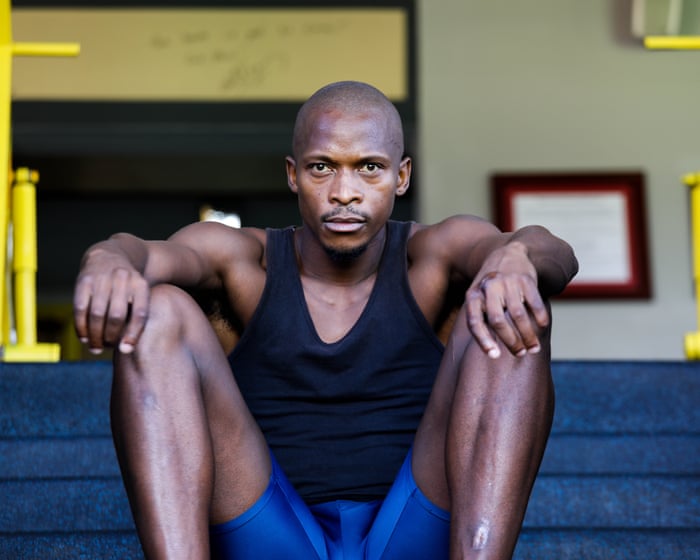
“I felt like there was nothing left for me,” says Manyonga, now 35, his toned muscles visible under a polo shirt—a stark contrast to the gaunt figure he became during his years on drugs.
“After my mum passed, I decided my life was over. She was the pillar of my life. She kept me going. The wagon lost its wheels, and everything started going south.”
The next three years passed in a drug-fueled haze, mostly tik but also some crack cocaine, which fortunately didn’t suit him. The only reminder of his past was the ID card he often had to show to convince people he was the same man who once conquered the athletics world.
“My life was crazy,” he says. “I was just living for another fix. I got to the point where I was robbing people, snatching phones, breaking into houses—just to get a fix. That’s how low I went.
“I just had to wake up in the morning and numb the pain because I didn’t want to accept that I had a problem.”
In 2023, while trying to fund his next hit, Manyonga stole a phone from the daughter of a community patrol member near Paarl. When the patrol caught him, they used a baseball bat to deliver their own form of life-changing punishment.
“I couldn’t walk for a week,” he recalls. “That’s when the penny dropped for me. I saw my life flash before my eyes when those guys were beating me.
“The only thing left for me was death, because that’s the life of a drug addict. So I decided then that either I would kill myself or turn my life around. I needed to find Luvo Manyonga again.”
Needing a fresh start, he left his township of Mbekweni and moved to the Eastern Cape, away from the drugs that had trapped him for so long. He got clean, left his life of crime behind, and began to make a plan.After stealing a phone belonging to the daughter of a community patrol member, he was beaten. Photograph: Moeletsi Mabe/The Guardian
When his athletics ban expired in December 2024, Manyonga quietly began training again. A few months later, he stood at the end of a long jump runway for a small meet in Stellenbosch, ready to compete for the first time in nearly six years.
“It brought back all the memories of where I’d come from, the journey I went through,” he says. “To be able to stand on that runway, healthy and looking forward to doing what Luvo does best, it was quite emotional.”
His jump of 7.31m that day was a far cry from the athlete who had stood atop the world podium eight years earlier, but it was a start. Taken on by the World Wide Scholarships organization, he moved to Johannesburg to live with a new coach, Herman Venske. A familiar routine emerged: sunrise gym work, midday rest, and afternoons at the track.
Slowly but surely, his distances improved, reaching eight meters for the first time in October and then soaring to 8.11m last month.
That was enough to secure a place at this week’s World Athletics Indoor Championships in Torun, Poland, where he returns to the global stage as a man taking full responsibility for his actions.
“I am human. I make mistakes,” he says. “I don’t sugarcoat that. I was the one who failed to be available for my anti-doping whereabouts checks. I never used any substance to cheat in sport; it was just a recreational drug that I used. I had a problem. But now I have learned my lesson. I have recognized who Luvo Manyonga is.”
He hopes his experience serves as a cautionary tale about what can happen when a young person is lifted from poverty into instant success and fame.
Manyonga never finished school. No one in his family knew how to help a child suddenly exposed to more money than he had ever imagined. His support network was woefully insufficient, and he began using recreational drugs as a teenager, even before he won the world junior title in 2010.
“I came from a small township, and nobody had experienced fame or traveled the world at a young age,” he says. “A lot of things happened for me very quickly. I got big-headed and thought I owned the world. My drug use was something that was bound to explode.”
The initial 18-month doping ban in 2012 had little impact. Throughout his elite career, he would smoke tik during the off-season, only stopping a couple of months before each summer. Incredibly, he still achieved global success.
“Sport can give you a natural high, so when I wasn’t in sport, I would look for something that would give me that feeling,” he says. “Whenever I came back to South Africa, I wanted that feeling.
“I thought I could manage it. I thought I could balance competing in the season and then, in the off-season, do my drugs. But nobody can cheat drugs. Those things are evil.
“You will get to a point where they take over, they rule your life, you depend on them.”
When Manyonga speaks now, he does so with total clarity for the first time since his youth, having been clean from the day he received that beating in 2023: “Me trying to take another hit right now would be death for me.”
The exuberance that once lit up stadiums worldwide has visibly returned. His exceptional circumstances have seen him welcomed back into the sport in a way unlike any other twice-banned athlete, and he is relishing the chance to compete as the oldest long jumper at the world indoors.
“I’m so excited,” he says. “I know for a fact that I still have big jumps and gold medals in me. I still have to give these youngsters a challenge. I feel like I’m getting better and better with each competition.
“Muscle memory, you know…”Never forget. Last year was just the beginning. I’m like a car that’s been parked for four years. I just need to drive it for a while. The engine is still fresh, the tires and oil have been changed. Soon, this V12 is going to be breathing fire.
A trademark smile flashes across the face of one of athletics’ greatest entertainers. He has been through hell and back more than once. This final chance means too much to waste.
Frequently Asked Questions
Of course Here is a list of FAQs about the story of the long jumper who overcame meth addiction framed in a natural conversational tone
About the Story The Person
Who is this story about
This is the story of a professional or aspiring long jumper whose life and athletic career were nearly destroyed by a severe addiction to methamphetamine The title suggests they felt they had hit absolute rock bottom before turning their life around
What is the main message of their story
The core message is one of radical redemption It shows that even from the depths of addiction and despair it is possible to recover rebuild and achieve incredible things both in life and in sport
Is this based on a specific athlete
While the phrasing sounds like a news headline it is likely based on a real athletes biography or a major interview Stories like this have featured athletes such as Australian long jumper Brooke Stratton or others in track and field
About Addiction Recovery
What is meth and why is it so dangerous for an athlete
Methamphetamine is a highly addictive and powerful stimulant drug For an athlete it destroys the body from the insidecausing severe weight loss heart damage psychosis and destroying the discipline nutrition and rest required for peak performance Its the opposite of training
How does someone go from being an athlete to a meth addict
The path varies It often starts with underlying issues like mental health struggles injuryrelated despair peer pressure or using stimulants mistakenly believed to enhance performance or cope with pressure which then spirals into fullblown addiction
What does a journey through hell mean in this context
It refers to the devastating experiences of active addiction losing everything engaging in dangerous or illegal behavior experiencing paranoia and psychosis and feeling utterly hopeless
What was the turning point that made them seek help
The headline hints at it The only thing left for me was death The turning point is often a moment of clarity at absolute rock bottoma neardeath experience a major loss or the simple terrifying realization that continuing to use will kill them
About the Comeback Sport