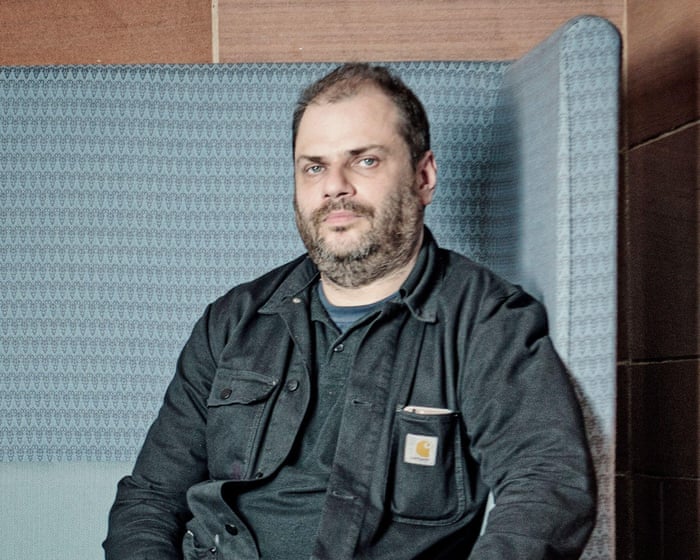
Picture Reshona Landfair in 1996, at age 12, when she met the R&B superstar R. Kelly (real name Robert Kelly). Her world, she says, seemed like “a buffet” laid out before her. She was popular, a seriously talented basketball player, and the youngest member—in her words, “the pint-sized girl rapper”—of 4 The Cause, the singing group she had formed with three cousins. They had been signed to a record label, reached the Top 10 in eight countries, and toured much of Europe. Her large extended family from Chicago’s West Side was tight-knit. Life was filled with music, sports, church, Sunday lunch at Grandma’s, family road trips, and everyone knowing everyone’s business. “That was a beautiful time,” she says. “I had love and good people all around me. I was living as my true self, the person I wanted to become. I felt like I was on my way.”
Now picture Landfair at 26, when she finally left Kelly’s orbit. By then, half her family wasn’t speaking to the other half, and the relationships that survived were strained by guilt, unasked questions, and past mistakes. She had no friends left—Kelly hadn’t allowed it. Her hopes of a music career were long gone; Kelly had made her leave 4 The Cause when she was just 15. She had no qualifications beyond high school and no idea what she wanted to do, because for over a decade she had relied on Kelly to tell her. She couldn’t imagine a healthy relationship; she says she learned sex “through the lens of a pedophile.” Every part of her 12-year-old life, everything on that “buffet table,” had been destroyed by Kelly. Yet she is still regularly told by strangers that she must be a “gold digger,” that she “rode the gravy train” and took Kelly for all she could get.
There shouldn’t be much left to learn about Kelly’s 30-year history of abusing women and children. In 2021, he was convicted of racketeering and sex trafficking, and the following year he was convicted of child enticement and producing child sexual abuse images. Millions have watched the three seasons of the documentary series Surviving R. Kelly, and his six-week trial in 2021 was covered worldwide. But those who have followed this horror story know that one key voice has not been heard: Landfair’s.
Her absence was especially notable in season one of Surviving R. Kelly, which first aired in January 2019. Many of his victims—fans, aspiring singers and dancers, and girls he and his entourage found in malls—described their experiences in chilling detail. They were groomed, isolated, beaten, and broken. Sex involved harm, pain, and extreme degradation, which he liked to film.
Woven through the series is powerful testimony from a former protégée of Kelly’s named Sparkle, who had introduced him to her 12-year-old niece, a talented rapper, but grew alarmed by their unsupervised time together. Sparkle’s appeals to the family went unheard—by then, Kelly had employed the niece’s father as a session guitarist. In 2002, one of Kelly’s “sex tapes” was leaked and widely distributed; it showed him urinating on a young girl whom Sparkle instantly recognized as her niece—and from her hairstyle, she knew it had been filmed when the girl was just 14. Months later, Kelly was charged with possession of child pornography. The trial took place in 2008. Sparkle testified for the prosecution, but her niece refused to take the stand. In court, the girl’s parents denied she was the one in the video. Kelly was acquitted, and the chance to hold him accountable was missed. That girl, of course, was Landfair.
The program triggered a reckoning—within weeks of its broadcast,Kelly had been arrested again. For Landfair, watching it was life-changing. She didn’t appreciate Sparkle speaking for or about her, but the rest was a revelation. “It was mortifying,” she says. “For so long, I’d thought these were sexual cravings and fetishes that he had for me—but then I saw it had been so many women, so many girls. It was like watching a serial killer, but in a sexual way. I had no idea that it was this massive, and I felt responsible. I’d protected him, I’d lied for him.” Her voice breaks and there’s a long silence while she gathers herself. “He was able to hurt so many people after me.”
These revelations led her to testify against Kelly in court at his 2022 trial in Chicago, and she has now written a book, Who’s Watching Shorty?, about her time with him.
It started when her aunt, Sparkle, took him to see 4 The Cause perform. “It was just so mesmerizing to be around him,” she says. “He was this larger-than-life figure in my eyes.” Kelly singled out Landfair for special praise and took the whole family to dinner. He quickly became a “family friend.” He visited their church, made Landfair his “goddaughter,” cheered her on in basketball games, and invited her father, a guitarist, to work at his studio. It felt like the whole family had been blessed, says Landfair. They were on the rise. “Being connected to Robert would create so many levels of security, whether that’s musically, financially, or just your reputation and popularity, having this cool celebrity in the family. We all appreciated that.”
Landfair’s book describes the devastating, steady drip of the grooming process and Kelly’s voice in her ear. It started with a hug that was just “a little too long and a little too tight.” They would have rambling phone calls, Landfair in her teenage bedroom, surrounded by sports trophies. At first, it was innocent chatter—music, school, basketball—then, later on, he began to ask what she was wearing. Then he’d tell her to touch herself.
Over many months, Kelly convinced her that they had a special bond, an incredible, once-in-a-lifetime connection, and that he was risking everything for the two of them. “You understand me on a level that is beyond anybody and everything I’ve ever experienced,” he told her. Then it would be: “If you love me like I love you, then you need to do what I say,” or: “People do things they don’t want to do for folks they love every damn day of the week.” He made rules about what she wore, who she could speak to, what she could say. In time, he was the one person she felt close to. If Landfair refused a certain sexual act—which Kelly called “the next level” or “going higher in our love”—he would punish her or call in a girl from another room of his studio (a maze of dark, windowless rooms) and have her perform it in front of Landfair. She knew there were many “girlfriends,” but in her muddled teenage mind, they were her rivals, not victims.
Who else knew? Landfair says much of Kelly’s entourage, who saw to her daily needs and brought her food, must have known. “Those people were around every day,” she says. “They had to care for you and they were like family. As a child, I saw it as helpful. Now I see they were part of it too, even if they didn’t perform the acts.”
What about her parents? Kelly always instructed her on how to shut down their questions. (When he made Landfair leave 4 The Cause, she was told to tell her parents it was because she wanted a “normal childhood.”) She feels strongly that it’s much too complicated to just “blame the parents.” Yes, Kelly paid her father, who died in 2021, a steady income, and he would not have wanted to make an enemy of someone so powerful.Someone so powerful—but she says she would have seemed “happy.”
“I definitely think there were moments my parents had spiritual discernment, and it probably was weighing on them so heavily that it was just not something they wanted to believe,” she says. “I’m not here to sugarcoat or cover up their shortcomings, but I know they were acting out of love and fear of losing me.”
If they were trying not to look too closely, the leaked video, made when Landfair was 14, gave them no choice but to see. By then, Landfair was 17. “It was degrading, embarrassing, traumatizing—my body being tossed around and seen by the world,” she says. “It was bootlegged and sold on street corners and in flea markets. People I grew up with were having ‘watch parties.'”
Her parents were devastated for their daughter, furious with Kelly, and fearful of the consequences. Under Kelly’s careful instructions, Landfair threatened to kill herself if they tried to separate her from him. At a crisis meeting in a Chicago hotel, Kelly begged on his knees for forgiveness from Landfair’s father. He said he was sorry for lying, but not for loving their daughter, and promised to protect her. At that point, her parents chose not to trust family services, police, courts, or judges. “We were just a family who didn’t want to cause the end of Robert’s career,” she says. “We felt more secure, more protected with Robert’s resources.”
From then on, Landfair went “underground.” She left school to be “home-schooled” and left home as well. She could no longer be seen with Kelly and instead stayed in one of those dark studio rooms or in a cubicle on his tour bus, parked outside his home. His staff attended to her needs, but Kelly himself wasn’t around much. “I was miserable, I was alone,” she says. “There were moments he remembered that he needed me on his side, so there’d be a shower of appreciation—like a dinner or a trip—but nothing felt like a gift by then, nothing was enjoyable. It was a mission carried out for his benefit.”
Kelly was still in demand despite the video, even appearing at the opening ceremony of the 2002 Winter Olympics, and he was occupied with parties, performances, and many more women and girls. Landfair was strictly forbidden from watching any coverage of the impending case, Googling Kelly’s name, or anything related to him—a rule she had always lived by.
It took six years for the sex tape to reach trial in 2008—there seemed to be no urgency from the authorities. Landfair knows now that the entire 26-minute, 30-second video was played for everyone in the courtroom, not just the jury. She knows people snickered.
“I do feel like race played a big part in the trial and the way I was treated in public,” she says, then stops, quietly fighting back tears. “I get chills when I think about it.” Another pause. “If this had happened to a white girl, especially by a Black man, I would have been treated more like a victim. I would have felt more supported. Instead, the only support I felt was from Robert’s side. I’m not here to play the race card, but it’s a reality. Black girls growing up, we’re considered to be ‘fast.’ If we’re victimized, it’s seen more as our fault. If things happen, we’re blamed.”
After Kelly’s acquittal, Landfair remained in his world for a few more years, but he was rarely present. In truth, she’d been replaced by other victims. She left at 26. “I was very lost, confused, very scared,” she says. “I really didn’t know life or normality. I had to rebuild my entire self.” She still did.She couldn’t see her time with Kelly for what it was. “I didn’t see myself as a victim because the world didn’t,” she says. “I was just a big topic of conversation. I knew that people called me a ‘ho’ and a ‘gold-digger’ while praising him and his music.”
“You also compartmentalize. When you’re in those moments where you’re reminded of what you’ve been through, you push it right away.”
She avoided reading anything about Kelly and certainly didn’t talk about him—that had been drilled into her for years. Even watching “Surviving R. Kelly” alone when it aired felt risky. “I was scared. I felt I was doing something wrong by even watching it—but by the end, I felt the spirit of conviction all over me.” Shortly afterward, when Landfair was served a subpoena by Homeland Security, she told them she would cooperate fully.
Landfair wasn’t involved in Kelly’s 2021 trial—the one in New York with 45 witnesses, which resulted in a 30-year sentence for racketeering and sex trafficking. She didn’t even follow it. “I was still so fearful,” she says. “I didn’t want to tap into too much information in case I felt intimidated. I just focused on what was in front of me.”
Her case was heard a year later in Chicago, with two days of testimony from Landfair. “I purged in that courtroom,” she says. “I didn’t want to hold anything back.” When she finished, she walked into the holding room, lay on the floor, and cried. “It felt spiritual,” she says, “like oil running off my body, toxins leaving. That was my moment of liberation. For the first time, I was not under his spell.” Kelly was sentenced to 20 years, 19 of them concurrent with his previous 30-year sentence.
Recovery is slow but steady. Landfair has a five-year-old son now. She works for a nonprofit supporting single mothers and for a school-based health program. “I’m still in the process of repairing my life,” she says, “but I’m so much further along.”
She still thinks about Kelly, though she tries not to. What made him this monster? Landfair doesn’t believe it had much to do with sex. “It was power,” she says. “Just as much as he had sexual fetishes and desires, it was more gratifying for him to see that he was able to get whatever he wanted, to make you do vile things and submit to him in every way.”
Kelly has talked publicly about experiencing childhood sexual abuse himself, from the age of seven. “I wish he had used his adult mind, his money, his power to get professional help, or raise awareness and help others,” says Landfair. “Instead, when I walked into the courtroom, he gave me a look that let me know he still didn’t get it,” she adds. “It was not a look of remorse. It was a look that said, ‘Hmph, how dare you?'”
“When I think about Robert now,” says Landfair, “there are moments I feel anger, moments I feel sadness—but ultimately, I just hope he gets it. Maybe now he does.”
His recent statement, since delivered to Rolling Stone magazine in response to her book through his lawyer, suggests otherwise: “At a young age, Ms. Landfair was unfairly forced into the public eye against her will by people that were intent on destroying the reputation of R. Kelly. She did not deserve that. Mr. Kelly has no negative comments to make about her. He hopes she finds success and peace.”
Who’s Watching Shorty?: Reclaiming Myself from the Shame of R. Kelly’s Abuse by Reshona Landfair is published by Legacy Lit (£25). Do you have an opinion on the issues raised in this article? If you would like to submit a response of up to 300 words by email to be considered for publication…To submit a letter for our letters section, please click here.
Frequently Asked Questions
Of course Here is a list of FAQs about Reshona Landfair and her journey of moving forward after her experience with R Kelly based on her public statements
FAQs About Reshona Landfair Moving Forward
BeginnerLevel Questions
1 Who is Reshona Landfair
Reshona Landfair is one of the women who testified in the federal trial against R Kelly She was a minor when her association with him began and she has since spoken publicly about the longterm impact of that experience and her path to healing
2 What did she mean by I had to completely rebuild who I was
She meant that the trauma and manipulation she endured fundamentally shattered her sense of self her identity and her understanding of the world Moving forward wasnt about going back to her old self but about constructing a new healthy identity from the ground up
3 Why is she speaking out now
By speaking out she aims to reclaim her narrative find personal closure and offer solidarity and hope to other survivors Her testimony was also crucial for legal accountability
4 What are the first steps she took to rebuild herself
While she hasnt provided a detailed blueprint common first steps for survivors like her often include seeking professional therapy establishing physical and emotional safety cutting ties with enablers and beginning to process the trauma in a safe space
Advanced Practical Questions
5 What does rebuilding actually look like in practical terms
It involves many layers relearning personal boundaries rebuilding selftrust and intuition forming healthy relationships possibly pursuing education or a career path that was interrupted and developing a new value system separate from the trauma
6 What are the biggest challenges in this kind of rebuilding process
Challenges include overcoming shame and selfblame managing triggers and PTSD symptoms dealing with public scrutiny and victimblaming grieving the lost years of her youth and navigating complex family dynamics that may have been involved
7 How does someone rebuild trust after such a betrayal
It starts internallylearning to trust ones own judgments and feelings again Externally it involves very slowly building relationships with people who have proven themselves to be consistently safe respectful and trustworthy often starting with a therapist or support group