European leaders have welcomed the U.S.-Iran ceasefire deal, calling for the reopening of the Strait of Hormuz and a permanent end to hostilities, including in Lebanon.
The U.S. and Iran agreed to a two-week conditional ceasefire on Tuesday, which includes temporarily reopening the Strait of Hormuz, following last-minute diplomacy by Pakistan. However, on Wednesday, the Israeli military stated it was continuing “fighting and ground operations” against the Lebanese militia Hezbollah, despite Pakistan’s announcement that Lebanon was included in the ceasefire.
In a joint statement, ten leaders—including those from Germany, France, the UK, Italy, and Spain—welcomed the ceasefire and urged “quick progress toward a substantive negotiated settlement.” They said such a settlement would be “crucial to protect the civilian population of Iran,” ensure regional security, and “avert a severe global energy crisis.” The statement called on all sides to implement the ceasefire, including in Lebanon. It was also signed by the heads of government of Canada, Denmark, and the Netherlands, as well as the leaders of the European Council and European Commission.
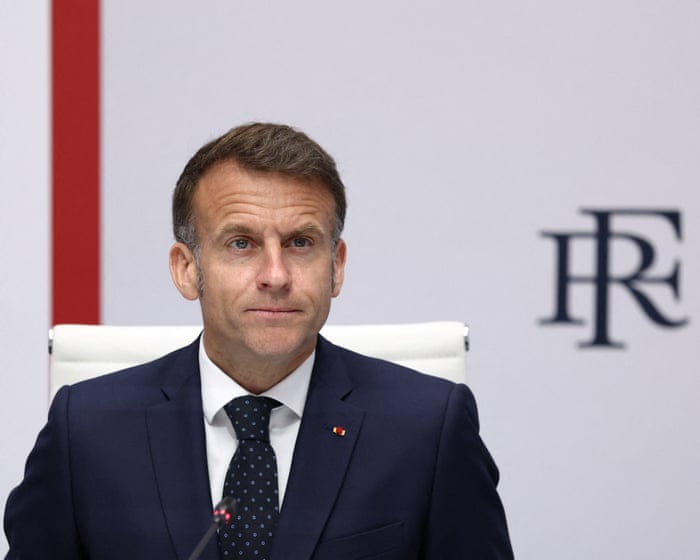
Earlier, French President Emmanuel Macron welcomed the ceasefire but emphasized that Lebanon, a former French protectorate, should be included in the deal. He noted that about 15 countries were mobilized “under French leadership” to help resume traffic through the Strait of Hormuz, through which about one-fifth of the world’s oil typically flows.
Spanish Prime Minister Pedro Sánchez, who has been the most outspoken Western critic of Donald Trump’s war in Iran, reacted bluntly, stating his administration “will not applaud those who set the world on fire just because they show up with a bucket.” In a post on X, he added: “Ceasefires are always good news—especially if they lead to a just and lasting peace. But this momentary relief cannot make us forget the chaos, the destruction, and the lives lost.”
German Chancellor Friedrich Merz welcomed the ceasefire and called for a permanent end to the conflict. He stated that the goal now is “to negotiate a durable end to the war in the coming days,” adding, “This can only be achieved by diplomacy.” Like his UK counterpart, Keir Starmer, Merz sought to avoid antagonizing Trump over the strikes, although European allies had already drawn Trump’s anger for refusing to join his war.
Starmer, who is traveling to the Gulf on Wednesday, wrote on X: “Together with our partners we must do all we can to support and sustain this ceasefire, turn it into a lasting agreement, and reopen the Strait of Hormuz.”
The EU’s foreign policy chief, Kaja Kallas, who is traveling to Saudi Arabia, described the agreement as a “step back from the brink” after weeks of escalation. “It creates a much-needed chance to tone down threats, stop missiles, restart shipping, and create space for diplomacy toward a lasting agreement,” she wrote on X, urging the reopening of the Strait of Hormuz.
European Council President António Costa urged all parties to uphold the ceasefire terms “in order to achieve sustainable peace in the region.” Two days earlier, the former Portuguese prime minister had warned that any “targeting of civilian infrastructure, namely energy facilities,” would be “illegal and unacceptable. This applies to Russia’s war in Ukraine and it applies everywhere.” While his post did not name Trump, it followed the U.S. president’s threat to destroy Iran’s power plants and bridges.
The Secretary General of the Norwegian Refugee Council, Jan Egeland, described the ceasefire as “wonderful news” for civilians on both sides of the Gulf. “Now we can scale up relief to the millions of refugees and displaced in Iran. But we have only some funding from Scandinavians. How come there…””Why are there billions readily available for war, but no funding for its victims?” he posted on X. Additional reporting by Sam Jones in Madrid.
Frequently Asked Questions
FAQs A Step Back from the Brink USIran Ceasefire
BeginnerLevel Questions
What is this ceasefire news about
Its about the United States and Iran agreeing to a temporary halt in hostilities or a deescalation of tensions which European leaders have publicly welcomed as a positive step
Why are European leaders welcoming this
They see it as a crucial move to prevent a wider conflict in the Middle East which would threaten regional stability global energy supplies and European security
Who exactly is involved in this ceasefire
Primarily the governments of the United States and Iran European powers are not direct parties but are key diplomatic players encouraging the deal
What does a step back from the brink mean
Its a phrase meaning pulling back from the edge of a major conflict or war It suggests the situation was very dangerous and this agreement has reduced the immediate risk
Is this part of the old nuclear deal
Not directly but its related This ceasefire often deals with immediate military tensions which is a necessary first step before more complex negotiations can succeed
Advanced Detailed Questions
What are the specific terms of this ceasefire agreement
While details vary typical terms include a mutual halt to targeted military strikes a pause in certain provocative actions and often the establishment of communication channels to prevent miscalculation
What are the main benefits for global security
Benefits include reducing the risk of a major war stabilizing global oil prices allowing diplomacy to work and freeing up international focus for other crises like Ukraine or Gaza
What are the common obstacles or problems with such agreements
Key problems are a lack of trust between the US and Iran hardline opposition within both countries the risk of small incidents sparking new escalation and differing interpretations of the terms
Can you give an example of what might have triggered the need for this
Examples include a nearconflict scenario like Irans seizure of oil tankers attacks on US bases by Iranbacked groups or direct military strikes that brought the two sides close to open warfare
What practical steps come next after this initial ceasefire
Next steps usually involve 1 Maintaining the quiet period to build confidence 2 Starting indirect talks