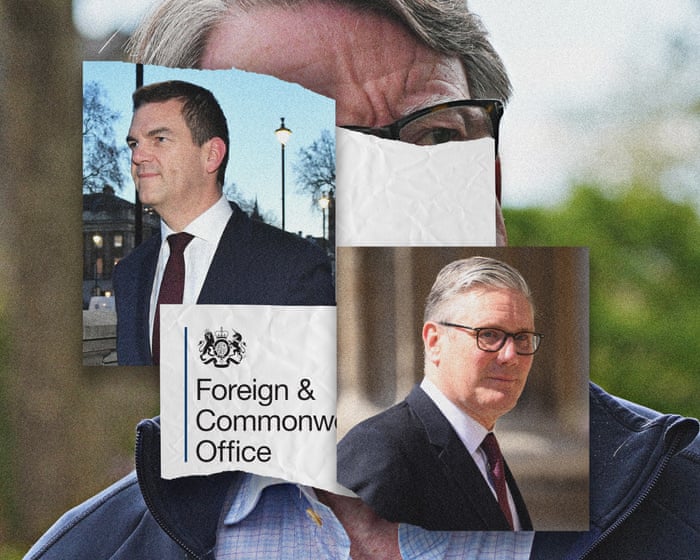
Keir Starmer’s time will come to an end—the only question is when. Not immediately, and not this month, but sooner or later, his leadership will face a reckoning. What keeps him in place for now is the simple fact that Labour has no clear alternative that MPs would unite behind. Many are waiting for Andy Burnham, but that delay could encourage others like Wes Streeting or Angela Rayner to make their move before the Mayor of Greater Manchester can return to Westminster. Starmer’s maneuvering to block Burnham from standing in the Gorton and Denton by-election—a seat he likely would have won—was seen as petty and cynical, turning many against him. This was a leader who was supposed to rise above such grubby politics.
The prime minister’s troubles are far from over. MPs have now called for Morgan McSweeney to appear before a committee, and Starmer has already admitted that appointing Peter Mandelson was a serious mistake. Though it’s worth noting that despite Mandelson’s known links to Jeffrey Epstein, figures like Kemi Badenoch did not object, Nigel Farage praised the decision, and Labour’s ranks did not revolt.
Sending a man with few moral or political scruples to charm a president with even fewer might have seemed like a stroke of brilliance—security concerns aside. But Labour supporters were further dismayed to learn from Starmer’s biographer, Tom Baldwin, that George Osborne was a close runner-up for the Washington post. Osborne, the architect of austerity, is a hated figure for many in Labour, and the revelation exposed a prime minister whose political compass seems to be spinning. Starmer has recently tried to steady himself with a bold refusal to join Trump’s war, but for many, it’s too little, too late. For now, he has a temporary reprieve—but only until his cabinet decides otherwise.
Let’s not forget the root cause of this crisis: Starmer’s strategy of appeasing Trump has completely backfired. It’s utterly depressing. We were promised an end to this cycle of chaos and scandal—a return to integrity and a focus on fixing the country’s problems, from the NHS to the cost of living. Instead, with war in Iran and the economy struggling, the prime minister is tangled up in explaining how he appointed a close friend of a convicted sex trafficker to one of the most sensitive roles in government.
What makes it worse is why Starmer got into this mess in the first place. He chose to appease Trump rather than stand up to him alongside our allies. That’s why he was so desperate to send Mandelson to Washington, regardless of the security risks. But appeasing Trump was never going to work, and now it has exploded in his face.
Scandals like this—especially from a prime minister who vowed to end them—only fuel the populism and extremism that threaten to tear our country apart. We can’t let that happen. We urgently need a change at the top so the government can finally focus on fixing what’s broken.
This scandal is also a blow to the civil service and its relationship with Number 10. The fallout from the Mandelson affair will cast a long shadow over the trust between ministers and officials. Olly Robbins’ sacking is another hit to confidence at the heart of government. It follows the prime minister’s lukewarm criticism of civil servants, the dismissal of two cabinet secretaries, and political frustration that the bureaucracy hasn’t been able to fill the gaps in the government’s vision. As the prime minister’s authority weakens and his relationships with colleagues deteriorate, officials will be looking to survive a period of uncertainty—or to prepare for the leadership changes and turbulence ahead.
It’s also a setback for Robbins’ reform programme at the Foreign Office, losing a leader in the middle of a fundamental overhaul.Structural changes will further destabilize the department during a time of geopolitical risk. Confidence and trust among colleagues are essential in the intense environment of No. 10. The manner of Robbins’s departure will lead many in the civil service to believe that avoiding blame and shunning risk are the right approaches. This will, in turn, further harm working relationships. The prime minister and his civil service colleagues should remember that building trust, not creating paper trails, is the best way to address the government’s recent problems.
The PM claims he was unaware, but who believes him?
Diane Abbott
MP for Hackney North and Stoke Newington
These frenzied political media events often end up being anticlimactic, but I have learned some interesting details over the past two days. Still, nothing was surprising or out of character. Olly Robbins came across as the perfect Whitehall mandarin, though he had an easier task than the prime minister: all he had to do was tell the truth. Keir Starmer, on the other hand, faced a bigger challenge. He had to convince the House of Commons that he had absolutely no idea about any concerns raised by Peter Mandelson’s security vetting. This was clearly unlikely. A simple Google search shows what those concerns might be. As a result, Parliament could not stop laughing at the PM’s claims of ignorance.
The government will survive the recent uproar, partly because no one in the Labour Party wants a leadership contest and partly because there is no agreement on a successor. However, things may look different after the May elections. One key lesson for politicians from recent events is that unwritten rules in government exist for a reason. For Starmer to dismiss a series of officials who were only trying to carry out his wishes is outrageous. Hopefully, this won’t happen again, at least not on such a scale. Perhaps rules should be made clear that politicians cannot fire senior civil servants arbitrarily, without due process. Anything else seriously undermines the democratic process.
I can tell you who will judge right and wrong—the voters.
John McTernan
Former political secretary to Tony Blair
It was No. 10 that did it. Every part of Olly Robbins’s testimony to the foreign affairs select committee leads back to Downing Street. No. 10 announced Peter Mandelson’s appointment without any qualification or mention that it depended on developed vetting (DV). There was “pressure” to get it done quickly—No. 10 wanted it finalized before Donald Trump’s inauguration. According to Robbins, Downing Street treated the Foreign Office as an operational branch—quickly delivering what it wanted in the U.S., and in another instance, looking for a diplomatic post for a staffer about to be moved on. Through the Cabinet Office, it even questioned whether DV was necessary for the role of U.S. ambassador. In a bombshell, Robbins seemed to suggest that No. 10 and the Cabinet Office leaked the story about Mandelson failing his vetting to the Guardian, which he called a “grievous breach of national security.”
Robbins took full responsibility for the vetting process and its outcome. But with his “union rep”—Dave Penman, general secretary of the FDA—sitting behind him, Robbins made it clear he won’t accept his dismissal quietly.
Politics is full of fascinating processes, but where does responsibility lie? The issue wasn’t the vetting; it was the sheer immorality of the appointment in the first place. Keir Starmer has taken personal responsibility for that—so far, without any personal consequences. Those consequences will come in two waves. First, from voters, who will humiliate the entire Labour Party in May. Second, from the parliamentary Labour Party, which will end Starmer’s misery later this year.Please email submissions of up to 300 words to be considered for publication in our letters section. To submit, click here.
Frequently Asked Questions
Of course Here is a list of FAQs based on the headline about UK political developments
FAQs Political Scrutiny and Government Stability
BeginnerLevel Questions
1 Who are Starmer Robbins McSweeney and Mandelson
Answer Keir Starmer is the UK Prime Minister Sue Gray is his Chief of Staff Morgan McSweeney is the Labour Partys Campaign Director Peter Mandelson is a former Labour minister and a powerful sometimes controversial figure in the partys history
2 What is meant by face tough questions
Answer It means being scrutinized by the media political opponents or the public about their actions decisions or associations In this case its about their connections to Peter Mandelson and what that means for the governments direction
3 What does Can this government hold on mean
Answer Its a question about political stability It asks whether the government can survive internal disagreements public scrutiny and pressure without collapsing which could lead to a loss of confidence or a new election
4 Why is Peter Mandelson significant in this context
Answer Lord Mandelson represents the New Labour era of the 1990s2000s Questions about his influence raise debates about whether the current government is returning to older policies or is being directed by figures not elected by the public
Advanced Practical Questions
5 What kind of tough questions is McSweeney likely to face
Answer He may be asked about the extent of Mandelsons role in shaping campaign strategy if there are conflicts within the party between old and new guard and whether the governments messaging is being unduly influenced by unelected advisers
6 How does scrutiny of unelected officials affect a government
Answer It can create a perception of a shadow government or backseat driving which undermines the authority of elected ministers It leads to headlines about splits and distracts from the governments policy agenda
7 What are the common signs that a government is struggling to hold on