European Green parties have been struggling with stagnation and crisis in recent years. The days of the “green wave” across Europe seem long gone. Back in 2019, Green parties achieved their best-ever result in the European Parliament elections, winning 74 seats. That same year, they also set records in Switzerland, Belgium, and Austria. Soon after, they joined governing coalitions in Finland, Germany, Ireland, and Austria.
But more recently, there’s been a lot of talk about a “greenlash”—a backlash against climate policies and green projects across Europe. Across the continent, Green parties have dropped out of nearly all government coalitions, and their recent election results have often fallen short of expectations. With what seems like waning enthusiasm for the climate movement and less focus on climate breakdown at the ballot box, Green parties are debating how to turn things around.
If Europe’s Green parties need inspiration, they should look to the UK. With a historic by-election win in February, record results in May’s local and devolved elections, and membership numbers that have tripled in nine months to over 230,000 people, the Green Party of England and Wales—there are separate branches in Scotland and Northern Ireland—has surged in popularity. What can other European Green parties learn from its success under its new leader, Zack Polanski?
Since Polanski was elected last September, the party’s focus has shifted noticeably. Climate breakdown and environmental protection are no longer the main themes of its messaging. Instead, Polanski emphasizes economic inequality, the cost of living, housing, and rent prices. He often talks about “the 99% versus the 1%,” taxing the rich, and “rip-off Britain.” Unlike the Labour Party, Polanski and the Greens have clearly positioned themselves by condemning the genocide in Gaza and supporting trans rights.
While political strategies from one country can never be simply copied to another, there are clear lessons for other Green and left-of-center parties. European Green parties usually started as quite radical organizations with strong ties to ecological and anti-nuclear movements, often holding similarly radical-left views on economics. Many have become more moderate over time, and in countries like Germany or Austria, they’ve become strongly government-focused, even governing alongside center-right parties. Tensions between more left-wing, radical members and the parties’ more moderate, pragmatic wings have existed as long as the parties themselves. But the lessons from the UK can’t be reduced to whether to be more left-wing or more centrist. There are three main lessons that go beyond a simple left-right positioning.
1. Focus on economic inequality. Our research suggests that Green parties can expand their voter base by emphasizing redistributive policies and economic inequality. By analyzing responses to party positioning in 11 European countries and specific reactions to campaign ads in Germany, we found that Green parties don’t lose credibility on climate issues when they broaden their agenda, nor does it demobilize their core supporters. Emphasizing redistribution and social justice tends to boost support for Green parties more than focusing on green growth.
In the UK, there’s also evidence this strategy worked. A report by Persuasion UK on the May elections showed that Green voters were just as likely to cite redistribution and taxes as climate breakdown and the environment as reasons for their support. The same report found that the Greens have a particularly strong appeal to voters who feel economically insecure. Among financially insecure voters with liberal social attitudes, 47% voted for the Greens—far more than the 25% who voted for Labour. This pattern is very different from many other countries.European Green parties tend to draw support mainly from people who are highly educated and financially well-off.
Taking a firm stance on certain issues can open up space to discuss others. This is true for the climate crisis, but another example from the UK is the Greens’ clear support for trans and other minority rights—unlike Labour. This not only boosted support among those who care about minority rights, but also allowed the party to focus on other topics. If you face silly “gotcha” questions like “What is a woman?” with clarity and unwavering support for trans rights, even the most anti-trans interviewer will eventually get bored, and you can move on to your real agenda.
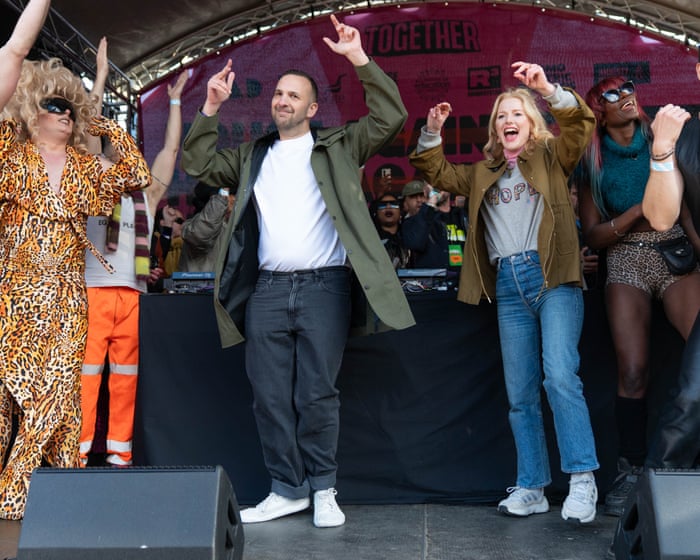
Embrace progressive identity politics. In the UK, the Greens have become a home for progressive identities and activism, welcoming people who engage in politics outside traditional party structures. These are individuals organizing locally, campaigning for rights, or mobilizing against war crimes. Many had grown disillusioned with party politics altogether. Now they have an electoral vehicle they can identify with. Polanski and his party show up at protests and strikes, but also in nightlife and cultural spaces, organizing their own raves. They don’t shy away from scenes often dismissed as “woke” or radical—they lean into that support. In doing so, they mirror campaigns like Zohran Mamdani’s in New York, who successfully built coalitions among progressive activists and marginalized groups.
While specific strategies should depend on each Green party’s national context, these three points should be considered across Europe. In countries with fragmented, multiparty systems, strategies that focus on economic inequality and build party ties around progressive identities will be especially important for forming electoral alliances. The so-called “greenlash” has made many Green parties more hesitant and cautious, watering down their demands and moderating their appeals. The lesson from the UK is different: be bolder and clearer in your message. Given the weakness of many social democratic parties in Europe, there’s a unique opportunity for Green parties to broaden their appeal—it might even help them become the dominant left-of-center force.
Tarik Abou-Chadi is a professor of European politics at the University of Oxford.
Do you have an opinion on the issues raised in this article? If you would like to submit a response of up to 300 words by email to be considered for publication in our letters section, please click here.
Frequently Asked Questions
Here is a list of FAQs based on the articles central argument about European Green parties needing boldness to reverse the greenlash
BeginnerLevel Questions
Q What is a greenlash
A Its a strong political and social backlash against environmental policies People are pushing back because they feel these rules hurt their wallets jobs or way of life
Q Who is Polanski and why is he mentioned
A Roman Polanski is a famous film director The article uses him as an example of someone who took creative risks and made bold uncomfortable choices in his art The point is that Green parties need that same kind of fearless unconventional boldness in politics
Q Why are Green parties in Europe struggling right now
A Many voters feel Green policies are too expensive too fast and too preachy The parties are seen as out of touch with everyday concerns like energy bills and farming livelihoods which has fueled the greenlash
Q What does adopting boldness mean for a political party
A It means taking big risky and sometimes unpopular stands Instead of playing it safe it means proposing radical solutions admitting past mistakes and directly challenging powerful industries or comfortable habits
AdvancedLevel Questions
Q What specific bold move does the article suggest Green parties should make
A The article implies they should stop being the police of green behavior Instead they should champion disruptive highreward projectslike massive public investment in green tech or a universal basic income funded by carbon taxesthat change the entire system
Q How does the Polanski model apply to politics Isnt he a controversial figure
A The comparison isnt about his personal life but his artistic method making films that are morally complex visually shocking and emotionally raw For Greens this means crafting policies that are brutally honest about tradeoffs rather than offering easy comfortable promises
Q What is the main risk if Green parties dont adopt this boldness