These days, wars target digital infrastructure just as much as military bases. The fact that large parts of everyday life can be shut down without a single shot being fired is exactly why Russia seems interested in doing that. For example, it’s already dangerously interfering with aviation and shipping around the Baltic Sea.
Think about the impact of bigger, more successful cyberattacks on our modern lives. Ordinary people would have to get by without texting, banking apps, public transportation, and most office work. The government, however, would still need to function. In an offline world, running a country would require a lot of people. Sweden suggests that some of them could ride motorcycles.
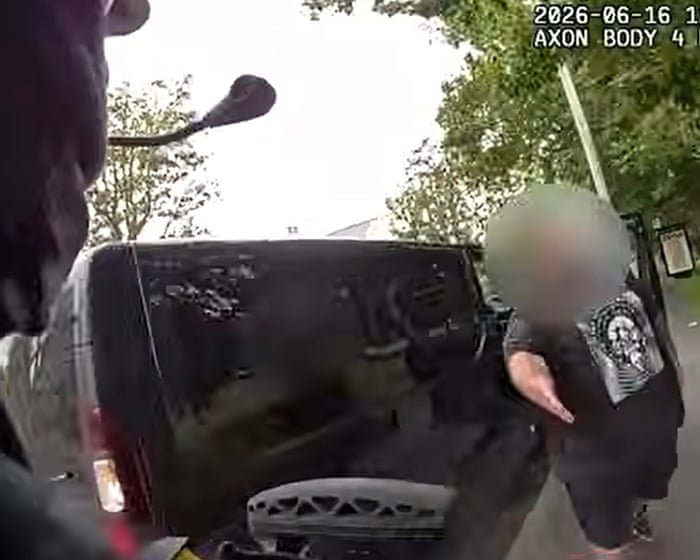
Sweden’s Volunteer Motorcycle Corps (FMCK), an auxiliary defense organization, is training civilians to serve as volunteer motorcycle couriers. In a crisis, these riders would transport important items between government offices and anyone else who needs them. (Drones, which enemies can relatively easily interfere with, wouldn’t be safe enough for delivering critical items during war.)
This idea is catching on. More than 250 couriers have already completed the course, and more are training. Across Sweden, ordinary citizens are contributing their skills—from radio communications to dog training—to other auxiliary defense organizations that provide practical support to the armed forces without involving combat. Other Swedes have joined the Home Guard, a part-time organization that handles homeland defense. Joining the Home Guard has become so popular that the force has far more applicants than openings. Sweden has also launched a pioneering civil defense force that includes people in professions that are essential during severe crises.
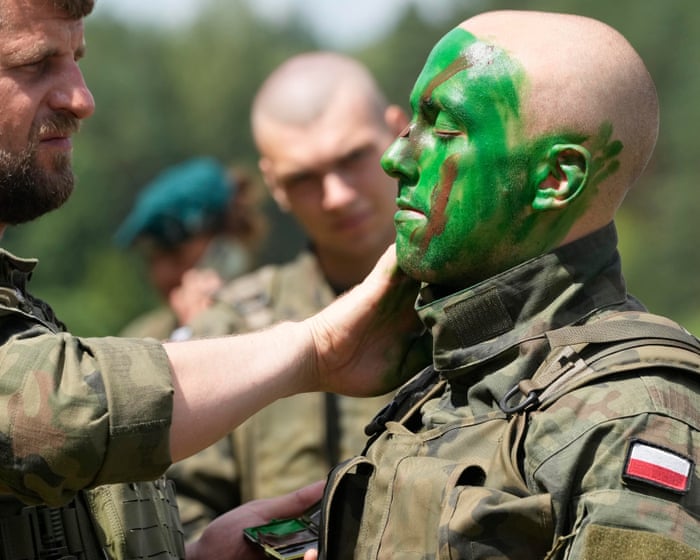
Like Sweden, other countries in the Nordic-Baltic region are showing us that national defense is as much about people as it is about weapons. Beyond traditional Home Guards, more innovative groups are also allowing citizens to volunteer for their country’s defense. Estonian IT professionals can join the country’s cyber defense unit, while teenagers are being trained in practical survival skills. Children and adults in Lithuania are learning to build and operate drones. And in Poland, the government has launched a program called W GotowoÅ›ci (“Always Ready”), where an impressive 400,000 citizens receive training in basic military skills, survival, first aid, and cybersecurity hygiene.
Although enthusiasm varies, national defense is becoming a popular movement, and that’s a good thing, because defense isn’t just for professional soldiers. The UK doesn’t have similar citizen participation—yet. Neither do countries like Italy and Spain. But even in the middle of Europe, where threats feel more distant, attitudes are starting to change. In Germany, only 30% of people aged 18 to 28 support bringing back mandatory military service, and only 14% say they would serve—but four out of five Germans support a mandatory year of service across society. And sign-ups for the Technisches Hilfswerk—a hybrid government agency and volunteer organization that deploys during crises—are increasing.
For the past few years, the conversation among NATO member states has focused on how much money they are investing in the military. At last year’s NATO summit in The Hague, they all promised to increase their commitments from 2% of GDP to 5%. Defense ministries across Europe have placed enormous orders, including many large ones in the United States. (US weapons are good, and European governments feel that buying American will help them score points with Donald Trump.) As difficult as it is to find the money for all these weapons, it’s often more straightforward than building up defense’sAnother crucial ingredient: people. Soldiers suited to each aspect of modern warfare need to be recruited—and entirely new ways for civilians to get involved must be created.
While building advanced weapons takes time, people—both potential soldiers and civilian helpers—are available right away. The countries that make the best use of this incredible resource will be the ones best able to defend themselves.
Some European countries are lucky enough to already have this kind of commitment from their population. Others can still build it. Yes, top-performing nations like Sweden and Estonia may be relatively small, but their citizens’ willingness to fight is priceless. Yes, the threat from Russia is serious. Yes, they’re smaller than Russia. But they have citizens who are ready to stand up for their country, even when the odds are against them. That’s worth even more than a lot of high-tech weapons.
What’s more, defense that involves citizen volunteers is the way to build national security in a democracy. Defense isn’t about a separate, elite warrior class—it’s about everyone doing what they can to keep their country safe. Not every nation will be able to train citizens as volunteer motorcycle couriers for the government, but every country can create ways for its citizens to get involved. Countries outside the Nordic-Baltic region could start by keeping their citizens informed about the threats they face. These threats are often less obvious than those facing northernmost Europe, but they’re just as serious.
What most nations can learn from the Baltic region is that a large number of citizens are willing to help. They just need real opportunities to do so.
Elisabeth Braw is a Swedish security expert and a senior fellow at the Atlantic Council think tank.
Frequently Asked Questions
Here is a list of FAQs based on the statement Weapons are important but if war breaks out Europes greatest asset is its people
BeginnerLevel Questions
Q What does Europes greatest asset is its people actually mean in a war
A It means that advanced tanks and missiles are useless without skilled soldiers engineers logistics workers and civilians who can repair infrastructure treat the wounded and keep society running
Q Why are weapons not enough to win a war
A Weapons are tools You need people to operate them maintain them and make strategic decisions A country with the best weapons but a demoralized or untrained population will lose to a motivated wellorganized force
Q Cant modern technology replace the need for people
A No Drones and AI help but they still require human operators maintenance crews and analysts Technology can fail and only people can adapt to unexpected situations in real time
Q What specific skills do European people have that are valuable in a conflict
A Engineering medical care logistics communications cybersecurity and local knowledge of terrain Also language skills and cultural understanding help with diplomacy and intelligence
Q Does this mean every citizen should be a soldier
A Not necessarily A strong civilian workforce that keeps factories running farms producing food and hospitals open is just as vital as frontline troops
AdvancedLevel Questions
Q How does Europes diverse population become an asset rather than a weakness
A Diversity brings varied perspectives language skills for intelligence and specialized knowledge The challenge is coordination but a wellintegrated force can leverage these strengths
Q What historical examples show that people matter more than weapons
A The Winter War where outnumbered Finnish forces used local knowledge and motivation to defeat a larger Soviet army Also Ukraines resistance since 2014 shows how civilian volunteers IT experts and logistics workers have been crucial
Q How can Europe prepare its people for a potential war without causing panic