Spain is stepping up efforts to promote a tourism model that goes beyond the familiar “sun, sand, and coast” image, as the country prepares for another record-breaking year. The tourism minister said the number of foreign visitors could reach 100 million for the first time.
Speaking to the Guardian, Jordi Hereu rejected the idea that Spain is now overcrowded with tourists. However, he acknowledged that it has become clear that “the old formulas no longer work,” especially as concerns grow over overtourism and the impacts of the climate crisis.
Hereu, the minister of industry and tourism, said the steady rise in tourist numbers—which could get an extra boost this summer due to uncertainty about Middle Eastern destinations following the US and Israel’s war on Iran—can be managed in a sustainable and responsible way.
Last year, the number of foreign tourists increased by 3.2% to 96.8 million, while their spending rose by 6.8% to €134 billion (£116 billion). Figures from the first quarter of this year show tourist numbers up by 3.4% and revenue up by 6.7%.
“With that growth, we could reach 100 million,” Hereu said. “But I want to stress that this doesn’t worry or obsess us… We prefer what I call calm growth—growth that is easy to manage. And this year, despite what’s happening and the shift in demand, I think our forecast is still for moderate growth.”
Tourism has long been a key part of the Spanish economy, making up more than 12% of its GDP. But its rapid and unchecked growth in many areas has sparked protests and strong backlash. Overtourism, especially the rise of tourist apartments, has changed entire neighborhoods and cities, pushed locals out of the housing market, and put more pressure on public services and natural resources.
When asked if current tourism levels are sustainable, Hereu said: “Yes, if we do our homework, and no if we don’t do anything.” The minister, a former mayor of Barcelona, praised his successor, Jaume Collboni—also a socialist—for moving forward with a plan to ban tourist apartments in the Catalan capital by 2028. But he noted that Spain’s highly decentralized system makes it hard for the central government to drive local change. He also pointed out the different approaches taken by left-wing and right-wing governments.
“I think there are places in Spain that are now seeing the effects of not regulating anything,” he said. “But I also want to be clear that this is influenced by political views. The left is more in favor of regulating tourism than the right, because the right believes we should allow freedom and let the market regulate itself—which isn’t true, and in many places it’s clear that it isn’t self-regulating.”
Hereu said that while he believes anti-tourism sentiment is “very much a minority” in Spain, it’s becoming increasingly clear that a new approach is needed. Local and regional authorities need to properly limit, regulate, and tax their tourism offerings.
“What I do believe is that in some places, people are asking for better tourism—a better model,” he said. “But the culture I see across Spain is one of a country that knows how to welcome people. Our key principle is that we want to transform the model to stay ahead, and we’re working humbly to do that because the old formulas no longer work.”
Although he defended traditional beach tourism, which still accounts for 37% of all visits, and said Spain must be open to “all sectors” of the market, he noted that peoplePeople were now looking for experiences beyond just lying by the pool.
“It’s very interesting to see in the qualitative surveys that people who come mainly because ‘hey, I’m here to relax, sun and beach, etc.’ also start asking for extras – like ‘beach plus’,” Hereu said. “I think this is a good trend, because what we need is to add value.”
The minister said Spain’s socialist-led coalition government was committed to the socially, economically and environmentally sustainable principles outlined in its 2030 tourism strategy.
“One goal is to spread out destinations over time, and we’re also working to reduce the seasonal peaks,” he said. “The third, very clear principle is to diversify our offerings away from the decades of sun, sand and coast – where the [Spanish tourist industry] was born, and which is still the main draw.”
Although Spain has promoted the sunny charms of its eastern and southern coasts for decades, Hereu argues that the key to sustainable tourism lies in making it less seasonal, less focused on beaches, and more geographically and culturally varied.
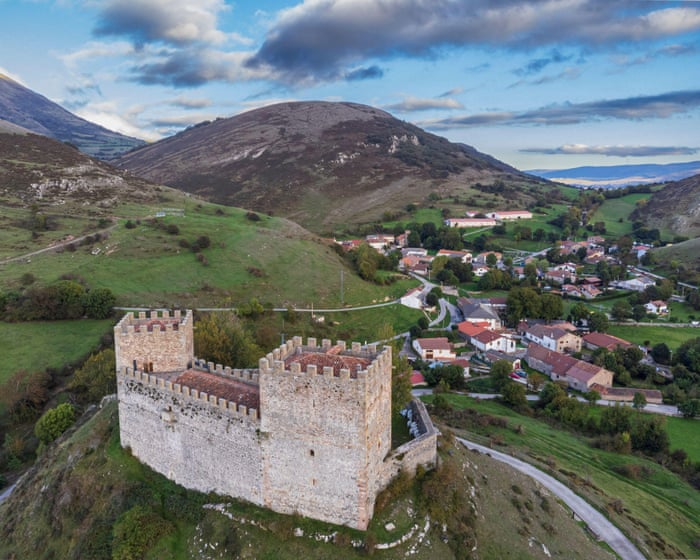
The country’s current advertising campaign, called Think You Know Spain? Think Again, skips the sun-drenched coasts and instead highlights churches, paradores, orange groves, folk festivals, food, wine, lakes, green spaces, handicrafts and brown bears. It even shows rain.
“You don’t see any coastal beaches; instead, it’s inland Spain and the green Spain of the north,” he said. “So, it’s about spreading out and discovering other realities. And what’s happening? The low and mid seasons are growing much more than the high season, and inland, green Spain is growing much more than the main segment.”
Spain’s reliance on tourism became clear during the Covid pandemic. In 2020, international visitor numbers dropped by 77% to just 18.9 million. That led the government to invest €3.4 billion from EU next generation funds in a plan to modernise and transform the sector.
According to Hereu, that investment has allowed less visited areas of Spain – such as Castilla-La Mancha, Castilla y León, Extremadura, Galicia, Asturias, Cantabria, the Basque Country and Navarre – to develop their tourist markets.
“There’s a lot of potential there, and that’s where we need growth to happen,” he said. “Because, for example, on the Mediterranean coast, especially now, in the high season, there are limits.”
The minister believes that diversifying and spreading out the tourist industry can help Spain tackle depopulation by ensuring that young people don’t have to leave their hometowns to find work elsewhere. Lengthening the season would also help provide more stable jobs, he added.
“Before it was June, July, August and, at most, September,” he said. “But now people open in April, May or June, and we have more stability. October is also very important now, and the truth is, in some cases chains tell me they’re open almost all year round. This also gives us more job stability, and it’s obvious that salaries also have to increase, right? You have to attract people to the sector and keep them. And that’s good news because it also brings social stability and a fairer distribution of profits.”
Hereu said the government was also working to help the industry adapt to the effects of the climate emergency, which are becoming more evident in Spain through droughts, heatwaves, forest fires, floods and rising sea levels. He said renewableClean energy, efficient water use, and good waste management could all help reduce the impact of the crisis. He added that it was now very clear that sticking to the old approach would be a mistake. “We’d have the opposite of what we have now – we’d be increasing the number of tourists instead of the amount they spend,” he said. “And right now, we’re growing more in spending value than in visitor numbers.”
Frequently Asked Questions
Here is a list of FAQs about Spain promoting lesserknown regions as tourist numbers approach 100 million
BeginnerLevel Questions
1 Why is Spain suddenly telling tourists to avoid the beaches
They arent telling you to avoid them completely They are asking you to also visit other areas to reduce overcrowding on the coast and share the economic benefits with the countryside and smaller towns
2 What does lesserknown regions mean in this context
It refers to parts of Spain that arent as famous as Barcelona Madrid or the Costa del Sol Think of places like Extremadura Galicias inland villages rural Aragon or the mountains of León
3 Is Spain getting too crowded with tourists
Yes in certain hotspots With nearly 100 million visitors expected popular beaches and city centers are struggling with congestion This campaign aims to spread people out more evenly
4 Whats the benefit for me if I visit a lesserknown region
Youll likely find lower prices fewer crowds more authentic local culture and a more relaxed experience You also get to see a side of Spain that most tourists miss
5 Are these lesserknown areas safe for tourists
Absolutely Spain is one of the safest countries in the world Rural areas are generally very safe with friendly locals who are often eager to welcome visitors
AdvancedLevel Questions
6 Which specific regions is Spain actively promoting right now
Key regions include Extremadura Castilla y León Galicias interior Aragon and La Rioja
7 How is the Spanish government funding or supporting this offthebeatenpath campaign
They are investing in improving regional railway connections offering grants to local tourism boards for marketing and creating new cultural routes
8 What are the biggest challenges for tourists visiting these lesserknown regions
Limited public transportation between small towns fewer English speakers and less frequent accommodation options compared to the coast Renting a car is often recommended for flexibility