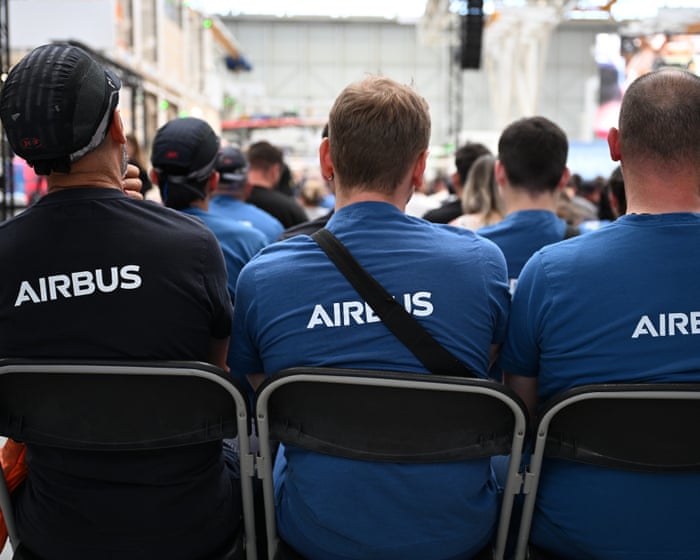
Airbus has agreed to employee demands on remote work after a series of strikes over its CEO’s orders to return to the office. The world’s largest plane maker is reported to have softened its plan to limit remote work to one day a week starting in September. Currently, staff can work from home two days a week.
This was part of a high-profile push by Airbus CEO Guillaume Faury to bring employees back to the office, aiming to ensure the company could meet record demand and develop new products after hiring thousands more workers. In June, Faury told employees that while home working had been essential during the Covid pandemic, the situation had now changed, as Airbus needed staff to share their skills in person. “I count on all of you to support this,” he said in a memo, as reported by Bloomberg.
However, according to Reuters, a series of strikes—including in Spain, France, and the UK in recent months—has forced him to reverse course. Managers have now been told that staff can work from home an average of two days a week, effectively limiting the CEO’s efforts.
In Spain, workers have been striking on and off since July, with around 40% of the company’s 14,000 local employees taking part in recent stoppages over issues like remote work, transport, paid leave, and salaries. There have also been occasional protests in France and the UK against plans to require office staff to come in four days a week.
However, Reuters noted that Airbus production—which is central to the European defense industry—has not been affected by the strikes.
An Airbus spokesperson said: “Our objective remains the same: we aim for increased on-site presence to ensure better collective efficiency, knowledge transfer, and faster decision-making. However, effective change requires listening to our people. Based on employee feedback, we have decided to implement this transition more gradually.”
The spokesperson added: “We are empowering managers to organise hybrid working within their teams in a pragmatic and practical way that maximises collective efficiency and reflects the reality of their working environments. This will be done within the scope of Airbus’s current collective agreements for hybrid working.”
Frequently Asked Questions
Here is a list of FAQs about Airbus agreeing to remote working demands following strikes written in a natural clear and concise tone
Airbus Remote Work Strike FAQs
1 Wait did Airbus actually agree to remote work because of strikes
Yes After a series of strikes by workers demanding better pay and more flexible working conditions Airbus management agreed to sign a new companywide agreement that guarantees the right to remote work for eligible employees
2 How many days a week can Airbus employees now work from home
Under the new agreement eligible employees can work remotely for up to three days per week This is a significant increase from the previous policy which generally allowed only one or two days
3 Is this remote work policy available to all Airbus employees
No its not a blanket policy It applies mainly to nonproduction stafflike engineers office workers and administrative roles Employees who work on the factory floor in maintenance or in roles that require physical presence are not covered by the remote working clause
4 What made Airbus change their mind
The strikes were the main catalyst Workers were frustrated with rising inflation and felt that the companys initial pay offers were too low The demand for better remote work flexibility became a key bargaining chip and Airbus agreed to it as part of a broader deal to end the strikes and avoid further production delays
5 Does the remote work policy apply to Airbus sites outside of Europe
The core agreement was negotiated with European unions so it applies primarily to Airbus operations in France Germany Spain and the UK However local subsidiaries in other countries often have their own policies and this European agreement may influence future local negotiations
6 Will this remote work arrangement affect employees pay or benefits
No The agreement states that remote work will not affect base salary bonuses or other contractual benefits However some specific allowances might be adjusted if you are not commuting but your core pay remains the same
7 Can a manager refuse a request to work from home
Yes but with conditions While the right to remote work is guaranteed managers can refuse a request if there is a clear operational need eg a critical meeting a project