Hope is fragile. You can only hold on to it if you keep finding reasons to believe tomorrow can be better. A woman with the resources and opportunity to rent her own flat, for example, is more likely to leave an abusive husband and recover. A student with their own room and desk to do homework may find more meaning in doing well at school. And an elderly person who can afford to live in a neighbourhood where they feel safe and connected is less likely to become isolated and depressed.
It’s no coincidence that all these examples centre on the same issue. Affordable housing may be the most personal and urgent social problem of our time. In Berlin, where 85% of residents rent, rents have risen by almost 70% over the past decade—despite a rent control law in place since 2015. How? Loopholes and illegal practices have let property owners keep squeezing the housing market. The social anxiety caused by this crisis doesn’t affect only low earners and single-parent households; it affects large parts of the middle class too.
So what does a political party need to do to win power in the state of Berlin? It’s hardly rocket science: focus on the housing crisis, offer solutions, and avoid distractions from political opponents. That is exactly what the left-wing party Die Linke has been doing for months. The result of last Sunday’s state election is striking: for the first time, Die Linke became the strongest party in Berlin with 25.7%. Not because everyone who voted for it suddenly agreed with everything else the party stands for, but because, more than any other party in this campaign, Die Linke made this issue unmistakably its own: who gets to live in Berlin, and at what price.
The result is also remarkable because Germany is at a historic turning point. On the same day as the Berlin election, the far-right Alternative für Deutschland (AfD) became the largest party in a state election in Mecklenburg-Western Pomerania with 38%. Just two weeks earlier, it had won almost 44% in Saxony-Anhalt. While centrist parties desperately copy the AfD’s ideas and rhetoric on migration to win back voters, Die Linke could set an example in Berlin for the rest of the country: by actually listening to people’s worries and working on ideas to improve their lives sustainably, instead of scapegoating.
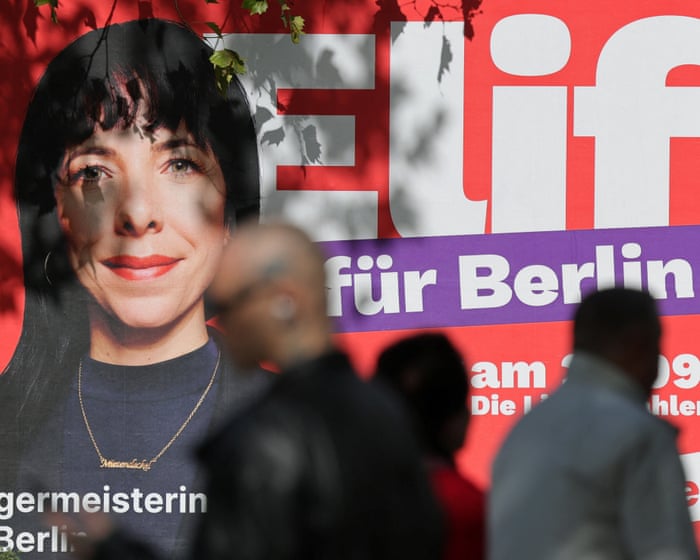
The party’s lead candidate, Elif Eralp, could become not only Berlin’s first left-wing mayor since German reunification in 1990, but also Berlin’s first mayor ever with a migration background. Born in Munich, she is the daughter of Turkish socialists who fled after the military coup in Turkey in 1980. Eralp put housing at the centre of her campaign. For many weeks, the whole city was flooded with giant portraits of the 45-year-old wearing an optimistic smile and a golden nameplate necklace with the word Mietendeckel—rent freeze.
Eralp’s programme was clear from the start: lower rents, more public housing, and implementation of Berlin’s 2021 referendum, in which a majority voted for more public ownership of housing to ease the accommodation crisis. It’s not a completely new world that Eralp promises. All she had to do was simply speak about the one we are already living in.
But winning an election is one thing. Governing is another. Die Linke may have won the most seats, but it lacks a majority to run the state on its own. To turn its campaign promises into policy, Eralp has to negotiate with other parties, particularly the Social Democrats (SPD) and the Greens. While Berlin’s Greens have already spoken out in favour of a progressive coalition, the SPD is deeply divided.
Die Linke’s top priority is a radical ambition: it would involve the compulsory purchase of the housing portfolios—those exceeding 3,000 apartments—of large private real estate companies anand their transfer into a democratically controlled non-profit, public body. The SPD’s approach is to regulate the housing market much more strongly, expand public housing and potentially introduce a rent cap. Which sounds like everything that has already failed in the last decade.At the same time, Die Linke enters negotiations under a microscope. Political opponents are questioning whether the party’s positions are compatible with democratic values, while controversies surrounding antisemitism and parts of the party’s political culture have become a major subject of public debate. Antisemitism is, historically and today, a problem inherent in German society as a whole, one that also exists within Die Linke and should be combated more decisively. However, the uproar about antisemitic rappers and an organised crime member who was spotted at Die Linke’s election party seem like sham debates that overshadow the actual conflicts of interest.Meanwhile, the Christian Democratic Union (CDU) chancellor, Friedrich Merz, has already stated, in response to the Berlin elections, that a federal law could be passed to prevent the expropriation of privately owned housing. Markus Söder, leader of the state of Bavaria, announced financial consequences for Berlin, if the “extremist”, “antidemocratic” and “antisemitic” Die Linke were to govern the capital. No such measures were announced for potential AfD-governed states, of course.It is hardly surprising that conservatives are now foaming at the mouth, given that for decades they have been pursuing policies that benefit those who profit from the housing crisis. Yet, more and more Social Democrats are also up in arms, putting pressure on their party not to form a coalition with Die Linke.skip past newsletter promotionFree newsletter |WeeklySign up to This is EuropeThe most pressing stories and debates for Europeans – from identity to economics to the environmentEnter your email Sign upafter newsletter promotionAnd this is where hope becomes fragile again. Because Eralp now has to do something harder than naming a problem: she has to find coalition partners, and for that she has to compromise – without making her voters feel betrayed. Now that would be a radical act, indeed.
Fatma Aydemir is a Berlin-based author, novelist, playwright and a Guardian Europe columnist
Do you have an opinion on the issues raised in this article? If you would like to submit a response of up to 300 words by email to be considered for publication in our letters section, please click here.
Frequently Asked Questions
Here is a list of FAQs based on Fatma Aydemirs article about Berlins political star
Beginner Questions
1 Who is the new political star in Berlin mentioned in the article
The article refers to a rising political figure in Berlin who is gaining popularity by focusing on the citys housing crisis and offering a message of hope The specific figure is likely a candidate or leader addressing the housing shortage though the title emphasizes the phenomenon of a politician becoming a symbol of hope for Europe
2 What is the main problem this politician is trying to solve
The main problem is the lack of affordable housing in Berlin Rents have skyrocketed and many people are struggling to find a place to live The politician offers a vision of hope by promising to tackle this crisis
3 What does hope and housing mean in this context
It means that the politician is offering a solution to a basic need while also inspiring people to believe that things can get better Its a combination of practical policy and emotional reassurance
4 Why is this issue important for all of Europe
Many European cities face similar housing crises If Berlin can find a successful solution it could serve as a model for other cities The article suggests that what Berlin needshope and housingis something all of Europe needs
5 Is this politician a real person or a general idea
The article refers to a specific political star but the focus is on the broader trend and what their success represents Its about the phenomenon of a leader who offers hope through housing policy
Intermediate Questions
6 What are the common problems with housing in Berlin
Common problems include
High rent prices due to gentrification and demand
A shortage of affordable apartments
Speculation by real estate investors
Long waiting lists for social housing
Displacement of longterm residents
7 What practical solutions does the politician propose
While the article doesnt list every policy typical solutions include
Building more affordable housing
Rent controls or freezes
Expropriating large real estate companies
Increasing social housing funding