We Do Not Part
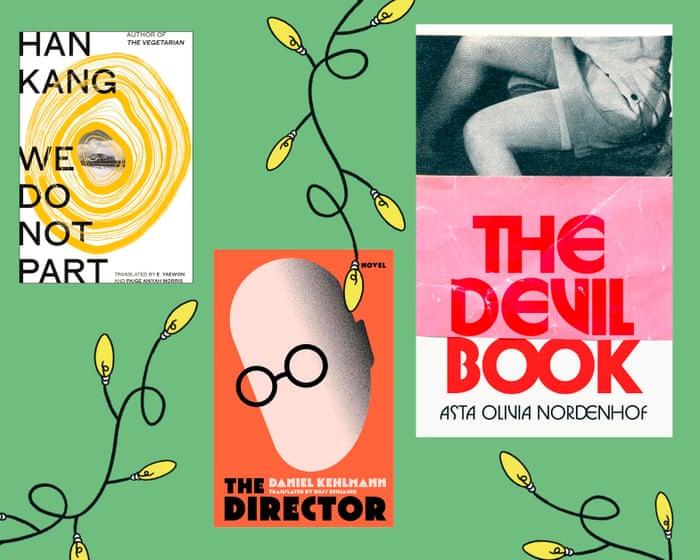
Han Kang, translated by e yaewon and Paige Aniyah Morris (Hamish Hamilton)
The Korean author and 2024 Nobel laureate blends the surreal quality of The Vegetarian with the political history of Human Acts to remarkable effect in her latest novel. Kyungha, a writer facing a health crisis (“I can sense a migraine coming on like ice cracking in the distance”), agrees to care for a hospitalized friend’s pet bird. Her friend, Inseon, is a filmmaker who exposes historical massacres in Korea. At the heart of the book is a mesmerizing, dreamlike sequence where Kyungha, blinded by snow, stumbles toward Inseon’s rural home and finds herself in ghostly company. As the pace slows and physical and psychological pain converge, the story becomes even more absorbing. This may be Han’s finest novel to date.
On the Calculation of Volume I and II
Solvej Balle, translated by Barbara J Haveland (Faber)
“It is the eighteenth of November. I have got used to that thought.” Book dealer Tara Selter is trapped in time, reliving the same day over and over. This is no Groundhog Day—it’s more philosophical than comic (she doesn’t even bet on the horses)—yet it is equally compelling. Tara gradually begins to grasp how she occupies space in the world and the ways we let our lives drift. At first, she tries to live normally, traveling to warm and cold cities to mimic the passing seasons. By the end of the second volume—with five more books to come—hints of cracks appear in her sealed-off world. Is Balle breaking her own rules? It only makes us eager to keep reading.
The Director
Daniel Kehlmann, translated by Ross Benjamin (Riverrun)
In 1930s Hollywood, filmmaker GW Pabst is surrounded by yes-men studio executives and egotists like Fritz Lang (“Metropolis is the best film ever made.” “I know”). He returns to Europe to visit his sick mother; when war breaks out, he is stranded in Austria, where he can only make films with Nazi approval. Kehlmann transforms Pabst’s real-life dilemma into a vibrant, entertaining epic. “Times are always strange,” he is told. “Art is always out of place.” The secondary characters steal the show, from his son Jakob, who embraces fascism, to Leni Riefenstahl with her “skull-like smile,” and even a surprise narrator in one chapter: prisoner of war PG Wodehouse.
Money to Burn / The Devil Book
Asta Olivia Nordenhof, translated by Caroline Waight (Jonathan Cape)
You wait a long time for a Scandinavian septology-in-progress, and then two arrive at once. But where Balle’s work is cool and reflective, Nordenhof’s is fiery and eccentric. The books loosely revolve around a 1990 passenger ferry fire—a possible insurance scam—that killed 159 people. Channeling rage from this tragedy (“capitalism is a massacre”), the narrative spirals into stories of love, rape, mental illness, art, and more. Like a conventional novel with all the dull parts removed, these books grow more energizing and thrilling as the fury intensifies—even if the loose connections between stories require readers to piece things together. “I mean really /,” writes Nordenhof.“I can’t do the whole thing by myself.”
These three novellas about life in – and in exile from – postwar Iraq argue that laughter is the best response to horror. The blend of darkness and humour is captured in the first story, where a pharmacist closes her shop because she’s tired of Islamic State fighters asking for Viagra—a comic detail until we realise what they might want it for. In another, a young man tasked with managing a militia leader’s email account falls in love with one of his female admirers. Elsewhere, library books are soaked in blood dripping from the IS killing floor above, bluntly illustrating how literature is under threat from fundamentalism. All the more reason to read Blasim’s essential stories.
To browse all translated fiction included in the Guardian’s best books of 2025, visit guardianbookshop.com. Delivery charges may apply.
Frequently Asked Questions
Of course Here is a list of FAQs about the best translated fiction of 2025 designed to be helpful for both new and seasoned readers
General Beginner Questions
1 What does translated fiction mean
It simply means a novel or story originally written in a language other than English that has been professionally translated so you can enjoy it
2 Why should I read translated books
They are your passport to other cultures perspectives and storytelling styles youd otherwise miss They can challenge your worldview and introduce you to incredible authors from around the globe
3 How do I find the best new translated fiction
Look for awards follow dedicated publishers and check best of lists from sources like The Guardian or Literary Hub
4 Isnt something always lost in translation
While nuances can be tricky a skilled translator is an artist who recreates the spirit voice and beauty of the original Many argue something is also gaineda bridge to a new world
5 Im new to this Where should I start with 2025s books
Start with a book whose premise intrigues you most regardless of its country of origin A gripping story is universal and an engaging plot can make the translated aspect feel seamless
Advanced Specific Questions
6 What trends are emerging in translated fiction for 2025
Early indications suggest a strong year for innovative autofiction from East Asia climatefocused narratives from the Global South and genrebending works that mix folklore with contemporary issues
7 How much does the translator influence the final book
Immensely The translator makes crucial choices about voice rhythm and cultural context For major awards like the International Booker the prize money is now split equally between author and translator highlighting their vital role
8 Are there specific publishers known for their 2025 translated fiction lists
Yes Keep an eye on