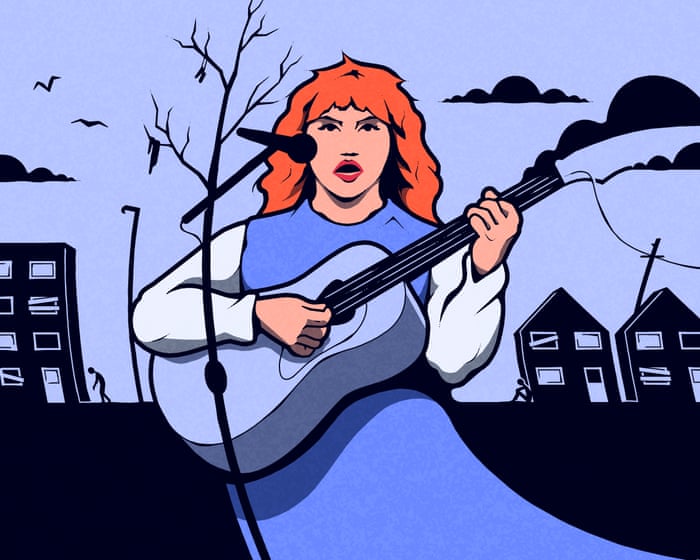
What has it felt like to be alive in 2025? The answer likely reflects key aspects of 21st-century life. One is the constant horror and conflict dominating the daily news. Another revolves around the growing material pressures in even supposedly stable nations: the relentless cost-of-living crisis, and the fact that millions find a secure job, a stable home, or a plausible future increasingly out of reach.
Then there’s the pervasive sense of absurdity, nastiness, and anger fueled by the internet. Bigotry is everywhere. What we still call social media often seems designed to blend wild fiction with moral outrage—take the ghoulish “online content creator” Bonnie Blue, who claimed to have had sex with 1,057 men in 12 hours and ended the year by endorsing Nigel Farage. You might check your feed out of mild curiosity, only to be swept into storms of mockery, hatred, and polarized shouting.
The biggest rewards often go to high-profile figures who cynically exploit this chaos—a story that fits everyone from modern porn stars and extremist influencers to the current U.S. president. The resulting noise only deepens feelings of disconnection and disorientation, especially for a generation born into an internet-shaped world that came of age after the 2008 financial crash. I receive emails three or four times a week capturing this mood, neatly summarized in a September press release from the British Association for Counselling and Psychotherapy: “Young people are surviving, not thriving, with many feeling disconnected and pessimistic about their future.”
Journalism can only scratch the surface. Capturing this surreal mess falls to novels, plays, films, TV dramas, and music. And this year, music has delivered something perfect: Euro-Country, the third album by Irish singer-songwriter Ciara Mary-Alice Thompson, known as CMAT. As the 29-year-old artist says, “Every song touches on an emotional detail of what it’s like to have come up in this era of capitalism and what it’s done to us all.” The album is filled with visions of growing loneliness and alienation, yet it also champions a basic humanity. It aches, pairing portraits of a bleak world with a quiet insistence that we could all help build something better.
You don’t need to know any of this to appreciate CMAT’s talent. Many of her best songs are about matters of the heart. If you’ve seen her perform live—as tens of thousands did over the summer, including at a career-defining Glastonbury set—you’ll know she’s a flamboyant, funny, and confident presence, more dizzying entertainment than social commentary. But the point remains: the best musicians channel their times, and she is easily 2025’s prime example.
Some of the album’s sharpest lyrics focus on her home country. Appropriately, the cover of Euro-Country shows Thompson emerging from a fountain at a retail park near her hometown of Dunboyne, County Meath—a place she describes as increasingly defined by “shopping centres and cement and roads,” where “There’s been years and years of basically no social services … and everyone’s just been by themselves on Facebook, scrolling and getting radicalised by the far right.” These issues, of course, are evident in many countries. But if you want to understand how raw economic…Seven years ago, the Guardian sent me to cover the housing crisis gripping Dublin—a crisis that persists today. Amid the European headquarters of Facebook, Google, LinkedIn, and what was then Twitter, I encountered a city where, as one recurring line put it, “Homeless families stay in hotels, and tourists stay in houses.” Everyone also spoke of the “ghost estates” scattered across the country beyond the capital. Built during the Celtic Tiger boom, these developments remained vacant, leaving behind a trail of human wreckage.
This is what Euro-Country’s title track captures. “It was normal,” sings Thompson, “building houses / That stay empty even now.” She also touches on the personal toll, singing, “I was 12 when the dads started killing themselves all around me”—a powerful and haunting line.
Other songs blend the personal and political. “Iceberg” explores how financial and personal insecurity can break people, describing a friend who once sought out conflict but is now “drowning.” “Take a Sexy Picture of Me” offers a sharp, unsettling look at the modern male gaze and its troubling consequences. Yet the standout moment is “The Jamie Oliver Petrol Station,” which perfectly captures the disorienting rush of the 21st century and how it distorts our relationships.
As writer Dorian Lynskey noted, the song embodies a modern “tragicomedy of misdirected anger.” It depicts Thompson pulling into a motorway service station branded with Jamie Oliver’s name and spiraling into a rage she doesn’t fully understand. “I’m wasting my time on seething,” she sings. With her phone as an implied presence, lines like “I needed deli but God, I hate him” feel like they could have been posted online. Though often funny, the lyrics point to something deeper: our frustrations over housing, jobs, and larger issues often get redirected onto easier targets.
I first saw CMAT perform over two years ago at a festival in Shropshire, in a big top before a few hundred people. As the set went on, the crowd grew increasingly aware of the extraordinary talent on stage. Looking back, I now see something more: Thompson, like the best songwriters, captures the spirit of her time while defiantly pushing back against it. Great art often carries a sense of resistance, and her work is full of it—making it a powerful vessel for something that felt fragile this year: a deeply human hope.
Frequently Asked Questions
Of course Here is a list of FAQs about the article Flamboyant furious and full of hope CMAT is the sound of 2025 writes John Harris
General Beginner Questions
Q Who is CMAT
A CMAT is the stage name of Irish singersongwriter Ciara MaryAlice Thompson Shes known for her witty narrativedriven pop music
Q What is this article about
A Its a piece by music critic John Harris for The Guardian arguing that CMATs unique stylemixing classic pop sounds with deeply personal sometimes furious and hopeful lyricsrepresents the exciting direction of music heading into 2025
Q Why does the article call CMAT the sound of 2025
A The writer believes her music captures the current cultural mood its extravagant and fun tackles modern anxieties and injustices but ultimately maintains a sense of optimism and connection
Q What does her music sound like
A Its often described as theatrical countrytinged pop Think big melodies influences from 60s girl groups and 70s countrypolitan with very clever conversational lyrics
Q Im new to her music Whats a good song to start with
A Great starting points are I Dont Really Care For You or Stay For Something They showcase her catchy hooks sharp lyrics and emotional depth
Advanced Deeper Questions
Q What does furious mean in the context of her music
A Its not just anger Its a pointed articulate frustration about things like bad relationships societal pressures on women personal failings and the absurdities of modern life all delivered with a clever twist
Q How does CMAT blend flamboyance with serious themes
A She uses upbeat catchy and sometimes camp musical arrangements as a contrast to lyrics that explore anxiety heartbreak and existential dread This creates a unique bittersweet and relatable tension
Q What is John Harriss main argument about the future of pop music