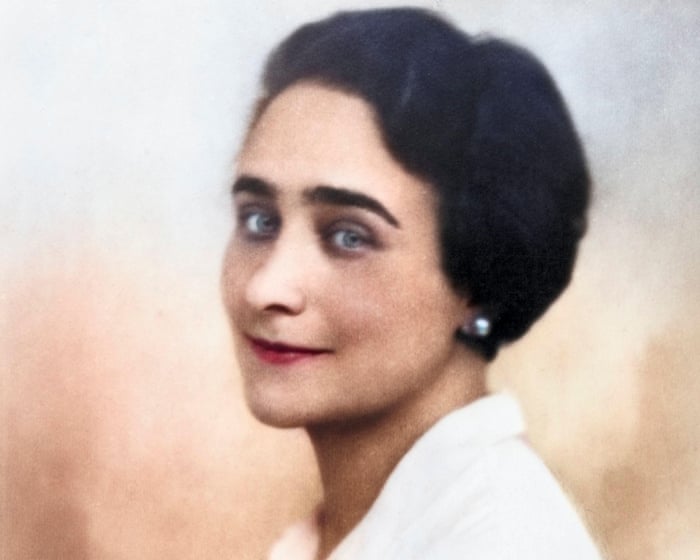
In 1948, the German Jewish writer Gabriele Tergit returned to Berlin. She found the city of her birth and upbringing, which she had once reported on and later captured in fiction, lying in ruins. Tergit had been a star of interwar Berlin’s vibrant journalism scene and had married into one of the city’s most notable Jewish families. Her debut novel in 1931 marked her arrival as a literary sensation.
Then the Nazis rose to power. Tergit, named on an enemies list, fled first to Czechoslovakia, then to Palestine, and finally to London, where she lived from 1938 until her death in 1982. She never made Berlin her home again. Her postwar visit revealed no real place for her in conservative postwar German literary circles, and no ready audience for her newly completed masterpiece, The Effingers. A version published in 1951 met with little acclaim. Only recently has a critical revival in Germany established Tergit as one of the country’s major authors. Now, thanks to Sophie Duvernoy’s excellent translation, The Effingers is available in English.
The novel traces four generations of the sprawling Effinger family, Jewish industrialists embedded in Berlin high society, from the Bismarck-admiring 1870s to the rise of fascism in the 1930s. Its central character, Paul Effinger, comes to Berlin to seek his industrial fortune. An ascetic enamored with mass production, Paul marries into the elite Oppner-Goldschmidt family, as does his brother Karl. The story follows numerous members of the extended clan through what is considered a golden age of assimilated Jewish life in Berlin. The city transforms dramatically over these decades: rapid population growth, technological advances, stark inequality, and sporadic bursts of progressivism. Ultimately, the political and economic instability of the interwar era brings disaster, fueled by rising antisemitism.
Tergit narrates all this through sober, precise, dialogue-driven scenes, constructing her novel from short, reporter-like chapters that subtly shift in tempo, perspective, and tone. Her authorial voice emerges not through explanation or reflection, but in her choices of what to show, when, and how. No single point of view dominates. Even the admirably liberal, progressive ideals of some characters are undercut by abrupt jumps that reveal how women and the poor were often excluded from such optimism.
The Effingers is a wonderfully vivid social portrait of pre-Nazi Berlin, where party scenes overflow with meticulous details of fashion, food, decor, and gossip. But it is also an intellectual portrait, largely because its characters constantly think, read, and argue. Tergit uses the multi-generational novel form less to explore family dynamics and more to track the shifts between eras that feel—as her characters often remark—like the dawn of a new age. Protestant morality, industrial utopianism, liberal cosmopolitanism, various forms of Judaism, women’s liberation, nationalism, and socialism all inhabit the text, often in surprising combinations.
When fascism arrives in the novel, it feels sudden and disorienting, yet also continuous with older tendencies and ideas. With its social breadth and historical depth, The Effingers presents Nazism not as a fairy-tale battle of good versus evil, but through the often incoherent mix of desires, ideas, and material conditions that drove individuals and groups to join the fascist cause. Tergit prefers detail to abstraction—and details resist grand explanations.
In 1949, she wrote to a publisher that The Effingers was “not the novel of Jewish fate, but rather a Berlin novel in which very many people are Jewish.” At its heart, Tergit’s novel asserts a claim on the city as a place for Jewish people.It firmly rejects the fatalistic view that Jewish life in Germany is inherently miserable or even impossible. It also appears skeptical of Zionist nationalism as a form of redemption: Uncle Waldemar delivers an impassioned speech defending an assimilated Jewish identity against all ethnic nationalisms, accusing the early Zionist movement of exploiting “every argument of this dreadful new time for its own purposes.”
Like Paul’s daughter Lotte, Tergit visited Palestine in 1933. There, she felt out of sync with Zionist emigrants, who she believed shared more intellectual ground with German “blood-and-soil” thinkers than with families like her own. “They saw anyone traveling to Palestine with a sorrowful heart as a traitor,” she later wrote. Tergit refuses to accept the destruction of Jewish Berlin as inevitable. Her novel tells a family’s tragic story—but she does not allow that tragedy to define them.
The Effingers: A Berlin Saga by Gabriele Tergit, translated by Sophie Duvernoy, is published by Pushkin (£20). To support the Guardian, order your copy at guardianbookshop.com. Delivery charges may apply.
Frequently Asked Questions
FAQs The Effingers by Gabriele Tergit
BeginnerLevel Questions
1 What is The Effingers about
Its a family saga following four generations of the Jewish Effinger family and their friends in Berlin from 1878 to the 1940s Its a detailed panoramic portrait of German society business and culture showing how life dramatically changed with the rise of the Nazis
2 Who was Gabriele Tergit
Gabriele Tergit was a GermanJewish journalist and novelist She was a famous court reporter in Weimar Berlin and fled the Nazis in 1933 The Effingers is her major literary work
3 Is this book a historical novel or a family story
Its both While centered on the fictional Effinger family their personal lives marriages and business ventures are deeply intertwined with real historical events making it a powerful historical novel about an era
4 Why is the setting important
The book meticulously shows the vibrant modern and often tumultuous life of Berlin during the German Empire and Weimar Republic This vivid portrayal makes the eventual destruction of that world by the Nazis all the more tragic and understandable
5 Is it a difficult book to read
It can be challenging due to its length and large cast of characters However its written in a clear engaging almost journalistic style Using a family tree is highly recommended
Advanced Thematic Questions
6 How does the book portray Jewish life in Germany
It shows its immense diversity and integration The characters range from fully assimilated patriots to more religious or Zionistleaning individuals The novel highlights how they saw themselves as Germans first making their betrayal by the state particularly devastating
7 What makes this book a unique historical source
Tergit writes as both an insider and a sharp social observer She captures the everyday textures of lifefashion technology business deals salon conversationsin a way that pure history books often dont focusing on the social and cultural atmosphere