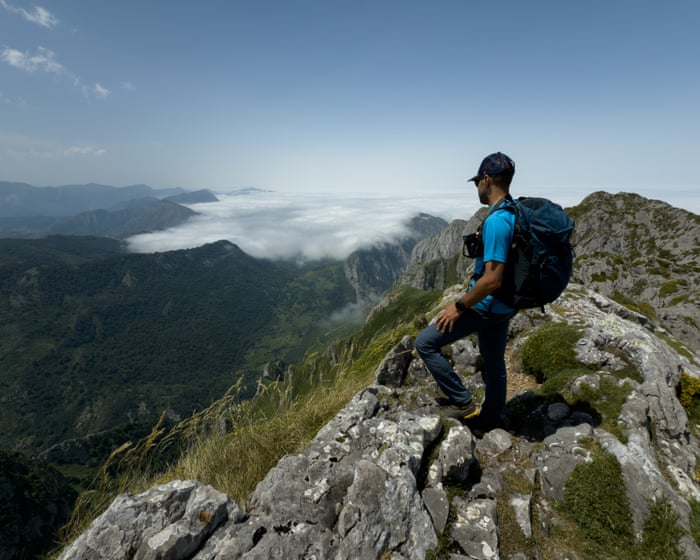
A metà del primo vallone glaciale, esco dal sentiero per fermarmi su una chiazza di neve. Un ragno scappa via veloce tra i cristalli ghiacciati. Pochi metri più avanti, il fianco della montagna esplode di colori: minuscoli fiori alpini brulicanti di api e grilli, circondati da cime frastagliate. Un paio di camosci osservano da una rupe, poi risalgono rumorosamente una parete quasi verticale. Mi fermo e mi raffreddo in fretta, quindi indosso una giacca. Mi ricordo che sono in Spagna, durante un'ondata di caldo europea.
Quando finalmente distolgo lo sguardo dalla fauna selvatica, il mio gruppo di escursionisti sono puntini minuscoli su un sentiero che si snoda su una parete rocciosa. Questa è la catena montuosa dei Picos de Europa, nel nord della Spagna—un insieme di vette che superano i 2.500 metri, famose per i loro pendii ripidi. Li seguo, raggiungendoli mentre scalano una cresta per trovare una vista inaspettata: una torretta di cannone di una portaerei della Seconda Guerra Mondiale, ora trasformata in rifugio di montagna. (La Cabina Verónica fu tagliata dalla USS Pulau nel 1961 in una discarica di Bilbao e trascinata quassù da muli.)
Il custode, Jorge, l'ha presa in gestione come progetto otto anni fa e da allora l'ha resa la sua casa estiva, aggiungendo pannelli solari e serbatoi d'acqua alla cupola di alluminio lucido. "La adoro," dice con un sorriso, preparando il caffè nella minuscola cucina. "Perché dovrei aver bisogno di città e folle quando ho tutto questo?" Le viste sono mozzafiato. Molto più in basso, lungo la valle, un gipeto si libra in volo—uno dei pochi reintrodotti con successo nel 2005. Il rifugio dorme al massimo sei persone, troppo piccolo per il nostro gruppo, ma è popolare tra scalatori ed escursionisti solitari.
Questo viaggio sembra pieno di contraddizioni e sorprese. Per cominciare, sul traghetto da Portsmouth a Bilbao, ero solo sul ponte alle 5 del mattino, circondato da una fitta nebbia fredda. Non riuscivo nemmeno a vedere le onde sotto la ringhiera. Sembravamo immobili, persi negli spazi esterni. Mentre guardavo giù, la foschia si è sollevata un po', e tre delfini sono emersi dall'acqua, ricordandomi che ero sul pianeta Terra, non su un'astronave. Questa rotta del traghetto, e la sua gemella per Santander, attraversano un canyon oceanico profondo 4.000 metri, e gli avvistamenti di balene sono comuni. L'esperto di bordo, André, mi dice di aver visto orche e diverse specie di balene, inclusa la rara balena dal becco di Cuvier.
Le montagne dei Picos, a ovest di Bilbao, sono sempre state note per l'inaspettato. Nella storia spagnola, furono un centro di resistenza al dominio romano e poi ai Mori. Hanno fiori e farfalle che non si trovano da nessun'altra parte; il camoscio è una sottospecie unica, e ci sono anche orsi e lupi. Sotto le vette imponenti si cela un'altra sorpresa: una rete sotterranea di fiumi e grotte giganti profonde quasi un miglio.
La nostra escursione attraverso la catena è iniziata a nord, salendo fino al rifugio di montagna Vegarredonda a 1.410 metri. Ci sono alcuni di questi rifugi sparsi per i Picos, la maggior parte fuori rete e riforniti da muli. Aspettatevi buone conversazioni, porzioni di cibo generose e un materasso rivestito di plastica in quella che alcuni potrebbero chiamare una "russatoria". Sono salvato dalla gentilezza di Arten, uno del nostro gruppo, che mi dà tappi per le orecchie in gel di silice. Funzionano bene, e al mattino mi sveglio e trovo tutti già andati a fare colazione.
In una piccola officina di pietra, una signora anziana siede su uno sgabello da mungitura rustico. Sugli scaffali ci sono forme di formaggio.
Il cibo è una parte importante dell'esperienza dei Picos. Quella mattina camminiamo fino ad alcune casette di pietra vicino a un lago, Ercina, e troviamo un cartello scritto a mano che pubblicizza formaggio fatto in casa. Bruno e Cristina, le nostre guide, si entusiasmano molto. In una piccola officina di pietra... Una signora anziana siede su uno sgabello da mungitura rustico, indossando un grembiule di nylon, in attesa di clienti.
"Mio nonno costruì questa capanna nel 1944 quando avevo tre anni," dice Maria. "Tutti venivano quassù per l'estate, portando con sé i loro animali. Ora sono solo io."
I pascoli delle montagne dei Picos
Alle pareti sono appesi i corni da bevuta e i piatti di legno dei suoi antenati; sugli scaffali ci sono forme di formaggio. Il metodo dei Picos è mescolare latte di pecora, mucca e capra. I risultati sono deliziosi. "Avevo paura che questa tradizione potesse scomparire," dice Maria. "Ma mio figlio è interessato, quindi c'è speranza che continui."
Lasciamo Maria, ancora mangiando il formaggio, e svoltiamo in una valle laterale, salendo costantemente oltre massi che nei loro incavi ospitano minuscoli giardini di sassifraga e sedum. Un picchio muraiolo vola via, uno degli uccelli più rari che vivono qui. I camosci stanno su creste lontane, mai lontani dalle chiazze di neve. Ma il loro mondo si sta restringendo man mano che le ondate di caldo spagnole si insinuano sempre più in alto. (Ero contento di aver viaggiato in traghetto; come passeggero a piedi, ho prodotto meno del 10% della CO2 che avrei prodotto volando, secondo il calcolatore di carbonio di Direct Ferries.)
Passiamo la notte al Rifugio Vega de Ario, un rifugio con la migliore cucina, che ospita anche la squadra di speleologia dell'Università di Oxford. Dopo più di 60 anni di esplorazione e diverse generazioni di speleologi che hanno mappato alcuni dei sistemi di grotte più estesi del mondo, mi dicono che sono vicini a collegare due enormi reti di grotte. Prometto di tornare a vederlo—una volta installate le scale.
Sotto le vette imponenti si cela un'altra sorpresa: una rete sotterranea di fiumi e caverne giganti profonde quasi un miglio
Il giorno dopo, attraversiamo uno dei pochi luoghi nei Picos dove si vede un'auto—il villaggio di Poncebos, che si trova su una bellissima passeggiata nella gola lungo il Rio Cares. Da lì, saliamo di nuovo attraverso prati pieni di fiori e fattorie abbandonate fino alle nuvole. Poi, con una tempistica drammatica perfetta, la nebbia si dirada per rivelare il punto culminante mozzafiato di queste montagne: il Picu Urriellu, un'imponente guglia rocciosa di 2.529 metri, sotto la quale si trova uno dei rifugi di montagna più spettacolari d'Europa, Vega de Urriellu.
Questo è uno dei rifugi più popolari, che ospita 96 persone, con molti altri che campeggiano nelle vicinanze, ma rimane amichevole e socievole. Stiamo fuori con Bruno e Cristina mentre indicano le loro vie di arrampicata preferite. Intorno a noi, piccoli gruppi di scalatori discutono i loro piani. La parete sud è popolare tra i gruppi guidati; la parete ovest è un mostro di 750 metri.
I Picos sono pieni di fiori colorati
Le depressioni glaciali, con i loro ragni e fiori, sono davanti a noi, ma è qui che sceglierei di restare. Non mi vedreste mai in una grotta, ma sono tentato da quelle che Bruno chiama eccellenti vie di arrampicata. Mentre il sole tramonta, la roccia diventa arancione, dando a Urriellu il suo nome spagnolo, Naranjo de Bulnes—l'arancia di Bulnes.
Calano le tenebre, e salgo su un sentiero di montagna per altre viste, ma trovo il mondo sotto il rifugio completamente coperto di nuvole. Mi siedo su un masso e, dopo un po', mi accorgo di essere osservato. Un camoscio si erge su una cengia sopra di me, le sue corna curve e delicate si stagliano contro il crepuscolo come due punti interrogativi. Guardo l'ultimo bagliore arancione svanire sulla cima di Urriellu, poi mi volto verso la cengia, ma il camoscio è sparito.
Il viaggio è stato fornito da KE Adventure Travel; la traversata di otto giorni dei Picos parte da £1.295, inclusi tutti i pasti, l'alloggio e le guide. Brittany Ferries salpa fino a due volte a settimana da Portsmouth a Bilbao e Santander, e da Plymouth a Santander, da £128 per passeggeri a piedi ad agosto.
**Domande Frequenti**
Ecco un elenco di domande frequenti sul trekking attraverso i Picos de Europa, che coprono preoccupazioni da principianti ad avanzati.
**Domande Generali per Principianti**
1. **Cosa significa esattamente la cultura montana vivente nei Picos de Europa?**
Significa che la gente del posto vive e lavora ancora qui, allevando bestiame, producendo formaggio e mantenendo antiche capanne di pietra e sentieri. Non stai solo camminando in un museo, ma attraverso fattorie e villaggi attivi.
2. **Devo essere super in forma per fare trekking qui?**
Non necessariamente. Ci sono facili passeggiate in valle e percorsi da villaggio a villaggio per principianti. Tuttavia, i classici percorsi d'alta montagna richiedono una buona resistenza e non soffrire di vertigini.
3. **Qual è il periodo migliore per andare?**
Da fine giugno a inizio settembre è il periodo più sicuro per i percorsi in alta quota. Maggio e ottobre possono essere buoni per i sentieri più bassi, ma aspettatevi neve e fango in altitudine. L'inverno è solo per alpinisti esperti.
4. **È sicuro andare da soli?**
Sì, sui sentieri principali ben segnalati. Ma per vette remote o trekking di più giorni, è fortemente consigliato andare con una guida o un gruppo. Il tempo cambia rapidamente e la nebbia può rendere la navigazione difficile.
5. **Cos'è il percorso della Gola del Cares?**
È l'escursione giornaliera più famosa, un sentiero di 12 km scavato in una parete di roccia verticale. È pianeggiante ma stretto, con precipizi vertiginosi. È spettacolare ma può essere affollato in estate.
**Domande Pratiche Avanzate**
6. **Posso soggiornare nei rifugi di montagna o ho bisogno di una tenda?**
Puoi usare i rifugi gestiti sui percorsi principali, ma devi prenotare in anticipo in estate. Il campeggio libero è tecnicamente limitato nel Parco Nazionale, ma il bivacco in alta quota sopra il limite degli alberi è spesso tollerato se sei discreto e non lasci tracce.
7. **Come gestisco l'odore del formaggio Cabrales nei villaggi?**
Abbraccialo. Il formaggio è famosamente puzzolente perché viene stagionato nelle grotte naturali di montagna. L'odore è forte, ma il sapore è incredibile. Comprane una fetta da un'azienda agricola locale, non da un negozio turistico.
8. **Qual è il pericolo più grande oltre alle cadute?**
I cambiamenti improvvisi del tempo. Una mattina soleggiata può trasformarsi in un pomeriggio di temporali, grandine e nebbia fitta. Porta sempre strati impermeabili e caldi, anche se il cielo è sereno.